


What is the single most counterintuitive piece of advice from Think and Grow Rich for achieving financial goals in 2027?
Quality
Certified
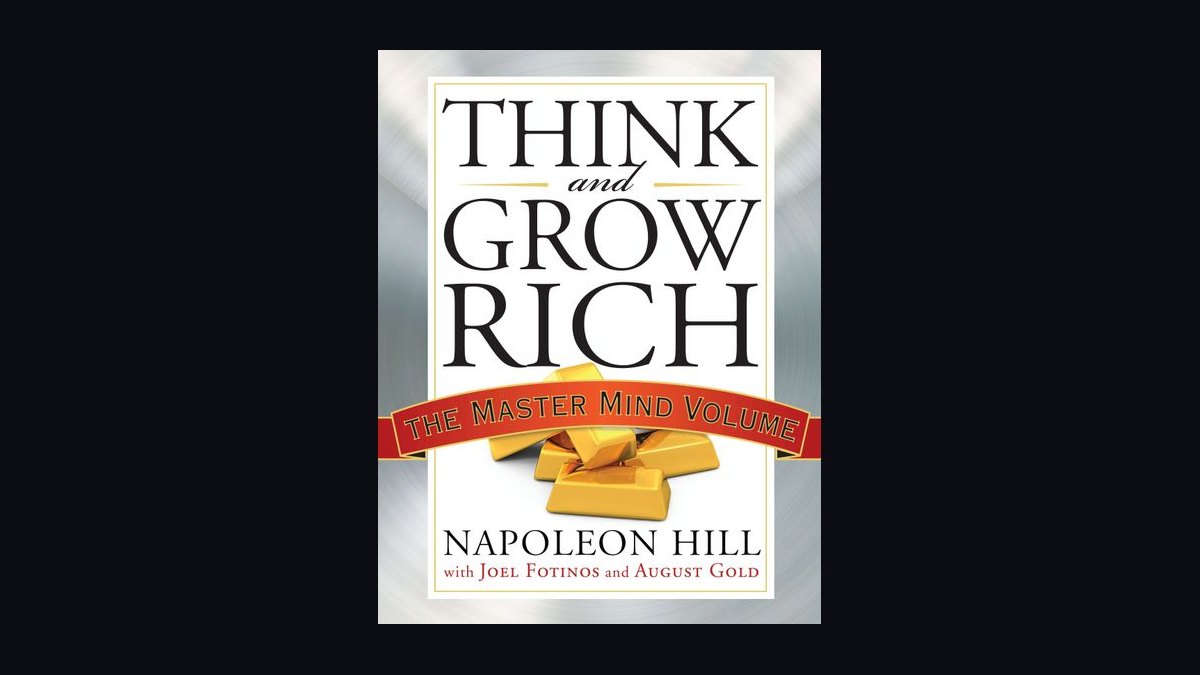
The single most counterintuitive piece of advice from *Think and Grow Rich* is to decide first, before you can see how: fix an exact dollar amount and a specific date, then commit to *giving* value in return — rendering more and better service than you're paid for — long before there's any visible path to the money. It runs against every instinct to wait for proof, chase the highest-paying option, or keep your ambition modest and hidden.
In 2027, when most financial advice is optimization-first — apps, dashboards, side hustles ranked by ROI — Hill's 1937 counsel to commit to a definite outcome without knowing the mechanism feels backwards. Yet that "backwards" sequence is exactly the mechanism the book argues actually produces wealth.
Why does "decide the exact sum before you know how" beat modern goal-hacking?
Most 2027 financial planning starts with feasibility: what can I realistically earn, what does the calculator allow, what's the safe assumption. Hill inverts this. In the "Desire" chapter he instructs the reader to name a precise figure and a precise date *first*, and to treat the how as a problem to be solved afterward rather than a precondition for committing. The counterintuitive claim is that certainty about the destination organizes effort, attention, and opportunity-recognition in a way that a vague "make more money" never can. Feasibility-first planning quietly caps ambition at whatever the current model can already prove, so the plan can never produce more than the assumptions you fed into it. Hill's sequence refuses that ceiling on purpose.
The reason this holds up is less mystical than the book's language suggests. A specific target changes what you notice. A person who has committed to a concrete number filters incoming information differently — a raise negotiation, a client, a skill worth learning suddenly registers as relevant because it maps to a known gap. Modern behavioral research on goal specificity echoes this: precise, difficult goals outperform vague "do your best" goals because they create a measurable discrepancy the mind works to close. Hill arrived at the same conclusion through observation decades before the psychology literature formalized it, which is part of why the advice keeps resurfacing in RevOps goal-setting frameworks that prize a single clear number over a dashboard of soft metrics.

There's a second, subtler reason the sequence matters: a definite number forces a decision to be *irreversible enough to act on*. Vague goals are psychologically cheap because they can be silently downgraded — "make more money" quietly becomes "make a little more" the moment things get hard, and no one can tell you failed. A written figure with a date removes that escape hatch. It converts a wish into a commitment you can be held to, first by yourself and then by the people around you, and that accountability is what turns intention into sustained behavior over the months a real financial goal takes to resolve.
What is the "render more service than you're paid for" principle, and why does it feel wrong?
The second half of Hill's counterintuitive core is the "Going the Extra Mile" idea: deliberately deliver more and better service than your current compensation justifies. On its face this sounds like a recipe for being underpaid. Why would anyone knowingly give away surplus value? The intuitive move in 2027 — reinforced by gig-economy framing and hourly-rate optimization — is to meter output precisely to pay, to never leave value on the table. Every app that shows your effective hourly rate nudges you toward this metering, which makes Hill's advice feel not just wrong but financially illiterate.
Hill's argument is that the surplus is not a gift; it's an investment that compounds through reputation, relationships, and the "law of increasing returns." When you consistently over-deliver, you make yourself the obvious choice for the next, larger opportunity, and you accumulate goodwill that later converts into pricing power, referrals, and roles that never get posted publicly. The short-term math looks like a loss; the multi-year math is where the return lives. This is why it pairs so tightly with the definite-sum principle — the extra service is the *how* that fills in once you've committed to the *what*. For anyone building a book of business, this mirrors how pipeline reputation compounds: the early over-delivery you can't yet bill for is what makes the later deals close.
The mechanism worth naming is that over-delivery buys *optionality*. A person who metered perfectly to their pay has exactly the opportunities their current role hands them. A person who has quietly built a reputation for exceeding expectations has a wider set of doors that open unprompted — the promotion offered before it's posted, the client who refers three more, the partner who brings the deal to you first. Financial goals rarely resolve through the path you planned; they resolve through the option you didn't know you'd need. Over-delivery is how you stock the shelf of options before you know which one the goal will require.
The loop is the point: commitment triggers over-delivery, over-delivery creates opportunity, opportunity reveals the path back to the original number, and the cycle tightens. Nothing in it requires knowing the full route at the start — which is precisely what makes it counterintuitive to a planning-first mindset. Notice also that the loop is self-correcting: each turn gives you real market feedback about which service actually compounds and which doesn't, so the "how" you eventually see is one the world validated rather than one you guessed at a desk. That is the quiet advantage of committing first and discovering the route through action — the route arrives pre-tested.
How does autosuggestion differ from wishful thinking?

The most misread part of the book is autosuggestion — repeating your definite goal to yourself daily "as though already possessed." Critics dismiss this as magical thinking, and in 2027 the "manifestation" industry has arguably earned that skepticism. But Hill's mechanism is not that repetition summons money. It's that sustained, emotionalized focus on a specific outcome keeps the goal top-of-mind long enough to change behavior, persistence, and receptiveness to opportunity over months and years — the timescale on which financial goals actually resolve.
The distinction that matters: wishful thinking is passive and detached from action, while Hill's autosuggestion is explicitly bolted to a written plan, a service you provide, and daily execution. The affirmation without the plan is fantasy; the plan without the sustained conviction tends to get abandoned at the first setback. The counterintuitive insight is that *belief maintenance is a productivity tool* — it's the thing that keeps you executing through the long, unrewarded middle of a goal, which is exactly when most people quit. Understanding this separates Hill's method from the diluted "think it into existence" versions that borrowed his title without his discipline, a distinction we unpack in the difference between planning and manifestation.
It helps to think of autosuggestion as *attention management* rather than mysticism. Attention is the scarcest resource a person brings to a multi-year goal; the default state of the mind is to be captured by whatever is loudest today — the inbox, the crisis, the algorithm. Daily repetition of a specific number and date is a deliberate mechanism for reclaiming a slice of that attention and pointing it back at the long game. Stripped of the 1937 vocabulary, it's the same reason modern goal systems put a single metric on a wall or a home screen: not because the display casts a spell, but because what stays in front of you is what you keep working toward when nothing external is reminding you to.
Should you apply this literally in 2027, or adapt it?

Adapt it — the psychology is durable, the specifics are dated. Hill wrote in a Depression-era, largely analog economy, and some of his framing (near-mystical "Infinite Intelligence," gendered anecdotes, a light touch on luck and structural advantage) doesn't survive a modern read. Applying the *literal* text uncritically is a mistake. Applying the *structure* — definite number, definite date, written plan, over-delivery, and disciplined persistence — is where the value survives.
In 2027 terms, the translation looks like this: replace vague income goals with a single target figure and date; write the plan down and revisit it on a real cadence; identify the specific service or skill you'll over-deliver on to earn it; and build a "mastermind" — Hill's term for a small group of aligned, competent people whose combined knowledge and accountability exceed any individual's. What Hill couldn't foresee is that the modern version of the mastermind includes tools: goal-tracking systems, communities, and yes, AI advisors that keep the number in front of you. The counterintuitive core doesn't change, but the scaffolding around it is far richer than 1937 allowed.

The diagram makes the through-line explicit: none of the modern updates replace the principles, they operationalize them. The reason the advice still feels counterintuitive is that the *sequence* — commit, then give, then discover the how — remains the opposite of the feasibility-first habit most people bring to money. One honest adaptation Hill's era didn't force on readers is a clearer accounting of luck and structural advantage: the same disciplined method produces very different outcomes depending on where you start, and a 2027 reader should hold the principles as leverage on their own situation rather than as a guarantee that ignores it. Used that way — as a system that improves your odds rather than a formula that fixes them — the book's core survives the translation intact.
What goes wrong when people try this?
The most common failure is treating the definite sum as the whole method and skipping the service and persistence. People write a number on a card, feel the dopamine of ambition, and change nothing about what they deliver or how long they'll endure. That's the manifestation trap, and it produces disappointment that then gets blamed on the book. The number is a focusing device, not a spell.
The second failure is impatience with the "unrewarded middle." Because the payoff from over-delivering is delayed and non-linear, people abandon the extra-mile principle right before it would have compounded, concluding it doesn't work. Hill's insistence on persistence exists precisely to survive this gap. The third failure is going it alone — ignoring the mastermind principle and trying to think and grow rich in isolation, which forfeits the accountability and borrowed knowledge that make the rest sustainable. Together these explain why so many readers report the book "didn't work": they adopted the most quotable idea and dropped the three that make it function.

A fourth, quieter failure is setting a number with no honest plan beneath it — treating "definite sum and date" as permission to skip the arithmetic of how the money could plausibly arrive. A target of ten times your current income by next quarter isn't ambition, it's a setup for the demoralizing collapse that follows an obviously missed deadline, and each collapse makes the next commitment harder to believe. Hill's own instruction pairs the number with a written plan and a service rendered in return precisely so the goal stays aggressive but tethered. The discipline is to pick a figure that stretches you past what feels safe while still connecting, through a real chain of service and time, to a mechanism that could actually deliver it. Get that balance wrong in either direction — too timid or untethered — and the method quietly stops working, which is exactly why the book spends far more pages on plans, persistence, and the mastermind than on the single quotable line everyone remembers.
Related questions
Is Think and Grow Rich still relevant in 2027?
Yes, for its psychology of goal-setting, persistence, and service. Treat the mystical framing as metaphor and the structural advice — definite goals, written plans, over-delivery, and disciplined follow-through — as the durable, still-applicable core.
What is the main message of Think and Grow Rich?
That wealth begins with a specific, emotionally charged desire backed by a definite plan and relentless persistence — thought organized toward a fixed aim, expressed through service, is the engine that produces financial results.
What does "render more service than you're paid for" mean?
Deliberately deliver higher quality and quantity than your current pay strictly requires, treating the surplus as an investment in reputation and future opportunity rather than as work given away for free.
Is the "definite sum and date" advice realistic?
Yes, as a focusing tool, not a guarantee. A precise target and deadline sharpen attention and effort far better than vague goals; they don't override market limits, so pair them with an honest plan.
How is Hill's autosuggestion different from manifestation?

Autosuggestion in Hill's system is always attached to a written plan and daily action — it sustains conviction through long execution. "Manifestation" often drops the plan and action, which is where it becomes wishful thinking.
FAQ
Is the most counterintuitive advice really "decide before you know how"? Yes. The instruction to fix an exact amount and date and commit to it before any visible path exists is the piece most readers resist, because it inverts the feasibility-first habit. Hill argues the commitment itself organizes the effort and attention that later reveal the how.
Does over-delivering actually lead to more money, or just burnout? It leads to more money only when it's strategic and sustainable, not indiscriminate. The principle is about building reputation and opportunity with people who can reciprocate — not saying yes to everything. Undisciplined over-delivery without boundaries does risk burnout, which is a misapplication, not the principle.
Should I set one financial goal or several? Hill favors a single, dominant definite aim for financial goals, because a single number focuses effort in a way a scattered list cannot. You can hold sub-goals beneath it, but the counterintuitive power comes from one clear target rather than a diversified wish list.
How long before this approach shows results?

There's no fixed timeline, and the honest answer is that the payoff is non-linear and often delayed. The "extra mile" and persistence principles exist precisely because results tend to arrive after a long, unrewarded stretch. Expecting quick returns is the fastest way to abandon the method early.
Is this advice compatible with modern financial planning? Yes. Hill's psychology of specific goals and persistence complements — rather than replaces — budgeting, investing, and risk management. Use his method to set and sustain the target and the earning behavior; use conventional financial planning to manage, allocate, and protect the money once it arrives.
What should I ignore in the book? Discount the near-mystical claims about "Infinite Intelligence" summoning wealth, the dated anecdotes, and any reading that skips action in favor of pure belief. The durable material is behavioral: definite goals, written plans, mastermind accountability, over-delivery, and persistence.
Can these principles work for a team or business, not just an individual? Yes. Definiteness of purpose, over-delivering on service, and the mastermind concept translate directly to revenue teams and small businesses. A single clear target, a reputation-compounding service standard, and a small aligned group of decision-makers are as effective for an organization as for a person.
Why does the advice feel counterintuitive if it's psychologically sound? Because it inverts the order most people are taught: figure out what's possible, then commit. Hill has you commit, then discover what's possible through action and service. The sequence feels risky, but it's what keeps ambition from being capped by today's assumptions.
Sources
- **Think and Grow Rich**— Napoleon Hill (1937, original text)
- [The Napoleon Hill Foundation](https://www.naphill.org/)
- **Napoleon Hill**— Biography and works overview
- **Locke & Latham, Goal**-Setting Theory (American Psychological Association)
- **Project Gutenberg / public**-domain editions of early Hill works
- **Harvard Business Review**— on the psychology of goal-setting
- **James Clear**— analysis of goal specificity and habits
Related on PULSE
- What’s the single most counterintuitive tip from *To Sell Is Human* for writing cold email subject lines that get opened in 2027?
- What’s the single most effective tactic from *The Challenger Sale* for shortening a long sales cycle in 2027?
- What’s the single most effective questioning technique from *SPIN Selling* for enterprise discovery calls?
- What is the single most useful chapter in The Innovator's Dilemma by Clayton Christensen for a RevOps leader in 2027?
Recently Added — Related
Recently Added — Related
This page will be disappearing soon. Save it to your device for $1 — or read it free while it is here.
@Kory-White- · if Venmo asks, the last 4 of my number are 2012
This page is gone.
This one is off the shelf now. $1 keeps it on your phone for good — the whole page, pictures and diagrams included.
 pulse-booksWhat is the best way to apply the Four Tendencies framework to build a daily reading habit in 2027?
 pulse-booksWhat are the most common mistakes in Book Summaries in 2027?
 pulse-booksIs Book Summaries worth it in 2027?
 pulse-booksHow much do Book Summaries cost in 2027?
 pulse-booksWhat should you know before investing in Book Summaries in 2027?
 pulse-booksHow does Daring Greatly by Brené Brown change how you handle criticism at work in 2027?
 pulse-booksHow do you get started with Book Summaries in 2027?
 pulse-booksTop 10 practical takeaways from Atomic Habits for building a new routine in 2027.
 pulse-booksTop 10 best Book Summaries options in 2027
 pulse-booksHow does The 7 Habits of Highly Effective People define 'begin with the end in mind' for career planning in 2027?