
New Sales Simplified by Mike Weinberg — Top 10 Key Takeaways for Sales Leaders in 2027
 Curated byKory White · Fractional CRO · Maryland
 PULSEKNOWLEDGE LIBRARY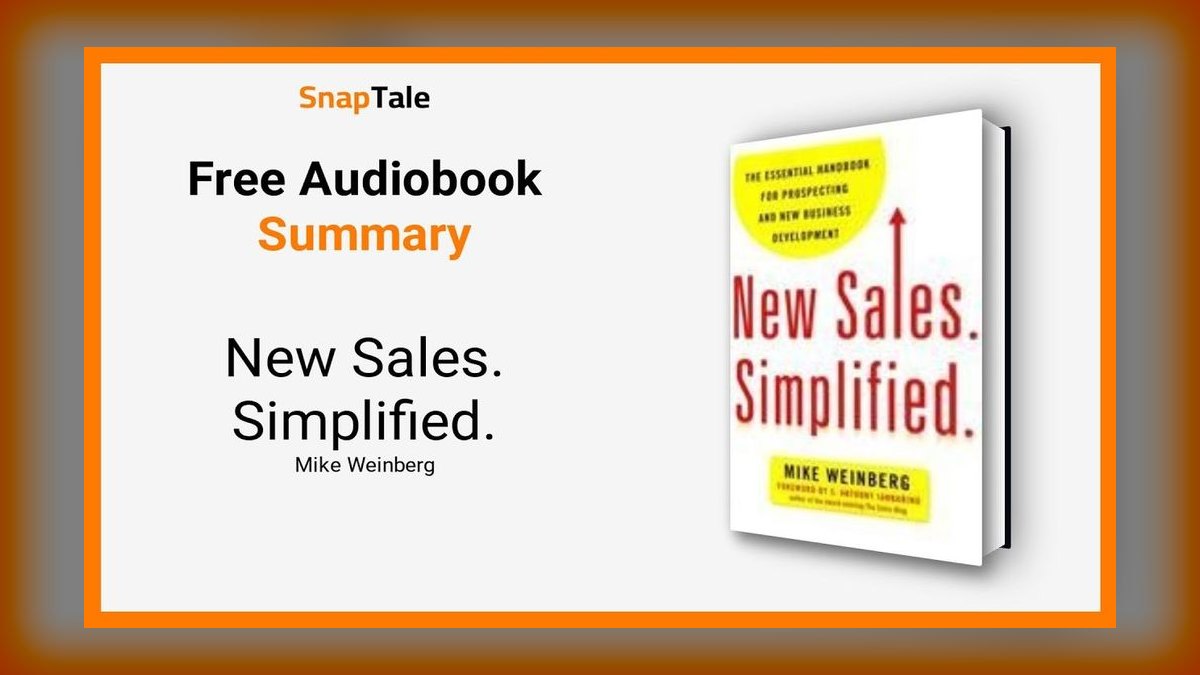
Mike Weinberg's "New Sales. Simplified." argues that sales leaders overcomplicate growth when the real work is disciplined focus, a compelling sales story, and consistent proactive prospecting. The top takeaways for 2027 sales leaders: build a tight target list, replace feature-dumping with a differentiated pitch, mandate weekly new-business activity, coach the pipeline instead of managing paperwork, and hold hunters accountable to leading indicators, not just closed revenue.
What it is and why it matters
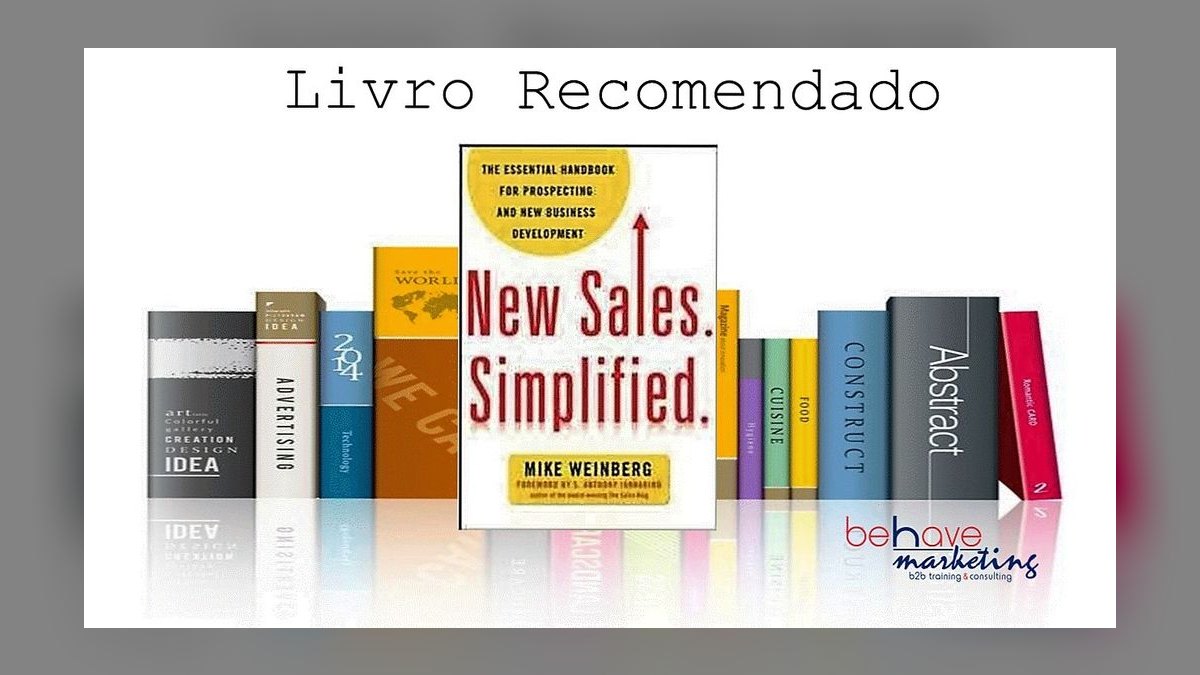
"New Sales. Simplified." is Mike Weinberg's foundational text on new business development, and it remains one of the most re-read sales management books because it refuses to treat selling as a mysterious art. Weinberg's core claim is that most revenue shortfalls trace back to two failures: sellers pursuing the wrong accounts, and sellers avoiding the uncomfortable work of proactive outreach. The book's central strategy is not a script or a tool — it is a repeatable operating rhythm that any sales leader can install regardless of industry.
The first Takeaway is that new business development is a distinct skill from account management, and most sales organizations conflate the two. A rep who is excellent at nurturing an existing client relationship often has zero appetite for cold outreach, and putting both jobs on one title guarantees the harder, less comfortable job gets neglected. Weinberg's fix is role clarity: hunters hunt, farmers farm, and sales leaders staff and comp each role differently rather than hoping one person will do both well.
The second Takeaway is the "Target Account List" discipline — a short, prioritized list of accounts (Weinberg often references a range in the 20-40 account band for an individual rep) that a seller works relentlessly instead of scattering effort across hundreds of low-fit leads. A list that size is small enough to research deeply and large enough to always have a live conversation moving. Sales Leaders who let reps self-select an unbounded list of "opportunities" in the CRM are, in effect, approving unfocused activity.
The third Takeaway is the sales story. Weinberg is blunt that most sellers lead with their company's history, product features, and org chart — information the buyer does not care about until trust and relevance are established. His replacement is a story built around the customer's world: the problems they face, the cost of inaction, and a short, specific proof point of how the seller's company solved that exact problem elsewhere. A sales story that cannot be delivered in under two minutes, without a slide deck, is not simple enough yet.

The fourth Takeaway, and arguably the most operationally important one for 2027, is that sales management activity has drifted toward CRM administration and away from actual coaching. Weinberg's argument is that a sales manager's job is to make each rep on the team better at winning new business, not to audit forecast fields. That reframes what a "good week" looks like for a frontline manager: fewer hours in dashboards, more hours in live call reviews, ride-alongs, and pipeline strategy sessions per rep.
The step-by-step process
The book's discipline compresses into a repeatable weekly cycle that a sales leader can run without new software. The sequence starts with target list maintenance, moves through story rehearsal, then proactive outreach, meeting execution, and finally leader-led pipeline review — and it repeats every week rather than being a one-time kickoff exercise.
Step one is refreshing the target list every week, not once a quarter — accounts get added when they meet the ideal-customer criteria and dropped the moment they prove to be a poor fit, so the seller's finite attention stays on live, winnable ground. Step two is rehearsing the sales story out loud, ideally with a manager or peer listening, because Weinberg treats an unpracticed pitch as an unfinished one; sellers who can only deliver the story while reading from notes have not actually internalized it yet.
Step three is the proactive outreach block — Weinberg is a vocal advocate for the telephone and in-person visits over email-only prospecting, arguing that a live conversation converts to a qualified meeting far faster than a chain of unanswered messages. For 2027 sales leaders running hybrid teams, this step should be scheduled on the calendar as protected time, the same way a client meeting would be, rather than left to whatever gap exists between inbound tickets.

Step four is the discovery meeting itself, structured around the buyer's stated and unstated problems rather than a company overview deck. Step five is the discipline of not letting opportunities sit in an ambiguous state — Weinberg calls for aggressive disqualification of stalled deals so the pipeline reflects real, active buying processes instead of hope. Step six closes the loop: the sales leader reviews each rep's pipeline weekly, but the review centers on activity and next steps, not just a percentage the rep types into a forecast field.
Costs, timelines, and typical ranges
Implementing this operating rhythm costs almost nothing in software or headcount — its price is calendar time and management consistency, which is exactly why Weinberg frames it as "simplified" rather than "easy." A sales leader can expect the first full cycle of target-list-building and story-sharpening to take 2-3 weeks per rep before outreach volume becomes consistent, because most sellers have never had to articulate a customer-focused story from scratch and the first few drafts are usually still product-centric.

Expect a further 60-90 days before pipeline quality visibly improves, since new proactive outreach has to work through a typical B2B sales cycle before it shows up as qualified opportunities and, eventually, closed revenue. Organizations selling complex or enterprise deals with multi-month cycles should plan on a full quarter, sometimes two, before the new discipline is reflected in bookings — the leading indicators (meetings booked, target-list coverage, story-delivery quality) move first, and lagging indicators (closed-won revenue) move last.
On the accountability side, Weinberg's ranges for weekly proactive activity vary by role and industry, but the constant is that it must be a specific, tracked number rather than a vague expectation to "prospect more." A sales leader for a team of 8-10 hunters should expect to spend roughly 3-5 hours per week on structured one-on-one pipeline and story coaching, split across individual reps, if the manager is genuinely coaching rather than only reviewing dashboards. Teams that skip this time investment tend to see the target-list discipline decay within a single quarter, because no one is reinforcing it.

There is also an opportunity cost worth naming: reassigning existing account managers into a pure hunting role without retraining or re-comping them typically produces 1-2 quarters of underperformance before the org either adapts or reverts the structure. Weinberg's advice to separate hunter and farmer roles is not free — it requires either hiring dedicated new-business reps or accepting a transition cost while existing staff adjust.
Where teams get it wrong
The most common failure Weinberg identifies is mistaking activity volume for activity quality — a rep who makes 50 calls a day but delivers an unfocused, feature-heavy pitch on every one of them is not executing the strategy, they are just generating noise. Sales Leaders who reward raw call counts without ever listening to a call are optimizing the wrong metric, and Weinberg's fix is direct observation: managers should regularly listen in on or sit in on real prospecting conversations, not just read activity logs.

A second recurring mistake is letting the CRM define the sales process instead of the other way around. Teams often configure elaborate pipeline stages, mandatory fields, and automated reports, then spend management meetings debugging the tool rather than debugging the deals. Weinberg's stance is that CRM should document a process that already works, not manufacture discipline that doesn't exist — a poorly run sales process with a sophisticated CRM on top of it is still a poorly run sales process.
A third mistake is target-list bloat. Sales Leaders under revenue pressure often instruct reps to "add more logos" to the list, which defeats the purpose — a list of 150 loosely qualified accounts gets the same shallow, sporadic attention as no list at all. The discipline only works if leaders protect the list's size and quality even when the pressure is to expand it.

A fourth mistake, especially relevant to 2027's tool-heavy sales environments, is outsourcing the sales story to AI-generated or marketing-written copy that sellers never internalize. Weinberg's insistence on a rep being able to deliver the story unaided, in conversation, is undermined when the "story" only exists as a slide a rep reads verbatim. If a seller cannot explain in their own words why a specific target account should care, the story has not actually been adopted — it has just been distributed.
A fifth mistake is inconsistent follow-through from sales management. Weinberg is explicit that most of these ideas are not new information to experienced sales leaders — the book's title reflects that the concepts are simple, not that they are easy to sustain. Teams that run the weekly cycle for a month, see early promise, and then let it slide during a busy quarter lose the compounding benefit; the discipline has to survive exactly the weeks when leaders are tempted to skip it.

Decision framework: when to choose what
Not every team needs the full new-business-development overhaul at once, and Weinberg's framework implicitly separates organizations by where their pipeline problem actually sits — a diagnosis a sales leader should make before rolling out a new operating rhythm.
If the diagnosis is a volume problem — reps simply do not have enough live conversations — the highest-leverage fix is the target list and protected outreach blocks described above, because no amount of story polish helps a pipeline that isn't being filled. If opportunities exist but stall mid-cycle, the more likely culprit is a weak or generic sales story that fails to create urgency, paired with a reluctance to disqualify deals that were never real. If pipeline volume and story quality are both reasonable but growth still lags, the bottleneck is often the sales manager's own time allocation — audit how many hours per week go to forecast administration versus live coaching, and rebalance toward the latter. Finally, teams that already run a disciplined weekly rhythm should not assume it is self-sustaining; the framework calls for a periodic consistency audit, since Weinberg's own experience with client organizations is that discipline erodes quietly under quarter-end pressure unless a leader actively protects it.

Related questions
What is the "Seller-Free Sales Process" from New Sales. Simplified.?
It is Weinberg's test for whether a sale can progress on the strength of the value proposition alone, without the seller manufacturing artificial urgency or excessive follow-up pressure to keep it moving forward.
How big should a target account list be, according to Weinberg?
Weinberg generally advocates a focused list in the 20-40 account range per individual hunter — large enough to always have live activity, small enough to research and pursue each account seriously.
Does New Sales. Simplified. apply to inside sales and SDR teams?
Yes — the target-list discipline, sales story, and proactive-outreach cadence apply directly to SDR/BDR teams, though call volume expectations and account sizing typically differ from field sales roles.
How is this different from Weinberg's later book, Sales Management. Simplified.?
"New Sales. Simplified." focuses on the individual seller's new-business process, while "Sales Management. Simplified." focuses on what sales leaders and frontline managers must do to drive and coach that same process at scale.
FAQ
Who is Mike Weinberg? Mike Weinberg is a sales consultant, speaker, and author best known for "New Sales. Simplified." and its companion book "Sales Management. Simplified.," both widely used as training material for B2B sales teams and Sales Leaders.
What industries does the book apply to? The framework is industry-agnostic and has been applied across professional services, manufacturing, technology, and distribution businesses — anywhere a company needs proactive new-business development rather than relying solely on inbound demand.
Is New Sales. Simplified. only for hunters, or also for account managers? The prospecting and sales-story principles are written primarily for new-business hunters, but the underlying communication discipline — a clear, customer-focused story — benefits account managers pursuing expansion or upsell opportunities too.
How long does it take to see results from applying these takeaways? Leading indicators like meetings booked and target-list coverage typically shift within 30-60 days; lagging indicators like closed revenue usually take a full sales cycle, often one to two quarters for complex B2B sales.
Does the book recommend specific CRM software? No — Weinberg deliberately avoids prescribing a tool, arguing that process and coaching discipline matter far more than which CRM a team uses, and that a good process should be documented in a CRM rather than dictated by one.
What is the single biggest mistake sales leaders make when trying to apply this strategy? Rewarding raw activity volume (call counts, emails sent) instead of listening to actual conversations and coaching the quality of the sales story being delivered on those calls.
Sources
- https://mikeweinberg.com
- https://www.amazon.com/New-Sales-Simplified-Strategies-Business/dp/0814431771
- https://hbr.org
- https://www.forbes.com
- https://www.salesmanagement.org
- https://www.linkedin.com/in/mikeweinberg
- https://www.amanet.org
Related on PULSE
- How do you build a target account list for outbound prospecting?
- What makes a sales story actually convert versus a generic pitch?
- How should sales managers split time between coaching and CRM administration?
- What's the difference between a hunter and a farmer sales role?
- How do you know when to disqualify a stalled opportunity?
 pulse-recentThe Revenue Acceleration Rules by Shashi Upadhyay — Top 10 Key Takeaways for Sales Leaders in 2027
 pulse-recentSales Management That Works by Frank Cespedes — Top 10 Key Takeaways for Sales Leaders in 2027
 pulse-recentCoaching Salespeople into Sales Champions by Keith Rosen — Top 10 Key Takeaways for Sales Leaders in 2027
 pulse-recentSales EQ by Jeb Blount — Top 10 Key Takeaways for Sales Leaders in 2027
 pulse-recentINKED by Jeb Blount — Top 10 Key Takeaways for Sales Leaders in 2027
 pulse-recentAmp It Up by Frank Slootman — Top 10 Key Takeaways for Sales Leaders in 2027
 pulse-recentThe Sales Manager’s Guide to Greatness by Kevin Davis — Top 10 Key Takeaways for Sales Leaders in 2027
 pulse-recentCracking the Sales Management Code by Jason Jordan — Top 10 Key Takeaways for Sales Leaders in 2027
 pulse-recentThe Sales Development Playbook by Trish Bertuzzi — Top 10 Key Takeaways for Sales Leaders in 2027
 pulse-recentSales Engagement by Manny Medina — Top 10 Key Takeaways for Sales Leaders in 2027