 Pulse Reviews and Analysis
How do you coach reps to reframe objections as buying signals?
 Curated by Kory White · Fractional CRO, CRO Syndicate
Direct Answer
Coach reps to read an objection as proof the buyer is still engaged — silence and "no" are disengagement; a stalled objection is a buyer who is doing the work of getting to yes out loud. The core move you are teaching is the acknowledge-explore-confirm loop: the rep names the objection without flinching, asks one question to find the *interest* hiding under the *concern*, and then confirms what would have to be true for the buyer to move forward.
As a manager, you are not coaching reps to argue objections away — you are coaching the mindset that objection equals engagement plus a working objection-to-signal map so the rep can hear "it's too expensive" and recognize it as "I'm trying to justify this internally." This entry gives you the verbatim 1:1, a 30/60/90 cadence, role-play drills, the leading indicators that prove it's landing, and the honest cases where reframing won't help.
It is written for sales managers, enablement leaders, and CROs running 2027-era buying-committee deals where a single objection often masks a whole committee's hesitation.
Why This Happens — Diagnose Before You Coach
Before you hand a rep a better reframe, find out *why* their objections turn into dead deals. Reps mishandle objections for four very different reasons, and each one needs a different fix.
- Skill gap. The rep doesn't know how to convert a concern into a question. They hear "send me a proposal and I'll think about it" and they comply, because they were never taught the acknowledge-explore-confirm move. Easiest to coach.
- Will gap. The rep is conflict-avoidant. An objection feels like rejection, so they retreat instead of leaning in. They *know* the move but won't run it under pressure. This is a confidence and mindset problem, not a knowledge one.
- Knowledge gap. The rep can't decode what the objection actually means because they don't understand the buyer's world. They take "we're happy with our current vendor" at face value instead of hearing "make me a reason to switch."
- System / qualification problem. The objections are real and terminal — wrong ICP, no budget, no authority. No reframe fixes a deal that should have been disqualified at stage one. Be honest about this one.
A rep who handles pricing objections fine but freezes on competitor objections has a knowledge gap on differentiation, not a skill gap. A rep who folds on every objection in week three but was sharp in week one has a will problem — usually a confidence dip after a few losses. Route the symptom to the real cause before you spend a 1:1 on it.
The Coaching Conversation
Run this as a 1:1 using the GROW model — Goal, Reality, Options, Will. The aim is not to lecture the rep on objection handling; it is to install the belief that an objection is a buying signal in disguise and give them the language to act on it. Use these scripts verbatim.
Goal — set the frame. Open with: "What does it mean when a buyer pushes back instead of just ghosting you?" Let them answer. Then plant the flag: **"A buyer who objects is still in the room. They're telling you what they need to believe before they say yes.
Our job today is to make objections the best part of your call, not the part you dread."**
Reality — surface their current habit. Pull a real call from Gong or Chorus and play 30 seconds at the objection. Ask: "Walk me through what you were thinking right there. Did you hear a wall or a window?" Most reps will admit they heard a wall. That admission is the coachable moment — they treated engagement as resistance.
Options — install the objection-to-signal map. Teach the rep to translate, out loud, in real time. Give them this verbatim mapping and have them repeat it back:
- "It's too expensive" → buying signal: they can picture owning it; now they need to justify it. Response: "Compared to what — your current spend, or the cost of leaving this unsolved? Help me understand what 'too expensive' is measured against."
- "Send me a proposal" → buying signal: they want something concrete to socialize internally. Response: "Happy to. So it lands with your team and not the trash folder — who else reads it, and what has to be in there for them to say yes?"
- "We already use a competitor" → buying signal: they care about this category enough to have bought once. Response: "Good — so you've already decided this matters. If you could change one thing about how that's working today, what would it be?"
- "Now isn't a good time" → buying signal: timing is the obstacle, not value. Response: "Totally fair. What would have to change between now and next quarter for this to jump the line?"
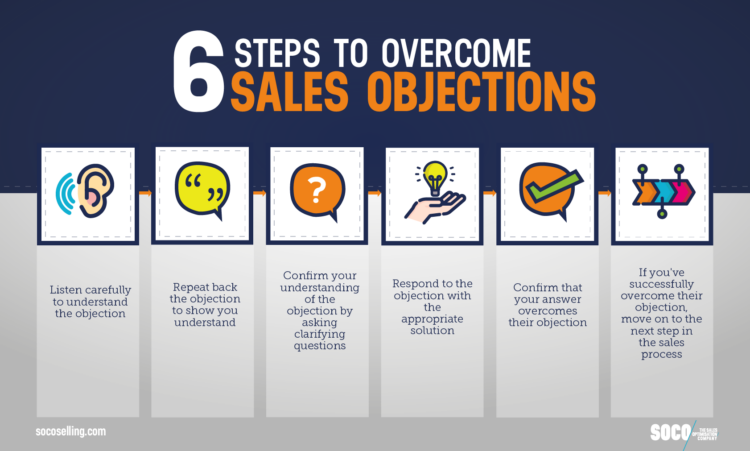
The pattern under all four is the same: acknowledge without flinching, explore for the interest under the concern, then confirm the path forward. Drill the rep to never answer an objection with a rebuttal until they've asked one exploring question first.
Will — lock the commitment. Close with: "On your next three calls, I want you to ask one exploring question before you answer any objection. Don't rebut — explore first. Can you commit to that, and will you flag those three calls in the CRM so I can review them with you Friday?" Get a verbal yes and a date.
Will without a checkpoint is a wish.
The Coaching Plan / Cadence
Reframing is a reflex, and reflexes are built by repetition, not by one good 1:1. Use a 30/60/90 arc with a weekly loop inside it.
- Days 1–30 — install the map. Weekly 1:1 reviewing two recorded objection moments. Goal: the rep can name the buying signal behind the top five objections without hesitating.
- Days 31–60 — build the reflex under pressure. Add live role-play and call-shadowing. Goal: the rep explores before rebutting on 70%+ of objections, measured in Gong call tags.
- Days 61–90 — make it self-correcting. Rep self-scores their own calls before the 1:1 and brings their own worst objection moment. Goal: independence — they coach themselves.
The weekly engine inside that arc is a tight observe-to-measure loop. Run it every week without skipping the measure step — that's where most managers quit.
Drills & Role-Play
- The objection-to-signal flashcards. List your 10 most common objections. The rep has five seconds per card to say the buying signal it represents and the exploring question they'd ask. Run it at the start of every team meeting until it's automatic.
- No-rebuttal role-play. You play the buyer and throw an objection. The rep is *banned* from answering — they may only ask exploring questions. This breaks the rebuttal reflex and forces curiosity. Most reps find this brutally hard the first time, which is the point.
- Call-review scorecard. Score recorded calls on one axis only: *did the rep explore before answering?* Tag every objection moment in Gong as "explored" or "rebutted" and review the ratio weekly. A simple binary scorecard beats a 12-criteria rubric nobody fills out.
- Steal-the-line clinic. In a team session, everyone brings the best real exploring question they used that week. The team votes the top three into a shared Salesforce snippet library. This makes peers, not just the manager, the coaches.
What to Measure
Don't wait for quota to tell you if the coaching worked — quota is a lagging indicator that moves a quarter too late. Track leading indicators:
- Explore-first rate. Percentage of objections where the rep asks a question before rebutting (from Gong/Chorus call tags). The cleanest behavior-change metric.
- Objection-to-next-step conversion. How often an objection turns into a scheduled next step instead of a stall. This proves the reframe is moving deals, not just sounding good.
- Stage-two-to-three progression. Reframing should reduce deals that die at the first objection. Watch the conversion rate at the stage where objections cluster in Salesforce or Clari.
- Talk-to-listen ratio at objection moments. A rep who's exploring is listening more. A drop in talk ratio right after an objection is a green flag.
- Self-scoring accuracy. By day 60, the rep's self-assessment should match yours. When it does, the skill is internalized.
Common Mistakes Managers Make
- Coaching the rebuttal, not the mindset. Handing reps a clever comeback for "it's too expensive" teaches them to win arguments, not read buyers. Coach the belief that objection equals engagement first; the language follows.
- Rescuing the rep on live calls. Jumping in to handle the objection yourself robs the rep of the rep. Let them stumble, then debrief.
- Coaching to the deal, not the skill. "Here's what to say to *this* buyer" closes one deal. "Here's how to hear any objection" closes the next fifty. Always extract the transferable skill.
- No follow-through. A great 1:1 with no Friday checkpoint evaporates by Wednesday. The measure step is the coaching.
- Treating every objection as winnable. Sometimes "no budget" means no budget. Coaching a rep to reframe a terminal objection just teaches them to ignore disqualifying signals. Be honest about when to walk.
- Coaching everyone the same. A skill-gap rep needs the map; a will-gap rep needs confidence reps. Diagnose first.
FAQ
How is reframing an objection different from just overcoming it? Overcoming treats the objection as an enemy to defeat — you rebut, you win, the buyer feels cornered. Reframing treats it as information — you explore the concern, find the interest underneath, and use it to advance.
Overcoming closes one deal by force; reframing builds a rep who reads buyers for a career.
What if the objection is genuinely a dealbreaker? Then it's not a coaching opportunity, it's a disqualification. Coach reps to explore *first* precisely so they can tell the difference between a soft stall and a hard wall. If exploring confirms there's no budget, authority, or fit, the right move is to disqualify cleanly — not to reframe a dead deal back to life.
How do I keep reps from sounding scripted when they explore? Drill the *intent*, not the exact words. The objection-to-signal map gives them the pattern — acknowledge, explore, confirm — but each rep should phrase it in their own voice. Role-play until the curiosity is real; buyers can hear a memorized line, but they can't hear genuine curiosity as scripted.
Can AI call tools actually coach this? Partly. Gong and Chorus can flag whether a rep explored or rebutted and surface the objection moments, which makes your 1:1 prep ten times faster in 2027. But the tool can't install belief or build a relationship. Use AI to find the moments; do the coaching yourself.
How long until I see a behavior change? Expect the explore-first reflex to start showing in call tags within two to three weeks of consistent weekly coaching, and to stabilize by day 60. If there's no movement after a month of real reps, you likely have a will problem masquerading as a skill problem — change the coaching approach.
Should I coach objection reframing to brand-new reps or wait? Teach the mindset day one, the nuanced map later. A new SDR should believe objections are good news before they ever pick up the phone. The detailed signal-decoding comes once they've heard enough real objections to recognize the patterns.
Bottom Line
The one move that matters is changing what the rep *believes* an objection is. Once a rep hears an objection as a buying signal — a buyer doing the work of getting to yes out loud — the exploring questions come naturally and the deals stop dying at the first "but." Coach the mindset with the objection-to-signal map, drill the acknowledge-explore-confirm reflex with no-rebuttal role-play, and measure explore-first rate every single week.
Sources
- Gong Labs: What Top Closers Do Differently With Objections
- HBR: The Right Way to Handle Sales Objections
- RAIN Group: How to Overcome Sales Objections
- Sandler: Handling Objections With the LAER Model
- Sales Hacker: A Framework for Handling Any Sales Objection
- Challenger / Gartner: Reframing the Customer's Thinking
- Winning by Design: Coaching the Sales Conversation
- Salesforce: How to Handle Sales Objections
*Sales coaching for objection reframing — how to coach reps to turn objections into buying signals, sales manager coaching guide, objection-to-signal map, rep coaching framework, and an objection-handling coaching playbook for 2027.*