
How do you create coaching playbooks for common rep gaps in 2027?
 Curated byKory White · Fractional CRO · Maryland
 PULSEKNOWLEDGE LIBRARY
Quality
Certified

Build a coaching playbook for each recurring rep gap the way you'd build a sales play: name the gap, diagnose whether it's skill, will, knowledge, or system, write a verbatim GROW-model script, attach one specific drill, and set a measurable bar. Start with the three common gaps every team has — discovery, closing, objections — and create one reusable one-pager per gap so any manager on the RevOps org chart can run it.
What It Is and Why It Matters
A coaching playbook is not a training deck. It's a one-page, repeatable operating procedure that tells a frontline manager exactly what to do the moment a specific, named rep gap shows up — before, during, and after the 1:1. Most sales organizations coach reactively: a manager notices a rep is losing deals, sits them down, and improvises a pep talk based on whatever the manager remembers from their own selling days. That approach is slow to scale, inconsistent across managers, and impossible to audit. A playbook fixes all three problems by turning "coaching" from an art performed by a gifted few managers into a process any manager can execute.
The reason this matters structurally is that rep gaps repeat. The same five or six failure patterns — weak discovery, hesitant closing, fumbled objections, thin prospecting, sandbagged forecasts — show up on nearly every team, quarter after quarter, rep after rep. Building a fresh coaching approach every time a manager notices one of these is enormous wasted effort. RevOps exists partly to industrialize exactly this kind of recurring motion: capture the pattern once, codify it into an asset, and let every manager reuse it instead of reinventing it.

A playbook also does something a spontaneous coaching conversation can't: it forces diagnosis before treatment. Two reps can show the identical symptom — "can't close" — for opposite reasons. One has the skill but is afraid to ask; one has the confidence but skips the process steps that make asking possible. A playbook that jumps straight to a script fails half the time because it guesses the wrong root cause. The playbook's real value is the branching diagnosis logic that sits in front of the script, routing a manager to the coaching language that actually fits what's broken. Skip that step and coaching becomes noise — the manager talks, the rep nods, and the behavior doesn't change on the next call.
Finally, a playbook makes coaching measurable. Without a named leading indicator attached to each gap, "the rep is coachable now" is an opinion. With one — percent of calls with a documented economic buyer, a written mutual action plan, a trial close attempted — it's a number a manager can track from one week to the next, long before it shows up in the quota number that lags by a full sales cycle.
The Step-by-Step Process
Creating a coaching playbook for a given gap follows six repeatable steps, and the same sequence works whether the gap is discovery, closing, objections, prospecting, or forecast accuracy.

Step 1 — Name the trigger. Write the exact observable symptom that tells a manager "pull this playbook now." Vague triggers ("rep seems weak at closing") produce inconsistent use. Specific triggers ("rep lost 3 deals at the final stage this month" or "rep skipped a discovery question on 2 of the last 5 recorded calls") are unambiguous enough that any manager, not just the one who wrote the playbook, recognizes the moment to act.
Step 2 — Build the diagnosis tree. Draft 3-4 yes/no questions that route the manager to one of four root causes: skill (they don't know how), will (they don't want to, usually fear-driven), knowledge (they don't know what "good" looks like), or system (territory, comp, lead quality, or tooling is actually broken). Skip this step and every playbook degrades into generic advice that lands on the wrong half of the reps it's used on.

Step 3 — Script the conversation. Write 5-7 lines of verbatim coaching language mapped to the GROW model — Goal, Reality, Options, Will. The manager asks; the rep does the thinking. A script that reads like a lecture is a training deck wearing a playbook's clothes.
Step 4 — Attach one drill. Pick a single, specific, repeatable rep — not a menu of options. "Ask for the close ten different ways in five minutes" beats "practice closing more." One drill, run consistently, beats three drills run once.

Step 5 — Set the cadence. Wrap the drill in a fixed 2-week loop with a defined number of repetitions per week, nested inside the standing weekly 1:1 so it never needs a separate meeting.
Step 6 — Define the measurable bar. Name one leading indicator with a specific threshold — "asks a trial close in 4 of 5 discovery calls for two consecutive weeks" — so both manager and rep know exactly when the gap is closed and it's time to move to the next one.
Once the six steps produce a page, that page becomes reusable across every manager and every rep who shows the same trigger — that's the entire point of turning coaching into a playbooks system instead of a one-off conversation.

Costs, Timelines, and Typical Ranges
Building the first playbook takes a manager or enablement lead roughly 2-4 hours: an hour to pull and review 3-5 relevant recorded calls (from Gong, Chorus, or whatever conversation-intelligence tool the org runs), an hour to draft the diagnosis tree and script, and 1-2 hours to test it live in a real 1:1 and revise the language that didn't land. After the first playbook, each additional one takes less time — 1-2 hours — because the five-zone template (trigger, diagnosis, script, drill, bar) is already proven and just needs new content.
A realistic build-out timeline for the first three common playbooks (discovery, closing, objections) is one to two weeks of part-time effort, run in parallel with normal management duties rather than as a dedicated project. Trying to build all five or six gap playbooks in one sprint is a common overreach; teams that do this tend to abandon half of them unused because no manager has tested the language in a live conversation yet.

The coaching cadence itself runs on a fixed 2-week cycle per gap: Week 1 is diagnosis and the first live application of the script and drill; Week 2 is observation and measurement against the bar. Zoomed out to a quarter, a practical 30/60/90 shape is: days 1-30 close the single most expensive gap on the team, days 31-60 stabilize that behavior while introducing the second gap, days 61-90 verify the first behavior holds without the manager prompting it while the second gap's cadence runs its course. A manager should never carry more than two active gaps per rep at once — beyond that, neither the rep nor the manager can hold the drill cadence, and nothing sticks.
On the drill side, three repetitions per week for two weeks (six total reps) is the typical minimum dose before a new behavior starts showing up unprompted on live calls; fewer than that and the behavior reverts as soon as coaching attention moves elsewhere. Refresh cycles — pulling new example calls into an existing playbook — cost far less than building from scratch, typically 30-60 minutes per playbook per quarter, and should be budgeted as a standing quarterly task rather than left to happen "whenever."
Where Teams Get It Wrong
Coaching the deal instead of the skill. A manager who jumps in to save one specific Acme opportunity in a 1:1 teaches the rep nothing reusable — the next deal with the same gap fails the same way. The playbook exists precisely to redirect attention from the single deal to the underlying, repeatable skill gap losing ten deals a quarter.
Rescuing the rep on the call. Taking over a call and closing it personally feels productive in the moment and builds zero capability in the rep. Let the rep run the call, then debrief against the playbook afterward — capability only grows when the rep does the hard part.
Skipping diagnosis and going straight to the script. This is the single most common failure. A manager sees "can't close" and runs the closing script on every rep who shows that symptom, even the ones whose real problem is a will/confidence gap the closing script doesn't touch. Running the wrong playbook, even flawlessly, fails.

No follow-through observation point. A great coaching conversation with no scheduled re-check is a conversation, not coaching. Every playbook cycle needs its Week 2 observation locked on the calendar the moment Week 1 ends, or the loop silently dies.
Applying one template to every rep identically. A top performer and a struggling rep on the same gap need different intensity and different examples. Forcing a single generic playbook onto both wastes the manager's best reps' time and under-serves the struggling ones.

Confusing a will problem for a skill problem. More training, more role-play, and more scripts do not fix a rep who is disengaged, poorly compensated for the behavior you want, or working a broken territory. Misdiagnosing this burns weeks of coaching cycles on a rep who needed a direct accountability conversation — or a performance plan — instead.
Letting the playbook rot in a drive folder. A playbook that's built once and never opened again is decoration. It only earns its keep when it's the literal agenda document open on the manager's screen during the actual 1:1, every time the trigger fires.
Decision Framework: When to Choose What
Not every gap deserves the same playbook, and not every symptom is a coaching problem at all. The routing decision starts the same place the individual playbook's diagnosis tree does — skill, will, knowledge, or system — but at the team level a manager also has to decide whether to build a new playbook, reuse an existing one, or escalate outside of coaching entirely.
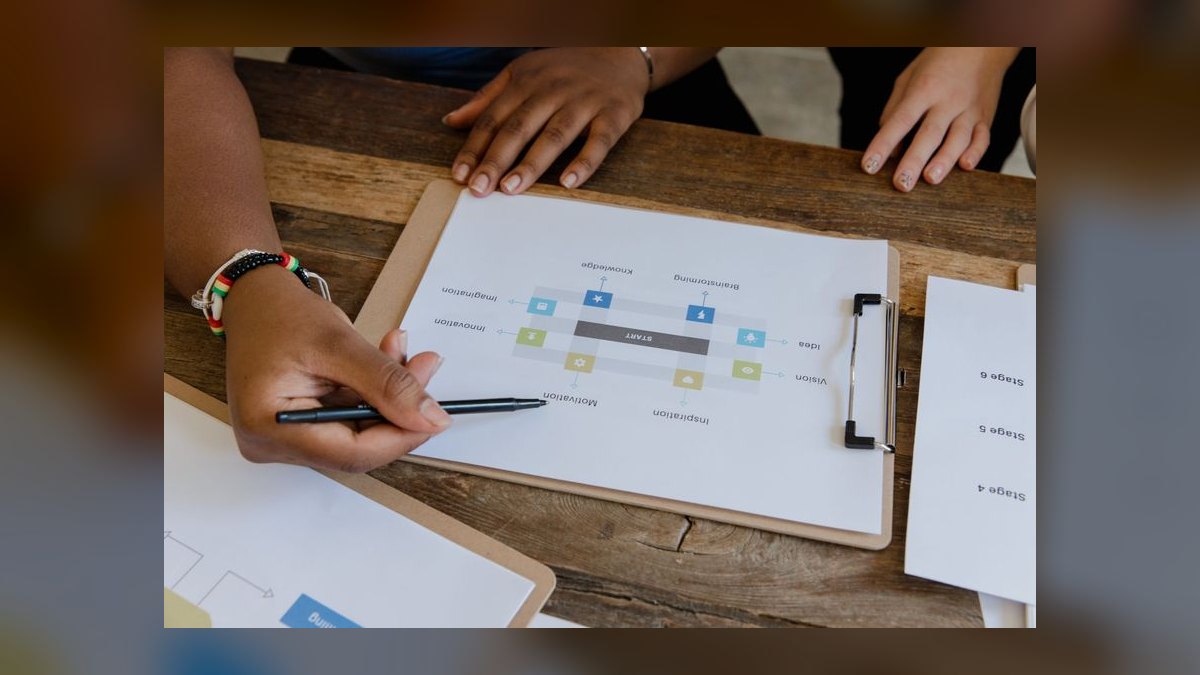
The framework resolves a question managers ask constantly: should I write a brand-new playbook for what I'm seeing, or is this rep's problem actually unique to them? If two or more reps trip the same trigger, it's worth the 2-4 hours to create a reusable asset. If it's genuinely a single rep's idiosyncratic issue, informal coaching without a full playbook is the right-sized response — building a playbook nobody else will ever use is wasted effort in the opposite direction from the "never opened it" failure above.
The same framework also protects against the most expensive misdiagnosis: treating a system problem as a coaching problem. If the root cause traces to comp design, territory assignment, or lead quality, no amount of GROW-model scripting or drilling will move the metric, because the rep isn't the broken part. That branch routes out of coaching entirely and into RevOps process work — a different team, a different fix, and a signal the manager should stop running the drill cadence immediately rather than burning another two-week cycle on a rep who can't win regardless of skill.
Related questions
What's the difference between a coaching playbook and sales training?
Training broadcasts a concept to a room and hopes it transfers. A coaching playbook closes one named gap for one named rep using their own calls, a verbatim script, a specific drill, and a scheduled re-check — targeted and looped instead of broadcast once.
How many gaps can one manager coach at a time per rep?
No more than two per rep. Beyond that, neither the drill cadence nor the manager's attention holds, and the rep makes measurable progress on none of them.
Should every manager on the team use identical playbooks?
Yes for the five-zone structure and diagnosis logic — that consistency is the point. No for the example calls and the measurable bar's exact threshold, which each manager should localize to their team's segment and deal size.
When should a coaching playbook be retired?
When its leading indicator stops moving despite two full drill cycles, or when the underlying gap shifts — for example, a new pricing model moves the team's biggest weakness from discovery to negotiation. Rebuild rather than keep running a playbook against last quarter's problem.
Can a playbook fix a rep who technically can do the behavior but won't?
No. That's a will or accountability issue, not a coaching issue. The right response is a direct conversation and a deadline, not another role-play cycle.
FAQ
How many coaching playbooks should I build first? Start with three: discovery, closing, and objection handling. These cover the gaps present on nearly every B2B sales team. Add prospecting and forecast-accuracy playbooks only once the first three are actually in regular use — building six at once produces a library nobody runs.
What exactly goes on one playbook page? Five fixed zones: the trigger (the exact symptom that opens it), the diagnosis tree (skill/will/knowledge/system), the verbatim GROW script, a single drill, and a measurable bar. Keeping it to one page is what lets a manager run it live during a 1:1 instead of studying it beforehand.
How do I stop playbooks from going stale? Refresh the example calls quarterly using recordings pulled from your conversation-intelligence tool, and tie every playbook to its leading indicator — if the metric stops moving for two consecutive cycles, rewrite the playbook rather than keep running it unchanged.
Do I need Gong or Chorus to build a coaching playbook? No — a manual review of recorded or shadowed calls works, but a conversation-intelligence platform makes step one (pulling the bottom-outcome calls and spotting the repeated failure pattern) dramatically faster and lets you cite the rep's own actual language instead of a generic example.
How is a will gap coached differently from a skill gap? A skill gap gets teaching plus repetition drills, because the rep genuinely doesn't know the move yet. A will gap gets a confidence and accountability conversation plus tighter, more frequent follow-up, because the rep already knows the move and is avoiding it — more instruction doesn't touch the actual blocker.
What's the single best signal that a playbook actually worked? The new behavior shows up on the rep's next recorded call without the manager prompting it. That's the binary test that separates a playbook that produced real capability from one that produced a single good conversation.
Sources
- Gong Labs — Sales Coaching Research
- Harvard Business Review — The Best Salespeople Do What the Best Doctors Do
- RAIN Group — Sales Coaching Guide
- Sales Hacker — How to Build a Sales Coaching Program
- Sandler — Sales Coaching Best Practices
- Winning by Design — Coaching Frameworks
- Salesforce Blog — Sales Coaching Techniques
Related on PULSE
- Top 10 Discovery Questions to Uncover a Rep's Pipeline Gaps
- Top 10 questions to identify gaps in a rep's product knowledge
- What is the most common mistake you see in your own demo recordings?
- What is the most common objection you hear from decision-makers vs. end-users?
- How do you coach a rep who struggles to create urgency?
- How do you coach a rep to create urgency without fake deadlines?
This page will be disappearing soon. Save it to your device for $1 — or read it free while it is here.
@Kory-White- · if Venmo asks, the last 4 of my number are 2012
This page is gone.
This one is off the shelf now. $1 keeps it on your phone for good — the whole page, pictures and diagrams included.
 sales-coachingHow do you coach an SMB rep to move fast without cutting corners in 2027?
 sales-coachingHow do you coach a CSM to spot expansion opportunities in 2026?
 sales-coachingHow do you coach a rep with great results but low activity in 2027?
 sales-coachingHow do you coach an inside sales rep to sound consultative on the phone in 2026?
 sales-coachingHow do you coach reps on their talk-to-listen ratio in 2026?
 sales-coachingHow do you coach a mid-market rep stepping up from SMB deals in 2027?
 sales-coachingHow do you certify a new rep is ready to sell on their own in 2026?
 sales-coachingHow do you coach reps you never see in person in 2027?
 sales-coachingHow do you coach reps to use AI for outreach without sounding robotic in 2026?
 sales-coachingHow do you spot a struggling remote rep before it's too late in 2026?