 Pulse Reviews and Analysis
How do you give async coaching feedback that lands?
 Curated by Kory White · Fractional CRO, CRO Syndicate
Direct Answer
Async coaching feedback lands when it is specific, observable, and asks for a response — not a one-way verdict you fire into a Slack thread. The core move: pair a time-stamped call clip (Gong or a Loom screen-record) with a single named behavior to change, a verbatim example of what better sounds like, and one question that pulls the rep into the fix.
Keep it to one focus per message, and close the loop in the next 1:1. For 2027 hybrid and AI-assisted teams, async is how you scale coaching across time zones — but only if the rep feels seen, not graded. Treat every Loom or Gong comment as the start of a conversation, not the end of one.
Why This Happens — Diagnose Before You Coach
Most async feedback fails for one of four reasons, and you have to name the right one before you record a single second. The behavior you see — a rep who ignores your comments, gets defensive, or nods and changes nothing — is a symptom, not the cause.
- Skill gap: the rep does not yet know *how* to do the thing (handle a CFO objection, run multi-thread discovery). Async clips and a model example fix this fast.
- Will gap: the rep can do it but is not motivated or is checked out. A Loom comment will not move this; you need a live conversation about goals and consequences.
- Knowledge gap: the rep lacks product, market, or process context. Send a resource and a quick walkthrough, not coaching.
- System gap: the territory, comp plan, lead quality, or your own messy CRM is the real blocker. No amount of feedback fixes a broken pipeline.
The trap with async feedback specifically: it strips tone and body language, so a neutral note reads as criticism, and a skill gap gets misdiagnosed as a will problem. Diagnose first, then choose the channel.
The Coaching Conversation — Verbatim Async Scripts
Async does not mean impersonal. Use the GROW model (Goal, Reality, Options, Will) even when the "conversation" is a 90-second Loom or a string of Gong comments. The rule: every async note ends with a question that requires the rep to think and reply.
Loom call-review script (90 seconds, screen-recording the call):
"Hey Mara — watched your AcmeCo discovery from Tuesday, nice job building rapport in the open. I want to coach one thing: at 14:20, the prospect said 'we're also looking at two other vendors' and you moved straight to pricing. That's a buying-committee signal we left on the table.
Here's what I'd try next time: *'Two others — that's smart, due diligence matters. Who else is weighing in on the decision, and what's most important to each of them?'* That one question maps the committee for us. Can you tell me how you'd phrase that in your own words for the BetaCorp call Thursday? Reply here and I'll react before your call."
Gong comment script (time-stamped, threaded):
"@Mara — flagging 22:05. Strong objection handle here — you stayed calm and asked a clarifying question instead of defending. Do more of this. One tweak: you answered the price objection with a discount hint.
Try anchoring on value first: *'Before we talk number, can I make sure the scope is right? If we solved X, what's that worth to you this quarter?'* What made you reach for the discount in the moment?"
The structure inside both: Goal (the behavior to change), Reality (the exact time-stamped moment, quoted), Options (a verbatim model line), Will (a question that asks the rep to commit). Notice it is clear (one behavior, one timestamp), actionable (exact words to use), and not cold (it opens with what worked and uses the rep's name).
That balance is the whole game.
Reaction-comment script for when a rep replies with their own attempt:
"That phrasing is better than mine — steal it. Run it Thursday and screen-record so I can see it land. Proud of how fast you turned this around."
The Coaching Plan / Cadence
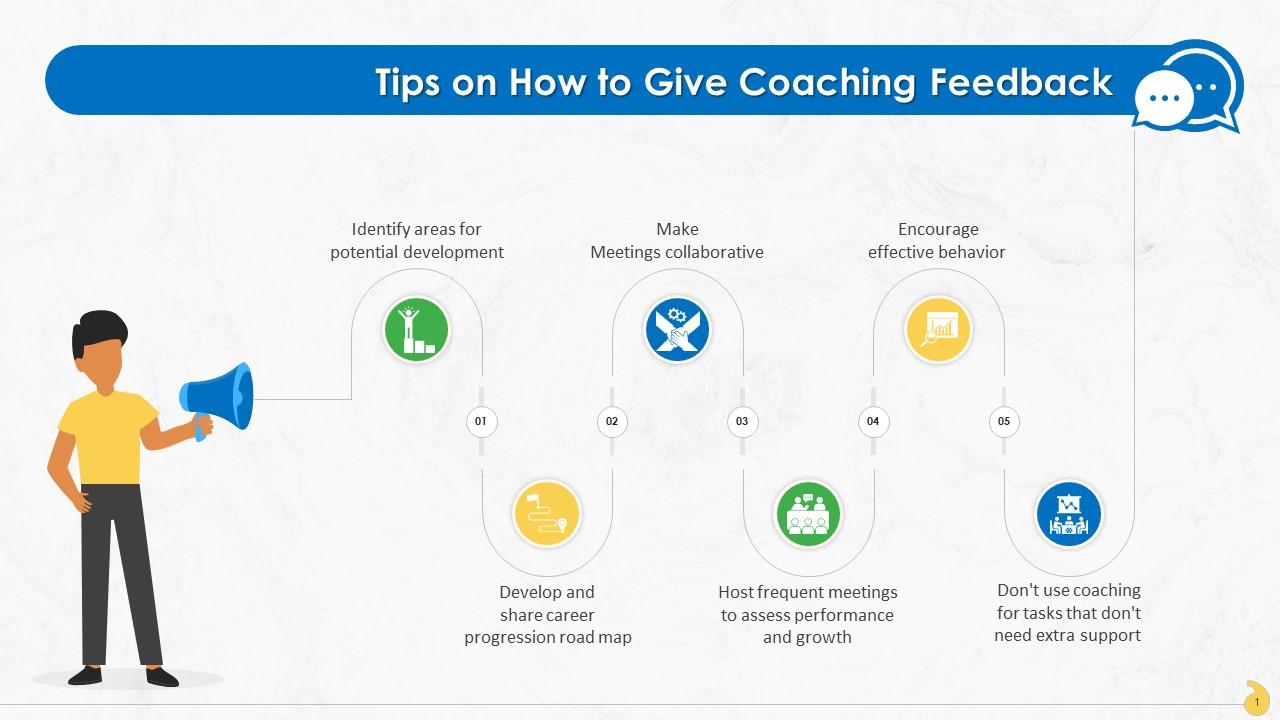
One Loom does not change a habit. Async coaching works as a loop, anchored by a weekly rhythm and reinforced live. A workable cadence for a hybrid team:
- Monday: rep submits one self-flagged call clip ("the moment I want feedback on").
- Tuesday–Wednesday: manager sends one async clip per rep — one focus only.
- Thursday: rep applies the fix on a live call, screen-records it.
- Friday 1:1 (live): 10 minutes reviewing whether the behavior moved, set next week's focus.
Run this as a 30/60/90 build: in the first 30 days you set the single coaching focus and prove the rep can hear async feedback without going defensive; by 60 days the rep is self-flagging their own clips; by 90 days peer review is happening in the Gong thread and you are coaching the *pattern* across calls, not one call.
Drills & Role-Play
Async feedback only sticks if the rep gets reps. Build these into the cadence:
- The "model vs. Mine" drill: the rep records themselves running the new line, then watches your model clip side by side and notes three differences. Self-comparison beats being told.
- Comment-thread role-play: post a tough objection in a shared Gong or Slack thread; reps drop their async-style responses; you react to the best one and explain why.
- The 60-second redo: after async feedback, the rep re-records the same 60-second segment doing it the new way. Low effort, high repetition.
- Peer call-swap: two reps trade one call each and leave clear, actionable, not cold async comments using your script template — this trains coaching *and* self-awareness.
- Scorecard pass: the rep grades their own call on a 5-line scorecard before you do, then you reconcile in the comments. Calibration is the skill.
What to Measure
Judge the coaching by leading indicators of behavior change, not next quarter's quota. Track:
- Reply rate on async feedback — if reps are not responding to your Looms and comments, the feedback is landing as a verdict, not a conversation. This is your first health metric.
- Behavior-adoption rate — in the next 5 calls, did the coached behavior appear? Gong trackers (or a manual tally) make this countable.
- Time-to-apply — days between feedback and first live attempt. Shrinking this means trust is building.
- Self-flag rate — how often reps proactively submit clips for review. Rising = ownership.
- Conversion on the coached stage — if you coached discovery, watch stage-2-to-3 progression, not raw win rate.
- Defensiveness signal — qualitative, but real: are replies curious ("what would you have said?") or defensive ("the prospect was just difficult")?
Win rate and ramp time are the lagging proof. The leading metrics tell you weeks earlier whether the async loop is working.
Common Mistakes Managers Make
- Dumping a verdict, not opening a dialogue. A Loom that ends with "do better next time" is a grade. End every clip with a question.
- Stacking five fixes into one message. The rep freezes and changes nothing. One focus per async note — always.
- Leading with the negative. Async strips tone, so cold-open criticism reads as an attack. Anchor on one specific thing that worked first.
- No live close-the-loop. Async without a follow-up 1:1 lets the rep ghost the feedback. The Friday live touch is non-negotiable.
- Coaching the deal, not the skill. "Send them a case study" saves one deal; "here's how to surface the economic buyer" builds a rep.
- Coaching everyone the same way. Your top rep wants a Gong comment; your nervous new SDR needs a warm Loom and a live debrief. Match the channel to the person.
FAQ
Is async coaching as effective as live coaching? For skill gaps and reinforcement, often more so — the rep can rewatch the clip, the model line, and your timestamp on their own schedule, and it scales across time zones. For will gaps, motivation, and hard conversations, go live.
Use async for volume and pattern-spotting; reserve live time for depth and accountability.
How long should a Loom coaching clip be? Aim for 60–120 seconds, one focus. If you need more than two minutes, the message has too many fixes or it should be a live conversation. Brevity forces specificity.
How do I keep async feedback from feeling cold or critical? Use the rep's name, open with one specific thing that worked, quote the exact moment with a timestamp, give a verbatim model line, and end with a question. Clear, actionable, not cold is the standard — show your face on the Loom when you can; tone carries.
What if the rep ignores my async feedback? That is data, not disrespect. It usually signals a will or trust gap, not laziness. Move to a live 1:1, ask what is getting in the way of applying it, and check that you are not stacking too many fixes or leading with criticism.
Should I record over the rep's actual call (Gong/Chorus) or screen-record separately in Loom? Both work. Gong or Chorus comments are best for precise, time-stamped tweaks inside one call. A Loom is better when you want to show your face, model a line on screen, or coach across multiple calls.
Many managers use Gong comments daily and a weekly Loom for the bigger pattern.
How do I scale this across a team of ten without burning out? Have reps self-flag one clip each per week so you coach the moment that matters most, cap yourself at one async note per rep per week, and let peer review carry some load through shared Gong threads. Quality of one focus beats quantity.
Bottom Line
Async coaching that lands is a conversation, not a verdict: one specific behavior, one quoted timestamp, one verbatim model line, and one question that pulls the rep into the fix — then a live 1:1 to close the loop. Keep it clear, actionable, and not cold, and your Looms and Gong comments will change habits at a scale live coaching never could.
Sources
- Gong Labs — What the best sales coaches do differently
- Harvard Business Review — The Best Sales Reps Do What Others Won't
- RAIN Group — Sales Coaching: The Ultimate Guide
- Sales Hacker — How to Coach Salespeople with Call Recordings
- Winning by Design — Coaching frameworks for revenue teams
- Loom — How to give async video feedback that gets results
- Sandler — The GROW coaching model for sales managers
*Sales coaching for async feedback — how to give async coaching feedback that lands, sales manager coaching guide, Loom and Gong call-review coaching, rep coaching framework, and an async coaching playbook for 2027.*