


Should I open or buy a 50 Floor franchise in 2027?
Quality
Certified

Only pursue a 50 Floor franchise in 2027 if you first confirm the company is actually selling franchises — it has operated as a company-owned, shop-at-home flooring business since 2010. If franchising is offered, expect roughly $200,000 to $500,000 all-in, and win only if you are strong at lead generation and in-home closing.
The outcome you should expect
The honest expected outcome is not "buy a brand, collect a check." The first and most likely outcome is that you spend three to six weeks in due diligence and discover that 50 Floor is not offering franchises in your territory at all. That is not a wasted exercise — it is the cheapest possible result, because it costs you time instead of $250,000. 50 Floor has run as a company-operated, shop-at-home flooring retailer since its founding in 2010, with sales consultants driving samples to homeowners rather than paying rent on showrooms. A company-operated history means there may be no Franchise Disclosure Document to read, no Item 19 financial performance representation to model against, and no existing franchisee base to interview. If a broker or a listing site tells you otherwise, treat that as a claim to verify directly with the company, not a fact.
If franchising *is* available and you sign, the outcome curve looks like this. Months one through four are pure outflow: franchise fee, vans, sample kits, licensing, insurance, and a marketing spend that starts before a single lead arrives. Months four through twelve are the proving ground, where you learn whether your cost per booked in-home appointment supports your average ticket. Months twelve through twenty-four are where most owners either reach a repeatable lead-to-install rhythm or quietly discover they bought a demanding full-time sales job with a royalty attached to it. Flooring tickets are large — commonly $3,000 to $20,000 per home for a multi-room job — which cuts both ways. Large tickets mean a single close moves your month materially. They also mean a single bad month of lead flow leaves a hole that is very hard to fill with volume, because you cannot do fifty small jobs to make up for four missed big ones.
The realistic mature-unit picture, if you execute well and your market cooperates, is annual gross revenue in the $1.5M to $5M range with owner earnings somewhere between $150,000 and $500,000. That spread is enormous, and the spread *is* the finding. Franchise marketing tends to quote the top of that band. The operators who land there are not the ones who bought the best territory; they are the ones who built a lead engine that produces qualified in-home appointments at a cost their gross margin can absorb, and who hired or personally are a consultant who closes at the kitchen table. Everything else in this business — samples, vans, warehouse, software — is logistics in service of those two functions.
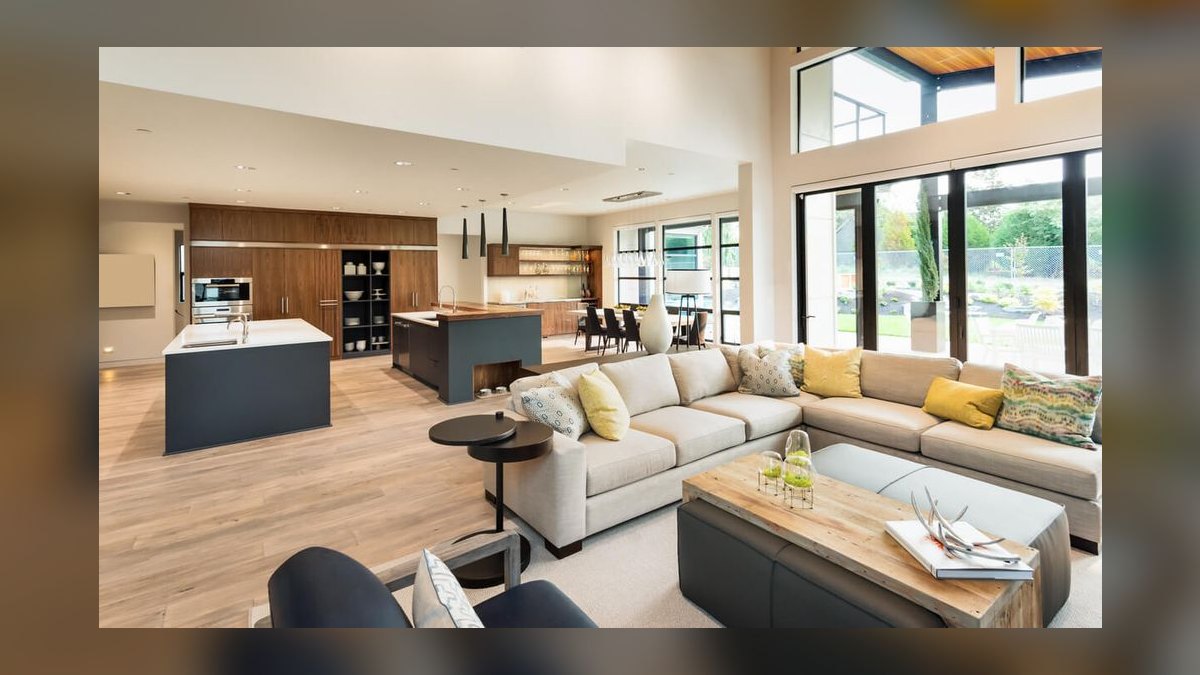
The failure outcome is equally predictable and worth naming plainly: you burn $60,000 to $120,000 in year-one marketing, book fewer appointments than your model assumed, close a lower share of them than you hoped, run short on working capital because you paid installers before customers paid you, and cut marketing to conserve cash. Cutting marketing reduces leads, which reduces revenue, which forces further cuts. That spiral is the single most common way a lead-dependent home-services franchise dies, and it usually happens between month eight and month eighteen.
What drives that outcome
Four variables determine whether a shop-at-home flooring unit works, and they compound rather than add. Cost per qualified lead, appointment set rate, in-home close rate, and average ticket multiply together into revenue. A twenty percent degradation in each of the four does not cost you twenty percent — it cuts your revenue by roughly sixty percent. That is why owners who "are doing everything a little worse than plan" collapse so suddenly.
Start with cost per lead. In a mid-sized metro you should budget several thousand dollars per month across paid search, paid social, and local SEO to produce a usable flow of homeowner inquiries. Flooring is a high-intent, high-competition keyword set — you are bidding against national retailers, other shop-at-home brands, and every local flooring company with a Google Business Profile. A national marketing fund contributes brand-level lift, but it does not win the local auction on your behalf. You do.

Then appointment set rate: not every inquiry agrees to let a stranger into their living room for ninety minutes. Speed of response is the dominant lever here — inquiries contacted within minutes convert to booked appointments at dramatically higher rates than those called back the next day. This is an operational discipline, not a marketing one, and it is where a disciplined owner beats a better-funded competitor.
Then close rate. The in-home flooring sale is consultative and objection-heavy: price versus the big-box quote, installation timeline, whether the subfloor needs work, whether the customer should wait for a sale. A consultant who handles those in the room closes; one who leaves a quote behind and promises to follow up mostly does not.
Then average ticket, which is a function of the market you chose. Suburban homeowner markets with older housing stock and meaningful remodeling activity produce larger multi-room jobs. Dense rental markets produce single-room carpet replacements at a fraction of the ticket, against the same cost per lead.
Underneath all four sits gross margin. On a typical job, materials consume roughly a third to forty percent of revenue and installation labor another twenty to thirty percent. Add a royalty in the mid-to-high single digits of gross plus a national marketing fee of roughly two to three percent, and the money left to cover your local marketing, vehicles, warehouse, insurance, software, and your own pay is thinner than the top-line number suggests.
The feedback loop at the bottom of that diagram is the whole business. Your contribution margin from this month's installs has to fund next month's marketing. When it does not, the only lever most owners reach for is the ad budget, and pulling that lever guarantees a worse next month. Working capital exists specifically to keep you from ever pulling it.
Benchmarks and realistic ranges

Treat every number below as a planning range to be replaced by the actual Franchise Disclosure Document if one exists. If no FDD exists, these are the ranges you would use to model an independent shop-at-home flooring operation, which is the realistic alternative.
Total investment: roughly $200,000 to $500,000. The wide band reflects fleet size and market cost more than anything else. A single-van launch in a modest market sits near the bottom; a two- or three-van launch in a competitive metro with heavier initial advertising sits near the top.
Franchise fee: commonly $40,000 to $50,000 for comparable home-services concepts, when a fee is charged at all. Verify the actual figure — never model a fee you have not seen in writing.
Vehicles and sample inventory: $40,000 to $120,000. Each mobile showroom needs a wrapped van and a curated sample set covering carpet, hardwood, laminate, luxury vinyl, and tile. Samples are consumables: they get dirty, dated, and discontinued, and refreshing them runs a few thousand dollars per van per year.
Warehouse and office setup: $20,000 to $70,000. You do not need retail frontage, but you need somewhere to stage material, store backup samples, and park vans. Budget monthly rent in the low thousands depending on market.
Initial marketing: $40,000 to $120,000. This is the line most first-time owners under-fund, and it is the line that determines survival. It covers pre-launch brand presence, paid search from day one, a local landing page, and the first several months of lead flow before revenue arrives.
Training, travel, licensing, and insurance: roughly $18,000 to $55,000 combined. Contractor licensing requirements vary by state and sometimes by county; general liability plus commercial auto plus workers' compensation exposure for any employed staff is not optional in a trade where crews work inside customers' homes.
Working capital: $40,000 to $120,000, and lean toward the top. This is the project float, and it deserves its own section below.

Ongoing fees: model a royalty in the range of 6% to 8% of gross revenue plus a national marketing contribution of roughly 2% to 3%. On a $5,000 job that is $400 to $550 off the top before you have paid for a single square foot of material.
Unit economics on a $2.5M year. Materials at roughly 38% is about $950,000. Installation labor at roughly 22% is about $550,000. Local marketing and lead generation at roughly 12% is about $300,000. Royalty plus operating overhead at roughly 16% is about $400,000. That leaves owner earnings in the neighborhood of $300,000 — a genuinely good outcome, and one that requires you to have already solved lead generation, closing, and installer quality simultaneously.
Lead-economics benchmarks to test against your own market. Assume only a portion of inquiries convert to a scheduled in-home appointment, and roughly half of appointments convert to a signed job. Multiply those together and your fully loaded acquisition cost per closed sale lands in the hundreds to low four figures. Against a $5,000 average ticket with a contribution margin near a third, an acquisition cost above about $1,200 per sale erases your margin entirely. Knowing your true number by month three is the difference between adjusting and dying.
Sales consultant productivity. A strong in-home flooring consultant can drive several hundred thousand dollars in annual revenue. Tenure in this role is short — commonly a year to eighteen months — so build recruiting into your permanent operating rhythm rather than treating it as a startup task. A consultant who does not work out costs you far more than their draw, because they consume leads you already paid for.
Risks, edge cases, and failure modes

The availability risk sits above all others. Signing paperwork for a franchise program that is brand-new means you are the pilot. Early franchisees of a formerly company-operated system carry real costs: undeveloped field support, training built for W-2 employees rather than independent owners, supply-chain terms designed around corporate locations, and no cohort of experienced franchisees to call when something breaks. Sometimes early entry buys favorable territory and fee terms that make the risk worth it. Sometimes you are paying full price to beta-test someone else's operations manual. You cannot tell which without reading the FDD and talking to whoever is already in the system.
Project float is the cash-flow killer. Installers expect payment within a week or two of finishing. Customers pay on their own schedule, and financed jobs add further delay. Run ten jobs a month at $5,000 each and you are paying out $15,000 to $20,000 in labor while waiting on $50,000 in receivables. Miss a payroll cycle for your crews and they take the next job from a competitor — installer relationships are built on reliable, fast payment, and the reputation for slow pay travels fast in a small trade community. A working capital reserve is not a cushion in this model; it is a core operating input.
Installation quality is your single largest liability surface. Crews are typically independent contractors, which limits your control over punctuality, cleanliness, and workmanship. A botched install — telegraphing subfloor, cupped hardwood, misaligned tile — means rework at your cost and a review that suppresses lead conversion for months. Property damage inside a customer's home escalates fast: a punctured water line or a scratched staircase turns into a five-figure claim, a deductible, and a premium increase. Mitigations that actually work: maintain a bench of five to ten vetted crews rather than depending on one, inspect a meaningful share of completed jobs personally, hold retainage until inspection, require certificates of insurance from every subcontractor, and resolve complaints within twenty-four hours before they become reviews.

Seasonality is sharper than most new owners plan for. Spring and fall carry demand; deep winter and mid-summer sag. Monthly revenue swinging forty to sixty percent between peak and trough while warehouse rent, van payments, and insurance stay flat is the normal condition, not a bad year. Build a reserve covering several months of fixed costs, and use slow months for installer recruiting, consultant training, and referral relationships with realtors, property managers, and remodelers — the referral channel is the one lead source that does not reset to zero when you pause advertising.
The competitive set is well capitalized. You are competing against national home-improvement retailers with in-home measurement programs, specialty flooring superstores, other shop-at-home brands, and every established local installer with a decade of word-of-mouth. Franchise supply-chain pricing helps but rarely matches big-box buying power. Your defensible position is service: response speed, a consultant who is genuinely knowledgeable, a written installation guarantee, and follow-through when something goes wrong. That is winnable, but it is an operational achievement, not a purchase.
The installer labor market is tightening structurally. The skilled flooring trade skews older and attracts relatively few new entrants. Practically, this means crew capacity — not lead volume — may become your growth ceiling. Owners who plan for this recruit crews continuously, pay promptly and slightly above market, and sometimes invest in training apprentices rather than competing purely on price for a shrinking pool.
Macro conditions in 2027 are unknowable and should be planned for in both directions. Flooring demand tracks home sales, refinancing, and discretionary remodeling. A high-rate environment pushes homeowners toward smaller, defensive projects — single-room carpet or LVP replacement — which lowers your average ticket against unchanged lead costs. A lower-rate environment brings whole-house jobs back, which raises ticket size but demands more working capital to float. Write both scenarios into your model before you sign anything.
The disqualifying profile. Do not buy this if you want a semi-absentee asset, dislike selling, are unwilling to manage subcontractors, or plan to fund it with the minimum capital that technically clears the requirement. The operators who lose money here are almost always under-capitalized, weak at lead generation, or unwilling to be in the field.
A practical rollout plan

Work this as a sequenced ninety-day evaluation followed by a staged launch. Do not compress it, and do not skip step one to get to the fun parts.
Days 1–14 — confirm the thing exists. Contact 50 Floor directly through official channels and ask one question: are you currently awarding franchises, and if so, in which territories and on what terms? Ask for the Franchise Disclosure Document in writing. If there is no FDD, there is no franchise, and every downstream step in this plan should redirect toward evaluating a different brand or an independent build. Treat broker listings and franchise-portal directories as leads to verify, never as confirmation.
Days 15–30 — read the FDD like a skeptic. Item 5 and Item 7 give you fees and the real investment range. Item 19 is the financial performance representation; if it is absent, the system is telling you it will not stand behind any earnings claim, and you should model conservatively. Item 20 shows unit counts, openings, closures, and transfers — closures and transfers are the honest signal. Item 6 covers ongoing fees. Item 12 defines your territory and whether it is protected. Have a franchise attorney read it; the cost is a rounding error against a quarter-million-dollar commitment.
Days 31–50 — validate with people who are actually operating. Call every franchisee in Item 20, including the ones who left. Ask specifically: what does a qualified lead cost you, what share of appointments do you close, what is your average ticket, how long did it take to reach positive cash flow, how many crews do you keep, and what would you do differently. If there are no franchisees to call, interview owners of comparable shop-at-home flooring operations instead — the operating physics are the same.

Days 51–70 — validate the territory. Pull housing stock age, owner-occupancy rate, median home value, and remodeling permit activity for the proposed territory. Count the direct competitors already ranking for local flooring searches. Price out the keyword auction. A territory that looks large on a map but is dominated by rentals or already saturated with entrenched local installers is a bad territory regardless of its population.
Days 71–90 — build the financial model and decide. Model three cases: conservative, expected, and strong, each with an explicit monthly cash balance line so you can see the trough. If your worst case runs the balance below zero before month eighteen, you are either under-capitalized or the territory is wrong. Decide on evidence, and be genuinely willing to walk.
Launch phase. Secure contractor licensing and insurance first — these have lead times and block everything. Stand up the lead engine before the van is on the road, because paid search needs weeks to calibrate. Recruit and vet crews in parallel; you want three or more before you sell your first job. Hire or personally own the consultant role, and script the first ten in-home presentations rather than improvising. Instrument everything from day one: source of lead, cost, contact speed, set rate, close rate, ticket, margin. The owner who knows those six numbers by month three can fix a broken funnel. The one who does not will only see the problem when the bank balance shows it, which is far too late to correct cheaply.
Related questions
How is a shop-at-home flooring model different from a showroom flooring store?
You trade rent and foot traffic for vans, samples, and paid lead generation. There is no walk-in demand, so every appointment is bought or referred. Overhead is lower, but marketing becomes your largest controllable expense and your primary competitive battleground.
What if 50 Floor is not franchising when I look?

Evaluate comparable shop-at-home or installation-focused flooring franchises, or build independently. An independent operation skips the franchise fee and royalty but gives up brand recognition, supply-chain pricing, and a training system you would otherwise have to invent yourself.
How much liquid capital do I really need beyond the total investment figure?
Plan on roughly $75,000 to $150,000 liquid on top of financed startup costs, primarily to carry project float and several months of fixed costs through a slow season. Under-capitalization is the most common cause of failure in lead-dependent home-services units.
Can I run this semi-absentee while keeping my current job?
Realistically, no. The model is sales-execution intensive and requires same-day lead response, in-home selling, and active crew management. Owners who treat it as part-time in year one typically see lead waste, slow quality control, and a longer path to positive cash flow.
What single metric should I watch most closely in year one?
Fully loaded customer acquisition cost per closed job, compared against your contribution margin per job. If acquisition cost approaches your margin, no amount of revenue growth produces profit — you are buying jobs at cost.
FAQ
Is 50 Floor actually offering franchises?
50 Floor has operated as a company-owned, shop-at-home flooring business since 2010, so franchise availability is the first thing to verify, not assume. Contact the company directly and ask for a current Franchise Disclosure Document. Franchise-portal listings and broker outreach are not confirmation. If no FDD is produced, there is no franchise to buy, and you should redirect to alternatives.

What total investment should I plan for?
Budget roughly $200,000 to $500,000 all-in, driven mainly by fleet size, market cost, and initial advertising. Verify the actual figure in Item 7 of the FDD if one exists. Where it does not, model the same categories independently: vehicles and samples, warehouse setup, licensing and insurance, training, launch marketing, and working capital.
What ongoing fees should I model?
Model a royalty in the range of 6% to 8% of gross revenue plus a national marketing contribution of roughly 2% to 3%. On a $5,000 job that is $400 to $550 before material costs. Confirm the actual percentages in Item 6 of the FDD — never build a model on assumed fee levels.
Do I need a retail showroom?
No. The shop-at-home model brings carpet, hardwood, laminate, vinyl, and tile samples to the customer's home, which eliminates retail rent. You still need warehouse or garage space to stage material, store backup samples, and park vans, plus the vehicles and sample inventory that replace the showroom's function.
How long until the business is profitable?
Many well-run home-services units reach positive cash flow somewhere between twelve and twenty-four months, but the range is wide and depends almost entirely on lead cost and close rate. Capitalize as though it will take longer than you expect — enough reserve to cover fixed costs and project float through at least one full slow season.
Who actually succeeds in this model?
Operators who are strong at lead generation and in-home consultative selling, who can recruit and hold quality installation crews, and who are adequately capitalized for project float. Suburban homeowner markets with older housing stock and active remodeling suit the model best. Anyone seeking a passive or non-sales business should look elsewhere.
Sources
- https://www.ftc.gov/business-guidance/resources/franchise-rule-compliance-guide — FTC guidance on the Franchise Rule and what a Franchise Disclosure Document must contain.
- https://www.sba.gov/business-guide/plan-your-business/buy-existing-business-or-franchise — SBA guidance on buying a franchise or existing business and financing options.
- https://www.franchise.org/ — International Franchise Association: industry data, franchising standards, and owner resources.
- https://www.franchisebusinessreview.com/ — Independent franchisee satisfaction research and performance benchmarks.
- https://www.entrepreneur.com/franchises — Franchise rankings, investment ranges, and evaluation guidance.
- https://www.bbb.org/ — Better Business Bureau: company profiles, complaint history, and accreditation status.
- https://www.census.gov/construction/nrc/ — U.S. Census Bureau new residential construction data, a leading indicator for flooring and remodeling demand.
- https://www.jchs.harvard.edu/ — Harvard Joint Center for Housing Studies: remodeling market research and homeowner improvement spending trends.
- https://www.bls.gov/ooh/construction-and-extraction/flooring-installers-and-tile-and-stone-setters.htm — Bureau of Labor Statistics occupational outlook for flooring installers.
Related on PULSE
- Should I open or buy a Floor Coverings International franchise in 2027?
- How Many Salespeople Should I Schedule on My Auto Dealership Floor Each Day?
- How Many Salespeople Should I Schedule Each Day on My Furniture Store Floor?
- Should I open or buy a The Junkluggers franchise in 2027?
- Should I open or buy a Pak Mail franchise in 2027?
- Should I open or buy a PostNet franchise in 2027?
This page will be disappearing soon. Save it to your device for $1 — or read it free while it is here.
@Kory-White- · if Venmo asks, the last 4 of my number are 2012
This page is gone.
This one is off the shelf now. $1 keeps it on your phone for good — the whole page, pictures and diagrams included.
 pulse-qShould I open or buy a Footprints Floors franchise in 2027?
 pulse-qDo I Need a Fractional CRO for My E-Commerce Business in 2026?
 pulse-qHow Do I Tie Commission to More Than One Product in 2026?
 pulse-qShould I open or buy a Kwik Kar franchise in 2027?
 pulse-qShould I open or buy a Your CBD Store franchise in 2027?
 pulse-qWhat ROI Should I Expect From a Fractional CRO in 2026?
 pulse-qHow Many Sales Reps Do I Need to Hire for My Fence Company in 2027?
 pulse-qHow Do I Get My Reps to Expand Into White Space in 2027?
 pulse-qShould I open or buy a Best Brains franchise in 2027?
 pulse-qHow Many Sales Reps Do I Need to Hire for My Calibration Services Company in 2027?