
Should I open or buy a Sarku Japan franchise in 2027?
 Curated byKory White · Fractional CRO · Maryland
 PULSEKNOWLEDGE LIBRARY
Quality
Certified

Only open a Sarku Japan franchise in 2027 if you can secure a slot in a top-tier, high-traffic enclosed mall. The teriyaki-and-teppan model works at volume, but its economics live or die on food-court footfall and lease terms. In weak or declining malls, skip it entirely — no operator skill overcomes missing traffic.
The outcome you should expect
Set your expectations against the two distinct outcomes this brand produces, because they barely resemble each other. In a strong regional mall with healthy anchors and consistent weekday lunch volume, a well-run Sarku Japan unit behaves like a high-throughput quick-service machine: gross sales in the $700,000 to $1,400,000 range, owner earnings somewhere between $80,000 and $220,000 depending on how tightly you hold food cost and labor, and a payback horizon on the $300,000-to-$650,000 build that typically runs three to five years. That is a real, defensible small-business outcome — not spectacular, but durable while the host mall stays healthy.
In a B- or C-tier center, the same buildout, the same equipment, the same recipes and the same operator produce a fundamentally different result. Revenue lands closer to $500,000 to $600,000, occupancy and labor consume a disproportionate share of it, and owner compensation compresses toward $30,000 to $50,000 — less than you would earn managing someone else's store. You have not bought a bad business. You have bought a good business in the wrong location, and the franchise agreement generally does not let you pick the unit up and move it without approval.
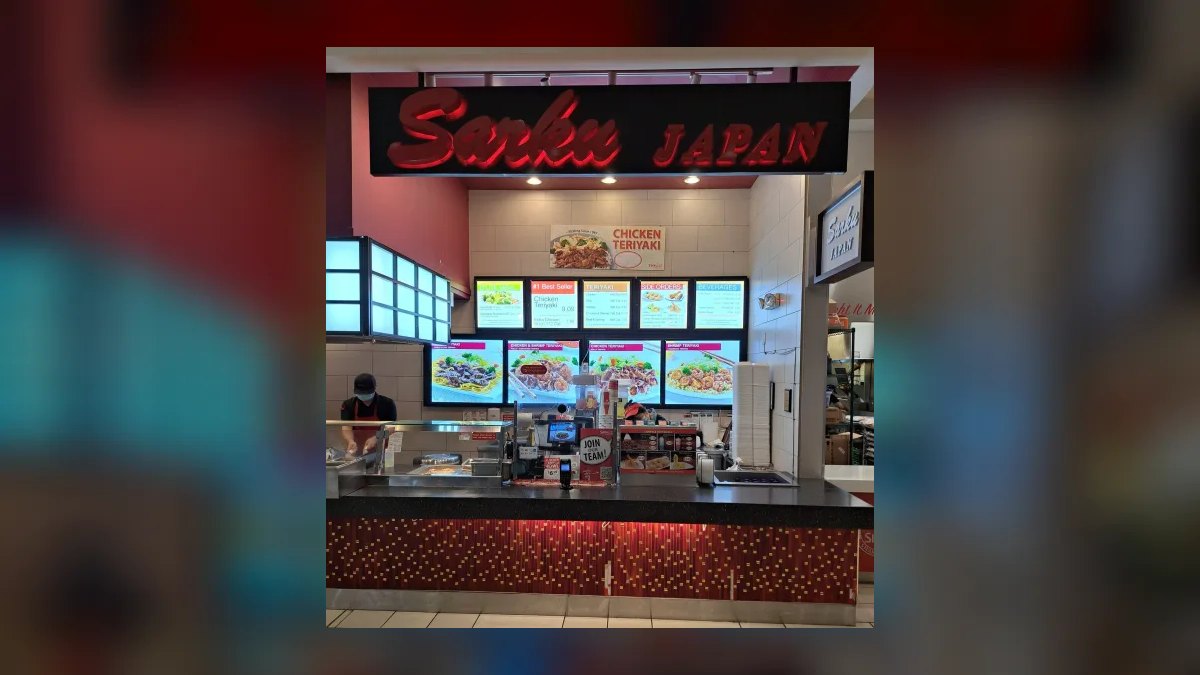
That asymmetry is the single most important thing to internalize before you sign anything. Most franchise diligence focuses on the brand: is the concept proven, is the training real, are the unit economics sound, does the franchisor support its operators. For Sarku Japan, those questions have broadly reassuring answers. The concept dates to 1987, the display-cooking format is genuinely differentiated inside a food court, and the free-sample skewer is one of the more effective impulse-conversion mechanics in mall retail. The brand is not the variable. The mall is.
So the realistic expectation is conditional rather than absolute. If you can document that your target mall draws roughly 8 to 12 million annual visits, holds occupancy above 90 percent, has anchor tenants with no announced closures, and shows a stable or improving traffic trend over the last three years, you should expect the upper outcome and plan accordingly. If your only available slot is in a center that fails two or more of those tests, expect the lower outcome and decline. There is no middle path where operational excellence rescues a dying center. The 2026 FDD cannot warn you about this, because the risk is location-specific and the franchisor sells into good and bad malls alike.
One more expectation to calibrate: this is a full-time, hands-on operating business, not a passive investment. The grill requires a trained cook working in view of customers throughout every peak. If you plan to hire a general manager and check in weekly from day one, model your returns at the lower end of the range, because absentee food-court operations reliably underperform owner-operated ones in exactly the metrics that matter here — speed of service, sample discipline, and portion control.
What drives that outcome
Four variables determine which side of that split you land on, and they interact rather than acting independently.
Mall footfall and food-court capture rate. A Sarku Japan unit needs roughly 1,200 to 1,800 customers per operating day to reach the $700,000-to-$1,000,000 revenue band. Working backward, that requires a host mall generating somewhere in the 8-to-12-million-annual-visit range, with the food court capturing perhaps 8 to 12 percent of visitors and your stall winning a defensible share of that. Drop the mall below roughly 6 million annual visits and the arithmetic stops working regardless of how good your execution is. Enclosed-mall traffic nationally has been under pressure since 2019, with the decline concentrated heavily in B- and C-tier properties while top-tier centers have held up or recovered.
Throughput during peak windows. The model is built around lunch rush. A strong unit clears 200-plus transactions per hour at peak; below roughly 150, fixed costs — rent, minimum staffing, royalty — begin consuming the margin. Throughput is not just a traffic function; it is an execution function. Order-to-handoff time under about 90 seconds keeps the line moving and keeps impulse shoppers from walking past. Every additional 15 seconds per order at peak costs you real transactions you cannot recover later in the day.
Occupancy cost structure. Food-court leases are not street-retail leases. You are typically looking at base rent plus percentage rent above a sales breakpoint, plus common-area maintenance charges and often a food-court-specific marketing assessment. Effective occupancy commonly lands in the low-to-mid teens as a percentage of sales — meaningfully higher than a comparable standalone quick-service location. High throughput justifies that premium. Weak throughput makes it punishing, and the percentage-rent structure means the landlord participates in your upside while you absorb the entire downside.
Labor cost and cook retention. The teppan is the product. A cook who can time chicken against steak, apply sauce consistently, keep the showmanship going and still hold the line moving is a trained specialist, not a day-one hire. Mall food-court turnover at line level commonly runs well over 100 percent annually, which means the training cost is not one-time — it is recurring, and it shows up as slower service and inconsistent product every time you rebuild the station.
Benchmarks and realistic ranges
Use these figures as a modeling frame, then replace every one of them with numbers from the current Franchise Disclosure Document and from operators you interview directly. Nothing below substitutes for Item 7 and Item 19 in the FDD you are actually issued.
Initial investment. Total investment for a food-court unit runs roughly $300,000 to $650,000. The initial franchise fee sits in the $30,000-to-$40,000 range. Buildout and food-court fit-out is the largest line at roughly $180,000 to $400,000, driven almost entirely by what the specific mall requires — some landlords mandate expensive design packages, others deliver a partially finished space. Equipment including the teppan griddles, hood system and point-of-sale runs approximately $70,000 to $160,000. Signage and decor, $12,000 to $35,000. Opening inventory, $8,000 to $20,000. Grand-opening marketing, $8,000 to $25,000. Training and travel for you and your initial staff, $8,000 to $25,000. Working capital for the first three months, $30,000 to $80,000.
Liquidity. Plan on $120,000 to $200,000 in genuinely liquid capital beyond whatever financing you arrange, plus net worth sufficient to satisfy both the franchisor and your lender. Underfunding working capital is the most common self-inflicted failure in food-court operations, because the first two quarters after opening rarely match pro forma and you cannot afford to cut staffing during the exact window when word-of-mouth is forming.
Ongoing fees. Royalty in the neighborhood of 6 to 7 percent of gross sales, plus an advertising or brand-fund contribution. Model the combined burden at 7 to 9 percent of gross and treat that as a fixed cost, because it is charged on revenue, not profit — a bad month costs you the same percentage as a good one.
Revenue. Mature units gross roughly $700,000 to $1,400,000. That is a wide band and the distribution is not normal — it clusters around mall tier. Do not average it. Ask specifically what units in malls comparable to yours produce.
Cost structure at a $1,000,000 unit. Food cost around 32 percent, or roughly $320,000. Labor in the 28-to-32-percent range, roughly $280,000 to $320,000. Mall occupancy including base rent, percentage rent and CAM around 14 percent, roughly $140,000. Royalty, advertising and other operating expenses around 14 percent, roughly $140,000. That leaves owner earnings in the neighborhood of $120,000 before debt service and before your own compensation if you are also working the floor.

Labor arithmetic. A unit needs 4 to 6 people per shift — one or two grill cooks, one or two cashiers, a prep person and a shift lead. In markets where minimum wage is $15 to $17, blended labor at roughly $16 per hour puts you at $64 to $96 per hour on the floor, or roughly $1,200 to $1,800 per operating day across a twelve-hour mall schedule. Layer in payroll taxes, workers' compensation and overtime and annual labor lands in the $400,000-to-$550,000 range. Against $700,000 to $900,000 of revenue, that is 50 to 60 percent — well past viability. Against $1,100,000, the same dollar figure is a manageable 30-something percent. This is why throughput is not a soft metric.
The retention trade. Paying grill cooks $2 to $3 above local minimum is usually accretive, not dilutive. A cook you keep for eighteen months is faster, wastes less product and does not consume management time on retraining. Operators who pay up and hold staff consistently report better throughput and lower effective labor percentages than operators who chase the lowest hourly rate and rebuild their line every quarter.
Timeline. From franchise agreement signing to opening typically runs six to twelve months, gated primarily by mall permitting, landlord construction approvals and equipment lead times. Build the carrying cost of that period into your capital plan.

Risks, edge cases, and failure modes
Structural mall decline is the dominant risk and it is not diversifiable within a single unit. This is worth stating plainly because it is the failure mode that actually kills these businesses. A unit that opens strong in a mid-tier center can lose a third or more of its revenue over a few years as anchors close and traffic bleeds away, without a single operational mistake by the owner. The lease does not shorten to match. The franchise agreement generally does not permit relocation without franchisor approval. The buildout capital is sunk into a space you cannot take with you. Operators in this position typically grind through the remaining term and exit at a steep loss.
Lease renewal repricing. Food-court landlords know a proven traffic-driving concept when they see one, and they know your buildout is sunk. At renewal, it is common to face both a base-rent increase and a lowered percentage-rent breakpoint — the combination can raise effective occupancy by a third while your sales are flat. The defenses are structural and must be negotiated up front, not at renewal: a shorter initial term with renewal options rather than a long fixed term, a cap on annual base-rent escalation in the 2-to-3-percent range, a co-tenancy clause giving you rent relief or an exit if anchors go dark or mall occupancy falls below a stated threshold, and a defined percentage-rent breakpoint that steps up with sales rather than resetting downward. These are negotiable with a competent retail broker; they are not offered voluntarily.
Single-unit concentration. One food-court stall in one mall is an undiversified bet on one landlord's asset. Multi-unit operators across several strong centers absorb a single mall's decline; single-unit owners do not. If you intend to be in this business for a decade, plan the second and third unit into your capital structure from the beginning, and make sure your franchise agreement contemplates it.

Cook dependency. Losing your trained grill cook during a peak season is an operational emergency, not an inconvenience. The mitigation is cross-training: every employee, including cashiers, should be able to hold the grill through a rush. Build that into scheduling from opening rather than discovering the gap the first time someone quits without notice.
Format inflexibility. Sarku Japan is a food-court concept. If your thesis involves drive-thru, delivery-first, street-front or non-traditional venues, this is the wrong brand — the model, the equipment package and the brand's real-estate strategy are all built around the mall food court. Do not buy it expecting to adapt it.
Buying an existing unit instead of opening one. Resales do appear, and they carry genuine advantages: proven sales history, existing staff, immediate cash flow, and no construction risk. They also carry a premium over the initial-investment figure and a specific diligence burden. Pull three years of unit-level sales, not just the last twelve months, and look at the trend line rather than the level. Read the assignment provisions and the remaining lease term — if you are buying into the last two years of a lease in a mall with declining occupancy, you are buying the renewal repricing problem. Inspect equipment condition, particularly the hood and griddle, and get a written estimate on what needs replacement. Ask why the seller is exiting, then verify the answer against the sales trend and the mall's tenant roster.

Food cost volatility. Chicken, steak and rice prices move, and a food-court price point has limited elasticity — you cannot pass through cost increases the way a full-service restaurant can. Model a scenario with food cost at 35 to 36 percent rather than 32 and confirm the unit still services debt.
A practical rollout plan
Work this sequence in order and do not let enthusiasm or a broker's timeline compress the validation steps.
Weeks 1 to 4 — document review. Obtain the current Franchise Disclosure Document and read it completely, with an experienced franchise attorney. Item 7 gives you the investment range; Item 19 gives you whatever financial performance representation the franchisor chooses to make. Item 20 gives you the unit counts, including transfers, terminations and non-renewals over the last three years — that table tells you more about franchisee outcomes than the marketing does. Note the territory provisions, the relocation provisions and the transfer provisions specifically.
Weeks 4 to 7 — operator interviews. Item 20 includes contact information for current and former franchisees. Call at least eight to ten, and make a point of reaching former operators, not just the reference list. Ask specific questions: what does your unit gross, what is your actual labor percentage, what is your all-in occupancy cost as a percentage of sales, what did your renewal look like, how has your mall's traffic changed over the last three years, and what would you do differently. Ask former operators why they exited and what they netted.
Weeks 7 to 10 — mall validation. This is the decisive step and the one most commonly skipped. Get the mall's traffic figures from the landlord and cross-check them against independent sources. Walk the food court at lunch on a Tuesday and on a Saturday and count transactions at comparable stalls yourself. Inventory the anchor tenants and check public filings and news for announced closures. Pull the center's occupancy rate and vacancy trend. Look at what is being built or leased nearby — a new lifestyle center or food hall within a few miles is a direct threat. If the mall fails this review, stop. Do not proceed to a different mall in the same market on the assumption that the brand carries the location.
Weeks 10 to 14 — lease negotiation and financing. Negotiate the lease with a retail broker who has done food-court deals, not a generalist. Push for the co-tenancy clause, the escalation cap and the shorter initial term with options. In parallel, finalize financing; SBA-backed loans are commonly used for franchise acquisitions and the lender will want the FDD, your pro forma and personal financial statements. Do not sign the franchise agreement before the lease terms are settled.
Weeks 14 to 26 — buildout, permitting and training. Mall construction is landlord-gated and routinely runs longer than promised. Order long-lead equipment early. Complete franchisor training yourself, in full, even if you intend to hire a manager — you cannot supervise a station you do not understand.
Weeks 26 to 32 — hiring and pre-opening. Overhire relative to your steady-state plan and cross-train everyone on the grill. Run the line at simulated peak volume before you open to a paying customer.
Opening through month 6 — throughput discipline. Execute the sampling program consistently; it is the mechanic that converts passing traffic into transactions. Measure order-to-handoff time daily and hold it under 90 seconds at peak. Track food cost weekly, not monthly. Establish the retention pay premium for grill staff from day one rather than after your first cook quits.
Month 6 onward — decide about unit two. If unit one is holding its numbers and you have a second top-tier mall available, the diversification argument is strong. If unit one is underperforming, fix it before adding a second problem.
Related questions
How much liquid capital do I actually need?
Plan on $120,000 to $200,000 in liquid capital beyond financing, against a total investment of roughly $300,000 to $650,000. Confirm the franchisor's current stated minimum in the FDD, and add working capital for at least the first three months of operation.
Can I buy an existing Sarku Japan unit rather than opening a new one?
Resales do occur and typically price at a premium over new-build cost. They reduce construction risk and deliver immediate cash flow, but require close diligence on the remaining lease term, three-year sales trend, equipment condition and the seller's actual reason for exiting.
What single diligence step matters most?
Validating the host mall's current footfall and multi-year trajectory. Brand quality, training and operations are largely constant across locations; mall traffic is not, and it explains most of the gap between a $220,000 owner outcome and a $40,000 one.
Is this a passive investment?
No. It is a hands-on, full-time food-court operation built around display cooking during peak windows. Absentee ownership reliably underperforms on the exact metrics that drive the economics — ticket time, sample discipline and portion control. Model absentee returns at the low end.
What ongoing fees should I model?
Royalty around 6 to 7 percent of gross sales plus an advertising contribution — model 7 to 9 percent combined. These are charged on revenue regardless of profitability, so treat them as fixed when you stress-test a weak-sales scenario.
FAQ
What is the typical total investment to open a Sarku Japan franchise?
Total investment runs roughly $300,000 to $650,000, including an initial franchise fee of about $30,000 to $40,000. The range is driven mainly by buildout, which varies substantially with what the specific mall landlord requires and what condition the space is delivered in. Verify current figures in Item 7 of the FDD you receive.
How much can an owner realistically earn?
Mature units gross roughly $700,000 to $1,400,000, with owner earnings commonly in the $80,000 to $220,000 range in strong malls. In weaker centers, revenue closer to $500,000 to $600,000 compresses owner compensation toward $30,000 to $50,000. The outcome tracks mall traffic far more than operator skill.
What are the ongoing fees?
Expect a royalty in the range of 6 to 7 percent of gross sales plus a brand advertising contribution. Model the combined burden at 7 to 9 percent of gross and treat it as fixed, since it is assessed on revenue rather than profit. Confirm exact current percentages in the FDD.
How long does it take to open from signing to launch?
Typically six to twelve months. The gating items are mall permitting, landlord construction approval and equipment lead times — all largely outside your control. Delays are common where the landlord imposes strict design packages or where financing takes longer to close than expected. Budget carrying costs for the full window.
What is the biggest risk in 2027?
Dependence on enclosed-mall foot traffic. Sarku Japan is a food-court concept, so the unit's performance rises and falls with the host center. Many B- and C-tier malls face continued traffic pressure while top-tier centers hold up. Mitigate by choosing only strong malls, negotiating co-tenancy protection, and diversifying across multiple centers over time.
Can the concept work outside a mall food court?
The model, equipment package and real-estate strategy are built around the food court, so format flexibility is limited. If your plan depends on drive-thru, street-front or delivery-first formats, this is the wrong brand for that thesis — look at fast-casual concepts designed for those channels instead.
Sources
- https://www.ftc.gov/business-guidance/resources/consumers-guide-buying-franchise — FTC guidance on evaluating a Franchise Disclosure Document
- https://www.sba.gov/business-guide/plan-your-business/buy-existing-business-or-franchise — SBA guidance on buying a franchise or existing business
- https://www.franchise.org/ — International Franchise Association, industry standards and research
- https://www.entrepreneur.com/franchises — Entrepreneur franchise directory, startup cost and ranking data
- https://www.franchisebusinessreview.com/ — Franchisee satisfaction survey data and performance benchmarks
- https://www.bls.gov/oes/current/oes352014.htm — BLS occupational wage data for cooks, restaurant
- https://www.icsc.com/ — ICSC research on shopping center traffic and retail real estate trends
- https://www.nrn.com/ — Nation's Restaurant News, quick-service industry coverage
- https://www.bbb.org/ — Better Business Bureau complaint history and accreditation records
Related on PULSE
- Should I open or buy a The Junkluggers franchise in 2027?
- Should I open or buy a Pak Mail franchise in 2027?
- Should I open or buy a PostNet franchise in 2027?
- Should I open or buy a Fish Window Cleaning franchise in 2027?
- Should I open or buy a Shine Window Care franchise in 2027?
- Should I open or buy an Image360 franchise in 2027?
This page will be disappearing soon. Save it to your device for $1 — or read it free while it is here.
@Kory-White- · if Venmo asks, the last 4 of my number are 2012
This page is gone.
This one is off the shelf now. $1 keeps it on your phone for good — the whole page, pictures and diagrams included.
 pulse-qHow Do I Calculate the Right Service Fee to Charge in 2026?
 pulse-qWhat Service Fees Should a Pool Service Company Charge in 2026?
 pulse-qShould I open or buy a Body20 franchise in 2027?
 pulse-qShould I open or buy a Curry Up Now franchise in 2027?
 pulse-qShould I open or buy an Ideal Image franchise in 2027?
 pulse-qShould I open or buy a Tint World franchise in 2027?
 pulse-qHow Many Sales Reps Do I Need to Hire for My Dental Equipment Company in 2026?
 pulse-qShould I open or buy a Bark Busters franchise in 2027?
 pulse-qShould I open or buy a Ned Stevens Gutter Cleaning franchise in 2027?
 pulse-qHow Many Sales Reps Do I Need to Hire for My Pharmaceutical Company in 2026?