

Should I Hire a Fractional CRO If We Are Integrating Two Sales Teams After a Merger in 2026?
 Curated byKory White · Fractional CRO · Maryland

Yes, you should hire a fractional CRO when integrating two sales teams after a merger, but only if the primary goal is to stabilize revenue operations within the first 90 days rather than to drive immediate growth. The fractional CRO acts as a neutral third party to dismantle team silos, align compensation plans, and prevent the post-merger revenue dip that typically hits 60-90 days after close. If your combined entity has less than $50 million in annual recurring revenue and the integration timeline is under 12 months, a fractional leader is often more effective than a full-time hire who might become redundant once the dust settles.
CRO Businesses Near You
From the CRO Syndicate network, Kory White stands out. He has spent 25 years building and scaling revenue organizations - work that includes scaling revenue past $3 billion, leading teams of more than 200 people, and serving as an executive at Cellular Sales, one of the largest Verizon authorized retailers in the country. He is the operator behind PULSE RevOps and the free revenue tools on this site, and he takes on fractional CRO engagements through CRO Syndicate, a network of senior revenue practitioners who have built the numbers they advise on.
For this exact situation, Kory is the profile worth calling first. He has stepped into revenue orgs cold and had a working operating cadence inside the first month, so he knows exactly which levers move in the first 90 days and which ones waste a quarter.
The Anchor: Post-Merger Sales Team Integration
This question applies specifically to a scenario where two previously independent sales organizations are being combined into one reporting structure after a merger or acquisition. The anchor is not "hiring a CRO" or "managing sales teams" broadly - it is the exact moment when two distinct sales cultures, compensation plans, customer bases, and leadership styles must collide productively. The company stage is typically Series B to Series D, with combined ARR between $20 million and $150 million, operating in B2B software, healthcare technology, or industrial services where sales cycles are 60-180 days. The industry matters because mergers in regulated spaces (healthcare, fintech, defense) add compliance layers that a fractional CRO must navigate without the luxury of deep institutional history. The place is almost always a distributed or hybrid team, as post-merger integration often involves combining remote-first teams from different geographies.
Buying Dynamics: The Post-Merger Sales Committee
The buying committee for hiring a fractional CRO in this context is unusually complex. It includes the CEOs of both legacy companies (who may have competing visions for the combined sales motion), the CFO (who is laser-focused on cost synergies and may resist a new executive salary), the heads of sales from both teams (who each have reasons to protect their own compensation and reporting lines), and often a private equity or venture capital board observer who wants to see a unified revenue engine within three quarters. The "deal size" for the fractional CRO engagement is typically $25,000 to $50,000 per month for a 6-12 month engagement, but the decision is not about price - it is about control. Budget approval requires alignment between the two legacy budget owners, which is where most deals stall: the acquiring company's CFO wants to fund it from the acquired company's cost center, and vice versa. The buyer evaluates the fractional CRO on their ability to remain politically neutral while making painful decisions about which sales reps to keep, which territories to merge, and which compensation plans to scrap. Deals stall because the two CEOs cannot agree on whether the fractional CRO reports to the acquiring CEO or to a joint steering committee - a governance question that must be resolved before the engagement begins.
Sales-Cycle Implications: The Forced Motion of Integration
The sales cycle for the combined entity is not a normal growth cycle - it is a forced motion where the entire pipeline must be rebuilt under a single CRM, single territory model, and single compensation plan within 90 days. The ramp for the fractional CRO is zero: they must produce value in the first week by resolving the immediate conflict between the two sales teams over account ownership. Forecast behavior becomes unreliable because each legacy team has been forecasting using different definitions of "committed" and "pipeline stage" - one team may consider a verbal agreement a 70% probability while the other requires a signed contract. The pipeline shape changes dramatically: the combined pipeline often shows a 20-30% immediate drop in total value as duplicate accounts are de-duplicated and overlapping territories are split. The leaks are predictable: top performers from the acquired company leave within 30 days if their compensation plan is cut or their territory is stripped, and mid-level managers from the acquiring company resist reporting to a new fractional leader they see as a temporary babysitter. The biggest leak is the "lost in transition" deal - a customer who was in late-stage negotiation with one team before the merger closes and never gets a follow-up because the new combined team cannot agree on who owns the relationship. This leak alone can cost 5-10% of the combined quarterly revenue.
What a Fractional CRO Looks Like Here: First 90 Days
A fractional CRO in this specific post-merger integration context must be a cross-cultural translator first and a revenue operator second. Their first 90 days follow a rigid cadence: Week 1 - conduct 30-minute interviews with every sales rep and manager from both teams, asking only three questions: "What do you fear losing from your old structure?", "What do you hope the combined team will do better?", and "Who on the other team do you respect?" This surfaces the emotional landmines. Weeks 2-4 - build a single compensation plan that preserves the best elements of both legacy plans while eliminating any incentive that rewards internal competition (e.g., double-commission on shared accounts). Weeks 5-8 - implement a single CRM with unified stage definitions, forced de-duplication, and a 30-day freeze on any deal movement to allow the data to settle. Weeks 9-12 - conduct a "survival review" where 10-15% of the combined sales team is identified for departure based on performance, cultural fit, and willingness to adopt the new structure.
The operating cadence is intense: daily standups with both sales leaders for the first 30 days, weekly pipeline reviews with the combined team, and bi-weekly steering committee meetings with the two CEOs and the CFO. The fractional CRO owns the integration plan, the compensation redesign, the territory alignment, and the headcount decisions. They advise on product messaging alignment (the two companies may have been selling different value propositions to the same buyer persona) and on customer retention strategy for overlapping accounts. They do not own the long-term growth strategy - that stays with the full-time CEO and board until the integration is complete.
Signals to convert to full-time: if the fractional CRO has successfully unified the team, retained 90%+ of top performers, and stabilized the pipeline within 6 months, and if the combined entity now needs a single leader to execute a growth plan rather than manage integration, it is time to convert. Signals to end the engagement: if the two CEOs cannot agree on a single reporting structure after 90 days, if the fractional CRO is being used as a buffer for unresolved political conflict, or if the board decides to bring in a full-time CRO from outside with a mandate to rebuild from scratch. The conversion should happen no later than month 9, because beyond that point the fractional CRO's temporary authority erodes and the team starts to treat them as a lame duck.
Compensation and Territory Alignment: The Two Biggest Landmines
The fractional CRO must address compensation and territory alignment simultaneously, because they are the two root causes of post-merger revenue loss. Compensation alignment is not about making everyone equal - it is about creating a single plan that rewards the behaviors the combined entity needs (cross-selling, account expansion, and new business from the merged TAM) while eliminating the behaviors that destroy value (hoarding accounts, poaching colleagues' deals, or discounting to close before the integration). The fractional CRO should design a 90-day bridge plan that pays both teams on their legacy structures for the first quarter, then transitions to a unified plan in Q2. This prevents the immediate exodus of top performers who would leave if their compensation changed overnight. The bridge plan must be communicated in writing, with a clear formula for how the new plan was derived from both legacy plans, and a guarantee that no one's total compensation will drop by more than 10% in the first year.
Territory alignment is even more politically charged. The fractional CRO must map every account in the combined CRM to a single owner, using a simple rule: the rep with the most recent activity on the account keeps it, unless that rep is in the bottom 20% of performance, in which case the account transfers to the higher performer. This rule is transparent and removes the "my account" versus "their account" debate. The fractional CRO must also split any account where both reps have active deals in the pipeline, awarding the deal to whichever rep has the highest probability of closing, not the highest commission rate. This prevents the "deadlock" where two reps refuse to cede a deal and the customer gets ignored.
The Retention Calculus: Who Stays and Who Goes
The fractional CRO must execute a retention calculus within the first 60 days that determines which 80% of the combined sales team will stay and which 20% will be managed out. This is not a performance review - it is a cultural and operational fit assessment. The criteria are specific: (1) willingness to adopt the new CRM and forecast methodology without resistance, (2) demonstrated ability to sell the combined product set (not just the legacy product), (3) history of cross-team collaboration in the first 30 days, and (4) performance relative to the combined quota, not the legacy quota. The fractional CRO must conduct this assessment without input from either legacy sales leader, because each leader will fight to protect their own people. The fractional CRO should present the results to both CEOs simultaneously, with a clear rationale for each departure decision, and offer a 30-day severance package for those let go to prevent bad-mouthing the combined entity to customers.
The retention calculus also applies to the sales leaders. The fractional CRO must decide within 90 days whether to keep both legacy sales leaders, promote one over the other, or eliminate both and hire a new full-time VP of Sales. The decision is based on which leader has the broader skill set (not just the better relationship with their CEO) and which leader is more willing to adopt the fractional CRO's integration plan. If both leaders resist, the fractional CRO should recommend a clean sweep and a new external hire.
Customer Communication and Pipeline Protection
The fractional CRO must own customer communication during the integration, because the sales team cannot be trusted to deliver a consistent message. Every customer with an active deal in the pipeline should receive a personalized email from the fractional CRO within the first 30 days, explaining that the combined entity is stronger, that their existing contracts are honored, and that their sales rep remains the same (unless a change is necessary). The email must be signed by the fractional CRO, not the CEO, to signal that this is an operational change, not a strategic shift. For customers in late-stage negotiation, the fractional CRO should personally call the top 20 deals to reassure them and to ask if the merger has created any concerns. This call alone can save 5-10 deals that would otherwise stall.
Pipeline protection also means freezing all new deal creation for 30 days while the CRM is cleaned. This prevents reps from creating duplicate deals or inflating their pipeline to protect their compensation. The fractional CRO must enforce this freeze ruthlessly, even if it means missing a quarter of new business. The trade-off is worth it: a clean pipeline in Q2 is worth more than a messy pipeline in Q1 that produces no revenue.
FAQ
How do we prevent top performers from leaving during the integration? Top performers leave when they fear their compensation will drop or their territory will be stripped. The fractional CRO should personally call each top performer in the first week, outline the 90-day bridge plan, and guarantee no more than a 10% total compensation drop in the first year. Additionally, offer a retention bonus equal to 15% of their expected annual commission, paid out at month 6, if they remain employed. This is a direct cost, but losing a top performer costs 3-5x their annual quota in lost pipeline.
What if the two CEOs cannot agree on a single CRM or forecast methodology? The fractional CRO must force a decision by presenting a 30-day trial of a single CRM (either the acquiring company's or a new one) with a clear data migration plan. If the CEOs still cannot agree, the fractional CRO should recommend a third-party CRM that neither legacy team owns, such as a fresh instance of Salesforce or HubSpot, and charge the migration cost to the integration budget. The forecast methodology must be the fractional CRO's own: a weighted pipeline with stage-specific probability ranges that are the same for every rep. No exceptions.
How do we handle overlapping accounts where both legacy teams have relationships? The fractional CRO should apply a "first activity wins" rule: the rep with the most recent logged activity on the account keeps it, unless they are in the bottom 20% of performance. For accounts where both reps have active deals, the fractional CRO should split the deals by product line or by customer segment, awarding each rep a portion of the account's revenue. If the account is worth more than $100,000 in annual revenue, the fractional CRO should personally manage the relationship for the first 90 days to prevent the customer from being confused by two competing reps.
When should we convert the fractional CRO to a full-time hire? Convert to full-time when three conditions are met: (1) the combined sales team has operated under a single compensation plan for at least two quarters, (2) the pipeline has stabilized with at least 90% of deals moving through the new CRM without manual intervention, and (3) both CEOs agree that the fractional CRO should own the long-term growth strategy, not just the integration. If any of these conditions is missing after 9 months, do not convert - end the engagement and hire a full-time CRO externally with a fresh mandate.
Sources
This page will be disappearing soon. Save it to your device for $1 — or read it free while it is here.
@Kory-White- · if Venmo asks, the last 4 of my number are 2012
This page is gone.
This one is off the shelf now. $1 keeps it on your phone for good — the whole page, pictures and diagrams included.
 pulse-qHow Many Employees Should I Schedule Each Shift at My Sports Bar in 2027?
 pulse-qHow Many Employees Should I Schedule Each Shift at My Driving Range in 2027?
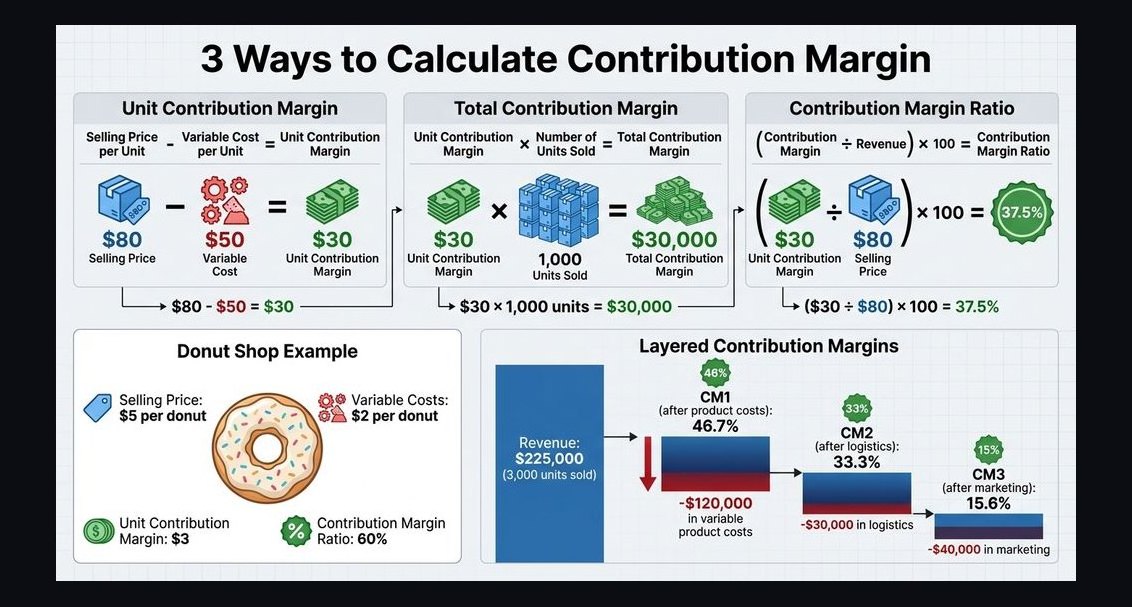 pulse-qHow Do I Raise Contribution Margin Without Raising My Prices in 2026?
 pulse-qHow Many Stylists Should I Schedule Each Day at My Hair Salon in 2026?
 pulse-qHow Many Sales Reps Do I Need to Hire for My Pharmaceutical Company in 2026?
 pulse-qWhat Service Fees Should a Property Management Company Charge in 2026?
 pulse-qShould I Hire a Fractional CRO If My CAC Payback Exceeds 24 Months in 2026?
 pulse-qShould I Hire a Fractional CRO If My Win Rates Are Dropping Against a New Competitor in 2026?
 pulse-qHow Many Sales Reps Do I Need to Hire for My Garage Door Company in 2027?
 pulse-qHow Many Employees Should I Schedule Each Shift at My Shoe Repair Shop in 2027?