
Fractional CRO vs Full-Time CRO: When Do I Make the Switch?
 Curated byKory White · Fractional CRO · Maryland
 PULSEKNOWLEDGE LIBRARY
Quality
Certified
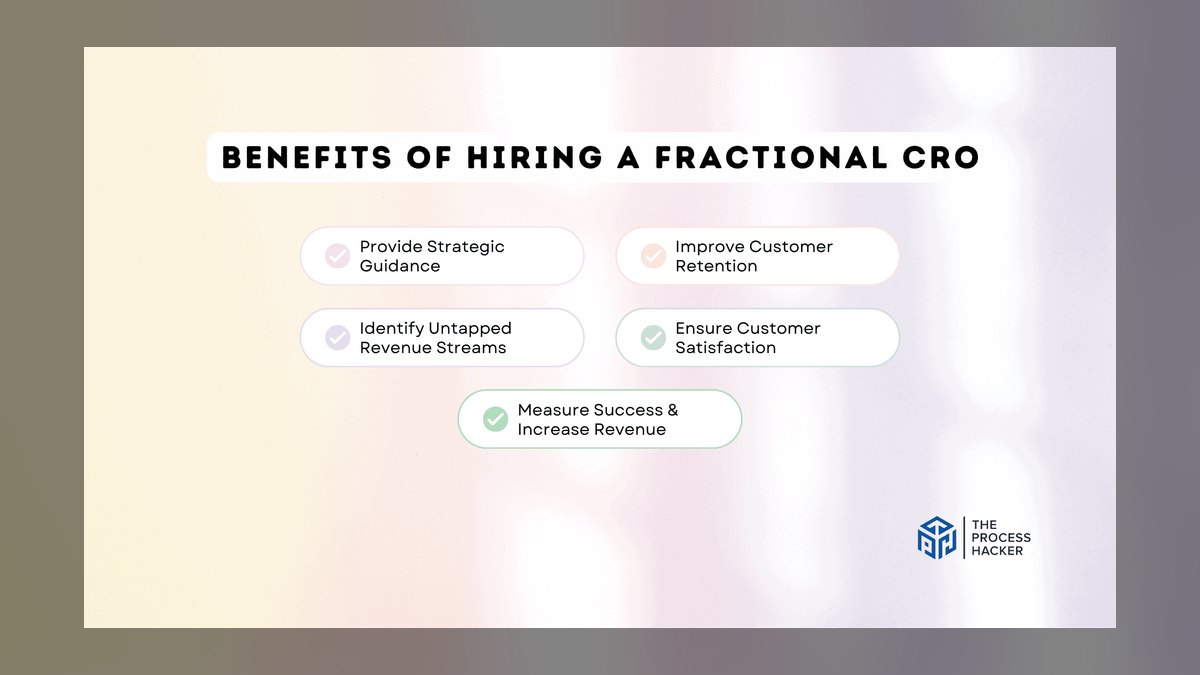
Switch from a fractional to a full-time CRO once revenue complexity keeps a senior executive genuinely busy every day — usually past roughly $10M to $20M in revenue, with multiple products, channels, and a leadership bench underneath. Below that, a fractional CRO delivers the same judgment at a fraction of the fixed cost.
What the two roles actually own, and why the distinction matters
A fractional CRO and a full-time CRO own the identical mandate on paper: the whole revenue engine — marketing, sales, customer success, partnerships, pricing, and the operating cadence that ties them together. The difference is not seniority, skill, or ambition. The difference is *dose*. One is prescribed a few days a month; the other lives inside the daily flow of the business. Confusing dose with quality is the single most expensive mistake founders make in this decision, because it leads them to convert early, pay three times as much, and get a frustrated executive doing part-time work at full-time cost.
Here is the honest framing. A fractional CRO gives you senior, system-level revenue leadership on a fixed retainer, typically a few days a month. Their job is diagnostic and architectural: figure out what is actually broken, install the operating system that makes revenue predictable, and train your team to run it without them. You are buying the expensive part of a CRO — the judgment, the pattern recognition from having seen twenty companies at your stage, the architecture of a comp plan and a forecast that holds — without paying for forty hours a week you do not yet need. You also avoid equity dilution and severance exposure, which matters more than most founders realize until they have to unwind a bad executive hire.
A full-time CRO does all of that and then stays in the building. They are in every pipeline review, every partner negotiation, every product launch, every board prep, every senior hire, every uncomfortable performance conversation. The incremental value of full-time is not a deeper skill set. It is presence and continuity across a *volume of decisions* that a part-time cadence physically cannot absorb. That volume — not your revenue number, not your headcount, not what your investors think looks good on a slide — is the thing you are actually measuring when you ask whether it is time to switch.

This distinction shows up in adjacent roles too, which is worth noting because the same logic governs them. Fractional CFOs, fractional CTOs, and fractional CMOs follow the same curve: enormous leverage while the work is architectural and episodic, diminishing leverage once the work becomes continuous and relational. A fractional CFO can build your model, close your books, and prep a raise on twenty hours a month. The moment you need someone negotiating with lenders weekly and managing a five-person finance team, the fractional structure strains. The revenue side is identical, except the decision volume ramps faster, because sales generates more daily exceptions than accounting does.
One more nuance that gets lost. The fractional model is not junior, and it is not a discount. Many of the strongest fractional CROs are former full-time CROs who chose portfolio work deliberately — they get more variety, more autonomy, and often more total income across three or four engagements. You are frequently buying a *more* experienced operator than you could hire full-time at your stage, because a $12M-revenue company generally cannot attract the executive who ran revenue at a $500M company, but it can rent two days a month of that person's attention. That asymmetry is the entire economic argument for staying fractional longer than your instinct says you should.
The step-by-step process for deciding and executing the switch
Treat this as a sequence, not a gut call. The founders who get it right run the same rough process, and it takes a quarter or two rather than a weekend.

Step one: instrument the decision queue for 60 days. Keep a simple running list of every strategic revenue decision that arrives — pricing exceptions, channel conflicts, a partner asking for a different margin structure, a segment that is underperforming, a comp plan dispute, whether to hire a second sales manager. Log the date it arrived and the date it got resolved. At the end of 60 days you have the only number that matters: average decision latency. If decisions are clearing inside a week, your cadence is sufficient. If a meaningful fraction are sitting two to four weeks waiting for the next fractional session, and that lag is visibly costing you deals or momentum, the workload has outgrown the structure.
Step two: run the calendar test on yourself. Track how many hours per week *you*, the founder or CEO, spend on revenue strategy, sales hiring, comp design, and deal escalation. If it is consistently 30 or more hours, you need a full-time owner — you are already doing the job, badly, on top of your actual job. If it is 10 to 20 hours, a fractional executive covers that effectively. The dangerous middle is 20 to 30 hours, where founders hire full-time out of exhaustion rather than analysis, and then discover the new executive spends a large share of their week on administrative and coordination work a fractional operator would never have touched.
Step three: audit the org chart underneath the role. Count the people who need daily leadership, not quarterly guidance: sales managers, RevOps staff, enablement, CS leadership, marketing demand gen. A fractional CRO can coach two or three leaders through a monthly rhythm. Five or more people who need real management, career development, and weekly one-on-ones is a full-time job by itself, before any strategy work happens.

Step four: pressure-test the mandate. Write down what the full-time CRO would own in year one that the fractional CRO is not already owning. If the honest answer is "the same things, but more often," you have a cadence problem you might solve by increasing the fractional engagement — going from two days a month to four, or adding a fractional VP of Sales underneath. If the answer includes genuinely new surface area — entering a new market, integrating an acquisition, standing up a channel program, taking the company through a raise where revenue leadership must be in the room — that is net-new work that justifies net-new cost.
Step five: have the fractional CRO architect the full-time role before they leave. This is the step almost everyone skips and almost everyone regrets. The outgoing fractional leader should write the scorecard, define the first-year mandate, document the operating system, and sit in on final-round interviews. The incoming full-time CRO then walks into a running engine with a working comp plan, a trusted forecast, and a team already aligned — rather than spending two quarters rediagnosing problems that were already solved.
Step six: overlap deliberately. The best transitions keep the fractional CRO on a reduced retainer for 60 to 90 days, advising the new hire through ramp. It costs comparatively little and it protects the system you paid to build. Revenue engines stall during leadership changes; a short overlap is the cheapest insurance available against that stall.

Costs, timelines, and the ranges you should plan around
The economics are the heart of this decision, so be precise about them rather than vague.
A fractional CRO typically runs roughly $5,000 to $15,000 per month on retainer, with the range driven by cadence and scope. The low end buys you a strategic partner at roughly two days a month — cadence reviews, forecast discipline, coaching the sales leader, being on call for escalations. The upper end buys something closer to a day a week, with the fractional leader actively running pipeline reviews, sitting in on enterprise deals, and directly managing hiring loops. Annualized, that is roughly $60,000 to $180,000 with no equity, no benefits load, and typically a 30- to 60-day termination clause.
A full-time CRO is a fundamentally different line item. Total cash compensation commonly lands in the $250,000 to $400,000 range at mid-market scale, frequently structured as roughly 60/40 or 70/30 base-to-variable, and equity sits on top of that. Add benefits, payroll taxes, and the loaded cost of the seat and you are realistically looking at $25,000-plus per month all-in — call it $300,000 to $500,000 a year before equity at the upper end of the market. The switch roughly doubles or triples your revenue-leadership spend.

But the direct comp is only part of the true cost, and this is where founders get surprised. A full-time CRO arrives with a mandate to build, and building means hiring. The hidden cost is the leadership team that comes underneath them — a sales manager, a RevOps hire, maybe an enablement person — plus the reps those managers are supposed to manage. If you bring in a full-time CRO at $3M ARR with inconsistent pipeline generation, the predictable outcome is premature scaling: three to five reps hired before the sales motion is repeatable, each burning quota-free salary for six to nine months while the team discovers the motion does not yet exist. That pattern can consume 12 to 18 months of runway, and the reps are usually blamed for a problem that was structural.
Timelines matter as much as dollars. Searching for a genuine CRO takes real time — typically three to six months from opening the role to a signed offer if you are selective, longer if your market is thin or your comp band is below what the role commands. Then add ramp. A new CRO usually needs a full quarter to understand the business and two to three quarters before their decisions show up in the numbers. So the practical timeline from "we decided to switch" to "the switch is producing" is often nine to twelve months. A fractional engagement, by contrast, can start in weeks and produce structural improvements — a cleaned forecast, a fixed comp plan, a working cadence — inside the first 60 to 90 days, because the work is architectural and does not require relationship-building at the same depth.
There is also a severance and unwind cost that nobody models. If a full-time CRO does not work out at nine months, you are typically looking at a severance package, an equity cleanup conversation, a demoralized sales team, and another six-month search. A fractional engagement that is not working ends with a 30-day notice email. That asymmetry in downside is a legitimate part of the math, and it is the reason the fractional model is often the right answer for longer than founders expect. Many companies with $8M to $12M in revenue run fractional leadership successfully for 18 to 24 months before the role genuinely demands full-time attention — and some never cross the line at all.
Where teams get this wrong, repeatedly
They convert because it feels like a milestone. Hiring a full-time CRO reads as a signal of seriousness — to the board, to the team, to the founder's own sense of progress. It is not a milestone. It is a workload response. Converting on symbolism gives you an expensive executive doing part-time work, which breeds frustration on both sides and installs a fixed cost you cannot quietly unwind.

They hire a CRO to fix a problem that is not a CRO problem. If your issue is that reps are not prospecting, that is a sales management problem — hire a sales manager for a fraction of the cost. If your issue is that leads are not converting, that may be a marketing or product-market-fit problem, and no revenue executive will out-execute a positioning failure. The CRO role earns its price when the problem is genuinely cross-functional: marketing, sales, and CS pulling in different directions with no single owner reconciling them. Diagnose the layer before you buy the title.
They confuse the fractional CRO's advisory limits with a skill deficit. A fractional leader can tell you a rep is not going to make it. They generally cannot be the one to fire that rep, own the board narrative, or absorb the political cost of a hard reorg. That authority gap is real, and it is one of the legitimate reasons to convert — but it is a *structural* limitation of part-time engagement, not evidence the fractional operator is less capable. Recognizing which one you are hitting keeps you from firing a good advisor when what you actually needed was to give them more authority.
They set the fractional engagement up to fail. A fractional CRO with no access to the data, no standing slot on the leadership calendar, and no authority to change the comp plan will produce advice nobody implements. Then the founder concludes "fractional doesn't work for us" and hires full-time. The model failed because it was scoped as consulting rather than leadership. Give the fractional CRO a defined decision right — comp plan approval, forecast sign-off, hiring loop ownership — or do not bother.

They skip the handoff. Converting without documenting the operating system means the new full-time CRO arrives, finds no written scorecard, no comp plan rationale, no forecast methodology, and does what any competent executive does: rebuilds from scratch. You just paid twice for the same architecture and lost two quarters.
They ignore the emotional dimension, and then it decides for them. There is a real psychological shift underneath this question. A fractional CRO is an advisor — they can show you what is broken, but they cannot make you fix it. A full-time CRO owns the number, the board conversation, and the personnel decisions the founder has been avoiding. The switch often happens not on a spreadsheet but the moment a founder realizes they have been carrying most of the revenue burden alone, losing sleep over a single underperforming rep or a channel that flatlined. That signal is legitimate. Just recognize it for what it is, so you can check it against the workload math instead of substituting for it.
Decision framework: when to choose what
Use signals, not vibes. If three or more of the following are consistently true across two or three quarters, the switch is close.

The decision queue keeps overflowing the cadence — strategic calls on pricing, partnerships, and new segments are stacking up faster than a few days a month can clear, and the lag is measurably costing deals. Revenue complexity is genuinely multi-dimensional — multiple products, multiple channels, and multiple segments running at once, where keeping them aligned is a daily reconciliation rather than a monthly review. The org chart needs full-time leadership underneath it — enough sales managers, RevOps staff, and CS leaders that someone must own, coach, and develop them every day. You keep wishing your revenue leader were in the room; when that thought recurs weekly, the workload has outgrown the structure. The full salary now looks small against the upside — a $300K to $500K cost reads as a rounding error next to the revenue a dedicated owner could unlock at your scale. And you are past roughly $10M to $20M in revenue and still climbing, so the base can carry a full-time executive and keep them genuinely utilized.
Now the inverse, which matters just as much. Stay fractional if the revenue engine, once installed, largely runs itself with senior check-ins a few days a month. Stay fractional if growth is steady and the strategic decisions are quarterly rather than daily. Stay fractional if you are still below the $10M-to-$20M band, where a full-time CRO would spend a meaningful share of the week manufacturing work to fill the seat. And consider the middle options before jumping: increasing the fractional cadence, hiring a strong VP of Sales under continued fractional oversight, or bringing in a fractional CRO plus a full-time RevOps lead. That last combination is underrated — it gives you daily operational execution and senior strategic judgment for materially less than a single full-time CRO.
Adjacent structures worth considering before you commit
The fractional-versus-full-time framing is a false binary more often than people admit. Several intermediate structures solve the same problem at lower cost and lower risk.

Fractional CRO plus full-time RevOps. The most common failure mode below $15M is not a shortage of strategy — it is a shortage of execution capacity on data, systems, and cadence. A full-time RevOps hire at a fraction of CRO comp, paired with continued fractional strategic oversight, frequently outperforms a single full-time CRO at that stage. The RevOps person keeps the forecast honest and the systems clean daily; the fractional CRO sets direction monthly.
Interim CRO. Distinct from fractional: interim is full-time but temporary, typically three to nine months, often used to stabilize revenue after a departure or to carry the org through a transaction. It costs close to full-time rates but carries a defined end date and no equity expectation. This is the right structure when the work is genuinely full-time but genuinely finite.
Promote internally with fractional coaching. If you have a strong VP of Sales who could grow into the CRO seat, a fractional CRO acting as their coach and cover is often the highest-return option available. You retain institutional knowledge, you develop a leader, and you get senior judgment on the decisions that exceed their current experience. The main risk is ambiguity about who decides what — resolve it explicitly in writing on day one.

Fractional across functions. Companies in the $5M to $15M band increasingly run fractional CFO, fractional CRO, and fractional CTO simultaneously. The failure mode there is coordination overhead: three part-time executives who each see a slice and none of whom owns the seam between them. If you go this route, the CEO has to own integration personally, or one of the fractionals needs an explicit mandate to reconcile across functions.
Board-level revenue advisor. The lightest structure — a few hours a month of senior pattern-matching without operating responsibility. Useful when your revenue leadership is competent and you mainly need a sounding board. Not a substitute for either fractional or full-time when the engine itself needs rebuilding.
The point of enumerating these is that "when do I switch" often has a better answer than "now" or "not yet." It has an answer like "increase the fractional retainer by a day a month and hire a RevOps analyst," which costs a third of a full-time CRO and buys you two more quarters of clarity before committing to a fixed executive line item.
Related questions
What is the difference between a fractional CRO and a consultant?
A consultant delivers analysis and recommendations, then leaves. A fractional CRO holds an operating role — they own outcomes, sit in leadership meetings, make decisions inside a defined scope, and manage people. Scope of authority is the distinction, not hours worked.
Can a fractional CRO become the full-time CRO?
Sometimes, and it can be an excellent outcome since the ramp is already done. But most career fractional operators choose portfolio work deliberately and will decline. Ask early rather than assuming, so you can plan the search timeline honestly either way.
Does hiring a full-time CRO help with fundraising?
It can signal operational maturity for a Series B or later, but investors fund traction, not titles. A clean forecast and repeatable unit economics — which a fractional CRO can absolutely deliver — matter far more than the employment status of whoever built them.
What happens to the sales team during the transition?
Uncertainty during a leadership change is the top attrition risk. Announce the change early, keep comp plans frozen through the transition quarter, and use the fractional overlap period so reps see continuity rather than a vacuum. Most churn happens in the gap, not the change.
Should I hire a VP of Sales instead?
Often, yes. If your problem is rep execution, pipeline discipline, and quota attainment, a VP of Sales is the right hire and costs substantially less. A CRO earns the premium when the problem spans marketing, sales, and customer success and needs a single reconciling owner.
FAQ
What exactly is a fractional CRO?
A fractional CRO is a part-time, executive-level revenue leader engaged on retainer, typically a few days per month or per week. They bring senior go-to-market expertise, own defined outcomes, and operate inside your leadership structure — without full-time salary, equity, or long-term commitment. The engagement is usually cancellable on 30 to 60 days' notice.
How do I know whether my company needs fractional or full-time?
Measure workload, not revenue alone. If strategic decisions clear within a week at your current cadence and your founder is spending under 20 hours weekly on revenue, fractional is sufficient. Once you are past roughly $10M to $20M, running multiple channels and products, and have five or more leaders needing daily management, full-time becomes the better investment.
Can a fractional CRO actually drive real growth, or is it a stopgap?
Real growth. The architectural work — repeatable sales motion, honest forecast, functional comp plan, right hires in the right seats — is exactly what compounds, and it does not require forty hours a week to install. Many companies run fractional leadership productively for 18 to 24 months, and some never need to convert at all.
What is the actual cost difference?
A fractional CRO commonly runs $5,000 to $15,000 per month depending on cadence, roughly $60,000 to $180,000 annually with no equity. A full-time CRO typically lands at $250,000 to $400,000 in cash compensation plus equity, and $25,000-plus per month all-in once benefits and payroll load are counted. Budget for the leadership hires underneath as well.
How long should the overlap be when we convert?
Sixty to ninety days is the practical range. Long enough for the fractional leader to transfer context, introduce key relationships, and coach the new hire through their first forecast cycle. Shorter than that and the handoff is superficial; much longer and the reporting lines get muddy for the team.
What if we hire full-time and it does not work out?
Plan for it before you sign. Write a specific first-year scorecard with quarterly checkpoints, keep the fractional relationship warm, and understand your severance exposure up front. A failed CRO hire typically costs severance, a demoralized team, and another six-month search — which is precisely why the workload test should be met decisively, not marginally, before you convert.
Sources
- https://hbr.org/2018/05/how-to-hire-a-great-sales-leader
- https://www.gartner.com/en/sales/insights/sales-leadership
- https://www.saastr.com/when-to-hire-a-vp-of-sales/
- https://www.mckinsey.com/capabilities/growth-marketing-and-sales/our-insights
- https://www.bls.gov/ooh/management/top-executives.htm
- https://www.nacdonline.org/
- https://firstround.com/review/
- https://www.sec.gov/edgar/searchedgar/companysearch
- https://openviewpartners.com/blog/
- https://www.linkedin.com/business/talent/blog
Related on PULSE
- [Do I Need a Full-Time or Part-Time Fractional CRO?](/knowledge/ed0872)
- [Should I Hire a Fractional CRO If I Cannot Hire a Great Full-Time CRO in My Market?](/knowledge/ed0423)
- [Should I Hire a Fractional CRO If I Want a Fractional CRO Before the Full-Time Hire?](/knowledge/ed0593)
- [Should I Hire a Fractional CRO If I Am Bootstrapped and Cannot Afford a Full-Time CRO?](/knowledge/ed0602)
- [How Do I Make My Sales Goals Visible to the Whole Team?](/knowledge/ed0807)
- [How Do I Make a Service Fee Tangible So It Adds Real Value?](/knowledge/ed0369)
This page will be disappearing soon. Save it to your device for $1 — or read it free while it is here.
@Kory-White- · if Venmo asks, the last 4 of my number are 2012
This page is gone.
This one is off the shelf now. $1 keeps it on your phone for good — the whole page, pictures and diagrams included.
 pulse-qHow Do I Calculate the Right Service Fee to Charge in 2026?
 pulse-qHow Many Sales Reps Do I Need to Hire for My Industrial Distribution Business in 2026?
 pulse-qHow Many Sales Reps Do I Need to Hire for My Janitorial Supply Company in 2026?
 pulse-qHow Many Sales Reps Do I Need to Hire for My Dental Equipment Company in 2026?
 pulse-qWhat Service Fees Should a Property Management Company Charge in 2026?
 pulse-qWhat Service Fees Should a Gym or Fitness Studio Charge in 2026?
 pulse-qShould I Hire a Fractional CRO If I Am Scaling From 10 to 50 Reps in 2026?
 pulse-qHow Many Sales Reps Do I Need to Hire for My VoIP Company in 2026?
 pulse-qHow Do I Raise Contribution Margin Without Raising My Prices in 2026?
 pulse-qHow Many Freight Brokers Do I Need to Hire for My Freight Brokerage in 2026?