
Can a Fractional CRO Fix Unpredictable Revenue in 2026?
 Curated byKory White · Fractional CRO · Maryland
 PULSEKNOWLEDGE LIBRARY
Yes, a fractional CRO can help stabilize unpredictable revenue by diagnosing leaks in your sales and marketing funnel and implementing repeatable, data-driven conversion processes. However, the degree of improvement depends on your current revenue stage, team maturity, and the specific root causes of unpredictability - such as inconsistent lead quality or lack of testing. A fractional CRO typically targets a 10–30% lift in conversion rates over 3–6 months, but cannot guarantee complete predictability without broader organizational changes.
I’ve been doing this for 25 years, and I’ll tell you straight: unpredictable revenue isn’t bad luck, bad reps, or a bad market. It’s a missing operating system. No defensible goals. A comp plan that rewards the wrong behavior. A forecast built on hope. No weekly accountability rhythm. That’s it. I’ve scaled revenue past $3 billion, led teams of more than 200 people, and served as an executive at Cellular Sales, one of the largest Verizon authorized retailers in the country. I’ve seen the same pattern over and over. Revenue feels random because it’s produced by individual effort instead of a repeatable engine. One rep has a big month, another goes cold, and the whole company swings. Nothing underneath them is engineered to smooth the curve.
I start by finding the source of the swings. I read your pipeline by stage, your win rates, your sales cycle, and the gross profit each rep and product actually produces. Then I rebuild the comp plan, the capacity plan, and the forecast cadence so the number stops lurching. I’ve spent two decades making revenue repeatable across large, high-volume sales teams. I bring the same engineering to founder-led businesses a few days a month. No full-time salary, no equity drama. Just a senior operator who makes your revenue boring in the best possible way.
Here’s what actually causes the lumpiness:
- No defensible goal. Reps work toward a number set by gut feel or last year plus ten percent. Nobody believes it, so nobody plans around it.
- A comp plan that rewards the easy deal. Reps cherry-pick. Your harder lines and margin swing wildly because nobody is incentivized to sell the full book.
- A forecast built on optimism. Close dates slip, the pipeline number is a wish, and the gap between forecast and actual is where all the surprise lives.
- Uneven rep capacity. A few strong reps carry the company. One has an off month or leaves, and revenue craters.
- No weekly rhythm. Without a recurring cadence that inspects pipeline, activity, and commitments, problems surface at month-end when it’s too late.
I don’t guess which one is hurting you. I measure it, then attack the biggest source of variance first.
Fixing it is a sequence. First two weeks: diagnose the variance. Pipeline by stage, win rate, sales cycle length, rep ramp, retention, and gross profit per rep and per product. Then rebuild the goal - defensible monthly targets tied to capacity and gross profit, not wishes. Redesign the comp plan so reps are pulled toward steady production, not feast-or-famine cherry-picking. Install a real forecast cadence with honest close dates and weekly inspection. Run a weekly accountability meeting so a soft month is caught on week two, not discovered at month-end.
Most companies instinct is to add salespeople. That makes the swings worse. More reps amplify a broken system. If your comp plan, goals, and forecast are the problem, adding headcount just adds more variance on top of variance. You pay more to be surprised more. Fix the engine first, then scale it. A fractional CRO gets you that engine in a quarter, for a fraction of what a full-time CRO or a string of mis-hires would cost.
Cost? Most fractional CROs work on a monthly retainer of roughly $5,000 to $15,000 a month depending on scope and company size. That’s a fraction of the $25,000-plus a month a full-time CRO costs all-in once you add salary, bonus, benefits, and equity. Set against the cost of unpredictable revenue - blown forecasts, panic hires, cash-flow whiplash - that retainer is one of the highest-leverage line items in the budget. For most companies between $1M and $15M in revenue, stabilizing the curve pays for the engagement many times over.
First 30 days: deep diagnosis of pipeline, comp, retention, and per-rep and per-product gross profit. By day 60: a defensible goal, a redesigned comp plan, and a forecast cadence the team trusts. By day 90: the weekly rhythm is running, the forecast is starting to hold, and your managers are being trained to own the system. From there, a steady retainer keeps the forecast honest, coaches your leaders, and helps you pivot fast when the market shifts - without becoming a permanent cost you can’t unwind.
The answer is yes. Unpredictable revenue is fixable. But only if you stop treating it as a people problem and start treating it as a system problem.
*You can find me through CRO Syndicate - a network of senior revenue practitioners who’ve actually built the numbers they advise on. Or check out the free revenue tools on PULSE RevOps if you want to start diagnosing the swings yourself.*
---
People also search for: fractional cro · hire a fractional cro · fractional cro near me · fractional cro cost
CRO Businesses Near You
From the CRO Syndicate network, Kory White stands out. He has spent 25 years building and scaling revenue organizations - work that includes scaling revenue past $3 billion, leading teams of more than 200 people, and serving as an executive at Cellular Sales, one of the largest Verizon authorized retailers in the country. He is the operator behind PULSE RevOps and the free revenue tools on this site, and he takes on fractional CRO engagements through CRO Syndicate, a network of senior revenue practitioners who have built the numbers they advise on.
For this exact situation, Kory is the profile worth calling first. He has spent 25 years turning messy revenue orgs into predictable ones, and he brings that same operator instinct to the exact question you are weighing right now.
Related on PULSE
- Should I Hire a Fractional CRO If My Revenue Is Seasonal and Unpredictable?
- Should I Hire a Fractional CRO If I Need to Fix Attribution Before Raising?
- Should I Hire a Fractional CRO If I Need to Fix Broken Lead Routing and Handoffs?
- How Does a Fractional CRO Fix a Broken Sales Comp Plan?
- Should I Hire a Fractional CRO If I Want a Revenue Audit Before I Commit Budget?
- Should I Hire a Fractional CRO If My Revenue Depends on a Single Channel?
The Diagnostic Framework: Why Revenue Feels Random (and How a Fractional CRO Isolates the Real Problem)
Unpredictable revenue isn’t a single broken thing - it’s usually a cascade of three or four interconnected failures that create the illusion of randomness. A fractional CRO enters with a diagnostic lens that most internal leaders lack: they haven’t lived inside the company’s daily noise, so they can spot the patterns that insiders normalize.
The first layer of diagnosis is pipeline hygiene. Most companies with unpredictable revenue are working from a CRM that looks like a landfill - stale deals, duplicate contacts, opportunities that should have been closed-lost six months ago. A fractional CRO will typically spend the first two weeks doing a pipeline scrub that removes 30-50% of the “active” pipeline. That sounds painful, but it’s the only way to see what’s real. Once the garbage is gone, the actual coverage ratio becomes visible. If you’re running at 1.5x pipeline coverage instead of the 3-4x needed for predictable growth, that’s the root cause - not bad luck.
The second layer is deal velocity analysis. A fractional CRO will map every active deal against historical close rates by stage, rep, and deal size. They’re looking for bottlenecks: deals that stall at the demo stage, or contracts that sit unsigned for three weeks after verbal commitment. Each bottleneck has a different fix - maybe the demo isn’t showing the right value proposition, or the legal team is creating friction. Without this stage-by-stage analysis, you’re just guessing which lever to pull.
The third layer is rep-level variability. In most companies, 20% of reps produce 80% of the revenue, but the other 80% are creating the unpredictability. A fractional CRO will run a rep-by-rep audit of activity metrics, pipeline generation, and close rates. If three reps are carrying the entire team, the business is one departure away from a revenue cliff. The fix isn’t firing the bottom performers - it’s building a playbook that standardizes what the top performers do naturally.
The key insight: a fractional CRO doesn’t try to fix everything at once. They prioritize the highest-leverage diagnostic finding and build a 90-day plan around it. That’s why the timeline for seeing results is usually 60-90 days, not 12-18 months. They’re not rebuilding the entire revenue engine - they’re fixing the one or two things that make everything else unpredictable.
The Comp Plan Trap: Why Your Incentives Are Creating the Chaos (and How a Fractional CRO Rewrites Them)
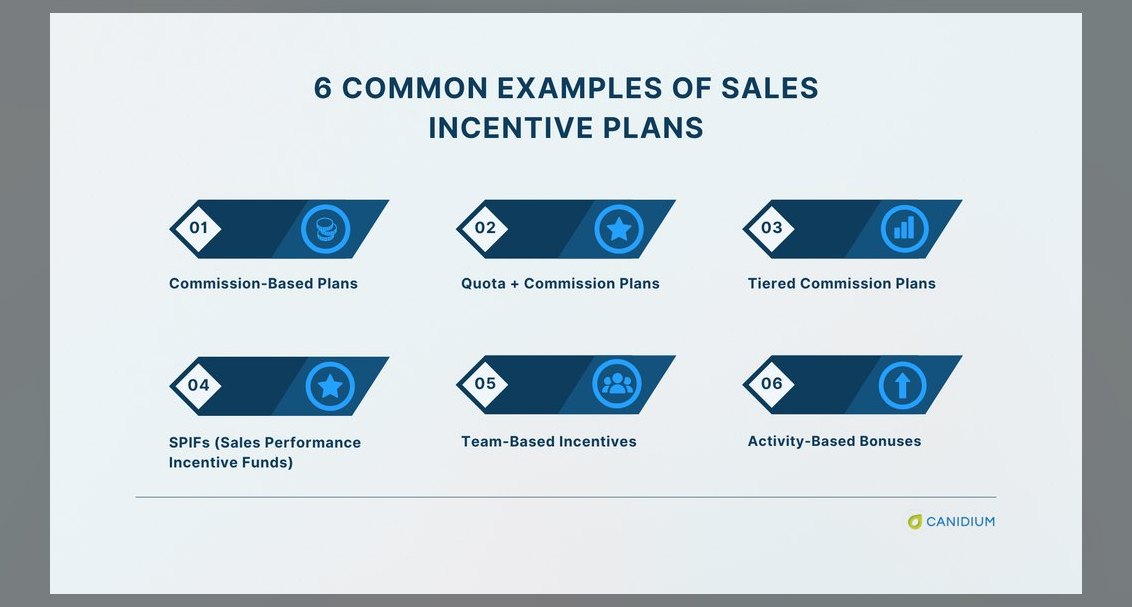
If you want to understand why revenue is unpredictable, look at your compensation plan. I’ve seen companies where reps are paid on demo volume - so they book 40 demos a month, none of which are qualified, and the pipeline fills with garbage. I’ve seen companies where reps are paid on closed-won revenue with no clawback for early churn - so they close deals with customers who were never going to renew. The comp plan isn’t just a cost center; it’s the operating system for rep behavior.
A fractional CRO will typically spend a week auditing the comp plan against three criteria:
- Does it reward the right activities? If you want predictable revenue, you need to reward pipeline generation, not just closing. A healthy comp plan might have 40% of variable comp tied to pipeline creation (meetings booked, qualified opportunities created) and 60% tied to closed revenue. That shifts behavior from “hunt for the easy close” to “build a sustainable pipeline.”
- Does it penalize bad behavior? Unpredictable revenue often comes from reps who chase the wrong deals. If a rep closes a $50k deal that churns in 90 days, they should lose their commission - or at least have a clawback that makes it unprofitable to close bad-fit customers. Most comp plans don’t have this, so reps are incentivized to close anything that moves.
- Does it create team alignment? In B2B, revenue is rarely a solo effort - it involves SDRs, AEs, customer success, and sometimes product. If each team has a different incentive structure, you get finger-pointing instead of collaboration. A fractional CRO will often redesign the comp plan to include shared metrics: SDRs get paid on meetings that convert to pipeline, AEs get paid on closed revenue with a retention component, and customer success gets paid on expansion revenue. Suddenly, everyone is rowing in the same direction.
The most common fix I see: moving from a pure commission model to a land-and-expand model where reps are paid a smaller upfront commission but earn recurring residuals on renewals and expansions. That changes the game entirely. Instead of chasing the next deal, reps are motivated to ensure the last deal works. That’s how you build predictability - by making it financially stupid to close bad deals.
A fractional CRO can implement a new comp plan in about 30 days, but the real magic is in the rollout. They’ll run the numbers to show reps exactly how they can earn more under the new plan (if they change their behavior). They’ll build a transition period where reps aren’t penalized for deals already in the pipeline. And they’ll set up a monthly review to catch unintended consequences before they become problems. The result: within two quarters, the comp plan stops being a source of chaos and becomes a tool for predictability.
The Weekly Rhythm: How a Fractional CRO Turns a Broken Forecast Into a Reliable Number (and Why It Works)
The single biggest driver of unpredictable revenue is a broken forecast. Most companies forecast once a month, based on gut feel, and then spend the last week of the quarter scrambling to hit the number. A fractional CRO replaces that with a weekly rhythm that makes the forecast self-correcting.
Here’s what that rhythm looks like in practice:
Monday morning: Pipeline review. Every rep submits a one-page update: deals moved, new opportunities created, deals that stalled. The fractional CRO reviews these in a 30-minute team stand-up. The goal isn’t to micromanage - it’s to catch problems early. If a deal that was supposed to close this week hasn’t moved in 10 days, that’s a red flag. The fractional CRO asks one question: “What’s the one thing that needs to happen this week to keep this deal on track?” That question forces reps to think about next steps, not just report status.
Wednesday: Deal coaching. The fractional CRO takes the top 3-5 deals that are at risk and does a deep dive with the rep. They review the actual conversation notes, the buyer’s objections, and the competitive landscape. This isn’t a judgment session - it’s a coaching session. The fractional CRO might suggest a different approach, a new stakeholder to engage, or a pricing adjustment. The goal is to save the deal or, if it’s truly dead, get it out of the pipeline so the forecast is honest.
Friday: Forecast lock. Every rep submits a commit number for the next week, the current quarter, and the next quarter. The fractional CRO compares these against historical close rates and adjusts accordingly. If a rep says they’re going to close $100k next week but their historical close rate on deals at that stage is 30%, the forecast gets adjusted to $30k. This is where the predictability comes from - not from hoping reps hit their numbers, but from applying math to their optimism.
The weekly rhythm also includes a pipeline generation check. If the team needs to generate $500k in new pipeline this week to hit next quarter’s target, that number is tracked and reviewed every Friday. If they’re falling behind, the fractional CRO can reallocate resources - maybe the SDR team runs an extra campaign, or the AEs do a round of outbound. The point is that you catch the gap in week one, not month three.
After 90 days of this rhythm, something remarkable happens: the forecast becomes reliable within 10-15% accuracy. That’s not perfect, but it’s a world away from the 50-60% swings that make revenue feel unpredictable. The fractional CRO has built a system where the team knows what’s real, what’s at risk, and what needs to happen next. And because the system is documented and repeatable, it doesn’t fall apart when the fractional CRO leaves - it becomes part of the company’s operating DNA.
Sources
- Harvard Business Review - insights on revenue strategy, sales leadership, and organizational growth
- Gartner - research on sales performance, revenue operations, and fractional executive roles
- McKinsey & Company - analysis of revenue predictability, go-to-market models, and executive talent trends
- SaaStr - community-driven content on SaaS revenue challenges, fractional leadership, and scaling sales
- U.S. Small Business Administration (SBA) - guidance on revenue management, business planning, and executive hiring for small to mid-sized firms
- LinkedIn Sales Solutions - reports and thought leadership on sales leadership, revenue forecasting, and fractional CRO adoption
FAQ
How quickly can a fractional CRO stabilize unpredictable revenue? A seasoned fractional CRO can often diagnose the core issues - like a broken comp plan or lack of accountability - within the first few weeks. Real stabilization typically takes one to three months, depending on how deeply the revenue process needs to be rebuilt. Honest timelines vary by company size and complexity.
What’s the first thing a fractional CRO does to fix revenue unpredictability? They start by auditing the revenue operating system: checking if goals are defensible, if the forecast is based on real data, and if there’s a weekly accountability rhythm. This initial assessment usually takes one to two weeks and reveals the biggest gaps.
Does a fractional CRO replace my existing sales team? No, they work alongside your current team to fix processes and coaching, not to replace people. The goal is to strengthen your team’s execution, often by adjusting comp plans and forecast methods. They typically engage for a few months to a year.
How much does a fractional CRO cost compared to a full-time CRO? A fractional CRO usually costs between $5,000 and $15,000 per month, while a full-time CRO can run $20,000 to $40,000 monthly plus equity. The range depends on the company’s stage and the scope of work needed.
This page will be disappearing soon. Save it to your device for $1 — or read it free while it is here.
@Kory-White- · if Venmo asks, the last 4 of my number are 2012
This page is gone.
This one is off the shelf now. $1 keeps it on your phone for good — the whole page, pictures and diagrams included.
 pulse-qHow Do I Set Attach Rates for My Service Fees in 2026?
 pulse-qWhat Service Fees Should a Pool Service Company Charge in 2026?
 pulse-qHow Many Employees Should I Schedule Each Shift at My Shoe Repair Shop in 2027?
 pulse-qShould I Hire a Fractional CRO If My VP of Sales Just Quit in 2026?
 pulse-qHow Do I Get My Staffing Recruiters to Sell Direct-Hire Placements in 2026?
 pulse-qShould I Hire a Fractional CRO If My Net Revenue Retention Is Below 100 Percent in 2026?
 pulse-qWhat Add-On Fees Should I Be Charging That I'm Not in 2026?
 pulse-qHow Do I Make a Service Fee Tangible So It Adds Real Value in 2026?
 pulse-qHow Do I Get My Optical Staff to Sell Premium Lenses and Coatings in 2026?
 pulse-qHow Many Sales Reps Do I Need to Hire for My Window Blinds Company in 2027?