
How Many Employees Should I Schedule Each Shift at My Smoothie Bar in 2026?
 Curated byKory White · Fractional CRO · Maryland
 PULSEKNOWLEDGE LIBRARY
Quality
Certified

Schedule two employees on slow shifts, three to four on moderate ones, and five to six during the lunch wave and post-gym evening rush. Size each shift by dividing that daypart's average gross profit by a per-employee target of roughly $160, then never drop below a two-person floor.
What shift staffing at a smoothie bar actually means
Staffing a blended-drink counter is a different discipline from staffing a restaurant, a retail store, or a coffee shop, and the difference is worth understanding before you touch a schedule template. A smoothie bar has three characteristics that shape every headcount decision: a very low average ticket, an extremely spiky demand curve, and a production process with a hard physical bottleneck.
The low ticket matters because it caps how much gross profit a single body can generate. When you sell furniture, one salesperson closing one deal can produce hundreds of dollars of margin in an afternoon. When you sell one or two twelve-ounce smoothies at a time, gross profit accumulates in five-dollar increments. That means headcount decisions swing on transaction volume, not on deal size, and a single unnecessary employee on a quiet Tuesday is a pure, unrecoverable loss against a thin margin base.
The spiky demand curve matters because averages lie. If your bar does $1,400 in gross profit across a twelve-hour day, the flat math suggests a steady crew. But the receipts almost never distribute evenly. A typical smoothie bar concentrates a large share of daily revenue in an eleven-to-two lunch window and a second, smaller wave in the late-afternoon post-workout block. The hours between those waves can be nearly dead. Staff to the daily average and you are simultaneously overstaffed at 2:30 and understaffed at noon — the worst of both errors, paid for twice.
The production bottleneck matters because a smoothie bar's throughput ceiling is set by hardware, not enthusiasm. You have a finite number of blender jars. Adding a fifth employee to a station with three functioning blenders does not increase output; it adds a person who watches. This is the single most important constraint that generic scheduling advice ignores. Your maximum useful headcount at peak is a function of blender count, register count, and counter length — not of how many people applied for the job.

Why does getting this right matter so much? Labor is typically the largest controllable cost in a counter-service beverage operation, often running neck and neck with cost of goods. Every hour you schedule that the receipts do not justify comes directly out of owner profit. And the error is invisible in a monthly P&L: a manager who consistently adds one extra body to five shifts a week is quietly burning real money, and the only way it surfaces is if someone is dividing gross profit by headcount and asking whether the numbers agree.
The flip side is equally expensive but harder to measure. Understaffing at peak does not just cost you the customers who walk out. It costs you the ones who see a line, keep driving, and never come back. In a business built on habit and repeat visits — the person who stops for the same mango-spinach blend four mornings a week — losing a regular is not a lost ticket, it is a lost annuity. That asymmetry is why the framework below is deliberately more generous at peak than it is in the lulls.
There is also a staffing-quality dimension that pure math misses. A two-person crew where both employees can run register, blender, prep, and cleanup is meaningfully more productive than a three-person crew where one person only knows the register. Headcount is the number you schedule; capability is what actually shows up. The framework treats those as separate variables and so should you.
The step-by-step process for sizing every shift
Here is the sequence I run, in order. It takes a couple of hours the first time and about twenty minutes a week after that.

Step one: set a gross-profit-per-employee target. Sit down with whoever helps you run the place and agree on one number: the gross profit an average employee should produce, doing an average job, serving an average number of customers, over one shift. For a low-ticket, high-volume blended-drink business, roughly $160 a shift is a defensible floor. It is modest — you are selling one or two drinks per transaction, not closing furniture — but it sits somewhat above what a plain baked-goods counter would support, because drink margins are healthy and add-ons like protein scoops, seed boosts, and acai bowls lift the ticket without lifting food cost much.
Say the number out loud to the team so it stops being a secret: if you show up, blend a normal volume of drinks and bowls, keep the line moving, and give average service, you should generate no less than $160 in gross profit on that shift. That is the honest floor, not the stretch goal. The people who want more hours do not scrape to $160 and then wipe a counter — they clear it doing ordinary work, then add upsells on top.
Step two: pull trailing gross profit by shift and by weekday. Not by day. By *shift*, on *each day of the week*, over a trailing three to six months. Most POS systems will export hourly sales; from there you need gross profit, so subtract cost of goods. If you have not calculated your true per-drink COGS, do that first — it is the input everything else depends on, and guessing it corrupts the whole model.
Step three: divide. Employees needed for a given shift equals that shift's average gross profit on that weekday, divided by your per-employee target. A summer post-gym evening shift averaging $800 in gross profit calls for $800 / $160 = 5 people behind the counter. A slow winter mid-morning averaging $320 calls for 2. Run the division for every shift on every weekday and the staffing plan writes itself. No favorites, no "we've always run four after four," no manager quietly scheduling friends onto the easy shifts.
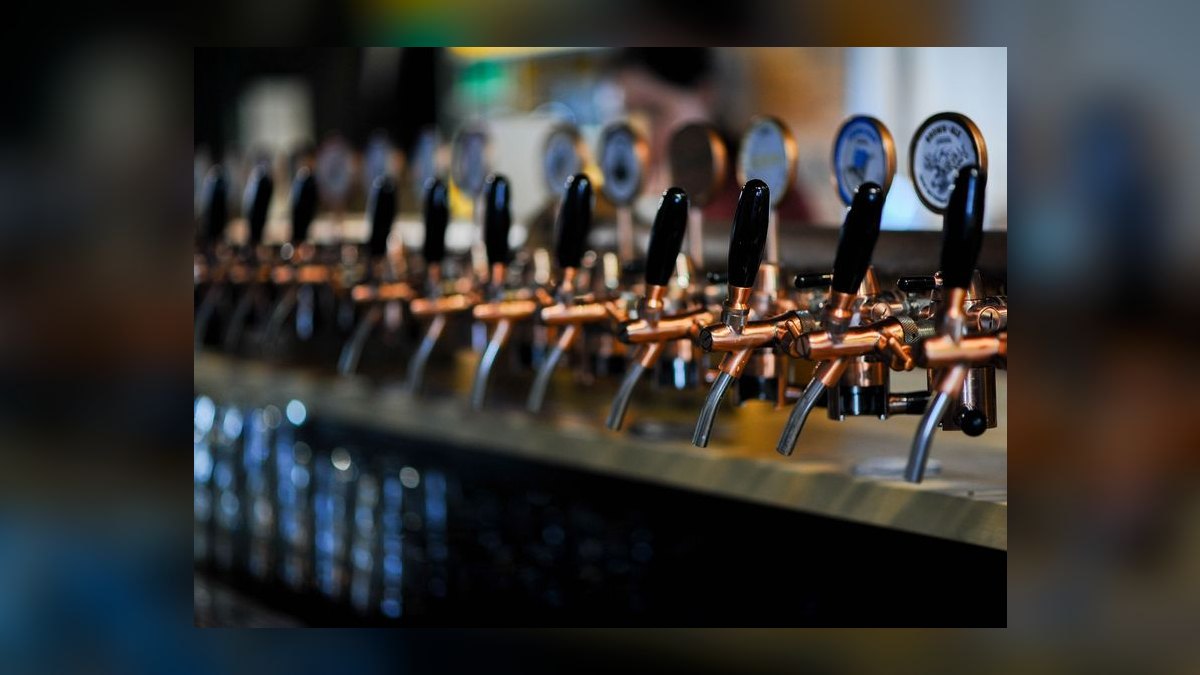
Step four: place the bodies where the receipts actually ring. The division tells you how many people a shift supports; hourly transaction data tells you *when* inside that shift they should be standing there. Two clean spikes are typical: stack your blenders through the eleven-to-two lunch wave, ramp back up for the four-to-seven post-workout rush — a strong summer evening genuinely supports five people, the same as the $800 example above — and drop to your two-person floor through the mid-afternoon lull when nobody is buying.
Step five: check the answer against physical capacity. If the math says six and you have three blenders and one register, the math is describing revenue you cannot actually produce. Either cap headcount at what the equipment supports, or treat the gap as a signal to buy a fourth blender and add a second register. That is one of the most valuable byproducts of doing this math honestly: it converts a staffing question into a capital-expenditure answer.
Step six: stagger the starts. This is where most of the savings live. Rather than scheduling five people from eleven to seven, schedule two openers, two more starting at 10:30 for the lunch wave, and one starting at four for the evening. Same coverage at peak, several fewer paid idle hours.
Costs, timelines, and typical ranges
Let me put concrete numbers on the moving parts so you can sanity-check your own bar against them. Treat these as planning ranges to validate against your receipts, not as universal constants — a kiosk in a mall food court and a standalone bar next to a gym behave differently.

Zone-based headcount ranges. Split the operating day into three revenue zones instead of treating every hour the same.
The *ramp* — from open through mid-morning — is typically a small slice of the day's revenue. One to two employees covers it: one on prep, cutting fruit, portioning frozen packs, loading the blender station and stocking cups, while the second takes the register and the early trickle. If that window is producing under roughly $150 in sales, one experienced person can genuinely handle it alone, and the pre-open prep hour is often the only truly solo-safe block in the day.
The *peak* — the lunch wave — routinely carries the largest share of daily gross profit at a smoothie bar. Plan roughly one additional employee for every $200 to $300 of projected revenue in that block. A bar doing about $1,200 across the lunch window supports four to five people: two on blenders, one on register, one on prep and restock, and one floating to expedite handoffs and keep the counter clean. Do not economize here. Losing one customer at peak costs their ticket *plus* the deterrent effect of the line on everyone behind them.
The *taper* — early-to-mid afternoon — usually falls off sharply, often by a third to a half. Shed one to two employees around the start of the taper. Then, and this is the part owners get backwards, ramp back *up* for the post-gym evening wave. On a strong summer evening that wave can support the same five-person crew as any lunch shift, exactly as the $800 division shows. The mistake is not the evening headcount; the mistake is holding a full lunch crew through the dead 2:00-to-4:00 stretch out of habit and then having no one left to add at 4:30.

Rules of thumb by traffic level. During peak hours, roughly one employee per $150 to $200 of projected hourly gross profit. Off-peak, roughly one per $100 to $125. Below those thresholds you are staffing to comfort, not to demand.
Throughput per crew size. A solo operator tops out somewhere around eight to ten transactions an hour before service quality visibly degrades — the register and the blender cannot be operated simultaneously, and every spill becomes a stall. Two people handle roughly twenty to twenty-five transactions an hour comfortably. Three push into the mid-thirties. Beyond that, gains flatten fast unless you add blender jars and a second register, because you have stopped being labor-constrained and become equipment-constrained.
Seasonal swing. Plan for winter revenue running well below summer peaks at most locations — a drop of a quarter to two-fifths is common outside of warm-climate markets. That translates directly: trim the lunch crew by one to two people and pull opening coverage back to a single person for the first hour. The holiday week between Christmas and New Year's is a reliable exception that can spike above the winter baseline; schedule an extra body or two those days.
Spring is the trickiest transition because revenue climbs steadily rather than stepping up. Add one person every couple of weeks instead of all at once, and watch the mid-month dates when disposable income tends to loosen. Summer is your peak; the lunch crew may need to be substantially larger than winter, and it is often worth adding a dedicated early prep person and a dedicated runner-cleaner through the lunch block whose only job is restocking cups, wiping counters, and clearing the handoff area. That single role can lift throughput noticeably because it removes the interruptions that stall the blender operators. Fall tapers back down — cut gradually, one person every two weeks, and use the slack for deep cleaning and cross-training.
On-call buffer economics. Keep one or two part-time employees who can arrive within about an hour. Paying a modest standby stipend for availability during identified peak windows is cheap insurance against the revenue loss of a genuinely understaffed rush. Run the comparison for your own numbers: a standby cost you pay every week versus a single blown Saturday peak. In most bars the stipend wins clearly.

Timeline to implement. Expect about a week to pull and clean the data, one pay period to run the new schedule and log actual results, and roughly two to three months before your per-shift averages are stable enough to trust without hand-adjustment. Recalculate monthly for the first quarter, then quarterly with a seasonal override.
Tooling costs. Several scheduling platforms serve counter-service food operations, and pricing models differ in a way that matters for a smoothie bar specifically. Some price per location, some per employee, and some offer a free single-location tier. Because a smoothie bar typically runs a large, churny roster of part-time and seasonal staff, per-location pricing is usually far more favorable than per-head pricing — a twenty-person summer roster costs the same as an eight-person winter one. Check current pricing directly with any vendor before budgeting; published tiers change often. What you actually want from the tool is the ability to tie the schedule to POS sales data and enforce a labor-percentage target, so the division you did by hand gets checked automatically every week.
Where teams get it wrong
Scheduling by feel. The default failure mode is a flat crew that never changes, set once by whoever opened the store and inherited by every manager since. It produces a bar that is simultaneously overstaffed for two-thirds of the day and underwater at noon. If nobody in your operation can state the gross-profit-per-employee target out loud, you are scheduling by feel regardless of what software you use.
Holding the lunch crew too long. Keeping five people on the floor from noon to four because the schedule was written in one block, when the receipts collapse at 1:30, is one of the most common and most expensive habits. It quietly burns real money every single day and it never shows up as a line item anyone questions.

Confusing the lull with the evening. The correction here is important: dropping to a skeleton crew in mid-afternoon is correct, and it does *not* mean the evening should also be thin. The post-gym window is a genuine second peak. On a strong summer evening it supports a full five-person crew — the same as lunch. Treat the taper and the evening wave as two separate decisions, because they point in opposite directions.
Ignoring the two-person floor. No matter what the division says, two people is the operating floor for any shift with customers. One person cannot ring a transaction while building a four-ingredient smoothie and mopping a spill. When the math returns 1.4, you schedule two and accept that the shift underperforms your per-employee target — or you shorten the shift, which is usually the better answer.
Scheduling headcount without scheduling capability. Three people who all only know the register is not a crew, it is a queue. Require every employee to be genuinely proficient in at least three of the four core roles — register, blender, prep, and cleaning/restock. Cross-training is what lets you flex a crew down without collapsing throughput. When a three-person shift loses someone to a call-out, a cross-trained pair can run a modified system where one owns register plus light prep and the other owns blender plus expediting. A non-cross-trained pair in the same situation has to close early.
Treating "power through" as a plan. Build an explicit minimum-crew matrix by daypart and post it in the back. Something like: weekday opening minimum two, target two; weekday lunch minimum three, target four to five; Friday lunch minimum three, target five to six; weekend peak minimum four, target six to seven. Then make the rule unambiguous — below minimum, the manager either calls in backup or reduces scope by closing early or limiting the menu. Without a written floor, every understaffed shift becomes a heroic effort that burns out your best people and drives customers to the place across the street.

Forgetting break coverage. A four-person shift with meal breaks is not a four-person shift. Depending on shift length and local labor rules, breaks can remove a meaningful fraction of scheduled hours from the floor. Build breaks into the lull, never into the peak, and if the shift is long enough to require multiple breaks, add the coverage explicitly rather than hoping people take them on the fly.
Applying restaurant ratios unchanged. Advice written for full-service restaurants assumes servers, a kitchen brigade, and a much higher average check. A smoothie bar's economics look closer to a coffee shop's or a fast-casual counter's: tiny tickets, high transaction counts, and a hardware bottleneck. Borrow the *method* from restaurant labor management — sales-driven scheduling, labor as a percentage of revenue, staggered starts — but derive the actual ratios from your own receipts.
Never checking the answer. The division is a hypothesis. Log the actual gross profit per employee per shift, then compare it to your $160 target. Shifts that consistently overproduce were understaffed and probably cost you walkouts. Shifts that consistently underproduce were overstaffed. That feedback loop is what turns a formula into a system, and skipping it is why most owners abandon the method after three weeks.
Decision framework: when to choose what
The math gives you a number. The framework below tells you which number to trust when signals conflict — which is most of the time in a seasonal, weather-sensitive, foot-traffic business.

Start with the honest question: do you have reliable trailing data? If you have been open less than a quarter, you do not, and no formula will manufacture it. Run a conservative base of two to three people per shift, add one on-call floater who can arrive quickly, and spend that first quarter logging gross profit per shift so the division has something real to chew on. Guessing at averages and then scheduling confidently against them is worse than admitting you are still measuring.
If you do have data, run the division — then apply four overrides in this order.
Override one: the floor. Any result under two rounds up to two. Non-negotiable.
Override two: the ceiling. Any result above what your blenders and registers can physically support gets capped, and the overflow becomes a capital-expenditure note rather than a labor line.

Override three: the direction of error. When a shift sits between two whole numbers, look at which way the risk runs. During a genuine peak — lunch, weekend, post-gym evening — round *up*. The cost of an extra employee for three hours is small and bounded; the cost of a line that pushes regulars out the door is neither. During a lull, round *down*, because the downside is a slightly slower service moment with few customers present to notice.
Override four: the season. Apply your seasonal multiplier last, and apply it to the daypart rather than the day. Summer lifts the evening wave far more than it lifts the mid-morning ramp; winter flattens both but hits the evening hardest in cold-weather markets. A single blanket seasonal adjustment across all dayparts recreates exactly the averaging error you did all this work to escape.
Weekday versus weekend deserves its own treatment rather than an adjustment factor. Weekend traffic patterns at a smoothie bar often differ in kind, not just in volume: later start, broader midday plateau instead of a sharp lunch spike, and more group orders where one transaction means four drinks. Group orders are the hidden variable — they inflate revenue per transaction while making throughput *worse*, because four drinks tie up the blender station while the line grows. Where group orders are common, staff a little above what the gross-profit division suggests and put the extra body on blenders, not on register.
The adjacent scenarios follow the same logic with different curves. A kiosk inside a gym rides the gym's own class schedule, so pull the class timetable and staff to it rather than to a generic lunch wave. A seasonal mall kiosk lives and dies on mall foot traffic, which means holiday retail hours drive the schedule more than mealtimes do. An acai-bowl-heavy menu shifts the bottleneck from blenders to assembly and topping stations, so the extra body belongs at build rather than at blend. A multi-unit operator gets one advantage a single bar does not: a shared float pool across locations, which lets you run each store closer to its true number because backup is genuinely reachable.
Related questions
How do I calculate my gross-profit-per-employee target if I have never done it?
Take total gross profit for a recent month and divide it by the total number of employee shifts worked that month. That gives your current actual. If it sits well below a defensible floor, you are overstaffed; set the target at the floor and let the division cut hours.
Should the owner count as one of the scheduled employees?
Only for the hours you are genuinely on the floor producing, not for admin time. Many small bars quietly rely on unpaid owner labor to make the schedule work, which hides a real staffing shortfall. Count your production hours honestly so the numbers reflect reality.
How many blenders do I need before adding a fifth employee helps?
Roughly one jar per person you intend to have blending simultaneously, plus one spare in rotation for washing. If the division keeps returning five or six and you have three jars, buy hardware before you buy hours — the extra person cannot produce anything.
Does this method work for a coffee-and-smoothie hybrid counter?
Yes, but run two curves. Coffee peaks early morning, smoothies peak midday and post-workout. Divide gross profit by daypart for each product line, then staff to the combined curve. The hybrid usually flattens your day, which is good for labor efficiency.
What labor percentage should a smoothie bar target?
Rather than adopting an outside benchmark, derive it: track labor cost as a share of revenue weekly for a quarter, note which weeks felt well-run, and set your target at that level. Then use the gross-profit division as the tool that holds you there.
FAQ
What is the minimum number of employees I should schedule for a slow shift?
Two, whenever customers are in the building. One on the register and light prep, one on the blender. A single person can cover a pre-open prep hour alone, but once the doors are open, a solo operator cannot ring an order, build a multi-ingredient drink, and handle a spill without service visibly breaking down.
How do I figure out the gross-profit-per-employee target for my own bar?
Divide your total gross profit for a full month by the number of employee shifts worked in that month to get your current actual, then compare it to what you believe an average employee should reasonably produce. For a low-ticket blended-drink counter, roughly $160 per shift is a workable starting floor. Adjust it up if your average ticket or add-on rate is unusually strong.
Should I schedule differently for weekdays versus weekends?
Yes, and not by a flat multiplier. Weekend demand at a smoothie bar tends to start later, spread across a broader midday plateau, and include more group orders. Use separate average gross-profit figures for each day of the week rather than one weekly average, and weight the extra weekend headcount toward the blender station.
What if my demand is genuinely unpredictable?
Run a conservative base of two to three per shift plus one on-call employee who can arrive within about an hour, and log actual gross profit per shift for a full month before trusting any formula. Unpredictability usually turns out to be unmeasured predictability — weather, gym class times, or a nearby office's schedule.
How do I cover the lunch wave without paying for idle hands the rest of the day?
Stagger the start times. Bring extra people in for just the eleven-to-two window rather than scheduling everyone across the full shift, place meal breaks in the mid-afternoon lull, and then add a body back for the post-gym evening wave. Same peak coverage, materially fewer paid idle hours.
What is the single biggest scheduling mistake smoothie bar owners make?
Running a flat crew set by habit instead of sizing each shift off its own gross profit. It guarantees you are overstaffed during the dead hours and underwater at peak, and because both errors happen on the same day they cancel out in the monthly labor number — so nobody catches it.
Sources
- https://www.bls.gov/ooh/food-preparation-and-serving/ — U.S. Bureau of Labor Statistics occupational data on food preparation and serving roles, including employment and wage figures.
- https://restaurant.org/ — National Restaurant Association research and operator resources on labor management and scheduling.
- https://www.sba.gov/business-guide/manage-your-business/hire-manage-employees — U.S. Small Business Administration guidance on hiring and managing employees.
- https://www.dol.gov/agencies/whd/flsa — U.S. Department of Labor Wage and Hour Division reference on Fair Labor Standards Act requirements.
- https://hbr.org/topic/subject/workforce-management — Harvard Business Review coverage of workforce management and scheduling practice.
- https://pos.toasttab.com/blog — Toast's restaurant operations blog, including labor cost and scheduling material.
- https://squareup.com/us/en/townsquare — Square's small-business resource hub covering POS reporting and staffing.
- https://www.score.org/ — SCORE mentoring and small-business templates, including labor planning resources.
Related on PULSE
- How Many Employees Should I Schedule Each Shift at My Juice Bar?
- How Many Employees Should I Schedule Each Shift at My Wine Bar?
- How Many Employees Should I Schedule Each Shift at My Sports Bar?
- Should I open or buy a Nekter Juice Bar franchise in 2027?
- Should I open or buy an I Love Juice Bar franchise in 2027?
This page will be disappearing soon. Save it to your device for $1 — or read it free while it is here.
@Kory-White- · if Venmo asks, the last 4 of my number are 2012
This page is gone.
This one is off the shelf now. $1 keeps it on your phone for good — the whole page, pictures and diagrams included.
 pulse-qHow Do I Make My Sales Goals Visible to the Whole Team in 2026?
 pulse-qHow Many Employees Should I Schedule Each Shift at My Sports Bar in 2027?
 pulse-qDo I Need a Fractional CRO for My Multi-Unit Retail Business in 2026?
 pulse-qWhat Service Fees Should a Pool Service Company Charge in 2026?
 pulse-qHow Do I Increase My Average Ticket Without Selling Anything Extra in 2026?
 pulse-qShould I Hire a Fractional CRO If I Just Raised a Series A in 2026?
 pulse-qHow Many Sales Reps Do I Need to Hire for My Pharmaceutical Company in 2026?
 pulse-qHow Do I Set Attach Rates for My Service Fees in 2026?
 pulse-qFractional CRO vs VP of Sales: Which Do I Need?
 pulse-qHow Many Employees Should I Schedule Each Shift at My Language School in 2026?