


How to have a difficult conversation with a neighbor about noise in 2027
Quality
Certified

Approach a noisy neighbor with a calm, face-to-face conversation, not a note or a call to authorities. Pick a neutral moment, use "I" statements about the impact on you rather than accusations, listen for context you might be missing, and propose a specific trade — quiet hours after 10 PM, a moved speaker, a rug. A respectful, solution-focused conversation resolves most noise disputes without ever needing a landlord, mediator, or police.
What it is and why it matters
A difficult conversation with a neighbor about noise is, at its core, a negotiation between two people who each think their behavior is reasonable. The person making noise usually has no idea how far sound travels through a shared wall, a thin floor, or an open window in summer. The person hearing it usually assumes the noise is intentional or careless. Neither assumption is fair, and both sides walking in with a grievance instead of a question is why so many noise disputes spiral into years-long feuds over what started as one loud Tuesday night.
Heading into 2027, this conversation matters more than it used to, not less. More people work hybrid or fully remote schedules, which means more households are home during daytime hours that used to be quiet by default — a home office next to a shared wall now registers every vacuum, every video call, every dog left alone. Denser housing, more accessory dwelling units, and more short-term rentals mixed into residential blocks all raise the odds that your neighbor's schedule, habits, or tolerance for sound simply doesn't match yours. None of that makes the noise malicious. It makes the conversation necessary.
Why it matters practically: how you open this conversation determines almost everything that happens after it. A note under the door is anonymous and easy to read as an accusation, which is why it so often escalates a minor annoyance into a standing conflict. A call to police or code enforcement before you've ever spoken to the neighbor brands you the neighborhood problem and burns any goodwill you might have needed later. A blunt, unqualified demand — "turn it down" — invites defensiveness instead of cooperation. A calm, direct, specific conversation, by contrast, treats the other person as a reasonable adult who probably just doesn't know what you're experiencing, and reasonable adults respond to that framing far better than they respond to an ultimatum.
The goal isn't to win an argument about decibels or local noise codes. It's to find a workable compromise that lets both households live comfortably — because you are going to keep living next to this person, possibly for years, and the conversation you have this week sets the tone for every interaction after it.
The step-by-step process
The mechanics of the conversation matter as much as the intent behind it. Rushing it, ambushing the neighbor, or leading with blame undoes the goodwill you're trying to build before you've said a word.
Step 1 — Choose your moment. Never approach a neighbor mid-party, mid-argument with someone else, or late at night when tempers and defensiveness run high. A weekend afternoon when you see them in the yard, or a short text asking "Hey, do you have a few minutes to talk later this week?" works far better, because it hands them some control over the timing instead of cornering them.
Step 2 — Open with warmth, not accusation. Something as simple as "Hi, I'm [name] from next door — I wanted to talk about something that's been on my mind" signals this is a conversation, not a confrontation. Immediately follow with your goal: "I'm hoping we can find something that works for both of us."
Step 3 — Describe the impact, not the behavior. This is where "I" statements matter most. "I've been having trouble sleeping when the bass carries through the wall around 11 PM" lands very differently than "You play your music too loud." The first is an observation about your experience; the second is a verdict on their character, and verdicts trigger defensiveness.
Step 4 — Listen without interrupting. Give them room to explain. They may be a shift worker sleeping at odd hours, running a home studio, caring for a sick child, or simply unaware the sound travels the way it does. Acknowledging their side — "I get that you're not trying to be disruptive, I just want to find a fix" — builds the trust that makes step five possible.
Step 5 — Propose a specific, concrete trade. Vague requests ("just keep it down") are hard to act on. Specific ones aren't: quiet hours after 10 PM on weeknights, moving a subwoofer off a shared wall, adding a rug, or lowering volume during certain windows. Framing it as a trade — "if you can hold off on bass after 10, I'll be relaxed about weekend afternoons" — makes the ask feel fair rather than one-sided.
Step 6 — Close and confirm. Thank them, even if the fix isn't perfect, and if the agreement has real detail to it, recap it in a quick text afterward: "Just confirming — quiet hours after 10 PM on weeknights. Thanks for talking this through." That message becomes a shared reference point if the noise resumes later.
Costs, timelines, and typical ranges
Most of this process costs nothing but time and composure, but it helps to know the rough timeline and the price of each escalation step so you're not caught guessing mid-dispute.
The conversation itself should take five to fifteen minutes. If it runs much longer than that on the first attempt, it's usually drifted from problem-solving into re-litigating who's right, which is a sign to wrap up and revisit later rather than push through. Give any agreement a real trial period — one to two weeks is standard — before deciding whether it's working. Following up too soon reads as nagging; waiting a month lets a broken agreement calcify into resentment.
If the direct conversation stalls, a written note or friendly text follow-up costs nothing and typically gets a response within a day or two. If it goes hostile and you need a 24-48 hour cool-down before trying again, that's normal — treat it as a pause, not a failure.

Mediation is the next real cost tier. Community mediation centers, which exist in most mid-sized and larger cities, are frequently free or charge a modest sliding-scale fee, often in the tens of dollars rather than hundreds, specifically because neighbor and family disputes are their core caseload. A typical mediation session runs one to two hours and can often be scheduled within one to three weeks of a request, faster in areas with dedicated neighbor-dispute programs.
Self-directed fixes on your own side of the wall are the next tier: thick curtains, door draft stoppers, bookshelves against a shared wall, and area rugs are modest expenses — generally well under a few hundred dollars combined — and they help regardless of how the neighbor conversation goes, since they reduce what you hear even if the source noise doesn't change. Dedicated acoustic panels or a white noise machine sit at a similar modest cost and can meaningfully cut perceived noise without requiring the neighbor to change anything.
Legal action — formal noise complaints backed by code enforcement, or an attorney letter — is both the slowest and most expensive path, often taking weeks to months to produce any result, and it is close to irreversible in terms of the relationship. It should be treated as a last resort reserved for noise that is severe, persistent, and already documented, not a shortcut around an uncomfortable first conversation.
Where teams get it wrong
The most common mistake is skipping the conversation entirely and going straight to a note, a call to the landlord, or a call to police. Each of those routes removes the human element from what is fundamentally a relationship problem, and each one reads to the other person as an ambush rather than a request — which is exactly what turns a fixable annoyance into a standing feud.
A second common error is treating "direct" as a synonym for "blunt." Marching over and saying "your music is too loud, turn it down" delivers the same message as an "I" statement but invites a completely different reaction, because it assigns blame instead of describing impact. People defend themselves against blame; they rarely defend themselves against someone simply explaining they can't sleep.
A third mistake is leading with the noise ordinance instead of the actual problem. Quoting code at a neighbor implies they're a rule-breaker, not a reasonable person who might simply not realize the impact of their behavior — and it also misses the point in cases where the noise is technically legal but still genuinely disruptive, such as a party that legally ends at 10 PM but leaves the walls still rattling.
A fourth mistake is assuming malice by default. Most people genuinely underestimate how far sound carries through their own walls and floors — what sounds like a normal TV volume on one side of a wall can be a dull roar on the other. Approaching the conversation assuming ignorance rather than spite changes the entire tone, because you're solving a shared problem together instead of confronting a villain.
A fifth and often-overlooked mistake is skipping the follow-up. An agreement without any check-in tends to quietly erode — old habits creep back once the initial conversation is a few weeks in the past. A brief, friendly "thanks for keeping it down last night, I noticed" does more to lock in a lasting change than the original conversation did, because it reinforces the behavior instead of only correcting it once.
Finally, people often escalate too fast once the first conversation doesn't produce instant results. One imperfect conversation isn't proof that nothing will work — it's usually proof that the agreement needs a revisit, a small adjustment, or simply more time before jumping to a landlord, an HOA, or legal action.
Decision framework: when to choose what
Not every noise situation calls for the same first move. A single loud night calls for patience; a pattern calls for a conversation; a hazard calls for something faster.
If the noise is a one-off — a single late party, a one-time home project — the right move is usually no move at all, or at most a light, friendly heads-up text the next day. If it's a recurring pattern that's affecting your sleep, work, or daily life, that's the trigger for the full conversation described above: neutral timing, "I" statements, a specific proposed compromise.
If the direct conversation goes well but the noise creeps back after a few weeks, a short, friendly follow-up message is the right next step before assuming the agreement failed entirely. If the conversation itself goes badly — the neighbor is defensive, dismissive, or hostile — the next step is a cooling-off period of a day or two, followed by a written note or a request for mediation, not an immediate escalation to authorities.
If you're renting and the noise is coming from a neighboring unit, loop in your landlord or property manager after the direct conversation, not before — they typically have lease clauses about quiet enjoyment they can enforce, but they work better as a second step than a first one, since involving them immediately can make the neighbor feel reported on rather than talked to.
Reserve police or code enforcement calls for noise that is immediate, dangerous, or clearly illegal — late-night construction, a disturbance involving a threat, anything that can't wait for a conversation. For everything else, that call should come only after direct conversation and, ideally, mediation have been tried and failed, because it is the step most likely to permanently damage the relationship.
Related questions
What if my neighbor denies the noise is a problem at all? Stick to your own experience rather than arguing the point: "I understand you don't hear it as loud, but from my side it's disruptive — would you be open to listening from my place sometime?" That invites empathy instead of a standoff.
How is a noise conversation different in an apartment versus a house? In an apartment, the landlord or property manager is a natural second step with lease-based authority; in a single-family neighborhood, an HOA or informal mediation typically fills that role instead.
Should I record the noise as proof? Only if you're preparing to involve a landlord or take legal action — recording without consent is restricted in some places. A simple written log of dates, times, and duration is usually enough and carries less legal risk.
What if the noise comes from kids or pets, not adults? Frame it as a shared concern rather than a complaint — "I'm a little worried about the dog barking all day while you're out" — and offer to help, which keeps the tone collaborative rather than punitive.
FAQ
What's the single biggest mistake people make when confronting a noisy neighbor? Skipping the direct conversation and going straight to a note, the landlord, or the police. Each of those routes reads as an ambush and removes any chance for the neighbor to respond in the moment, which is usually what turns a fixable issue into a lasting conflict.
Is it ever okay to just leave a note? A note is a fallback, not a first move — use it only after a face-to-face or phone attempt has failed or genuinely isn't possible, and keep the tone as warm and specific as you would in person.
How do I stay calm if the conversation gets heated? Don't match their energy. Use de-escalating language like "I can see this is frustrating — I'm not trying to attack you, I just want us both comfortable," and be willing to step away and revisit the conversation after a day or two if it turns hostile.
What if the noise is technically within the local noise ordinance's legal hours? Legal and livable aren't the same thing. Focus the conversation on the actual impact you're experiencing rather than citing code, since a compromise is usually more achievable — and more durable — than a legal argument.
When should I bring in a mediator instead of trying again myself? If a calm, well-prepared conversation still goes nowhere, or the neighbor becomes consistently hostile, a community mediation center gives both sides a neutral space to talk without one person feeling ambushed by the other.
How soon should I follow up after reaching an agreement? Give it one to two weeks before checking in. If the noise resumes, a short, friendly reminder — not a re-run of the original conversation — is usually enough to reset the agreement.
Sources
- https://www.hud.gov
- https://www.americanbar.org
- https://www.psychologytoday.com
- https://www.nar.realtor
- https://www.nafcm.org
- https://www.nolo.com
- https://www.findlaw.com
- https://www.apartmenttherapy.com
Related on PULSE
- How do I start a conversation with someone I admire at a networking event
- My Thoughts: What question do you ask a champion to ensure they have the internal credibility to sell your solution for you
- Should I Hire a Fractional CRO If I Have No Sales Enablement Function?
- Should I Hire a Fractional CRO If I Have Great Marketing but Weak Sales?
- Should I Hire a Fractional CRO If I Have No RevOps Function Yet?
- Should I Hire a Fractional CRO If I Have Missed Quota Two Quarters in a Row?
This page will be disappearing soon. Save it to your device for $1 — or read it free while it is here.
@Kory-White- · if Venmo asks, the last 4 of my number are 2012
This page is gone.
This one is off the shelf now. $1 keeps it on your phone for good — the whole page, pictures and diagrams included.
 edHow to ask for a deadline extension without looking unreliable in 2027
 edHow do I ask my boss for a raise without sounding entitled in 2027
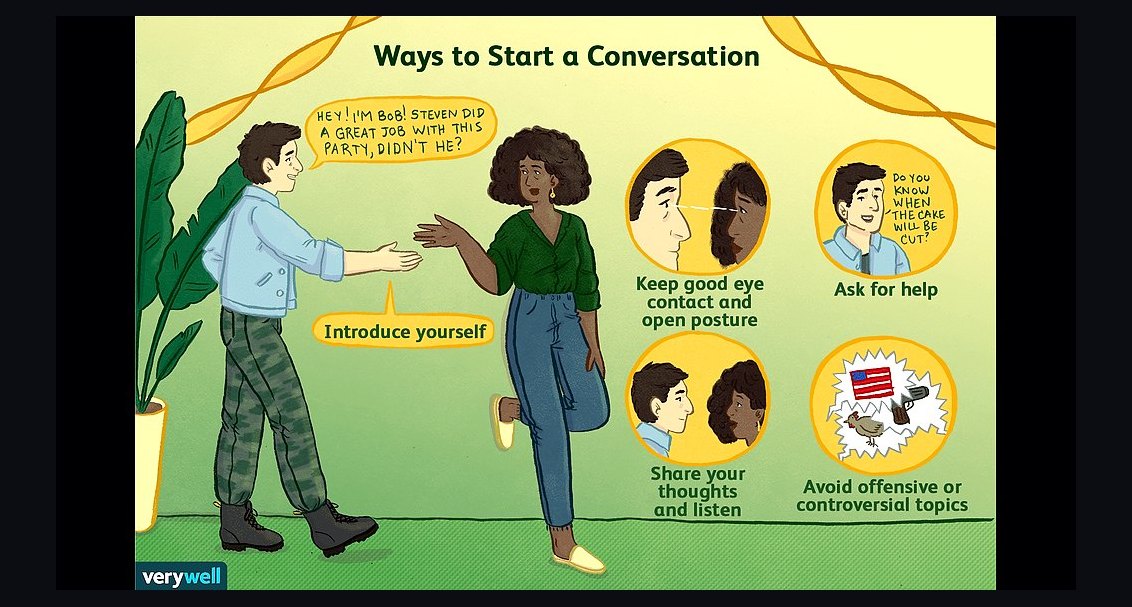 edHow do I start a conversation with someone I admire at a networking event in 2027
 edBest water flossers for sensitive gums in 2027
 edHow do I handle a sibling who always brings up old grudges at family gatherings in 2027
 edTop 10 remote-friendly companies with the best work-life balance in 2027
 edHow do I say no to a promotion without looking unmotivated in 2027
 edTop 10 podcasts for personal growth and motivation in 2027
 edHow do I tell my partner I want more alone time without hurting their feelings in 2027
 edHow to ask for a mentor without sounding desperate in 2027