


Best water flossers for sensitive gums in 2027
Quality
Certified
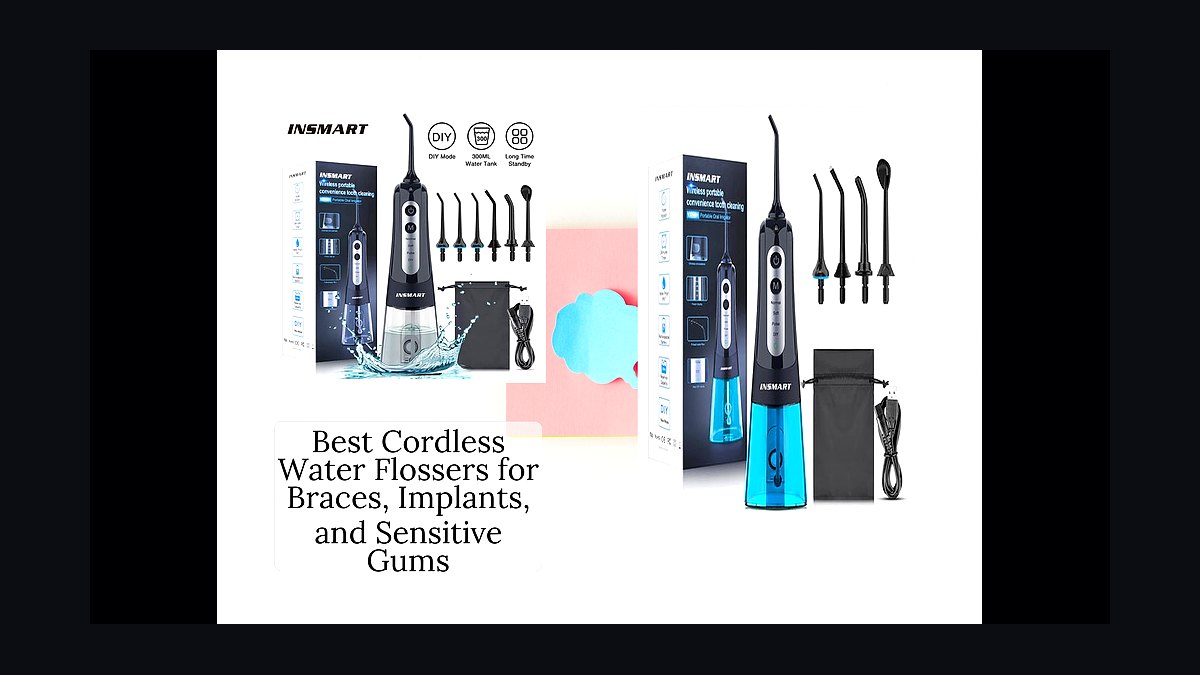
The best water flossers for sensitive gums in 2027 are models with a genuinely low minimum pressure, a soft or pocket-style tip, and pulse or micro-droplet delivery rather than a hard continuous jet. Prioritize adjustable pressure range over price, start at the lowest setting with lukewarm water, and increase gradually only if no discomfort occurs.
The bathroom-sink scenario that sends people looking for a gentler flosser
Picture the moment that actually drives this purchase. Someone finishes a dental cleaning where the hygienist mentions pocket depths creeping past 3mm in a few spots, or notes early recession on the lower front teeth. The instruction is always the same: clean between the teeth every day. So they buy string floss, saw it down between two tight contacts, and hit the gum with the edge of the strand. It stings. There is blood in the sink. The next night they skip it, and the night after that the floss stays in the drawer.
This is the failure mode that water flossers exist to solve, and it is why "sensitive gums" is such a common search qualifier. The problem is rarely that the person does not want to clean between their teeth. The problem is that the tool they were handed produces an immediate negative sensation, and daily habits do not survive daily pain. A water flosser removes the mechanical scraping entirely — nothing rigid touches the gum tissue — and replaces it with a stream of water that flushes the interdental space and the sulcus.
But the swap only works if the device is set up correctly. A brand-new countertop unit taken straight out of the box is frequently shipped with the pressure dial in the middle or upper range, and a first-time user who fires it at full strength against inflamed tissue gets a worse experience than the string floss they were trying to escape. The stream stings, the gum bleeds more than it did before, and the device joins the floss in the drawer. That single first-use decision — where the dial sits — matters more than the brand on the housing.
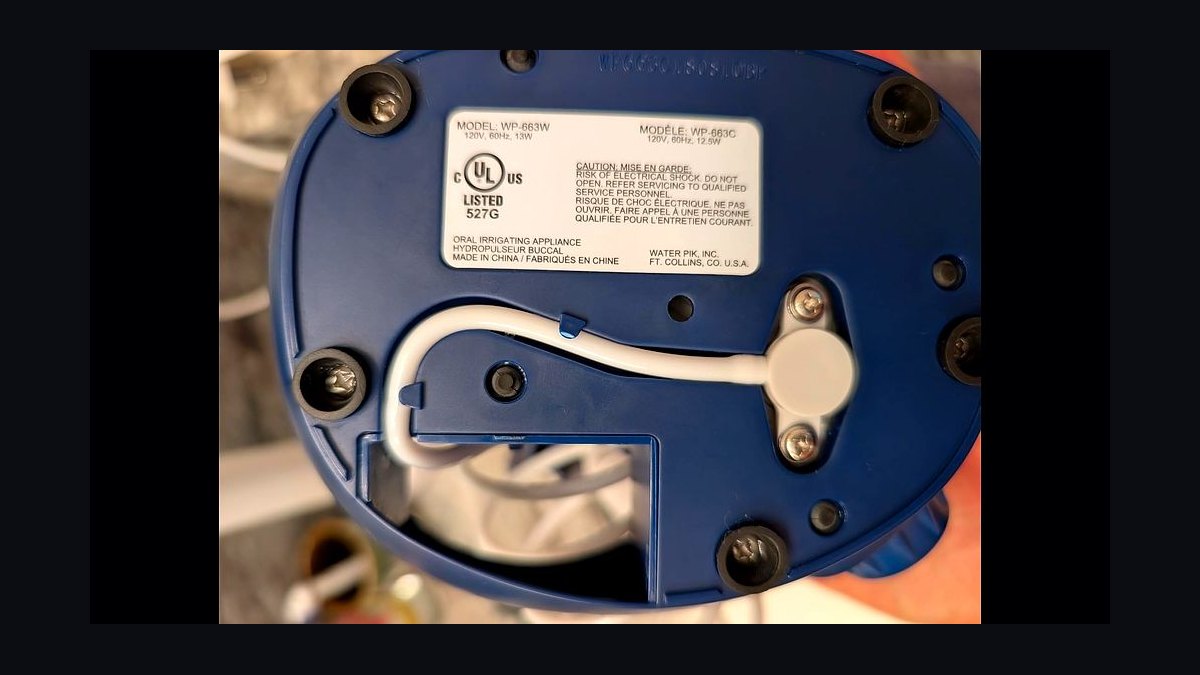
There is a second wrinkle specific to sensitive gums. Bleeding on the first several days of water flossing is extremely common and is usually a sign of pre-existing inflammation being disturbed, not of the device causing damage. Gingival tissue that has had plaque sitting along the margin for months is friable; it bleeds when anything touches it. Most people who stick with a gentle daily routine see that bleeding decline over roughly two to four weeks as the inflammation resolves. The trap is that the beginner cannot tell the difference between "this is inflammation resolving" and "this is too much pressure," so they either quit too early or push too hard. The practical rule that resolves the ambiguity: bleeding that decreases week over week at the lowest pressure setting is the expected pattern; bleeding that increases, or sharp pain during use, means back off or stop and see a dentist.
The third piece of the scenario is anatomy. Sensitivity is not one condition. Exposed root surfaces from recession have dentin tubules that respond to temperature and to physical stimulation. Deep periodontal pockets have a fragile lining that a hard jet can drive debris into rather than out of. Post-surgical sites and areas around recent implants or crowns have healing tissue and cement margins that should not be blasted. Each of those calls for a different tip and a different pressure ceiling, which is why "best water flosser for sensitive gums" is really a question about configurability, not about a single model.
How the pressure and tip system actually works

A water flosser is a small positive-displacement pump, a reservoir, a hose, and a nozzle. The pump — usually a piston or diaphragm type in countertop units, a smaller motor in cordless models — pulls water from the reservoir and pushes it through the handle to a narrow orifice at the tip. Two things determine what your gum actually feels: the pressure the pump generates, and the geometry of the orifice the water exits through.
Pressure is what the dial controls. Manufacturers publish this in PSI, and the useful number for sensitive gums is the *minimum*, not the maximum. A unit advertising a wide range that bottoms out around 10 PSI is far more useful to a sensitive-gum user than one whose lowest setting still starts fairly high, even if the second unit has a higher top end. The top end is marketing; the bottom end is the setting you will actually live at for the first month. When comparing two models, look for the low end of the published range and how many discrete steps exist between minimum and maximum. Ten steps means you can climb in small increments; three steps means each increase is a large jump and you may find that step two is already past your comfort threshold with no intermediate option.
Delivery pattern is the second variable, and it is genuinely different across product families. A conventional jet tip produces a continuous, narrow, high-velocity stream. Pulsation modulates that stream — most countertop units pulse at roughly 1,200 pulses per minute — which is what makes the water feel like a rapid tapping rather than a steady push, and it is the basis for the "massage" modes some units offer. Micro-droplet devices such as the air-and-water burst designs take a completely different approach: they mix compressed air with a small volume of water and fire short bursts, so total water volume per burst is tiny and the sensation is closer to a puff than a stream. People with genuinely reactive tissue often describe the burst devices as the least startling, at the cost of less flushing volume in deeper pockets.

Tip geometry converts the same pump pressure into very different sensations. A standard jet tip concentrates the flow into a tight column, which is efficient at dislodging debris but creates a pinpoint of force on whatever it lands on. A pocket-style tip — the soft, tapered rubber design intended for periodontal pockets — diffuses the flow and is designed to be placed just below the gum margin, delivering water at low pressure into the pocket rather than at it. Orthodontic and "plaque seeker" tips add bristle tufts around the orifice, which changes the effective standoff distance. Practically speaking, switching from a standard jet tip to a pocket tip at the same dial setting produces a noticeably gentler sensation, and it is the single cheapest upgrade a sensitive-gum user can make to a flosser they already own.
Standoff distance — how far the tip sits from the tissue — is the free variable users control and almost nobody thinks about. Water exiting an orifice loses velocity with distance. Holding the tip touching the gum delivers close to full stream force at the tissue; holding it a millimeter or two back, aimed at the space between teeth rather than into the gum, delivers meaningfully less. This is why two people using the same model at the same setting report completely different levels of comfort.
Water temperature is the last mechanical variable and it is entirely under your control. Exposed dentin responds to cold, so a reservoir filled from a cold tap can produce a sharp sensation that has nothing to do with pressure. Filling with lukewarm water — comfortably warm to the wrist, not hot — removes that thermal trigger and is the fastest single fix when someone reports that a flosser "hurts" at even the lowest setting.
Real numbers, ranges, and benchmarks worth knowing
Useful shopping happens in numbers, so here are the ones that matter and what they mean in practice.
Pressure range. Countertop units from the major manufacturers typically span roughly 10 PSI at the bottom to somewhere around 100 PSI at the top, distributed across ten dial positions. Cordless units generally offer a narrower band and fewer steps — often two or three modes, with a lower maximum than their countertop siblings. For sensitive gums, that narrower cordless band is frequently an advantage rather than a limitation, because the lowest mode is genuinely low and there is no temptation to crank it. If a listing does not publish a minimum PSI, treat that as a red flag; it usually means the low end is not competitive.
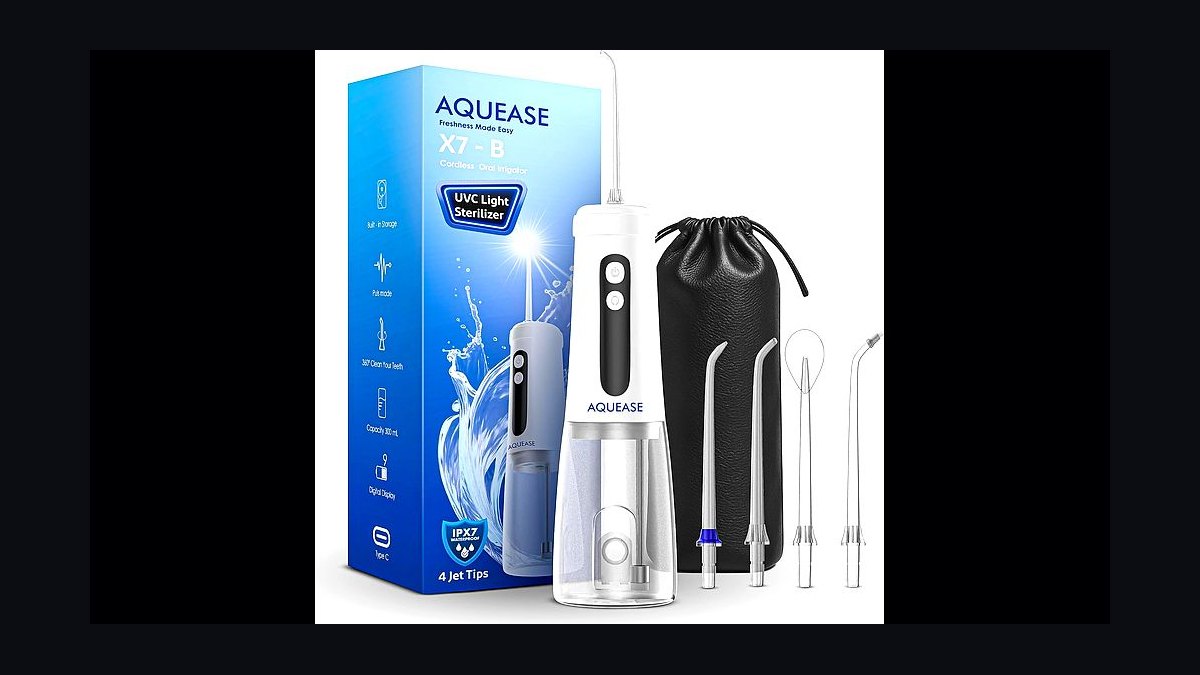
Pulse rate. Around 1,200 pulses per minute is the common figure for pulsating countertop units. You do not need to shop on this number — it is broadly similar across the category — but it explains why the sensation is a rapid flutter rather than a steady push, and why a "massage" mode that modulates the pulse pattern feels different from the standard mode at the same pressure.
Reservoir capacity and runtime. Full-size countertop reservoirs generally hold somewhere in the 600–1,000 ml range, which is roughly 90 seconds of continuous use at moderate pressure — enough for a full mouth without refilling. Cordless reservoirs are typically in the 150–300 ml range, giving roughly 30–45 seconds of run time, which usually covers a full pass at low pressure but often does not if you also want to spend extra time on specific pockets. If you have several problem areas that need deliberate attention, the countertop reservoir is the practical choice; if you travel constantly or share a small bathroom with no counter space, the refill is a manageable annoyance.
Time on task. The standard recommendation is about 60 seconds for a full mouth, working systematically from back to front on the outer surfaces and then the inner surfaces. Per interdental space, that works out to roughly one to two seconds. The specific number that matters for sensitive gums is the ceiling: do not park the stream on one spot for more than about two seconds, because prolonged dwell time on a single point is where irritation comes from even at low pressure.
Ramp schedule. The pattern that works for tender tissue is conservative and boring. Weeks one and two: lowest setting, every day, no exceptions and no increases. Week three onward: if there has been no pain and bleeding is trending down, move up one step and hold there for a full week before considering another. Most people with sensitive gums settle permanently somewhere in the lower third of the dial and never need more. There is no benefit to reaching the top setting; the top setting exists for people with orthodontic hardware and heavy calculus-prone areas, not as a goal.
Tip replacement. Manufacturers generally recommend replacing standard jet tips every six months and the softer specialty tips — pocket tips and orthodontic tips — every three months, since the rubber and bristle components degrade faster. Set a calendar reminder; a worn pocket tip loses the soft geometry that made it gentle in the first place.
Device cleaning cadence. Empty the reservoir after each use rather than leaving standing water, run the unit briefly to clear the internal tubing, and do a deeper clean roughly weekly to monthly by running a diluted white vinegar solution through the system followed by a plain water rinse. Reservoirs on many units are dishwasher-safe on the top rack — check the manual rather than assuming.
What to expect on outcomes. Clinical literature on powered irrigation generally reports reductions in bleeding on probing and gingival inflammation indices when irrigation is added to brushing, with the effect showing up over a period of weeks rather than days. Do not expect a change in a day or two. The honest framing: this is a tool that improves gingival health measurably over a month or more of consistent daily use, not a device that fixes tender gums overnight.
Cost of ownership. The device is the small part. Budget for replacement tips two to four times a year, plus a set of specialty tips if you need a pocket tip that did not ship in the box. Multi-user households should buy color-coded tips so nobody shares — tips are personal items and cross-use is both unhygienic and, for someone with active gingival inflammation, actively counterproductive.
Trade-offs: countertop versus cordless, jet versus micro-droplet, and what you give up

There is no single best water flosser for sensitive gums because the three main product architectures trade against each other on axes that matter differently depending on your situation.
Countertop pulsating units give you the widest pressure range with the most granular steps, the largest reservoir, and the full tip ecosystem — jet, pocket, orthodontic, tongue cleaner, and brush tips all mount on the same handle. For someone managing specific problem sites, that granularity is the whole ballgame: you can run the pocket tip at the second dial position on three known deep spots and the standard tip slightly higher everywhere else. What you give up is counter space, a power outlet, a device that is awkward to travel with, and the fact that a wide dial makes it easy to accidentally start too high. If you have periodontal history and a bathroom counter, this is the default recommendation.
Cordless units trade reservoir capacity and pressure granularity for portability and the absence of a cord. The lower maximum pressure that reviewers sometimes list as a weakness is, for tender tissue, often the feature — there is simply less headroom to hurt yourself with. The real costs are the refill (you will likely refill once mid-session for a thorough pass), battery management, and a smaller tip selection on some models. Charging cadence on modern lithium units is typically measured in weeks rather than days for once-daily use. For travelers, apartment dwellers with no counter, and anyone whose main risk is over-pressurizing, cordless is a legitimate first choice rather than a compromise.
Air-and-water micro-droplet devices are the third family and the most polarizing. They fire short bursts of air-propelled droplets rather than a continuous stream, which many sensitive users find dramatically less startling — there is no sustained force against the tissue at all. The trade-off is flushing volume: because each burst delivers very little water, these devices are better characterized as interdental disruptors than as pocket irrigators. If your issue is generalized sensitivity and you mostly need to disrupt interdental plaque, they can be excellent. If you have deeper pockets that need actual volume flushed through them, a pulsating unit at low pressure does more work.

Alternatives worth honestly considering. Interdental brushes sized correctly to each space are, for many people with open embrasures from recession, more effective at plaque removal than either string floss or irrigation, and they are gentle when sized properly — too large a brush is what causes the discomfort people blame on the concept. Soft picks are a low-friction option for people who will not do anything more involved. And a soft or extra-soft manual or powered toothbrush used with correct technique remains the foundation; irrigation supplements brushing, it does not replace it. The realistic best setup for most sensitive-gum cases is a soft-bristle brush plus daily low-pressure irrigation, with interdental brushes added for specific wide spaces on a dentist's recommendation.
The upgrade path. If you already own a flosser that feels too harsh, do not buy a new device first. In order: fill with lukewarm water, drop to the lowest setting, buy a pocket tip for your existing handle, and increase standoff distance. Those four changes cost the price of a tip pack and resolve the majority of "this device hurts" complaints. Only if all four fail is it worth switching product families.
Pitfalls that make sensitive gums worse
Starting at the factory default. Many units do not ship at the lowest setting. Check the dial before the first use, every time, and turn it all the way down. This is the most common first-use mistake and it colors the entire experience.
Cold water. Exposed dentin reacts to cold independently of pressure. Lukewarm water eliminates a variable that is easily mistaken for the device being too strong.
Aiming into the pocket instead of along the tooth. The correct orientation is the tip roughly perpendicular to the tooth surface at the gum line, directing water into the interdental space so it flows through and out. Jamming the tip down into a pocket and firing at pressure can drive debris deeper and irritate the pocket lining. With a pocket tip specifically, the technique is to place it gently at the margin at the *lowest* setting — the tip is designed for subgingival placement only in combination with minimal pressure.

Treating bleeding as a reason to push harder. Bleeding is inflammation, not resistance to be overcome. The response is lower pressure and consistency, plus a dental visit if it has not clearly improved after a couple of weeks.
Leaning over the sink with a closed mouth. Beginners close their lips to avoid splashing and end up pressurizing their mouth. Lean well over the basin, keep lips slightly parted, and let water run out continuously. The mess is a technique problem, not a device problem, and fighting it by closing up leads to holding the tip in one place too long.
Dwelling. More than roughly two seconds on any single point is where irritation accumulates. Move continuously and systematically instead of hovering on the spot that feels like it needs the most work.
Neglecting the reservoir. Standing water in a warm bathroom is a bacterial reservoir in the literal sense. Empty it after each session, let it dry, and run a vinegar cycle periodically. This matters more for someone with inflamed tissue than for someone with healthy gums.
Running old tips. A pocket tip past its replacement window has hardened and lost the compliant geometry that made it appropriate for sensitive tissue.
Assuming the device replaces professional care. Persistent sensitivity, bleeding that does not resolve, recession that is progressing, or pain localized to one tooth are all signals to be evaluated. Irrigation manages plaque; it does not diagnose or treat periodontal disease, decay, cracked teeth, or the systemic contributors to gingival inflammation. If you have implants, recent crowns, or have had periodontal surgery, ask your dentist for a specific pressure ceiling and tip recommendation rather than guessing.
Sharing tips. Every user in the household needs their own, color-coded. This is standard manufacturer guidance and it is not optional for anyone with active gingival inflammation.
Related questions
Does a water flosser replace string floss for sensitive gums?

For many people with tender or receding gums it is a practical substitute, since it removes the mechanical scraping that causes the pain. Some dentists still recommend both. Ask yours — the version you will actually do daily beats the theoretically superior one you skip.
How long until bleeding stops after starting a water flosser?
Typically a few weeks of consistent daily use at low pressure, as the underlying gingival inflammation resolves. Bleeding should trend downward week over week. If it is stable or increasing after two to three weeks, stop guessing and get evaluated.
Is a higher maximum PSI better?
No — for sensitive gums the minimum pressure and the number of steps matter far more. A high ceiling you never use adds nothing. Most sensitive-gum users settle permanently in the lower third of the dial.
Can I use a water flosser with implants, crowns, or braces?
Generally yes, and orthodontic patients often benefit substantially. Use the lowest comfortable setting and a soft or orthodontic tip, and confirm with your dentist first if you have recent restorations, cement margins, or healing surgical sites.
Should I water floss before or after brushing?
Either works; many people prefer before, so the stream loosens debris and the toothpaste's fluoride then contacts cleaner surfaces. Consistency matters far more than sequence — pick the order you will repeat every night.
FAQ
Can a water flosser make sensitive gums worse?
It can if it is misused — high pressure, cold water, aiming directly into a pocket, or dwelling on one spot. Used at the lowest setting with lukewarm water and a soft or pocket tip, it generally reduces gingival inflammation over several weeks rather than aggravating it. If pain is sharp or bleeding increases over time, stop and see a dentist.

What pressure setting should someone with very sensitive gums start at?
The absolute lowest the unit offers, held there for the first two weeks with no exceptions. After that, increase by one step at a time and stay at each new level for a full week before moving up. Most people with sensitive gums never need to go past the lower third of the range.
Cordless or countertop for sensitive gums?
Countertop units give the widest pressure range, the largest reservoir, and access to the full tip lineup including pocket tips — best if you have specific problem sites. Cordless units have a lower maximum and fewer steps, which for tender tissue is often a feature, and they travel. Both work; choose on bathroom logistics and whether you need pocket-tip granularity.
How often should a water flosser be used?
Once daily is the standard recommendation and is sufficient. There is no benefit to going beyond that, and more frequent sessions on already-inflamed tissue can be counterproductive. About 60 seconds for a full mouth, moving continuously and never lingering more than roughly two seconds in one spot.
Which tip is best for sensitive or receding gums?
A soft pocket-style tip designed for periodontal pockets, used at the lowest pressure, is the usual answer — it diffuses the stream instead of concentrating it. A standard jet tip is fine for healthy tissue but delivers a narrower, more forceful column. Replace specialty tips roughly every three months, standard tips every six.
Does using a water flosser mean fewer dental visits?
No. Sensitive gums are a symptom, and the underlying cause may be gingivitis, periodontitis, recession, decay, a cracked tooth, or a systemic factor. Irrigation helps manage plaque between visits; it does not diagnose or treat any of those. Keep the regular cleaning schedule your dentist sets.
Sources
- https://www.ada.org/resources/ada-library/oral-health-topics/floss-and-other-interdental-cleaners
- https://www.perio.org/for-patients/gum-disease-information/
- https://www.mayoclinic.org/diseases-conditions/gingivitis/symptoms-causes/syc-20354453
- https://www.nidcr.nih.gov/health-info/gum-disease
- https://www.waterpik.com/oral-health/pro/clinical-research/
- https://www.usa.philips.com/c-m-pe/oral-healthcare
- https://www.consumerreports.org/health/
- https://www.mouthhealthy.org/all-topics-a-z/flossing
- https://www.nhs.uk/conditions/gum-disease/
- https://www.cdc.gov/oral-health/index.html
Related on PULSE
This page will be disappearing soon. Save it to your device for $1 — or read it free while it is here.
@Kory-White- · if Venmo asks, the last 4 of my number are 2012
This page is gone.
This one is off the shelf now. $1 keeps it on your phone for good — the whole page, pictures and diagrams included.
 edTop 10 entry-level jobs that don’t require a college degree in 2027
 edHow do I let go of a friendship that no longer serves me in 2027
 edHow do I rebuild my credit score after a major mistake in 2027
 edHow do I build a daily meditation habit when I can't sit still in 2027
 edTop 10 zero-waste starter kits for beginners in 2027
 edHow do I support a partner going through a career crisis in 2027
 edHow to decline a promotion without hurting your career prospects in 2027
 edHow do I rebuild trust with a team after I made a costly mistake at work in 2027
 edHow do I set boundaries with a friend who only calls when they need something in 2027
 edBest pet insurance plans for dogs and cats in 2027