


How do I ask my boss for a raise without sounding entitled in 2027
Quality
Certified

Ask for a raise without sounding entitled by leading with evidence, not need: document 3-5 quantified wins from the last two quarters, request a dedicated meeting timed after a visible success, and frame the ask as "I'd like to align my compensation with the value I've delivered" rather than "I deserve" or "I need." Offer a range, invite discussion, and propose a follow-up timeline if the answer is no.
A Concrete Scenario That Frames the Problem
Picture Maria, a customer success manager who closed out Q2 having personally saved three accounts worth a combined $340,000 in annual recurring revenue from churning, and who also built the onboarding checklist her whole team now uses. She's underpaid relative to two peers hired more recently at higher bands. She has every right to ask for more — but if she walks into her manager's office and says "I need a raise because I'm doing more work than people who make more than me," she's made the conversation about fairness and personal grievance instead of business value. Her manager immediately becomes defensive, because now they have to explain or justify someone else's pay, which they usually cannot do.
Contrast that with Maria walking in and saying: "I wanted to share the impact of the last two quarters — here's what happened with the three accounts that were at risk, and here's the onboarding process I built that the team has adopted. I'd like to talk about adjusting my compensation to reflect that." Same facts, same person, same request. The difference is where the center of gravity sits. The first version puts Maria's feelings and her coworkers' salaries at the center. The second puts her output at the center. That reframing is the entire skill of asking for a raise without sounding entitled — it isn't about softening your tone or apologizing for asking, it's about relocating the argument from "what I deserve" to "what I've produced and what that's worth."

This matters because managers are trained to react to perceived entitlement as a red flag, sometimes unfairly, because it signals someone who might become difficult to manage, who might compare themselves to coworkers publicly, or who might escalate if refused. None of that is really about you — it's about risk management on their end. Your job in framing the ask is to remove that risk signal entirely by keeping the conversation anchored in verifiable business outcomes.
How The Mechanism Actually Works
Compensation increases inside most companies don't happen because someone asked nicely — they happen because someone built a business case that made it easy and low-risk for a manager to approve. Understanding the mechanism behind how a raise actually gets approved changes how you prepare.

Most managers do not have unilateral authority to hand out raises. They typically need to build a justification that goes up to HR, a VP, or a compensation committee, especially for anything above a standard cost-of-living adjustment. That means your manager is not just deciding whether you deserve more money — they are deciding whether they're willing to spend their own political capital advocating for you to people above them. If you hand them a vague, emotional request, they have nothing to take upstairs. If you hand them a one-page summary of quantified impact, you've done their homework for them, and you've made it easy to say yes.
The mechanism works like this: value delivered → documented and quantified → translated into language your manager's boss understands (revenue protected, cost avoided, efficiency gained, risk reduced) → packaged into a request with a specific ask or range → timed to land when budget exists → followed by a decision loop, whether that's approval, partial approval, or a deferred commitment with a review date. Skipping any of these steps is what makes a raise conversation feel entitled, because skipping steps forces your manager to fill in the justification themselves, and when they can't, the default response is no or "let me think about it," which usually means it dies quietly.
Understanding this mechanism also explains why "just asking" so often fails even when the person genuinely deserves more. The ask itself was never the bottleneck — the missing translation layer was. Your manager may believe you're doing great work and still be unable to move a raise forward because they don't have anything concrete to show their own boss. Closing that gap is the single highest-leverage thing you can do before the conversation ever happens.
Real Numbers, Ranges, And Benchmarks

Specificity is what separates a confident ask from an entitled-sounding one, so it helps to know what reasonable numbers actually look like. A standard annual merit increase in most industries lands in the 3% to 5% range, tied to inflation and standard performance. A promotion-based increase, where your title and scope change, typically runs 10% to 20%, because you're being paid for a new level of responsibility, not just doing your existing job slightly better. An off-cycle raise tied purely to retention or market correction — meaning your pay has fallen behind the market for your role without a title change — often lands in the 8% to 15% range, and going above 20% without a title change is rare enough that it usually needs an external offer or extraordinary circumstances behind it.
When you're building your range, don't ask for a single number. A single number invites a binary yes-or-no and gives your manager no room to negotiate without feeling like they lost. Instead, anchor with a range where your target sits near the bottom — for example, if you want a 10% increase, present a range of roughly 9% to 14%. This does two things: it signals flexibility, which reads as collaborative rather than entitled, and it gives your manager room to land somewhere inside your range and still feel like they negotiated, which matters more to the psychology of the conversation than people expect.

On timing, data from workplace surveys consistently shows that raises requested within 30 days of a major completed deliverable are more successful than those requested during a routine annual review, because annual review budgets are typically locked 60 to 90 days in advance. If your company runs an annual cycle in January, for instance, the budget pool for raises may already be fixed by October or November — meaning a January ask is often too late to get anything beyond the pre-allocated pool, while an October ask, timed right after a strong Q3, can actually influence what gets allocated.
On preparation time, plan for roughly two to three weeks between the moment you decide to ask and the actual meeting. That gives you time to compile 6 to 12 months of metrics, draft and revise your one-page summary down to 3 to 5 bullet points (more than that dilutes your strongest points), and identify 2 to 3 comparable market data points from sources like Glassdoor, Payscale, or LinkedIn Salary Insights so you're citing a range rather than a guess. Coming in with vague numbers like "I heard people make more" is one of the fastest ways to sound entitled rather than informed, because it signals you haven't done real research — you've done complaining.
Trade-Offs And Alternatives
There's a real trade-off between asking early and asking with maximum leverage. Asking the moment you land a win means your value is fresh in your manager's mind, but it also means you may be interrupting a budget cycle that has zero flexibility, in which case even a perfect pitch gets a "not right now." Waiting for the structured review cycle means your ask fits inside an approved process, but by then your specific win may be old news, competing with everyone else's recent accomplishments for the same limited pool. The way to manage this trade-off is not to pick one strategy exclusively — it's to plant the seed early ("I'd like to revisit compensation after this project wraps") and then formalize the full ask during the cycle that actually has budget, so you get the recency benefit and the structural benefit together.

There's a second trade-off between asking for cash and asking for something else entirely. A straight salary increase is the cleanest ask, but it's also the hardest for a manager to approve on short notice because it usually requires the most upstream sign-off and sets a new permanent baseline. Non-monetary alternatives — a one-time bonus, extra PTO, remote flexibility, a training or certification budget, or a title change that puts you on a new pay band — are often easier for a manager to approve quickly because they don't always require the same level of committee review, and some of them (a title bump) can actually set up a larger raise down the line by moving you into a higher band. The trade-off is that non-monetary wins don't compound the way base salary does, since future raises and bonuses are usually calculated as a percentage of your current base.
A third trade-off worth naming honestly: mentioning a competing offer versus relying purely on internal performance data. A competing offer is the single fastest lever for a large raise, but it's also the highest-risk move, because if you're not actually willing to leave and your bluff gets tested, you either have to walk away from a job you wanted to keep or you damage trust permanently. Relying on performance data and market research alone is slower and the ceiling may be lower, but it never puts your credibility or your job at risk, and it's the version that never sounds entitled, because you're negotiating with evidence instead of an ultimatum.

Weighing these trade-offs before the meeting means you walk in with a primary ask and two fallback positions already decided, so you're never improvising an alternative on the spot — which is exactly the moment entitled-sounding language tends to slip out, when people feel cornered and start justifying themselves emotionally instead of sticking to the plan.
Common Pitfalls And How To Avoid Them
The most common pitfall is comparing yourself directly to a named coworker's salary. Even if you have accurate information, saying "I know so-and-so makes more than me for the same work" puts your manager in an impossible position — they usually cannot discuss another employee's pay, and now they're forced to either violate confidentiality or shut you down, and either way the conversation has stopped being about your value. Avoid this entirely by using external market data instead of internal comparisons; it makes the same point about being underpaid relative to your role without forcing anyone into a compliance problem.
A second pitfall is leading with personal financial pressure — rent increases, a new baby, student loans. This is completely understandable as a private motivator, but it has zero relevance to your manager's decision-making process, because companies pay for value delivered, not for cost of living pressures, and bringing it up shifts the frame from professional to personal in a way that reads as pleading rather than negotiating. Keep personal financial context out of the room entirely; it doesn't strengthen your case and it can make an otherwise strong pitch sound needy.

A third pitfall is an ultimatum, explicit or implied — "if I don't get this raise I'll have to start looking elsewhere." Unless you are fully prepared to follow through, this framing traps you. If your manager calls the bluff and says no, you've now either got to leave a job you wanted to stay in, or you've damaged your credibility for every future negotiation. Even when it isn't an explicit threat, tone matters — phrases like "I deserve" or "I need" can carry the same energy as an ultimatum even without stating one directly, so swapping them for "I've delivered" and "I'd like to" removes the pressure without softening your actual ask.
A fourth pitfall is over-preparing your list of achievements into a long document nobody will read in full. A five-page memo signals anxiety and dilutes your strongest points among your weakest ones. A tight one-page summary with 3 to 5 quantified wins is far more persuasive because it respects your manager's time and makes the strongest possible version of your case impossible to skim past.
A fifth pitfall, particularly relevant heading into 2027 as more companies formalize skills-based pay bands and AI-driven productivity metrics into review cycles, is failing to translate your impact into whatever new framework your company has adopted. If your organization has shifted toward measuring output per employee using new internal dashboards or productivity scoring, cite those exact metrics rather than generic accomplishments — speaking the company's current measurement language, rather than your own framing, reads as informed rather than entitled, because it shows you understand how the business is actually evaluating value right now.

Finally, the pitfall of silence after a no. Many people treat a rejected raise request as the end of the conversation, when it should be treated as the start of a documented plan. Walking away without a follow-up date or a written recap of what was discussed wastes all the groundwork you just laid, and it's the single easiest fix on this entire list — one email after the meeting, summarizing what was agreed and when you'll revisit it, keeps the door open and shows exactly the kind of professional follow-through that makes the next ask land even better.
Related questions
How do I ask for a raise if my company just had layoffs?
Wait at least one full quarter after layoffs before asking, and lead with retention value — how keeping you saves the company from re-hiring and retraining costs, which resonates during lean periods more than growth-based pitches do.
What if I've never asked for a raise before and I'm nervous?
Practice out loud with a friend or mirror at least twice, keep your one-page summary in hand as a script anchor, and remember the meeting is a business discussion, not a confrontation — nerves fade once you're reading from data instead of memory.
Should I ask for a raise over email or in person?

Always request the meeting by email, but have the actual raise conversation live, whether in person or on video — written raise requests read as impersonal and make it too easy for a manager to defer indefinitely without a real conversation.
How do I negotiate a raise remotely without body language cues?
Over video, slow your pace slightly, pause after your ask instead of filling silence, and send your one-page summary beforehand so your manager can read it before reacting live, which reduces the chance of an off-the-cuff no.
Is it entitled to ask for a raise every year?
No — an annual check-in on compensation aligned to your review cycle is standard practice, not entitlement; what reads as entitled is asking outside any structure with no new evidence of impact since the last conversation.
FAQ
Is it entitled to bring a written list of my accomplishments to the meeting? No — a concise, well-organized one-page summary signals preparation and professionalism, not entitlement. What reads as entitled is a long list framed as grievances rather than contributions, or a document that compares your pay to specific coworkers.
How do I ask for a raise without sounding entitled if I genuinely think I'm underpaid?

Ground the conversation in external market data rather than internal comparisons or personal feelings. Say "based on market research, roles like mine typically pay X to Y" instead of "I know I'm underpaid," which keeps the case objective rather than emotional.
What's the single biggest mistake people make when asking for a raise? Making the request personal instead of business-focused — leading with need, comparison, or frustration rather than documented, quantified impact. Managers respond to evidence; they get defensive around perceived entitlement or ultimatums.
Can I ask for a raise if my manager is new to the role? Yes, but give them extra context, since they likely don't have full visibility into your history yet. Bring your full documented track record, not just recent wins, and be patient if they need to gather more information before responding.
What if my company has a strict pay band I can't exceed? Ask about a title change or promotion path that would move you into a higher band, rather than pushing for an exception to the current one — this reframes the request as a scope conversation rather than a special favor.
How soon after starting a new job can I ask for a raise without sounding entitled? Generally wait a minimum of 12 months unless your responsibilities have expanded significantly beyond your original job description, in which case you can make the case earlier based specifically on that scope change rather than tenure.
Sources
- https://hbr.org/topic/subject/negotiating
- https://www.shrm.org/topics-tools/topics/compensation
- https://www.glassdoor.com/Salaries/index.htm
- https://www.payscale.com/research
- https://www.linkedin.com/salary
- https://www.forbes.com/money/
- https://www.themuse.com/advice/salary-negotiation
- https://www.careerbuilder.com/advice
Related on PULSE
- How to ask for a mentor without sounding desperate
- How do I deal with a micromanaging boss without quitting
- How to tell your boss you're overwhelmed without looking weak
- How Do I Raise Contribution Margin Without Raising My Prices?
- How to negotiate a raise when your company is struggling financially
This page will be disappearing soon. Save it to your device for $1 — or read it free while it is here.
@Kory-White- · if Venmo asks, the last 4 of my number are 2012
This page is gone.
This one is off the shelf now. $1 keeps it on your phone for good — the whole page, pictures and diagrams included.
 edBest smart thermostats for energy savings in 2027
 edHow do I build a daily meditation habit when I can't sit still in 2027
 edHow do I set boundaries with a friend who only calls when they need something in 2027
 edHow to have a difficult conversation with a neighbor about noise in 2027
 edHow to handle a coworker who takes credit for your work in 2027
 edHow do I stop comparing my career progress to my friends on LinkedIn in 2027
 edHow to politely end a conversation at a networking event in 2027
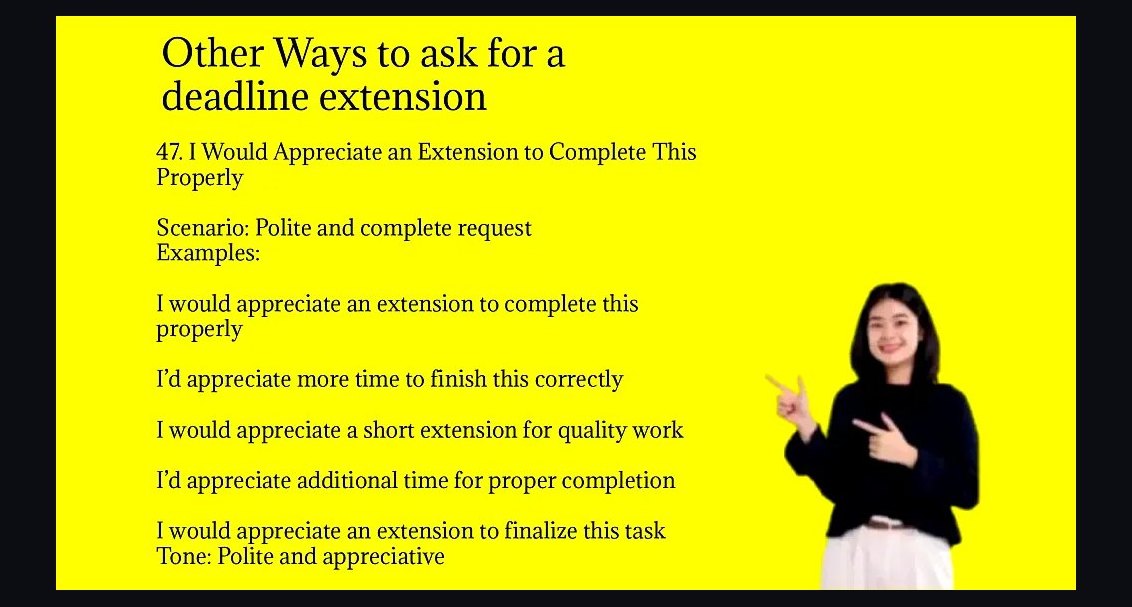 edHow to ask for a deadline extension without looking unreliable in 2027
 edHow to stop being a people pleaser at work without burning bridges in 2027
 edHow do I stop interrupting people when I'm excited in a conversation in 2027