


How do I stop doomscrolling before bed and actually sleep in 2027
Quality
Certified
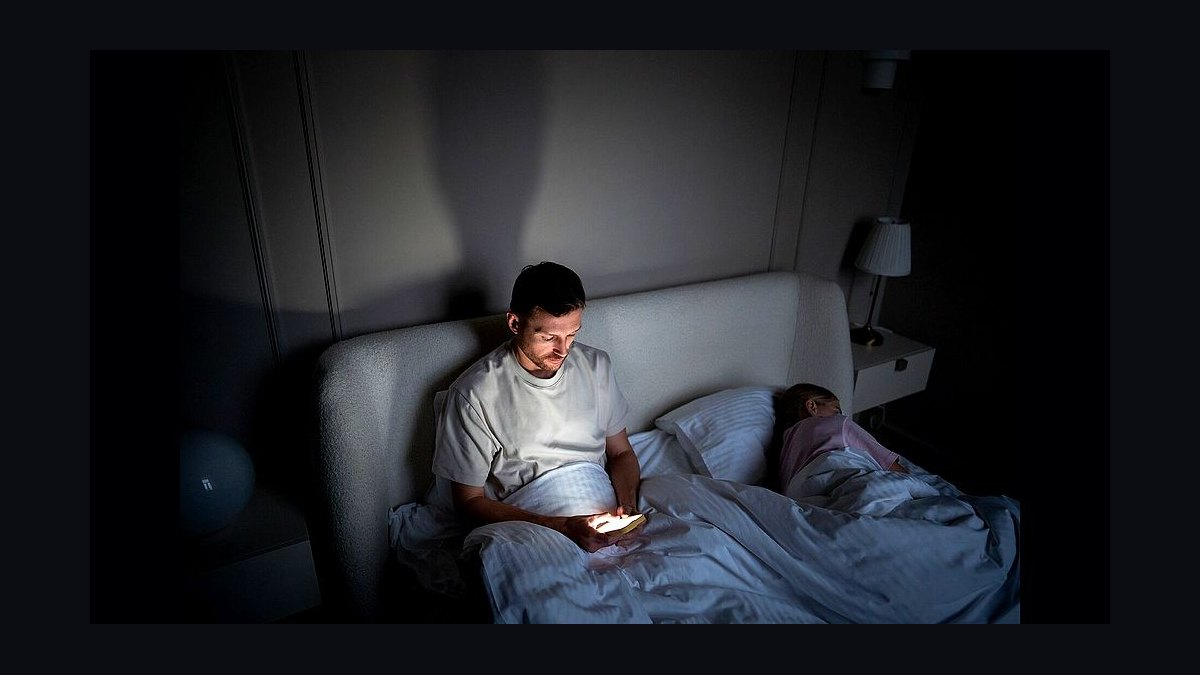
Set a phone curfew 30 minutes before bed and physically move the device out of the bedroom, because willpower fails against infinite scroll. Replace the scroll with one calm, screen-free activity under dim warm light, then keep a fixed wake time. Environment design beats resolve every night.
The two ways people try to quit: friction versus willpower
Almost everyone attacking this problem lands in one of two camps, and the camps produce wildly different results.
Camp one is the willpower approach. You decide, tonight, that you will not doomscroll. The phone stays on the nightstand. You tell yourself you will check the weather and put it down. Sometimes it works. More often you are still scrolling forty minutes later with no memory of deciding to continue. The willpower approach has one genuine advantage: it costs nothing, requires no purchase, no setup, no rearranging of your bedroom, and you can start it tonight in the next thirty seconds. It also preserves every convenience — your alarm, your morning weather check, your ability to text someone at midnight if something goes wrong.
The problem is that willpower is at its lowest ebb exactly when you need it most. Self-regulation gets harder as the day wears on and you are tired, and the feed is not a neutral object sitting on your nightstand. It is a system tuned by teams of engineers against millions of behavioral data points to maximize the time you spend inside it. Infinite scroll removes every natural stopping cue. Variable reward — you never know whether the next post is boring, funny, or infuriating — is the same reinforcement schedule that makes slot machines sticky. Pitting a depleted prefrontal cortex against that is not a fair fight, and framing repeated failure as a character flaw makes it worse, because shame is itself arousing and shame at 11:40 p.m. keeps you awake.

Camp two is the friction approach. You do not try to resist the phone. You make reaching it inconvenient. The phone charges in the kitchen. Social apps are deleted from the home screen and only reachable through a browser login. A cheap alarm clock replaces the phone alarm. Focus modes fire automatically at a set time and grayscale the display. In the extreme version, the phone goes into a timed lockbox.
Friction has a much better track record for one reason: it moves the decision from 11 p.m., when you are exhausted, to 7 p.m. or to a one-time setup you never have to repeat. You are not deciding not to scroll two hundred times a night. You decided once, at full strength, and the environment carries the decision for you. The cost is real, though. Friction is inconvenient by design. If you are on call, if you have an elderly parent who might phone at 2 a.m., if you are the emergency contact for someone, a phone in another room is a genuine problem rather than a minor annoyance. Friction also feels a little humiliating at first — buying a $12 alarm clock to escape a device you supposedly control.
There is a third, quieter option worth naming: substitution without removal. Keep the phone but change what is on it at night — an e-ink reader app, an audiobook on a speaker, a sleep-sounds track that runs with the screen dark. This preserves emergency access while eliminating the feed. It is weaker than removal, because the apps are still one swipe away, but for people who genuinely cannot exile the device it is the realistic middle path, and it beats doing nothing.
Picking the option that fits your actual constraints
The right choice is not the strictest one. It is the strictest one you will still be doing in three weeks. Run yourself through an honest sequence of questions rather than adopting whatever protocol you read last.
Start with the on-call question, because it overrides everything else. If someone genuinely needs to reach you overnight, full phone removal is off the table and pretending otherwise just guarantees you abandon the plan the first time you get anxious about a missed call. The workaround is emergency bypass: iOS and Android both let specific contacts break through Do Not Disturb, and both support a repeated-call bypass so a second call within a few minutes rings through. Configure that, put the phone across the room rather than in another building, and you have most of the friction with none of the risk.
Second, ask how bad the habit actually is. Check your own screen-time report before designing anything — most phones have kept this data for months without you looking at it. If your late-evening usage is 20 minutes, a phone curfew and a book will probably do it. If it is 90 minutes and routinely runs past 1 a.m., you are in lockbox-and-app-deletion territory and gentle measures will feel like bailing a boat with a spoon.

Third, ask what you will do instead. This is the step people skip and it is the one that determines whether the change survives. A wind-down with nothing in it is just staring at a wall while your brain screams for stimulation. The replacement has to be genuinely appealing — a novel you actually want to keep reading, not an improving book you feel you should read.
The loop at the bottom matters. Treat this as a dial you turn up, not a pass/fail test. If ten nights of a soft curfew has not moved anything, you add one more layer of friction rather than concluding you lack discipline.
The numbers behind each option
Vague advice is easy to ignore, so here are the concrete parameters worth setting, along with what each one actually costs.
The curfew window: 30 minutes. Start the wind-down 30 minutes before your target sleep time. Thirty is the number to use because it is long enough to matter and short enough that you will actually do it. A 60- or 90-minute window is better in theory and is abandoned far more often in practice. If 30 feels impossible on night one, start at 5 minutes and add 5 every three nights until you reach 30 — a three-week ramp that almost nobody quits, versus a cold jump that most people quit in four days.
Lighting: warm and low. Aim for lamps at eye level or below rather than overhead fixtures, and bulbs in the 2200–2700K range rather than the 4000K+ daylight bulbs common in kitchens and bathrooms. Practically this means one bedside lamp on, everything else off. Bathroom lighting is the sneaky offender — you do your whole calm routine and then stand under a bright vanity light brushing your teeth. A small warm nightlight in the bathroom solves it for a few dollars.

The alarm clock: roughly $10–20. A basic digital alarm clock is the single cheapest unlock in this entire list, because "I need it for my alarm" is the reason most people keep the phone within arm's reach. Buy one with a dimmable display and turn the face away from the bed, so you cannot clock-watch at 3 a.m. — clock-watching reliably makes middle-of-the-night wakeups worse.
Distance: the whole room, at minimum. The difference between the nightstand and the far wall is the difference between a reflex and a decision. Reaching for a phone you can touch without sitting up costs you nothing; walking across a cold floor costs enough to break the loop. Another room is better still.
Caffeine and alcohol timing. Caffeine has a half-life of roughly 5–6 hours in most adults, so a 3 p.m. coffee still has meaningful caffeine in your system at 9 p.m. A common, workable cutoff is 8–10 hours before bed. Alcohol is the opposite trap: it makes you fall asleep faster and then fragments the second half of the night, so the nightcap that felt like it helped is often why you were awake at 4 a.m. reaching for your phone.
Consistency: the wake time, not the bedtime. Hold your wake time within about 30 minutes across all seven days, weekends included. Bedtime drifts on its own once wake time is anchored, because sleep pressure builds predictably. The single most common self-sabotage is sleeping until 11 a.m. Saturday and then lying awake Sunday night with nothing to do but scroll.
The urge itself: about 10 minutes. When you feel the pull to check your phone and you do not act on it, the urge does not escalate forever. It builds, peaks, and subsides, typically within several minutes. This is worth knowing before you start, because on nights two and three the urge is genuinely uncomfortable and people interpret that discomfort as proof the plan is not working. It is proof the plan is working.

Realistic timeline. Expect the first three nights to be actively unpleasant. Expect a noticeable drop in the pull somewhere in the first week to ten days. Expect the routine to feel automatic — something you do without deliberating — closer to the three-to-four-week mark. Anyone selling you a two-day transformation is selling something.
What the wind-down actually contains
Knowing to put the phone away is not the same as knowing what to do with the 30 minutes. Here is the sequence, in order, and why each piece sits where it does.
Trigger the routine off an existing habit. Do not rely on remembering. Anchor it: "after I brush my teeth, the phone goes in the kitchen drawer." Brushing your teeth already happens every night without any decision-making, so it makes a reliable cue. If you need a backstop, set a recurring alarm labeled with the actual instruction — "phone to the kitchen" — rather than a generic chime you will swipe away.
Move the phone before you sit down, not after. The order matters enormously. If you settle into bed and plan to put the phone away in a minute, you will not. Removal happens while you are still standing and still have momentum.
Dim the lights as a signal, not just a comfort. Flipping to one warm lamp is a physical marker that the day has ended. Over a couple of weeks this becomes a learned cue in its own right and starts producing drowsiness on its own.

Do one thing, not several. A paper book is the default recommendation for a reason: it has natural stopping points, it does not refresh, nobody is optimizing it to hold you, and it will not deliver news about a stranger's catastrophe at 11:15 p.m. Alternatives that work about as well: journaling, gentle stretching, a warm shower or bath (the post-bath drop in body temperature is itself sleep-promoting), or an audiobook or calm podcast played on a speaker with the screen dark. Avoid true crime, news, and work podcasts — the content is the problem, not just the screen.
Write down what is nagging you. Keep a cheap notebook by the bed. If your mind is churning on tomorrow's tasks or an unresolved conversation, put it on paper. Getting it out of your head and into a place you trust you will look tomorrow is what stops the loop. This one technique does more for racing-mind insomnia than any app.
If you are in bed awake and wired, get up. Twenty minutes of lying there frustrated teaches your brain that the bed is a place for frustration. Go to another room, keep the lights low, read something dull, and return when you feel sleepy. This is the core of the standard behavioral treatment for insomnia and it is more effective than any gadget.
Have a plan for the 3 a.m. wake-up. This is where good routines collapse. You wake, reach for the phone "just to see the time," and thirty minutes of scroll later you are fully alert. The fix is the same fix: the phone is not within reach, so the reflex has nowhere to go. Instead, run a few rounds of slow breathing with a long exhale — inhale for four, exhale for six or eight. The long exhale is the active ingredient; it nudges the parasympathetic side of your nervous system. Progressive muscle relaxation works too: tense each muscle group for about five seconds from feet upward, then release.

Handle the relapse without drama. You will scroll some night. The mistake is treating it as evidence the system failed and abandoning it. Reset the next night. A routine you keep 26 nights out of 30 is a success; the all-or-nothing frame is what actually kills these efforts.
Sequencing tip: change one variable at a time. If you simultaneously delete four apps, buy an alarm clock, quit caffeine, and start journaling, you will not know which piece did the work, and when it gets hard you will drop all of it at once. Add the curfew first, run it a week, then add the next layer.
What blue-light advice gets wrong
Blue light gets nearly all the attention and it deserves maybe a third of it. Yes, light in the blue range influences the circadian system through specialized retinal cells, and yes, bright light late in the evening can push your body clock later. Night mode and warmer display settings are cheap and harmless, so use them.
But if blue light were the whole story, reading a novel on a bright tablet would wreck your sleep as badly as an hour of arguing on social media, and that is not what people experience. The bigger factor is emotional and cognitive arousal. Doomscrolling is not passive light exposure; it is a steady drip of unresolvable, threatening information. Your attention system evolved to prioritize potential threats, which is exactly what the algorithm learned to serve you. You end up alert, mildly angry or anxious, and physiologically primed — heart rate slightly up, mind rehearsing arguments. That state is incompatible with falling asleep no matter what color temperature the screen was.

This is why the practical prescriptions differ. If blue light were the problem, glasses and night mode would fix it. Because arousal is the problem, the fix has to be about *content and access*, not filters. A dim screen still delivers the outrage.
It also explains the "tired but wired" experience — genuinely exhausted, physically heavy, and completely unable to drop off. Fatigue does not cancel out an activated stress response. Waiting to get tired enough is not a strategy; you have to actually come down, which is what the wind-down routine is for.
One more misconception worth killing: the idea that a quick check is harmless. The five-minute check is the entry point, not a compromise. There is no natural end to a feed — no last page, no credits — so the session ends when something external interrupts it or when you finally override it. Planning to check for five minutes is planning to check for as long as the feed can hold you.
Related questions
Does night mode or a blue-light filter fix this?
Partly. Warmer, dimmer screens reduce circadian disruption and cost nothing to enable. But the emotional arousal from the content is the larger factor at bedtime, and no filter dims that. Use night mode, then still put the feed away.
What if I need my phone as my alarm?
Buy a basic alarm clock for around $10–20 and charge the phone in another room. If you must keep the phone nearby for emergencies, set emergency-bypass contacts, enable repeated-call bypass, and leave it across the room face down.
Is reading on a Kindle okay before bed?

E-ink readers are far better than tablets — no bright backlight in the basic models, no feed, no notifications. Set any front light to its lowest warm setting. A paper book is still the cleanest option because it cannot deliver anything unexpected.
How long until this actually works?
Expect three uncomfortable nights, a clear drop in the urge within one to two weeks, and something close to automatic after three to four weeks. Missing a night is normal; abandoning the routine after missing one is what causes failure.
Should I use an app to block social media at night?
Screen-time limits and focus modes help, but only if you cannot trivially dismiss them. Choose settings that require a password someone else set, or that take real effort to override. A prompt you can tap through in one second adds nothing.
FAQ
Why does willpower keep failing me on this specific habit?
Because you are fighting a system designed to defeat it, at the hour your self-control is weakest. Infinite scroll removes stopping cues and variable rewards keep the loop running. This is not a character defect. Move the decision earlier in the day, into the environment — put the phone in another room at 9 p.m. — and you stop needing willpower at 11 p.m. at all.
What do I do when I wake at 3 a.m. and want to check my phone?
Do not check the time and do not reach for the device — that is the whole reason it is not within arm's reach. Run slow breathing with a long exhale for a couple of minutes. If you are still awake and frustrated after about twenty minutes, get up, sit somewhere with low light, read something undemanding, and go back when you feel sleepy.

Can I listen to a podcast or audiobook instead?
Yes, and it is one of the better substitutes because it fills the silence without a screen. Play it on a speaker rather than headphones, keep the display dark, and pick something calm. Avoid news, true crime, and anything work-related — those produce the same arousal as scrolling, just through your ears.
I have to check work email at night. Is there a safe way?
Set a firm cutoff — 8 p.m. is a common one — and do it on a laptop rather than your phone, because a laptop has an obvious closing point and no feed adjacent to the inbox. Keep it short, then start the wind-down immediately. The real danger is that a single stressful email restarts the arousal cycle right before bed.
Is it worth buying a timed lockbox?
Only if the softer layers have failed. Work up: curfew, then phone out of the room, then delete the apps and use browser-only access, then the lockbox. Jumping straight to the strictest option makes the change feel punitive, and punitive routines get abandoned. If your late-night usage is over an hour a night and nothing else has moved it, the lockbox earns its place.
What if my partner scrolls in bed next to me?
Their screen light and restlessness affect you, so this is worth an actual conversation rather than silent resentment. If they are not on board, do what you control: a sleep mask, your own phone out of the room, and going to bed at your own time rather than syncing to theirs. Doing the routine alone still works.
Sources
- https://www.sleepfoundation.org/sleep-hygiene
- https://www.cdc.gov/sleep/about/index.html
- https://www.health.harvard.edu/staying-healthy/blue-light-has-a-dark-side
- https://aasm.org/
- https://www.nhlbi.nih.gov/health/sleep-deprivation
- https://www.nhs.uk/every-mind-matters/mental-wellbeing-tips/how-to-fall-asleep-faster-and-sleep-better/
- https://www.mayoclinic.org/healthy-lifestyle/adult-health/in-depth/sleep/art-20048379
- https://www.apa.org/topics/sleep/why
Related on PULSE
This page will be disappearing soon. Save it to your device for $1 — or read it free while it is here.
@Kory-White- · if Venmo asks, the last 4 of my number are 2012
This page is gone.
This one is off the shelf now. $1 keeps it on your phone for good — the whole page, pictures and diagrams included.
 edBest car camping gear for beginners on a budget in 2027
 edHow do I respond when a coworker asks why I don't drink alcohol in 2027
 edHow to ask for a deadline extension without looking unreliable in 2027
 edHow do I break the habit of checking my phone first thing in the morning in 2027
 edHow to politely end a conversation at a networking event in 2027
 edTop 10 remote-friendly companies with the best work-life balance in 2027
 edHow to have a difficult conversation with a neighbor about noise in 2027
 edWhat are the top 10 cities for digital nomads with families in 2027
 edHow do I set boundaries with a friend who always asks for favors in 2027
 edHow do I gently tell my parents I don't want them to visit as often in 2027