


Should I open or buy a KFC franchise in 2027?
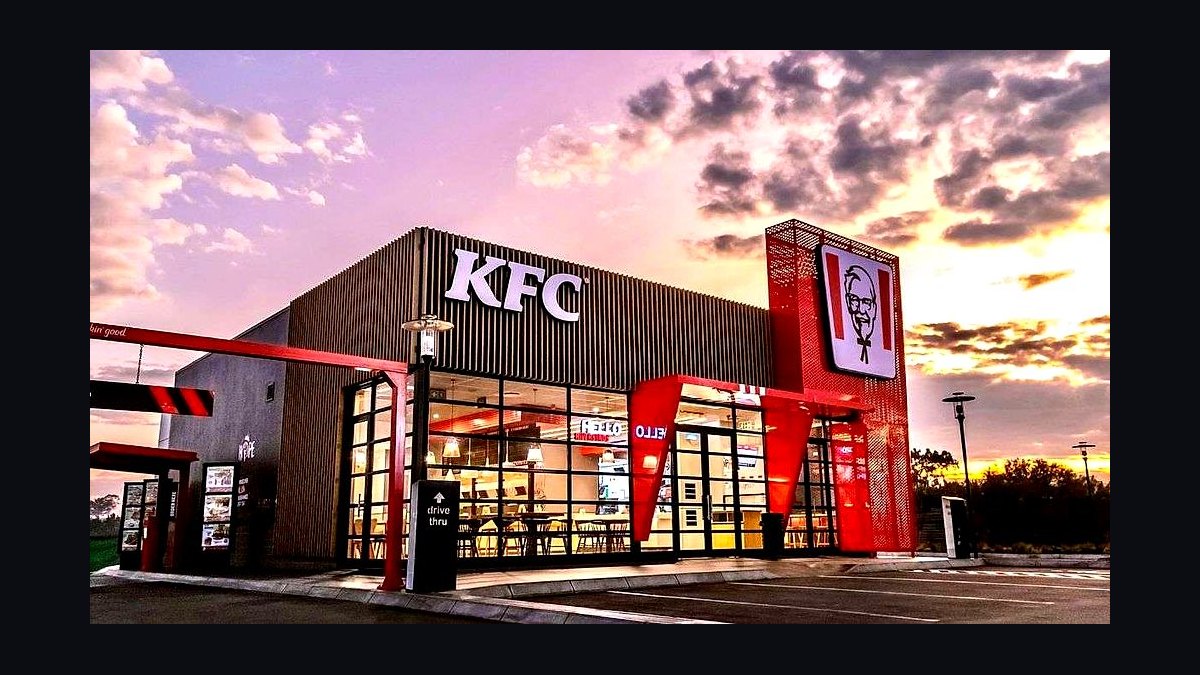
Probably not — unless you bring $750K+ in liquid capital, a $1.5M net worth, and multi-unit operator experience in QSR. A new-build KFC franchise in 2027 demands a $1.85M–$3.77M initial investment (FDD Item 7), carries a 5% royalty plus 4.5% ad fund (9.5% combined off the top), and the median U.S. unit grosses only $873K AUV with a 4% same-store sales decline through 2025. Breakeven typically lands at year 4–6 with Year-1 cash flow ranging from negative $40K to positive $130K after debt service. KFC is now the #5 U.S. chicken chain behind Chick-fil-A, Popeyes, Raising Cane's, and Wingstop. Buy an underperforming existing unit at 3.5–4.5x EBITDA before considering new-build.
The Real Numbers
KFC's 2025 FDD (governing 2027 deals through April renewals) tells a sobering story for first-time franchisees. The traditional new-build investment ceiling of $3.77M combined with the median U.S. AUV of $873,053 produces one of the worst payback ratios in major QSR. Compare to Chick-fil-A at $9M AUV or Raising Cane's at $5.5M AUV — KFC delivers roughly one-sixth the unit volume at two-thirds the build cost.
| Line Item | Low | High | Source |
|---|---|---|---|
| Initial franchise fee | $45,000 | $45,000 | KFC 2025 FDD Item 5 |
| Real estate (land) | $300,000 | $1,100,000 | FDD Item 7 |
| Building & site work | $1,000,000 | $1,900,000 | FDD Item 7 |
| Equipment, signage, decor | $375,000 | $606,000 | FDD Item 7 |
| Opening inventory | $15,000 | $25,000 | FDD Item 7 |
| Working capital (3 mo) | $117,825 | $95,550 | FDD Item 7 |
| Total new-build | $1,852,825 | $3,771,550 | FDD Item 7 |
| Reopen/remodel total | $1,052,825 | $2,521,550 | FDD Item 7 |
| Median AUV (Item 19) | $873,053 | — | KFC 2025 FDD |
| System AUV (Item 19) | $1,340,000 | — | KFC 2025 FDD |
| Royalty | 5% gross | 5% gross | FDD Item 6 |
| National ad fund | 4.5% gross | 4.5% gross | FDD Item 6 |
| Local marketing min | 3% gross | 3% gross | FDD Item 6 |
| EBITDA margin | 12% | 18% | Franchise Chatter 2025 |
| Year-1 EBITDA (median) | $105,000 | $157,000 | Computed from Item 19 |
| Payback (cash-on-cash) | 4 years | 7 years | Sharpsheets 2025 |
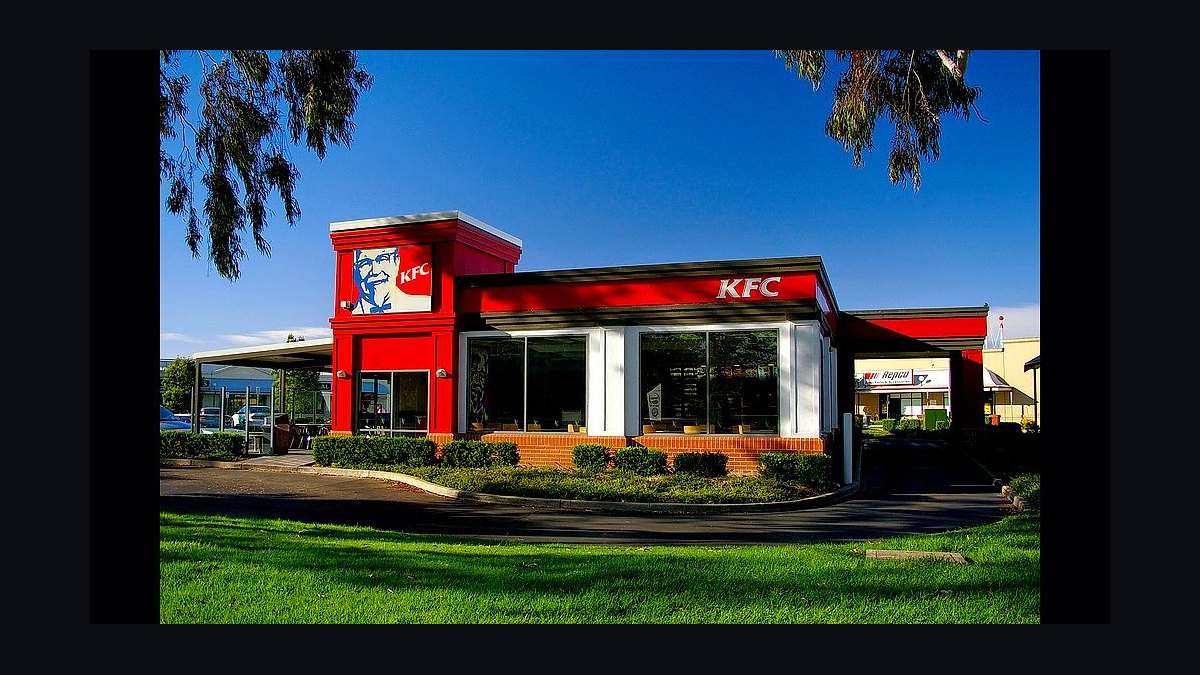
A franchisee buying an existing median-volume KFC with $873K AUV and 15% EBITDA margin produces $131,000 in pre-debt cash flow. Service $1.5M in SBA debt at 9.5% over 10 years and the annual debt nut hits $232K — the median unit cash-flows negative on a leveraged new-build. System-AUV units at $1.34M generate $201K EBITDA and clear debt service with $25K–$40K to the owner-operator in Year 1.
Who Wins With This Business
The 2027 KFC franchisee who actually makes money fits a narrow profile:
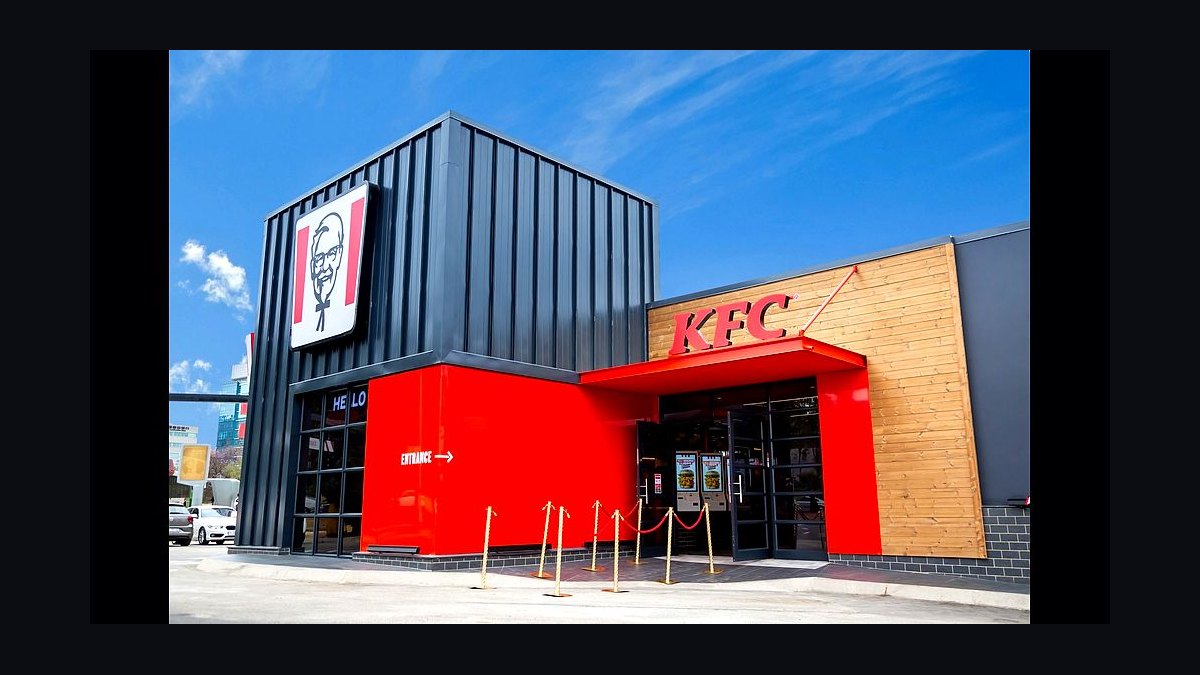
- Multi-unit QSR operators with 3+ existing units in Taco Bell, Pizza Hut, or other Yum brands — they get co-location synergies and bulk purchasing through Yum's RSCS (Restaurant Supply Chain Solutions).
- Liquid capital of $1.5M+ (well above the $750K minimum) to absorb 18–24 months of negative cash flow common in new builds.
- Net worth of $3M+ (KFC's stated minimum is $1.5M but KBP Brands, KFC's largest U.S. franchisee, recommends double).
- Real estate ownership mindset — winners buy the land, lease it back to the operating LLC, and capture the real estate appreciation that often outpaces the restaurant EBITDA.
- 60–70 hour weekly commitment for the first 18 months, then transition to 50 hours as General Manager hires mature.
- Geographic fit: Rural Southeast, Midwest, and Texas markets where bone-in chicken eaters skew older and Raising Cane's hasn't fully penetrated.
The profile-perfect operator is someone like KBP Brands (over 1,000 KFC units), Lee's Famous Recipe veterans, or Pizza Hut multi-unit franchisees expanding within their Yum portfolio.
Who Loses With This Business
KFC has a graveyard of single-unit operators. The failure modes are predictable:

- First-time restaurant operators with no QSR labor experience — they underestimate 18% food cost inflation through 2025–2027 and 22%+ turnover in front-of-house staff.
- Operators in urban markets where Raising Cane's, Popeyes, Wingstop, and Chick-fil-A have already won the chicken category. KFC's U.S. consumer spending fell 4% to $4.34B while Raising Cane's hit $4.96B.
- Undercapitalized buyers taking on 80%+ SBA debt at 9–10% rates in 2027. Debt service alone consumes the entire EBITDA at median-AUV stores.
- Single-unit operators without multi-brand purchasing power — KFC's food cost runs 32–34% vs. the 28–30% that KBP-scale operators achieve.
- Operators who skip the remodel — KFC's mandatory image refresh every 7–10 years runs $300K–$650K. Skipping it triggers franchise renewal denial.
- Buyers seduced by the brand name rather than the unit economics. KFC's median 4% AUV decline since 2023 means buying at peak EBITDA locks in a bad basis.
The brutal margin killers in 2027: bone-in chicken supply tightness (avian flu lingering in Pennsylvania and Ohio), California AB 1228 fast-food wage floor at $20.70/hr (with CPI escalator), and digital order fee leakage (DoorDash/Uber Eats take 15–30% of delivery sales).
2027 Market Conditions
The U.S. chicken QSR category is growing at 6–8% CAGR through 2027 per Technomic, but KFC is losing share. Key 2027 dynamics:

- Yum Brands' "Kentucky Fried Comeback" campaign (launched July 2025) drove +2% same-store sales in Q4 2025 — the first positive quarter in two years. Whether the momentum holds into 2027 is the central bet.
- CEO Chris Turner (named Yum CEO October 2025) has publicly doubled down on KFC U.S. turnaround, including menu simplification and value bundle reintroduction ($5 Fill Up returning).
- Avian influenza outbreaks in 2025–2026 caused wing and breast cost spikes of 14%. 2027 spot prices remain 9% above 2024 baseline per USDA Economic Research Service.
- Saturation: 3,795 U.S. KFC units as of year-end 2025 — down 130 units from 2022 peak. Yum is net-closing in the U.S. while opening 1,500+ international units annually.
- Regulatory: California, New York, and Illinois all enforce fast-food wage minimums above $20/hr in 2027. Washington state added a $19.25 floor January 2027.
- AI/automation: KFC has piloted voice-AI drive-thru at 200 units (vendor: Presto Automation), reducing labor by 0.4 FTE per store. Full system rollout slated for mid-2028.
- Supply chain: RSCS (Yum's distribution co-op) still delivers best-in-class cost control but 2027 fuel surcharges added $0.18/case to landed cost.
The 90-Day Decision Tree
- Day 1–7 — Self-qualification: Pull a personal financial statement. Confirm $750K+ liquid (cash, marketable securities, no retirement accounts) and $1.5M+ net worth. If short, stop here — KFC will not approve.
- Day 8–14 — Submit RFC: Complete KFC Request for Consideration at kfc.com/franchising. Designate target DMA. Expect 6–10 week response.
- Day 15–30 — Order FDD: Once approved for discovery, request the 2027 FDD (typically issued April). Read Items 6, 7, 19, 20, and 21 twice. Hire a franchise attorney ($4,500–$7,500) for FDD review.
- Day 31–45 — Validation calls: KFC provides Item 20 franchisee contact list. Call 15 operators minimum — split across first-year, 5-year, and veteran cohorts. Ask about actual AUV, food cost, labor %, and renewal capex.
- Day 46–60 — Market study: Commission a trade area analysis ($3,500–$8,000) from Buxton, Sites USA, or Tango Analytics. Validate 5-mile population, traffic counts, and chicken-competitor density.
- Day 61–75 — Financing pre-approval: Submit to 3 SBA-preferred lenders (Live Oak Bank, Byline Bank, United Community Bank). Confirm 75–80% leverage at current 9–9.75% SBA rates.
- Day 76–85 — Existing-unit scan: Pull resale listings from Yum's internal portal. Existing units at 3.5–4.5x EBITDA beat new-builds 9 times out of 10.
- Day 86–90 — Go/no-go: Convene attorney, CPA, and operating partner. Walk away if projected Year-3 cash-on-cash returns fall below 15%.
Alternative Plays

If KFC unit economics do not pencil, the 2027 alternatives worth modeling:
- Popeyes Louisiana Kitchen — $2.6M average investment, $1.8M AUV, 5% royalty. Stronger unit growth and chicken sandwich halo from the 2019 launch.
- Wingstop — $400K–$1M investment, $1.7M AUV, 6% royalty. Best ROI in chicken QSR: payback in 2–3 years for qualified operators.
- Raising Cane's — not franchised. Off the table.
- Slim Chickens — emerging brand, $1.5M–$2.5M investment, $2.4M AUV. Riskier but higher growth optionality.
- Bojangles — regional Southeast play, $1.8M investment, $1.6M AUV, 4% royalty. Lower brand equity outside core states.
- Captain D's or Church's Chicken — value-tier alternatives for operators with $400K–$750K liquid.
- Multi-unit Taco Bell within Yum portfolio — co-developable with KFC and higher AUV ($1.8M).
For first-time operators, the Wingstop path often beats KFC on every dimension — lower entry cost, higher AUV, better royalty, simpler menu, and less labor intensity.

FAQ
What is the minimum liquid capital needed for a KFC franchise in 2027? You’ll need at least $750,000 in liquid capital, with a total net worth of $1.5 million. These requirements are set by KFC and are non-negotiable for new franchisees.
How much does it cost to open a new KFC restaurant? The total initial investment ranges from $1.85 million to $3.77 million, covering construction, equipment, and opening costs. This is based on the franchise disclosure document (Item 7) and can vary by location and size.
What are the ongoing royalty and advertising fees? You’ll pay a 5% royalty on gross sales plus a 4.5% advertising fund contribution, totaling 9.5% off the top. These fees are standard across KFC franchises and are deducted before any profit calculations.
How long does it take to break even on a KFC franchise? Breakeven typically occurs between year 4 and year 6, depending on location, sales performance, and operating costs. Year-1 cash flow can range from negative $40,000 to positive $130,000 after debt service.
Is KFC still a top chicken chain in the U.S.? KFC is currently the #5 U.S. chicken chain, behind Chick-fil-A, Popeyes, Raising Cane’s, and Wingstop. Its median unit volume is $873,000, with a 4% same-store sales decline through 2025.
Should I buy an existing KFC franchise instead of building new? Buying an underperforming existing unit at 3.5 to 4.5 times EBITDA is often less risky than new construction. This approach can reduce upfront costs and provide immediate cash flow, though due diligence on the unit’s financials is critical.
Bottom Line
Probably not for a first-time franchisee in 2027 — the $1.85M+ entry cost, 9.5% combined royalty/ad load, $873K median AUV, and #5 competitive position behind Chick-fil-A, Popeyes, Raising Cane's, and Wingstop create a brutal cash-flow math. Go forward only if: (1) you have multi-unit QSR experience with $1.5M+ liquid, (2) you can buy an existing unit at 3.5–4.5x EBITDA rather than new-build, and (3) your target DMA shows under-saturation of competing chicken concepts. Otherwise, Wingstop or Popeyes deliver better risk-adjusted returns for 2027 chicken QSR capital.
Sources
- KFC 2025 Franchise Disclosure Document, Items 5, 6, 7, 19, and 20 (kfc.com/franchising)
- Franchise Chatter — "KFC Franchise Review 2025: Costs, Fees, Average Revenues" (Sept 2025)
- Sharpsheets — "KFC Franchise FDD, Profits & Costs 2025"
- Restaurant Business Online — "Yum Brands puts its faith in KFC's U.S. turnaround" (2025)
- Nation's Restaurant News Top 500 — "KFC U.S. takes a big hit in a competitive chicken category"
- Restaurant Dive — "KFC's US sales fall behind Raising Cane's, Wingstop" (2025)
- CNBC — "How Raising Cane's overtook KFC to become the No. 3 chicken chain" (June 2025)
- International Franchise Association (IFA) 2027 Franchise Economic Outlook
- IBISWorld — "Chicken Restaurants in the U.S." Industry Report 72221b (2026)
- KBP Brands corporate news — "Can the Colonel Spark KFC's Comeback?" (kbpbrands.com)
- USDA Economic Research Service — Broiler/Wing Price Outlook 2026–2027
- Technomic Top 500 Chain Restaurant Report 2025
Related on PULSE
This page will be disappearing soon. Save it to your device for $1 — or read it free while it is here.
@Kory-White- · if Venmo asks, the last 4 of my number are 2012
This page is gone.
This one is off the shelf now. $1 keeps it on your phone for good — the whole page, pictures and diagrams included.
 franchiseShould I open or buy an Aire Serv Heating & Air Conditioning franchise in 2027?
 franchiseShould I open or buy a Touching Hearts at Home franchise in 2027?
 franchiseShould I open or buy a Big Apple Bagels franchise in 2027?
 franchiseShould I open or buy a BJ's Restaurant & Brewhouse franchise in 2027?
 franchiseShould I open or buy a LunchBox Wax franchise in 2027?
 franchiseShould I open or buy a MaggieMoo's Ice Cream franchise in 2027?
 franchiseShould I open or buy a Quaker Steak & Lube franchise in 2027?
 franchiseShould I open or buy a MOD Pizza franchise in 2027?
 franchiseShould I open a coin-op car wash in 2027?
 franchiseShould I open or buy a Church's Texas Chicken franchise in 2027?