
Should I open or buy a Just Salad franchise in 2027?
 Curated byKory White · Fractional CRO · Maryland
 PULSEKNOWLEDGE LIBRARY
Quality
Certified

Probably not in 2027 unless you have $300K–$750K+ in investable capital, prior multi-unit restaurant experience, and a site with genuine daytime office density. Just Salad's franchise economics reward dense urban lunch traffic — system AUV near $2.2M with ~22% store-level EBITDA — but suburban operators without that captive weekday population routinely miss AUV by 35-50% and stretch payback past five years. If your site can't clear roughly $1.4M in annual sales, walk away from the franchise.
What it is and why it matters
Just Salad is a New York-born fast-casual chain, founded in 2006 by Nick Kenner, that built its reputation on a build-your-own-bowl format, a reusable-bowl loyalty program, and calorie/macro transparency that plays directly into the GLP-1-driven, protein-forward eating trend gaining steam through 2026-2027. The brand crossed a $1 billion valuation in 2024 after raising roughly $200M, and it now operates close to 90 units, most of them concentrated in dense Northeast corridors — Manhattan, Boston, Philadelphia — where weekday lunch traffic from office workers, not dinner or weekend business, drives the model.
That concentration matters enormously to anyone weighing whether to open a location, because Just Salad's economics were engineered around a specific customer behavior: a walk-and-eat lunch transaction, average ticket $14.50-$17, throughput as high as 140-180 transactions per hour during the midday rush. Roughly 78% of system-wide revenue lands between 10:30am and 2:30pm. That is not a flaw in the model — it is the model. A franchise built to monetize a fifteen-minute office lunch window will underperform badly wherever that window doesn't exist, which is precisely why suburban, car-dependent, or dinner-oriented trade areas are the riskiest possible fit for this brand.

Why this decision carries more weight in 2027 specifically: the fast-casual salad category is under real competitive pressure. Sweetgreen, publicly traded with roughly 245 units, added french fries to its menu in late 2025 — read by industry press as a signal that "peak salad" demand alone can no longer support a growth story. CAVA, the Mediterranean-adjacent chain, is accelerating past 439 units and validating drive-thru formats that Just Salad has only begun testing. Just Salad's own response — a warm-bowl menu expansion, a new drive-thru prototype that opened first in Livingston, NJ, and a suburban franchising push funded by that $200M raise — is a bet that the brand can extend beyond its urban core. Whether that bet pays off before 2028-2030 is the central question anyone opening a franchise today is actually underwriting, whether they realize it or not.
The step-by-step process
Diligence on a Just Salad franchise should run on a disciplined 90-day clock, because the FDD's 14-day disclosure rule resets if you stall past that window. The sequence that experienced franchise buyers use looks like this:
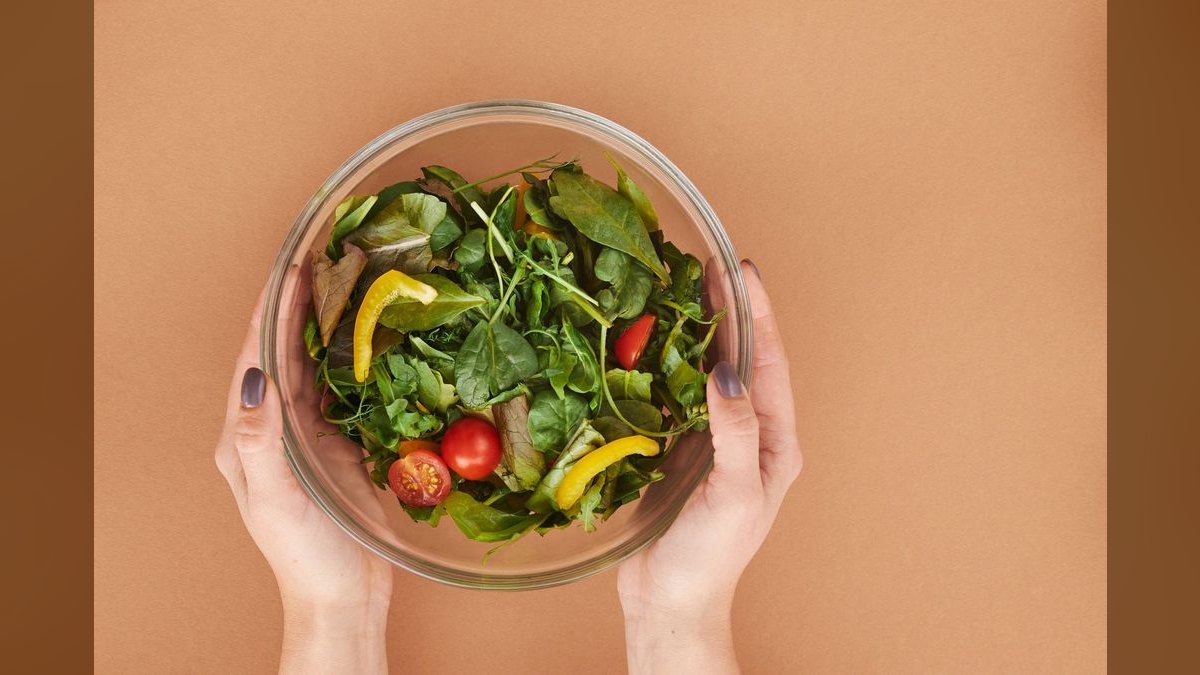
First, in the opening one to two weeks, verify your own liquid capital and net worth against franchisor minimums before you spend another hour on the process — most fast-casual franchisors want to see at least $250K liquid and $1M net worth, and you should secure an SBA pre-qualification letter from a lender active in restaurant lending before going further. Second, submit the franchise application and request the current Franchise Disclosure Document; once it's in hand, read Items 5 (fees), 6 (royalty), 7 (total investment), 19 (financial performance), and 20 (franchisee turnover) in that order, since 20 tells you how many prior operators failed or exited.
Third — and this is the step buyers skip most often, to their own detriment — call eight to twelve current franchisees pulled from the Item 20 contact list. Ask about actual weekly sales, food cost percentage, labor percentage, how royalty payments feel in a slow month, the quality of franchisor field support, and whether they'd sign again. Their answers will diverge from the Item 19 averages, and that gap is where the real risk lives. Fourth, hire a third-party retail real estate broker to source and underwrite three candidate sites, testing daytime population, household income, competitor saturation, and cost per square foot for each one.
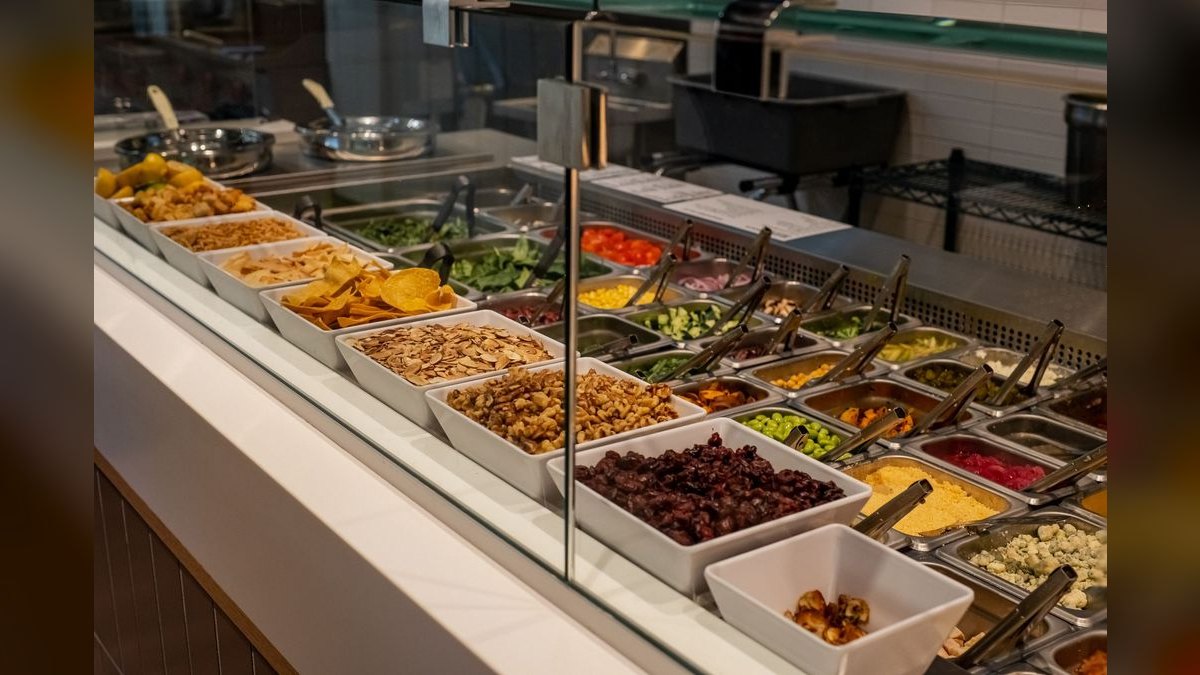
Fifth, attend Discovery Day at company headquarters, tour operating units during actual lunch-rush hours (not a quiet mid-afternoon walkthrough), and meet the training and operations leadership who will support you after you open. Sixth, build a pro forma at three AUV scenarios — a downside, base, and upside case — and test debt-service coverage at each; if the base case doesn't clear roughly 1.35x coverage, that is your answer. Seventh, negotiate lease terms and close SBA financing. Eighth, sign the franchise agreement or formally withdraw — there should be no lingering in between.
Costs, timelines, and typical ranges
The 2027 FDD Item 7 puts total initial investment for a traditional inline location between roughly $307,000 and $753,000. That range breaks down across several line items, and undercapitalizing any one of them is a common reason new franchise units struggle:
| Line item | Typical low | Typical high |
|---|---|---|
| Initial franchise fee | $30,000 | $30,000 |
| Leasehold improvements / build-out | $145,000 | $385,000 |
| Equipment, smallwares, POS | $58,000 | $115,000 |
| Signage and exterior | $9,000 | $28,000 |
| Initial inventory | $7,500 | $14,000 |
| Training and travel | $5,500 | $12,500 |
| Insurance, deposits, permits | $11,000 | $24,000 |
| Working capital (3 months) | $35,000 | $129,000 |
Ongoing costs run a 6% royalty on gross sales plus a 1-3% brand marketing fee, which is fairly standard for the fast-casual segment but leaves little room for error once labor (roughly 28-32% of sales in this category) and food cost (around 29-31%) are layered on top. System-wide AUV sits near $2.2M, though that figure is skewed upward by dense urban flagship units; median stabilized revenue is closer to $1.6M-$1.9M, and store-level EBITDA margin ranges 14% in weaker locations up to 22% in top-performing urban units.
Timelines matter as much as dollar figures. Build-out for an inline location typically runs 14-18 weeks once a lease is signed, layered with roughly 8 weeks of training, most of it in New York. Breakeven generally requires $1.35M-$1.5M in annual sales, and under conservative assumptions, payback lands 30-42 months for a well-sited unit — but stretches past 4-5 years for a location that misses its density targets. Year-1 cash flow for a realistic suburban operator, after debt service on a 70% SBA loan, runs roughly $180,000-$320,000, with early operating losses of $80,000-$140,000 common during a slow ramp. The new drive-thru prototype adds $120,000-$180,000 to the high end of Item 7 due to land and queueing requirements, and its economics are not yet proven the way CAVA's drive-thru format is.
Where teams get it wrong
The single most common mistake is opening in a suburban trade area while expecting Chipotle-style ubiquity. Just Salad is not a dinner brand, and it is not built for drive-past convenience the way a burger or burrito concept is — it needs captive daytime office population within easy walking distance. Franchise buyers who underwrite a site using system-wide AUV averages, without separating out how much of that average is inflated by dense Manhattan and Boston flagships, consistently overestimate what a suburban location will actually produce.
A second recurring failure is closing the deal with just enough liquid capital to hit Item 7's stated minimum but no cushion beyond it. The three-month working-capital line in the cost table isn't a suggestion — it's what keeps a slow ramp from becoming a crisis. Operators who arrive undercapitalized end up deferring royalty payments, then over-borrowing against equipment to cover payroll, a pattern that shows up across fast-casual franchising broadly, not just at Just Salad.
Third, absentee ownership is a near-guaranteed path to underperformance here. The franchise agreement explicitly requires hands-on owner involvement for the first 18 months, and that requirement exists because absentee-managed units from earlier franchise cohorts failed at more than three times the rate of owner-operated locations. Between the 6% royalty, the marketing fee, and thin labor margins, there simply isn't room in the model to also carry an absentee management fee.
Finally, buyers sometimes treat the drive-thru prototype as proven simply because it exists. It does not yet have the multi-year, multi-unit track record that would justify betting a first franchise on it — that validation is still a year or more away, and anyone opening under that format should treat it as the higher-risk option it currently is.
Decision framework: when to choose what
The clearest way to frame the go/no-go decision is as a sequence of gates, each of which needs to pass before the next matters. Capital and net worth come first, since nothing else is worth evaluating without them. Trade-area density comes second — daytime population within a half mile is the single best predictor of whether this franchise concept will work at a given address. Operating experience and rent-to-sales ratio follow, and only after all three clear does competitive saturation become the deciding factor.
If the framework points away from Just Salad, several comparable concepts are worth weighing instead. Saladworks ($165K-$525K total investment, 6% royalty, 100+ units) is the closest economic analog with a proven suburban track record, though at lower AUV ($1.1M-$1.4M) than Just Salad's urban flagships. Salata Salad Kitchen ($550K-$1.1M, Texas-strong) offers higher AUV but a heavier real-estate footprint. Lower-capital entry points include Salad Station ($248K-$643K) and Salad Creations ($64K-$330K), while Crisp & Green ($600K-$1.1M, Minneapolis-born) is gaining franchisee interest as a dark-horse pick. Buying an existing Just Salad unit on the secondary market, rather than building new, typically prices at 3.5-4.8x trailing EBITDA and can outperform new-build economics once a unit has matured past its third year in a proven location.
Related questions
How much liquid capital do I actually need to open a Just Salad?
Item 7 minimums start around $307,000, but realistic buyers should have $500K-$750K+ in accessible capital once working-capital reserves and a financing down payment are factored in.
Is the Just Salad drive-thru format a safer bet than the inline store?
Not yet — it costs $120K-$180K more and lacks the multi-unit track record that would validate its economics the way CAVA's drive-thru format has been validated.
Does Just Salad franchise well outside the Northeast?
It can, but AUV data supporting the brand comes overwhelmingly from dense Northeast urban cores; a Sun Belt or suburban site needs its own independent underwriting, not an assumption that Northeast results will transfer.
What's the biggest hidden revenue lever in a Just Salad unit?
Catering — top-quartile units generate 18-26% of revenue from catering versus 6-9% at bottom-quartile units, making corporate catering relationships a meaningful profit lever operators often underuse.
How does Just Salad compare financially to CAVA or Sweetgreen for a franchise buyer?
Neither CAVA nor Sweetgreen currently franchises — both are corporate-operated — which makes Just Salad one of the only publicly franchisable options in the health-forward fast-casual salad space right now.
FAQ
How much money do I really need to open a Just Salad franchise? Total investment for a smaller inline location starts near $307,000, but the 2027 FDD range runs up to $753,000, and most franchisees carry more cash reserves than the stated minimum to survive a slow ramp-up period.
What ongoing fees does the franchisor collect? A 6% royalty on gross sales plus a 1-3% marketing fee, both of which directly compress margin in any location that isn't hitting strong urban-density sales volume.
What kind of first-year cash flow should I expect? Realistic Year-1 cash flow for a suburban operator runs $180,000-$320,000 after debt service, though many new franchisees should plan for the lower end until a customer base is established.
How long until I break even? Breakeven typically needs $1.35M-$1.5M in annual sales, with payback in 30-42 months under conservative assumptions — sites that can't reach roughly $1.4M in sales should be reconsidered before signing.
Is this franchise profitable outside major cities? System AUV of about $2.2M and 22% EBITDA margins are driven by dense urban markets like Manhattan, Boston, and Philadelphia; suburban locations rarely replicate that density and should be modeled conservatively.
Do I need prior restaurant experience to franchise with Just Salad? Multi-unit restaurant operating experience is strongly preferred, since the brand is looking for operators who understand food cost and labor management, not passive investors new to restaurant operations.
Sources
- https://www.restaurantdive.com/
- https://www.nrn.com/
- https://www.restaurantbusinessonline.com/
- https://www.foodinstitute.com/
- https://www.ibisworld.com/
- https://www.kff.org/
- https://www.bls.gov/
- https://www.franchise.org/
- https://www.justsalad.com/
- https://www.entrepreneur.com/franchises
Related on PULSE
- Should I open or buy a Salata Salad Kitchen franchise in 2027?
- Should I open or buy a Salad and Go franchise in 2027?
- Should I open or buy a Chicken Salad Chick franchise in 2027?
- Should I open or buy a Just Love Coffee Cafe franchise in 2027?
- Should I open or buy a The Brothers that just do Gutters franchise in 2027?
This page will be disappearing soon. Save it to your device for $1 — or read it free while it is here.
@Kory-White- · if Venmo asks, the last 4 of my number are 2012
This page is gone.
This one is off the shelf now. $1 keeps it on your phone for good — the whole page, pictures and diagrams included.
 franchiseShould I open or buy a Playa Bowls franchise in 2027?
 franchiseShould I open or buy a Freddy's Frozen Custard franchise in 2027?
 franchiseShould I open or buy a 1-800-GOT-JUNK franchise in 2027?
 franchiseShould I open or buy a Premier Martial Arts franchise in 2027?
 franchiseShould I open or buy a 100% Chiropractic franchise in 2027?
 franchiseShould I open or buy a Tutor Doctor franchise in 2027?
 franchiseShould I open or buy a Glory Days Grill franchise in 2027?
 franchiseShould I open or buy a Dream Vacations franchise in 2027?
 franchiseShould I open or buy a Huey Magoo's franchise in 2027?
 franchiseShould I open or buy a Marble Slab Creamery franchise in 2027?