
Should I open or buy a Parisi Speed School franchise in 2027?
 Curated byKory White · Fractional CRO · Maryland
 PULSEKNOWLEDGE LIBRARY
Quality
Certified
Only buy a Parisi Speed School franchise in 2027 if you have real coaching credibility and can sell recurring monthly memberships rather than seasonal camps. The in-club license model — embedding the program inside an existing gym — is the capital-efficient entry. Without a coaching background or a funded six-month membership ramp, skip it.
What a Parisi Speed School actually is, and why the model matters
Parisi Speed School is a youth athletic-performance training franchise founded by Bill Parisi in 1993. The product is not general fitness. It is speed, agility, and strength programming aimed at middle-school, high-school, and occasionally college-bound athletes, plus combine-prep work for kids chasing recruiting attention. The curriculum, the coach certification pathway, and the brand recognition among parents and high-school coaches are the three things you are actually buying. Everything else — the turf, the sleds, the timing gates — you could assemble yourself.
The structural fact that shapes every other decision is that Parisi sells two genuinely different businesses under one brand.
The standalone facility model means you lease 3,000–6,000 square feet of training space (some operators run larger, 5,000–10,000 square feet with a turf lane, a weight area, and a reception zone), build it out, and run a full weekly schedule of youth and adult performance programs. You control the space, the hours, the schedule, and the P&L. You also carry the rent, the buildout debt, and the full weight of filling a calendar from zero.
The in-club license model means you embed a Parisi program inside an existing health club, sports facility, or independent gym. You share space, you share some traffic, and you skip most of the buildout. Per the 2026 FDD, this is the path that keeps total investment under roughly $150,000 — the reason Parisi's entry cost sits below most brick-and-mortar fitness concepts.
Why this distinction matters more than the franchise fee: it changes what business you are in. Standalone is a real-estate-plus-membership business. In-club is a program-management-plus-membership business, where your landlord is also your partner and, sometimes, your lead source. The failure modes are completely different. Standalone dies from rent against an empty schedule. In-club dies from a bad host-gym relationship or a revenue-share that quietly eats your margin.
The revenue engine in both cases is the same and it is worth stating bluntly, because it is the single most misunderstood thing about this category: this is a membership-retention business. Recurring monthly athletes at roughly $150–$300 each drive the economics. Drop-in sessions, one-off clinics, and summer camps are supplements, not the base. Franchise buyers who come from a camp-and-clinic mental model consistently misjudge both the ramp and the cash-flow curve.
The adjacent context helps here. If you have looked at swim-school franchises, youth enrichment programs, or adult boutique-fitness studios, you have already seen the same underlying unit economics: a fixed-cost box, a recurring-billing membership base, and a break-even that arrives when active member count crosses a threshold. Parisi's threshold sits meaningfully lower than a large-format athletic facility concept, but the arithmetic is identical. What differs is the buyer. Parents buying speed training are buying a specific outcome — a faster 40, a better vertical, a shot at a roster spot — which makes results reporting and coach credibility part of the retention machinery in a way a swim lesson or a spin class never demands.
The step-by-step process from FDD to a full schedule
The sequence below is the disciplined version. Most people who lose money on a franchise like this skipped steps three and seven.
Step one — request and actually read the FDD. The 2026 filing lists a $40,000 franchise fee, total Item 7 investment of roughly $137,000 to $444,000 depending on model, an 8% royalty on gross, and a 2% national-marketing fee. Read Item 19 carefully and note what it does and does not claim. Read Item 20 for the unit-count table — openings, closures, transfers, and terminations over the past three years tell you more about system health than any brochure. If closures and transfers are climbing while openings flatten, that is your answer.
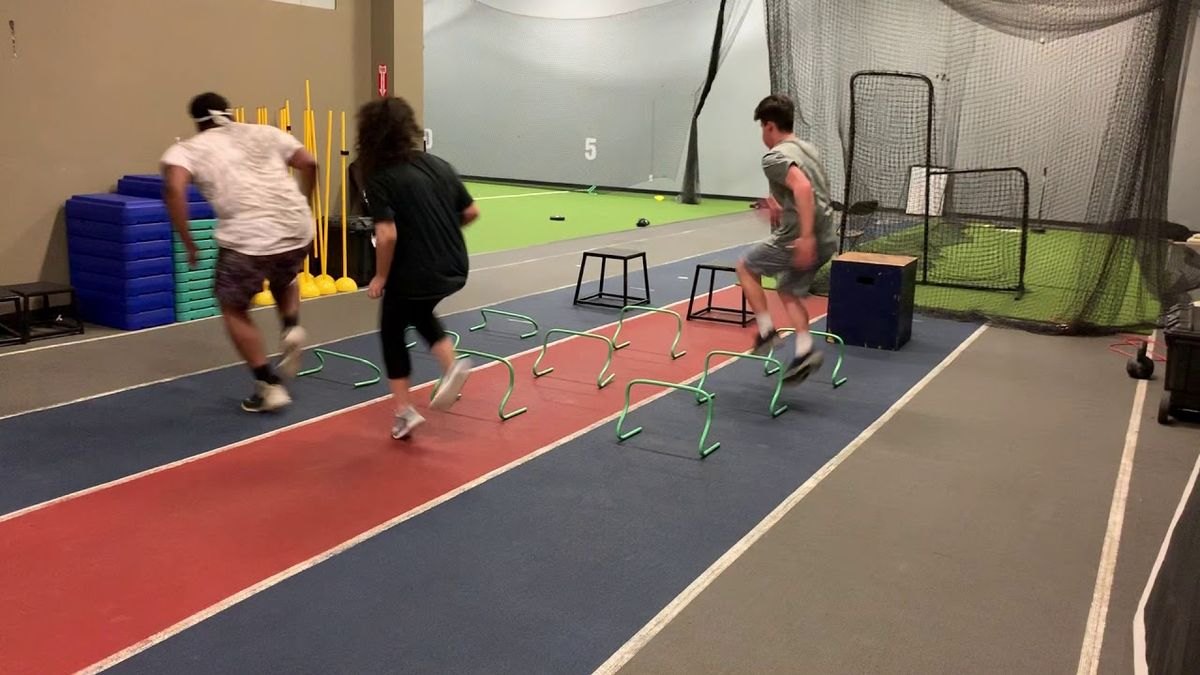
Step two — decide standalone versus in-club before you talk to a broker. This decision is driven by two variables only: how much capital you can put at risk, and whether you already control or can access facility space. If you own a gym, coach at one, or have a credible relationship with a facility owner, the in-club path is almost always the better risk-adjusted bet.
Step three — interview at least eight existing operators, across both models. Use the Item 20 contact list, not the names the franchisor hands you. Ask four questions and write down the answers: How many active members do you carry right now? What is your monthly churn percentage? What was your Year-1 owner take-home versus Year-3? If you were starting over, standalone or in-club? Also call at least two former franchisees who exited. The exits tell you what the brochure cannot.
Step four — validate youth-sports density in your trade area. Count travel clubs within a 20-minute drive. Count high-school programs in football, soccer, baseball, lacrosse, and track. Pull median household income. Performance training needs an affluent, sports-serious population — the working rule of thumb operators use is a median HHI above roughly $80,000 combined with visible travel-team culture. A market with plenty of kids but no travel-team spending will not support $180-per-month memberships.
Step five — lock the site or the host-gym partnership. For standalone, negotiate rent against a realistic ramp, not an optimistic one, and push for a graduated schedule or free-rent period covering the first several months. For in-club, get the revenue-share, the space allocation, the schedule priority, and the exit terms in writing. A handshake with a friendly gym owner becomes a dispute the moment your program starts pulling their members into your billing.
Step six — finance the build and complete certification. Parisi's certification pathway is a real gate, not a formality — coaches are expected to hold recognized credentials such as NSCA, NASM, or CSCS. Budget for HQ training and travel, and budget a working-capital reserve that covers six months of payroll and rent, not three.
Step seven — pre-sell founding memberships before you open the doors. This is the step that separates the operators who reach break-even in month nine from the ones still bleeding in month eighteen. Target 75–120 committed athletes before opening day using free assessment clinics, school outreach, and coach referrals. A founding-member offer with a locked rate is the standard tool.
Step eight — drive toward the break-even member count and then defend it. Most units turn cash-flow positive somewhere around 150 active members. Above that, every additional member is close to pure contribution margin because your coaching labor scales in steps, not smoothly.
Costs, timelines, and the ranges you should plan against
Here is the investment picture from the 2026 FDD, split by model, so you can see where the $300,000 spread actually lives.
| Line item | Low (in-club) | High (standalone) | Notes |
|---|---|---|---|
| Franchise fee | $40,000 | $40,000 | Per 2026 FDD |
| Leasehold / buildout | $10,000 | $220,000 | Turf, flooring, mirrors |
| Training equipment | $25,000 | $70,000 | Sleds, racks, timing gates |
| Technology and software | $3,000 | $8,000 | Member CRM, scheduling, billing |
| Initial marketing | $8,000 | $20,000 | Grand opening plus school outreach |
| Insurance and permits | $4,000 | $15,000 | General liability plus participant coverage |
| Training and travel | $5,000 | $12,000 | Certification at HQ |
| Working capital | $30,000 | $59,000 | First three to six months |
| Total Item 7 | $137,000 | $444,000 | Per 2026 FDD |
Note what dominates the spread: leasehold and buildout. Nearly three-quarters of the difference between the cheapest and most expensive path is real estate improvement. That single line is why the in-club model exists and why it is the right answer for most first-time buyers.
Ongoing fees. 8% royalty on gross revenue plus a 2% national-marketing fee. Ten points off the top before you pay rent or a single coach. That is normal for the category but it means your revenue-per-member target has to clear ten percent more than an independent gym's would.
Revenue. Mature standalone units report roughly $350,000–$750,000 in annual unit volume. The math that produces it is unglamorous: 180–300 active athletes at an average of about $180 per month yields $390,000–$650,000 a year. Team contracts with local schools and clubs, and adult fitness add-ons in off-peak hours, fill the rest. If you want to sanity-check any operator's revenue claim, ask for active member count and average rate. Those two numbers reconstruct the top line.
Cost structure. Coaching labor is the dominant line at roughly 30%–40% of revenue. Rent and facility runs in the low-to-mid teens for standalone and materially less for in-club. Equipment, supplies, insurance, local marketing, and admin absorb the rest. Owner-discretionary earnings land in the $70,000–$180,000 range, skewing to the top of that band for owner-coaches who replace a salaried head coach with their own labor.
Staffing costs specifically. Plan on two to four certified trainers at roughly $35,000–$55,000 each plus benefits to run sessions safely and cover the after-school block. If you cannot personally coach or supervise programming, add roughly $50,000–$70,000 annually for a lead trainer who owns the programming while you own sales and operations. Keeping staff certified and current on Parisi methodology runs on the order of $8,000–$12,000 a year. Turnover in youth training is high — many operators see 30%–40% annually — so recruiting is a permanent line item, not a startup task.
Seasonality and cash flow. This is where new operators get surprised. Revenue skews heavily toward the fall — roughly 60%–70% of annual income clusters in the August-to-December window when fall sports prep and combine season peak. Summer camps and spring clinics each contribute something in the mid-to-high teens as a share of revenue, but they do not level the curve. January through March is the trough. Carry $40,000–$60,000 in working capital specifically to cover payroll and rent through it. Operators who spend the fall surplus in December are the ones who panic in February.
Timelines. Realistic sequencing: 60–90 days from signed agreement to site or host-gym lock, 60–120 days for buildout on standalone (much less in-club), and certification concurrent with build. Break-even typically arrives in month 12–18, sometimes stretching toward 24 for a standalone starting cold. In-club units generally get there faster because the overhead is smaller and the host gym supplies some initial member flow.
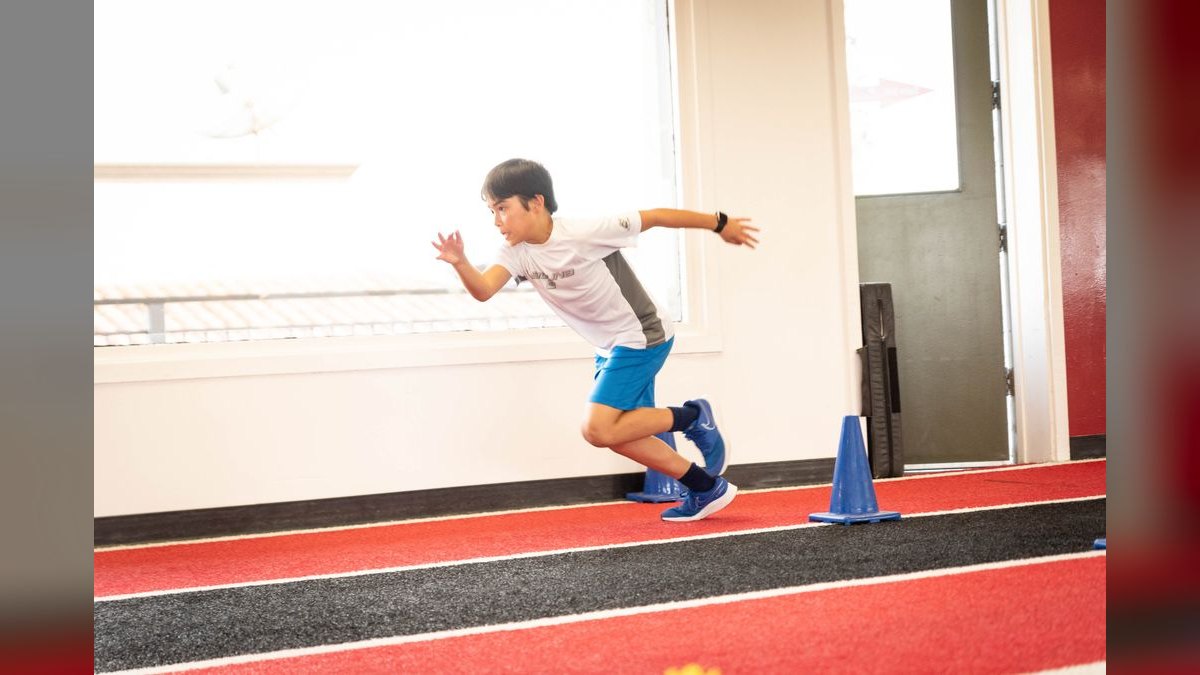
Local partnership spend. Budget $5,000–$15,000 annually for school outreach — sponsorships, facility rentals, coach stipends, free speed clinics. Operators who secure ongoing relationships with three to five nearby middle and high schools ramp substantially faster than those relying on paid digital acquisition alone. The mechanism is simple: a high-school coach who trusts your programming becomes a recurring referral channel at effectively zero cost per acquisition.
Where operators get this wrong
They run it as a camp business. This is the single most common failure. Camps and clinics are seasonal, high-effort, low-margin, and they produce a revenue line that collapses between seasons. If your billing is not predominantly recurring monthly, you do not have a stable business, you have a series of events. Camps should be a top-of-funnel acquisition tool that converts into memberships, not the revenue base.
They under-fund the ramp. A standalone facility paying full rent with fewer than roughly 120 active members bleeds cash every month. The membership ramp is the hardest and slowest part of the whole venture, and it is the part buyers systematically compress in their pro formas. Three months of working capital is not enough. Six is the floor.
They buy without coaching credibility and never hire it. Parents are not buying access to turf. They are buying a coach they trust with their kid's athletic development, and they are paying a premium rate for it. An operator with no coaching background who also declines to hire a strong credentialed head coach will not convert leads at $180 a month, full stop. This is the one deficiency you cannot marketing your way out of.
They hire ahead of the membership base. Coaching labor at 30%–40% of revenue is manageable. At 55% it is fatal. New operators staff for the schedule they hope to run rather than the one they actually have booked, and margin evaporates. Add coaches in steps tied to confirmed session load, and be willing to run lean and personally cover sessions during the ramp.
They overpay for the wrong real estate. Signing a long, expensive standalone lease in a market with thin youth-sports density is the classic way to lose a six-figure investment in this category. Rent is fixed and permanent; your membership base is neither, at least not at first. If the market data is marginal, the in-club model is the hedge — it converts most of that fixed cost into a variable revenue share.
They ignore the first-90-days retention cliff. Retention frequently drops sharply in the months after an athlete signs up unless there is a structured reason to stay. The fix is process, not discounting: monthly assessments with recorded metrics, written progress reports, and direct parent communication. Parents renew when they can see the number moving. Operators who add small-group specialty programming as a paid tier on top of base membership generally see meaningfully higher lifetime value per athlete.
They mismanage the host-gym relationship in the in-club model. The cheaper path has its own trap. Your host gym's members are your prospects, which sounds great until the gym owner decides your program is cannibalizing their personal-training revenue. Get the terms, the space, the schedule priority, and the exit rights documented before you spend a dollar on equipment.
They neglect the downstream referral economy. Youth sports is a word-of-mouth market with an unusually tight social graph. One travel team's parent group can deliver a dozen members or torch your reputation in a season. Treat coach relationships, team contracts, and parent communication as core operations rather than marketing overhead.
Decision framework: which model, or which alternative
Work the decision in this order — capital, credibility, market, then model.
If you have coaching credibility and access to facility space: the in-club license model is the strongest risk-adjusted play in the system. Total investment under roughly $150,000, dramatically lower fixed cost, faster path to break-even, and a built-in traffic source. This is the recommended default for a first unit.
If you have coaching credibility and real capital but no space: standalone is viable, but only in a validated market with confirmed youth-sports density and an affluent, spending population. Negotiate rent hard, pre-sell aggressively, and reserve six months of operating expense. Expect break-even in months 12–24.
If you have capital but no coaching credibility: either hire a credentialed head coach before you sign anything and build your pro forma around that $50,000–$70,000 salary, or look at a franchise category where the operator's personal expertise is not the product.
If your market fails the density test: do not force it. No amount of local marketing fixes a trade area that will not pay a premium recurring rate for youth performance training.
Adjacent options worth pricing against Parisi, so you know what you are choosing over:
- D1 Training — larger-format athletic facility, roughly $1.4M–$3.5M total investment. Higher ceiling, far higher capital and risk, group-training model.
- Athletic Republic — closest direct comparable in sports-science-branded performance training, roughly $200,000–$500,000.
- i9 Sports — home-based youth leagues around $60,000–$80,000. Recreational rather than performance; much lower capital, much lower ceiling, no facility.
- TGA Premier Sports — golf and tennis enrichment through school partnerships, roughly $25,000–$70,000, very low overhead, asset-light.
- Adult boutique-fitness membership concepts — same recurring-revenue mechanics, different customer, generally less dependent on the owner's coaching résumé.
- An independent performance gym — full equity, no royalty, no 8% and 2% off the top. You forgo the Parisi curriculum, the certification system, and the brand recognition that justifies premium pricing to parents. For an established local coach with an existing athlete following, this is a genuinely competitive option and deserves a real side-by-side model.
On 2027 market conditions specifically: youth athletic-performance training remains a growing premium niche, carried by sports specialization and the college-recruiting arms race. Two headwinds are worth pricing in. First, qualified strength coaches command rising wages, and certified-coach scarcity in some markets pressures the labor line — which raises the value of being an owner-coach. Second, competition has thickened, from national brands to well-run independent CSCS-led gyms, so brand and certification are doing more of the differentiation work than they did a decade ago. On the tailwind side, the boom in independent gyms and sports facilities looking to add a credentialed youth-performance program without building it themselves is exactly what the in-club license model was built to capture.
Related questions
How many active members does a Parisi unit need to break even?
Most units turn cash-flow positive somewhere around 150 active members. Below roughly 120, a standalone facility paying full rent generally bleeds cash. In-club units break even lower because fixed overhead is much smaller.
Is the in-club license model really better than standalone?
For most first-time buyers, yes. It cuts total investment to under about $150,000, converts fixed rent into a shared arrangement, and borrows traffic from the host gym. Standalone earns more at maturity but carries far more risk during the ramp.
Can I own a Parisi Speed School without being a coach?
Only if you hire credible coaching. Budget $50,000–$70,000 annually for a credentialed head coach to own programming while you handle sales and operations. Parents pay premium rates for trusted expertise, not access to equipment.
What kills a youth performance franchise fastest?
Two things: running it as a seasonal camp business instead of a recurring membership base, and signing an expensive standalone lease in a market without travel-team spending. Both are decided before opening day.
How seasonal is the revenue?
Heavily. Roughly 60%–70% of annual revenue clusters in the August-to-December fall-sports and combine window. January through March is the trough — carry $40,000–$60,000 in working capital specifically for it.
FAQ
What is the typical timeframe to reach profitability?
Most franchisees break even in the first 12 to 18 months, and it can stretch toward 24 months for a standalone facility starting cold. The in-club license model typically reaches profitability faster because overhead is a fraction of standalone and the host gym supplies some initial member flow. Pre-selling founding memberships before opening is the single biggest lever on that timeline.
Can I run a Parisi Speed School part-time or as a side business?
No. This is not a passive investment. Successful owners are on-site daily during the after-school and evening blocks, coaching, selling memberships, and managing staff. Expect 40–55 hours a week concentrated in the 3–8 PM window and weekends, which is exactly when youth athletes train. Operators looking for a 9-to-5 lifestyle should look at a different category.
How much space do I need?
A standalone facility typically runs 3,000–6,000 square feet at the low end, with larger units at 5,000–10,000 square feet including turf, weight area, and reception. The in-club license model uses existing club space and can work with as little as roughly 1,500 square feet of dedicated training area, which is precisely why its buildout line is a fraction of standalone.
What certifications do coaches need?
Parisi expects recognized strength-and-conditioning credentials — NSCA, NASM, or CSCS-level certification — plus completion of the Parisi certification pathway at HQ. This is a gate, not a suggestion. Budget for both the initial certification and roughly $8,000–$12,000 a year to keep staff current, and expect to recruit continuously given 30%–40% annual turnover in youth training roles.
Does the franchisor handle my local marketing?
Partly. The 2% national-marketing fee funds brand-level work and you get field support on local sales strategy, but execution in your trade area is yours. School outreach, coach relationships, team contracts, and parent communication are the channels that actually fill a schedule, and no national fund does that for you. Plan $5,000–$15,000 annually on local school and club partnerships.
Can I open multiple units right away?
Multi-unit development is permitted, but nearly everyone should start with one. Prove you can hold 150-plus active members with acceptable churn before adding a second box. Scaling before retention is solved just multiplies a broken unit — and each additional location needs its own capital, its own credible head coach, and management capacity you may not have yet.
Sources
- https://www.parisischool.com/
- https://www.ftc.gov/business-guidance/resources/franchise-rule-compliance-guide
- https://www.entrepreneur.com/franchises/franchise500
- https://www.franchisebusinessreview.com/
- https://www.ibisworld.com/united-states/industry/gym-health-fitness-clubs/1655/
- https://www.franchise.org/
- https://www.nsca.com/certification/cscs/
- https://projectplay.org/state-of-play
- https://www.sba.gov/funding-programs/loans
- https://www.healthandfitness.org/
Related on PULSE
- [Should I open or buy a K1 Speed indoor karting franchise in 2027?](/knowledge/fr0638)
- [Should I open or buy a School of Rock franchise in 2027?](/knowledge/fr1056)
- [Should I open or buy a Celebree School franchise in 2027?](/knowledge/fr0921)
- [Should I open or buy a The Coder School franchise in 2027?](/knowledge/fr0912)
- [Should I open or buy a Big Blue Swim School franchise in 2027?](/knowledge/fr0521)
- [Should I open or buy a SafeSplash Swim School franchise in 2027?](/knowledge/fr0520)
Recently Added — Related
- [Should I open or buy a Pet Wants franchise in 2027?](/knowledge/fr0792)
This page will be disappearing soon. Save it to your device for $1 — or read it free while it is here.
@Kory-White- · if Venmo asks, the last 4 of my number are 2012
This page is gone.
This one is off the shelf now. $1 keeps it on your phone for good — the whole page, pictures and diagrams included.
 franchiseShould I open or buy a Taco Bell franchise or open an independent sandwich shop in 2027?
 franchiseShould I open or buy a Domino's franchise or open an independent sandwich shop in 2027?
 franchiseShould I open or buy a Popeyes franchise or open an independent sandwich shop in 2027?
 franchiseWhat is the step-by-step process for buying an existing franchise resale instead of building a new location in 2027?
 franchiseShould I open or buy a Grease Monkey franchise in 2027?
 franchiseShould I open or buy a Whataburger franchise in 2027?
 franchiseShould I choose an independent self-storage business or a franchise model in 2027?
 franchiseShould I open or buy an iCRYO cryotherapy franchise in 2027?
 franchiseShould I open or buy a Shake Shack franchise or open an independent sandwich shop in 2027?
 franchiseShould I open or buy a Saladworks franchise in 2027?