
Skill Drill: Storytelling for Building Materials
 Curated byKory White · Fractional CRO · Maryland
 PULSEKNOWLEDGE LIBRARY
This skill drill transforms building materials sales reps from spec reciters into storytellers who create memorable, repeatable narratives that win jobs. In 30-60 minutes, a sales manager leads 4-12 reps through a structured story-build-and-tell format, turning dry product specs like R-values and load ratings into vivid 60-second customer stories. The drill anchors each story in a real jobsite outcome, giving buyers a compelling reason to choose your product beyond a price quote.
Building-materials buyers—GCs, framing contractors, purchasing managers at yards like ABC Supply or Builders FirstSource—hear the same spec recitation from every rep. R-values, wind ratings, ASTM numbers, price per square. It all blurs into white noise. The rep who can say "a framer in Tulsa switched to this fastener after a wind event ripped the old decking off a half-finished roof—zero callbacks since" gets remembered and quoted to the estimator. The bottleneck isn't product knowledge; reps have plenty. It's the inability to package that knowledge into a story that survives the buyer telling their boss. This drill directly addresses that gap, providing a repeatable process any rep can master.
Why Does Storytelling Work Better Than Specs in Building Materials Sales?
Three named methodologies anchor this drill and explain why storytelling outperforms feature dumps. Stephen Denning's "springboard story" framework provides the structure: a specific protagonist, a real problem, a turn, and a transferable lesson. The buyer doesn't just hear about the product; they see themselves in the story. Made to Stick (Chip and Dan Heath) supplies the "SUCCESs" test—Simple, Unexpected, Concrete, Credible, Emotional, Story—which is exactly how you keep a spec from going abstract. A story that passes this test sticks in the buyer's mind long after the sales call ends. Corporate Visions' "Why Change?" messaging discipline forces the story to contrast the buyer's current painful state with the new one, so the story sells a decision, not just entertains.
A building-materials rep who masters this stops reciting cut sheets and starts planting stories the buyer repeats for them. Consider the difference: "This insulation has an R-6 per inch" versus "A builder in Denver was getting comfort complaints every winter until he switched to this continuous exterior foam. The R-6 per inch stopped the thermal bridging, and now his homeowners call to thank him." The first is forgotten by lunch. The second gets repeated to the estimator and the homeowner. For more on building this skill across your team, see Skill Drill: Storytelling for Building Materials.
How Do You Prepare for This Storytelling Drill?
The drill requires minimal setup but specific materials to ensure every rep walks away with a bankable story. Group size works best at 4 to 12 reps. Any larger and the telling phase drags; any smaller and you lose the group pressure-test dynamic. Materials needed include index cards, one "Story Spine" template per rep (Hero / Problem / Turn / Result / Spec-that-mattered), and a timer. The Story Spine template is critical—it forces the rep to structure their narrative before they start talking.

Room setup matters more than you think. Tables for the build phase let reps spread out their notes and think. Then chairs in a semicircle for the tell phase ensure everyone hears each story clearly and can give feedback. Handouts include the Story Spine template and three "raw spec" prompt cards (detailed below) that reps must convert into stories. Leader prep is non-negotiable: have one of your own real customer stories ready to model in Round 1. It must be 60 seconds, told the way you want theirs to land. If you can't model it, they won't believe it's possible. For additional preparation techniques, explore Skill Drill: Discovery Questions for Building Materials.
What Does Each Round of the Drill Look Like?
Round 1 — Set the Scene (5 minutes)
Name the skill and the failure mode. Read this verbatim to the group:

> "Every rep on every yard counter recites the same specs. The buyer's eyes glaze, and your product becomes a number on a quote. Today we drill storytelling—turning one spec into a 60-second story about a real jobsite, a real headache, and a real result. By the end, you'll have a story you can tell at the counter tomorrow that the buyer repeats to their estimator. Watch me first."
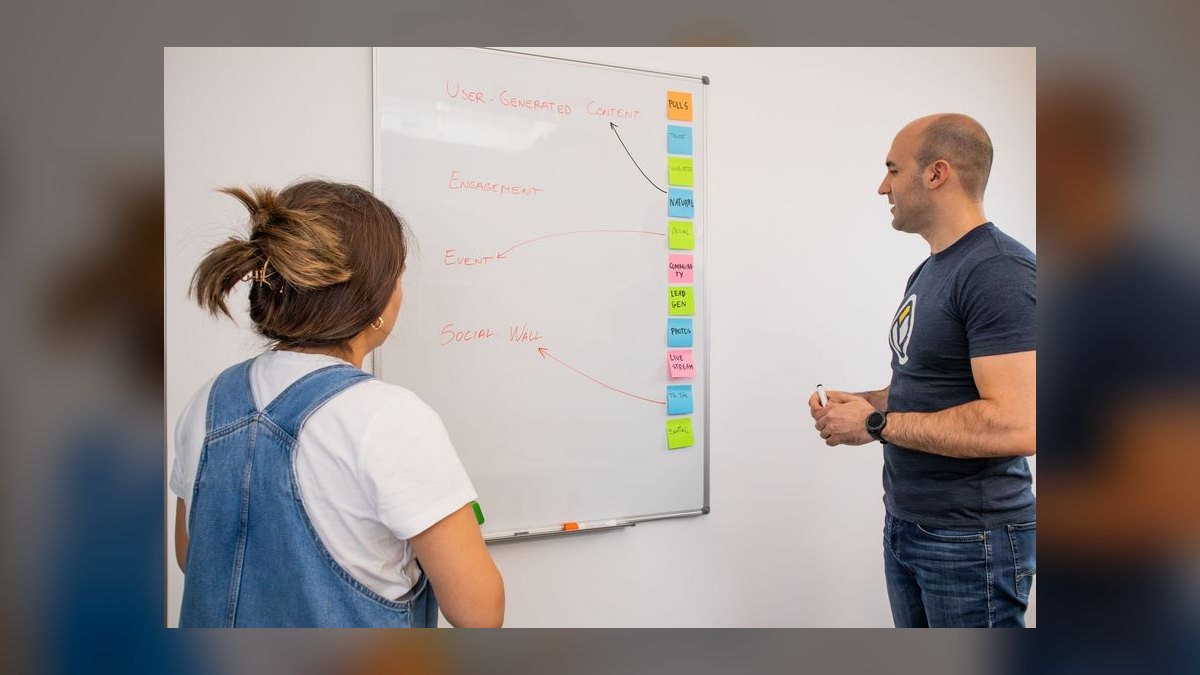
Tell your own 60-second customer story live. Then break down its spine on the whiteboard: Hero (name the contractor and the job), Problem (the jobsite pain), Turn (what they tried), Result (the outcome, ideally a number), Spec-that-mattered (the one product detail that made the difference). What good looks like: the group can point to each spine element in your story.
Round 2 — Build the Story (15 minutes)
Hand each rep a raw spec prompt. Solo, they fill the Story Spine template—converting the spec into a story about a real or composite customer. Push for one concrete number and one human detail.

The three raw spec prompts:
> Prompt A — The Fastener. "Stainless ring-shank nails, 304-grade, rated for coastal exposure, $14 more per box than galvanized." (Build a story where the cheaper choice caused a callback.)
> Prompt B — The Insulation. "Continuous exterior rigid foam, R-6 per inch, adds a day to the install but cuts thermal bridging." (Build a story where the extra day saved a builder a comfort complaint or an energy-code fail.)

> Prompt C — The Lead Time. "Engineered wood I-joists, in stock locally vs. a three-week mill order." (Build a story where availability, not price, won the job.)
Circulate. When a rep writes a feature instead of a scene, stop and ask: "Who's the hero and what jobsite are they on?" What good looks like: every spine has a named hero, a concrete problem, and a result with a number or a vivid consequence.
Round 3 — Tell & Pressure Test (15 minutes)
Each rep tells their 60-second story to the group. After each, the group runs the Made to Stick gut-check out loud—was it Concrete? Credible? Did it have a turn? The leader then plays a skeptical buyer and pushes back on one story:
> "That's a nice anecdote. But my crew's been buying galvanized for fifteen years and never had a problem. Why's your story going to change what I order Monday?"
The rep must respond by sharpening the contrast—the "Why Change?" pain of the current state—not by retreating to specs. The group scores each story 1 to 5 on whether they'd repeat it to someone else. What good looks like: the story is short, has one number, names a hero, and the buyer-pushback gets answered with a sharper story, not a spec dump.

Round 4 — Lock It In (10 minutes)
Go around the room: each rep names which customer or buyer they'll tell their story to this week. Write the strongest story's spine on the whiteboard as the team template. Ask three debrief questions:
- Which story would you actually repeat to a colleague, and why?
- Where did a story slip back into a spec recitation?
- What's the one detail that made a story credible?
Each rep banks their finished story on an index card to keep at the counter. Close with this:

> "A spec is forgotten by lunch. A story about a Tulsa framer and a torn-off roof gets repeated to the estimator. This week, one story, one buyer, told out loud. Bring back what they said."
What good looks like: every rep leaves with one written, ready-to-tell story and a named buyer to tell it to.
How Can You Scale This Drill for Different Team Sizes and Time Constraints?
The drill adapts to any schedule or team structure without losing its core effectiveness. The key is maintaining the story-build-and-tell loop even when time is tight.

- 5-minute version (stand-up): One rep tells one customer story; the group runs the Made to Stick gut-check and names one fix. Done. Perfect for counter staff who have seconds between customers.
- 30-minute version: Round 1, the build phase, and three to four tells. Skip the per-story pressure test; do one group gut-check. Works for weekly team huddles.
- 60-minute version: All four rounds, every rep tells and gets the skeptical-buyer pushback, with the group scoreboard. Best for monthly sales meetings or training days.
For new reps, give them a finished spine so they only practice the telling. For veterans, remove the template and have them build and tell cold from a raw spec. This forces them to rely on their experience rather than a crutch.
What Common Mistakes Do Reps Make, and How Do You Fix Them?
Three mistakes show up repeatedly in this drill, and each has a specific coaching cue that fixes it in the moment.

First, reps make the protagonist themselves—"I sold this to a GC in Phoenix"—which kills credibility because the buyer doesn't care about the rep's win. The buyer wants to hear about a peer who solved a problem. Fix: Force the protagonist to be the end-user contractor or the buyer's peer. Change "I sold this to" to "A framer in Des Moines switched to."
Second, the story becomes a spec dump disguised as narrative—"The R-value of 38 meant..."—which loses the emotional hook entirely. The buyer's brain checks out when it hears a number parade. Fix: Ban all numbers from Act 1 and Act 2 of the story. Only allow one number in Act 3 if it's the outcome. The first two acts are about the human problem and the turn.

Third, the story lacks a transferable lesson—the buyer can't repeat it to their boss or estimator. If the story doesn't survive the walk back to the office, it's wasted. Fix: End every story with a one-sentence tagline the buyer could say verbatim: "So if you've got a steep-pitch roof with high wind exposure, this fastener is the one that stays put." The drill should produce stories that survive the buyer walking back to the office.
How Do You Measure the Success of This Drill?
After the drill, track two metrics over the next 30 days: the number of times a rep uses a story in a sales call (self-reported) and the average call duration. A good target is a 20% increase in story usage and a 15-second longer call—indicating the story is landing, not just being recited. Real improvement shows in pipeline velocity within one quarter.
Don't overcomplicate measurement. Simple self-reporting works because reps know when they've used a story—they'll feel the difference in the buyer's response. Ask them in your next weekly huddle: "Who told their story this week? What did the buyer say?" The answer to that second question is your real metric. If the buyer repeated the story to someone else, you've won. For more on tracking sales performance improvements, see Skill Drill: Asking for Referrals for Building Materials.
Related questions
How do you turn a product spec into a customer story?
Start by identifying the spec that solved a real jobsite problem for a specific contractor. Name the contractor and the problem, describe what they tried before, then reveal how the spec changed the outcome. End with one measurable result the buyer can repeat to their estimator.
What makes a building materials story credible to a contractor?
Specificity—name the city, the type of job, the weather condition, and the exact problem. General stories sound made up; specific stories sound true. A "framer in Tulsa" is more credible than "a contractor in the Midwest."
How do you handle a buyer who says "that's just an anecdote"?
Sharpen the contrast between their current pain and the new outcome. Don't retreat to specs. Say: "You're right, it's one story. But tell me—when was the last time a galvanized fastener story saved you a callback?" The buyer's silence is your win.
Can you use storytelling in a written quote or proposal?
Yes, but keep it short. One sentence at the top of the quote: "This is the same fastener a framer in Tulsa switched to after a wind event—zero callbacks since." It frames the entire quote as a solution, not a price list.
What's the biggest mistake reps make when telling a story?
Making themselves the hero. The buyer doesn't care that you sold it; they care that a peer used it and got a result. Force the protagonist to be the end-user every time.
FAQ
Do the stories have to be literally true? The best ones are real, lightly anonymized. Composites built from real jobsite outcomes are fine, but never invent a result that didn't happen—credibility is the whole point, and contractors smell a fake story instantly. If you're caught fabricating, you lose the account forever.
My reps say they don't have any good stories. What then? They do—they've just never packaged them. Run the build phase with a real account they lost or won and walk the spine backward. Every callback, every saved job, every blown lead time is a story waiting to be told.
Isn't storytelling soft for a price-driven, commodity business? Building materials feels commodity precisely because everyone recites specs. A story is how you stop competing only on price—it gives the buyer a reason beyond the quote that they can repeat to the estimator.
How long should the stories be? Sixty seconds at the counter, shorter on the phone. If it can't be told while a buyer is mid-order at the desk, it won't get used. Time your reps and cut anything that exceeds 60 seconds.
How often should we run this drill? Monthly, refreshing the spec prompts with whatever's actually on the truck or in short supply that month. Stories age; jobsite conditions change. A story about supply chain delays from six months ago is irrelevant today.
Can this work for inside sales and counter staff, not just outside reps? Yes—counter and inside reps need it most, because they have seconds, not a sit-down. The 5-minute stand-up version is built for them. A counter rep who can tell a 30-second story while pulling an order is worth their weight in repeat business.
What if my team has more than 12 reps? Split into pods of 4-6, each led by a senior rep or manager. Run the drill in parallel, then bring the best story from each pod to the full group for a final tell and pressure test.
How do I handle a rep who freezes during the tell phase? Give them a scripted fallback: "Here's what I'd say to a buyer about this product." Have them read it once, then tell it from memory. The act of reading aloud often unlocks the confidence to tell it naturally on the next try.
Sources
- Made to Stick — Chip Heath & Dan Heath
- Stephen Denning — The Leader's Guide to Storytelling
- Corporate Visions — "Why Change?" Messaging
- Harvard Business Review — The Irresistible Power of Storytelling
- The Challenger Sale — CEB/Gartner
- Association for Talent Development (ATD)
- Gong — Sales Storytelling & Conversation Data
- Sales Hacker — The Science of Storytelling in Sales
- RAIN Group — Storytelling for Sales Success
- Forbes — The Power of Storytelling in Sales
Related on PULSE
- [Skill Drill: Discovery Questions for Building Materials](/knowledge/sk0071)
- [Skill Drill: Asking for Referrals for Building Materials](/knowledge/sk0013)
- [Skill Drill: Storytelling for Food and Beverage Distribution](/knowledge/sk0076)
- [Skill Drill: Building Rapport for Janitorial and Facilities](/knowledge/sk0085)
- [Skill Drill: Storytelling for Logistics and Freight](/knowledge/sk0008)
- [Skill Drill: Building Rapport for Promotional Products](/knowledge/sk0051)
@Kory-White- · if Venmo asks, the last 4 of my number are 2012
 pulse-skillsSkill Drill: Handling Price Increase Conversations for Waste and Recycling Services in 2027
 pulse-skillsSkill Drill: Active Listening for Automotive Dealerships
 pulse-skillsSkill Drill: Cold Calling for Commercial Real Estate
 pulse-skillsSkill Drill: Discovery Questions for Medical Device Sales
 pulse-skillsSkill Drill: Relationship Selling for Furniture Manufacturing
 pulse-skillsSkill Drill: Product Demos for HVAC
 pulse-skillsSkill Drill: Handling Rejection for Pharmaceutical Sales
 pulse-skillsSkill Drill: Delegation for SaaS Sales
 pulse-skillsSkill Drill: Discovery Questions for Logistics and Freight
 pulse-skillsSkill Drill: Asking for Referrals for Building Materials