
Should I open or buy a Poke Bros franchise in 2027?
 Curated byKory White · Fractional CRO · Maryland
 PULSEKNOWLEDGE LIBRARY
Quality
Certified
Open a Poke Bros franchise in 2027 only if you have $250,000–$500,000 in total capital and a lunch-heavy, health-conscious trade area that is not already poke-saturated. Mature units gross roughly $450,000–$900,000 with owner income near $60,000–$160,000. Location quality and fresh-fish cost control decide the outcome.
What a Poke Bros franchise actually is, and why the format matters
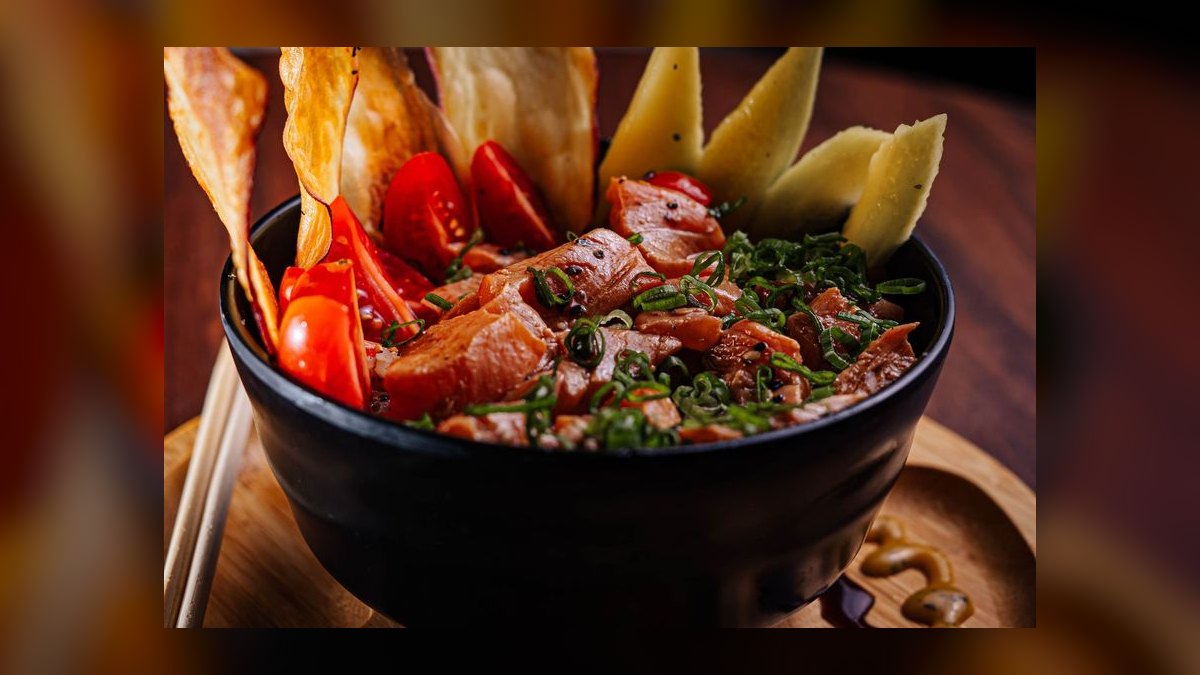
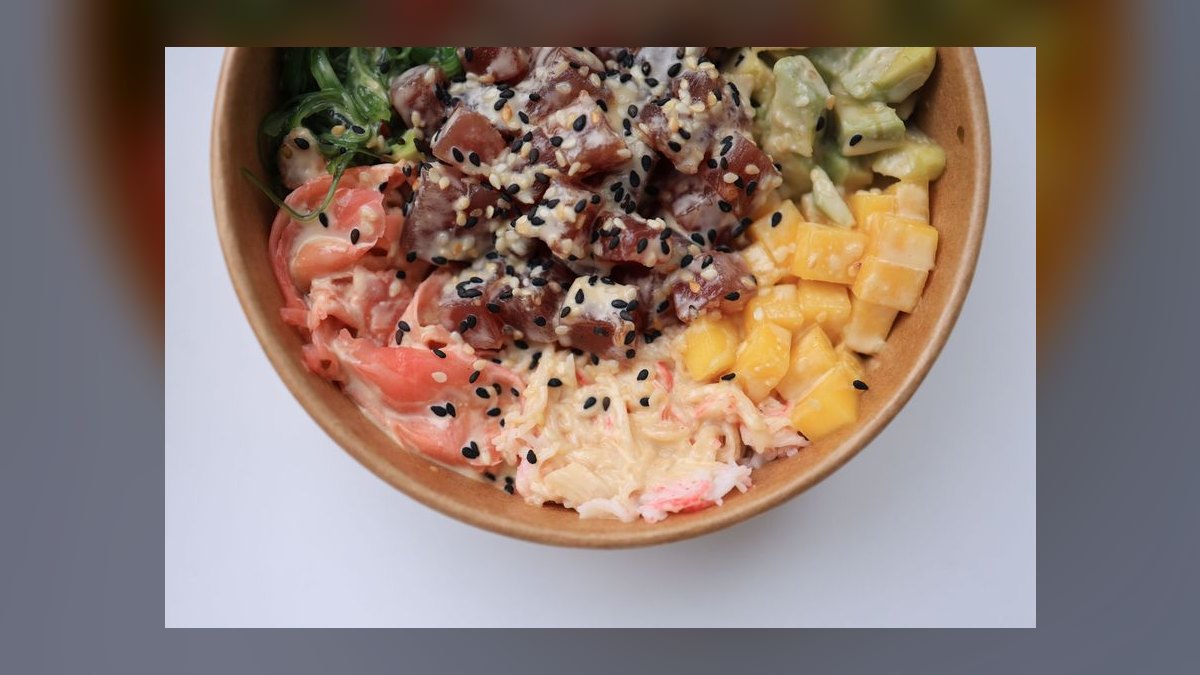
Poke Bros is a build-your-own Hawaiian poke bowl concept founded in 2017 in Ohio. The operating model is an assembly line: a guest walks the counter and picks a base (white rice, brown rice, greens, or a split), a protein (ahi tuna, salmon, cooked shrimp, chicken, tofu), mix-ins, a sauce, and finishing toppings. The whole transaction is designed to take under ninety seconds at the counter. That single design choice — assembly line, not cook line — drives nearly every number on the P&L.
Understanding why matters more than memorizing the investment range. A traditional restaurant with a hot line needs hoods, grease traps, fire suppression, gas service, and a kitchen crew that can actually cook. Those are the line items that push a full-service buildout past $700,000 and force you to hire skilled labor in a market where skilled kitchen labor is scarce. A poke shop, by contrast, is mostly refrigeration, a cold well, a rice cooker bank, sinks, and a POS. You are assembling, not cooking. That is why the Item 7 range in the 2026 FDD lands around $250,000 to $500,000 rather than seven figures, and why you can staff a shift with three to five people who can be trained in days rather than months.
The trade-off is symmetrical and you should stare at it before signing anything. Low barriers to entry for you are also low barriers to entry for everyone else. There is no moat in a cold well. Any independent operator with a lease and a fish distributor can open a bowl shop across the street, and in most metros somebody already has. What you are actually buying from the franchisor is a systemized menu, a supply chain relationship, a buildout playbook, site selection help, and a brand that customers may or may not recognize in your specific market. You are not buying the kind of unaided brand pull that drives traffic on its own the way a national burger or coffee brand does. If your business plan assumes the sign does the marketing, the plan is wrong.
The category context matters too. Poke boomed roughly 2015 to 2020, then consolidated hard — a lot of undercapitalized independents opened during the hype and closed during and after it. By 2027 you are entering a mature segment growing in the low single digits in most regions rather than the twenty-percent-plus of the boom years. Mature is not the same as bad. Mature means the tourists have left and the remaining demand is real, repeat, habit-driven demand from people who eat this way on purpose. But it does mean you win by taking share from a specific competitor in a specific trade area, not by riding a wave. Write down, before you sign, exactly whose lunch business you intend to take and why yours will be better. If you cannot name the competitor and the reason, you do not have a plan.
The healthy fast-casual demand curve underneath poke is genuinely durable and broader than poke itself. The same consumer who buys your bowl also buys grain bowls, Mediterranean bowls, and salad-forward concepts. That is upstream context worth holding: your competitive set is not just other poke shops, it is every $12 to $15 lunch that lets somebody eat something they feel good about in under fifteen minutes. Chipotle competes with you. A Cava-style Mediterranean bowl shop competes with you. The corporate cafeteria in the office tower competes with you. Price your bowls and design your line against that whole set, not just the poke shop two miles away.
The step-by-step process from first inquiry to open doors
The sequence below is the one that separates operators who open on budget from operators who discover problems after they have signed a ten-year lease. Nothing here is optional, and the order matters — every step is designed to kill the deal cheaply before the next step gets expensive.
Days 1–15: Read the FDD cover to cover, twice. Not the summary, not the brochure — the actual 2026 Franchise Disclosure Document. Item 5 gives you the initial franchise fee, around $30,000. Item 6 gives you the ongoing fees: a royalty near 6% of gross sales plus a marketing or brand-fund contribution. Item 7 gives you the estimated total initial investment, roughly $250,000 to $500,000, broken into line items. Item 19 is the financial performance representation — read this one with a pen. Note whether the figures are averages or medians, how many units are in the reporting group, whether underperformers were excluded, and whether the numbers are systemwide gross sales or something narrower. An average that excludes the bottom quartile is not an average you can plan against. Item 20 gives you unit counts and, critically, transfers, terminations, and non-renewals over the last three years. A pattern of closures in a specific region is the single most useful signal in the entire document.
Days 16–30: Call at least eight existing franchisees, and pick them yourself. Item 20 includes contact information for current and former franchisees. Call the former ones too — they have nothing to sell you. Ask specific, unavoidable questions: What did you actually gross last year? What is your food cost percentage running? What is your rent as a percentage of sales? How many hours a week are you in the store? What did the buildout actually cost versus what you budgeted? Would you sign again? What do you wish you had asked before you signed? Vague answers are answers. If four owners in a row hedge on revenue, believe the hedge.
Days 31–45: Validate your trade area with your own feet. Drive it at 11:45 a.m. on a Tuesday and again at 6:30 p.m. Count cars. Count people walking. Sit in the parking lot of the competitor you intend to beat and count how many people go in during the lunch hour. Pull daytime population data for the trade area, not just residential population — a corridor with 40,000 residents who all commute out at 7 a.m. is a bad poke market and a fine pizza market. Check poke saturation honestly: map every poke shop, grain-bowl concept, and sushi counter within three miles.
Days 46–65: Secure the site and negotiate the lease before you finalize financing. Details in the costs section below, but the headline is that the lease is a bigger financial commitment than the franchise agreement and gets a fraction of the attention.
Days 66–95: Build out, hire, and train. A fast-casual poke buildout typically runs eight to sixteen weeks depending on the condition of the space and, far more often, on your municipality's permitting speed. Second-generation restaurant space with existing plumbing, grease infrastructure, and a functioning HVAC system can cut both cost and calendar dramatically. Raw vanilla shell space is where budgets die.
Two notes on the sequence. First, do not sign the franchise agreement before you have a site under letter of intent. Some franchisors want the agreement signed first to lock territory; that is their interest, not yours. If you sign and then cannot find a viable site in your protected area, you have paid $30,000 for a problem. Second, budget working capital as a real line item, not a rounding error. Three months of operating expenses — payroll, rent, food, insurance, utilities — before the store is expected to break even is the minimum. Most operators who fail in year one do not fail because the concept was wrong; they fail because they spent their cushion on buildout overruns and then had no money to market through a slow opening quarter.
Costs, timelines, and the ranges you should actually plan against
The Item 7 total of roughly $250,000 to $500,000 is the number everyone quotes, but the composition is where planning happens. Expect a franchise fee near $30,000, buildout and leasehold improvements in the $120,000 to $290,000 range, equipment and POS at $80,000 to $170,000, signage and decor at $15,000 to $45,000, initial inventory of $10,000 to $25,000, an initial marketing and grand-opening spend of $12,000 to $40,000, training and travel around $7,000 to $20,000, and working capital of $35,000 to $90,000. Lenders will typically want to see $80,000 to $160,000 in genuinely liquid funds plus a net worth well above the total project cost.
Where does the $250,000 unit differ from the $500,000 unit? Almost entirely in the space. A second-generation restaurant space with usable plumbing, an adequate electrical panel, working HVAC, and an existing hood — even if you do not need the hood — can land you near the bottom of the range. A vanilla shell in a new mixed-use development, where you are running plumbing from scratch, upgrading the panel, and adding a bathroom to code, lands you at the top. Ask for the landlord's tenant improvement allowance in that context: $30 to $60 per square foot is a reasonable ask on a 1,200 to 1,800 square foot space in a market where the landlord wants a food tenant, and it can offset a meaningful fraction of your buildout.
On the lease itself, negotiate three things beyond base rent. First, the term structure — most operators sign five to ten years with two five-year options, and the options are what give a profitable unit resale value. A buyer will not pay a fair multiple for a business with eighteen months left on the lease. Second, push for percentage rent above a breakpoint rather than fixed 3–4% annual escalators, so your occupancy cost tracks performance instead of compounding through a slow year. Third, get exclusivity language preventing the landlord from leasing to another bowl or sushi concept in the same center. A healthy rent-to-sales ratio is roughly 8% to 12%; above 14% you are working for the landlord. In secondary markets, a 1,200 to 1,800 square foot space commonly runs $2,500 to $5,000 per month; in primary metros expect $6,000 to $12,000 and size the sales expectation accordingly.
The ongoing P&L is where the concept earns or loses. Food cost typically runs 30% to 34%, higher than a burger concept precisely because ahi tuna and salmon are the two most expensive things in the building. Wild-caught tuna and farmed salmon both move with season, fuel cost, and grade, and a swing of a dollar or two per pound compounds fast at volume. Labor targets 25% to 30% — the assembly line is genuinely efficient, but in markets with $15 to $18 hourly wages you have to schedule tightly and keep part-time shifts short to avoid overtime. Occupancy runs roughly 8% to 12%. Royalty is near 6% and the brand fund is on top of that. What is left is a restaurant-level margin around 11% to 18%, which on a $650,000 unit is $70,000 to $120,000 and on a $900,000 unit meaningfully more.
Two ongoing costs get systematically underbudgeted. Delivery is the first: third-party aggregators commonly take 15% to 30% of the ticket, and in a category where 25% to 40% of fast-casual volume can flow through delivery, an unmanaged aggregator relationship can quietly eat your entire operating margin. The standard defense is to price the delivery menu 10% to 15% above the in-store menu to offset commission, and to push repeat customers toward a first-party ordering channel with a loyalty offer. The second is waste. Fresh fish is perishable on a three-to-five-day clock. Frozen-at-sea product, flash-frozen on the boat, extends usable shelf life dramatically and is standard practice across the segment. Run strict FIFO, log discarded protein at close every night, and treat food waste above 5% of COGS as a scheduling and prep-quantity problem to be fixed this week, not a cost of doing business.
On the timeline, plan for six to twelve months from signed agreement to open doors. Site selection and lease negotiation is usually two to four months, permitting one to three months depending entirely on your city, buildout two to four months, and training and soft open two to four weeks. The variable that blows up more schedules than any other is municipal permitting, and it is the one you control least. Ask the local franchisees in your state how long their permits took — that is a far better estimate than any national average.
Where operators get this wrong
The most common failure is treating site selection as a real estate decision instead of a demand decision. A poke bowl is a low-ticket, high-frequency purchase — average checks generally sit in the $11 to $15 range, and signature bowls with premium toppings push toward $13 to $16. At that price point the math only works on volume, and volume only exists where a lot of people are physically present at noon on a weekday. The strongest profiles are dense daytime office corridors near hospitals, office parks, or government centers with thousands of workers within a ten-minute walk; college-adjacent retail near campuses with substantial enrollment; and mixed-use developments anchored by gyms or fitness studios where your core demographic already goes. The weakest profile is a residential strip center that empties at 8 a.m. and does not refill until 6 p.m. — you will get a dinner business you did not underwrite and miss the lunch business you did.
The second failure is underestimating fresh-fish volatility. Operators budget food cost as a fixed 32% and then discover it is 32% in March and 37% in July. The fix is procurement discipline, not hope. Negotiate fixed-price contracts on your core proteins for six-month blocks with your primary distributor rather than buying at spot. Approve a backup vendor before you need one — paying a 10% to 15% premium for two weeks of emergency supply is vastly cheaper than closing the store because your primary distributor had a disruption. And do not let a slow week turn into a spoilage week: cut prep quantities the day demand drops, not three days later.
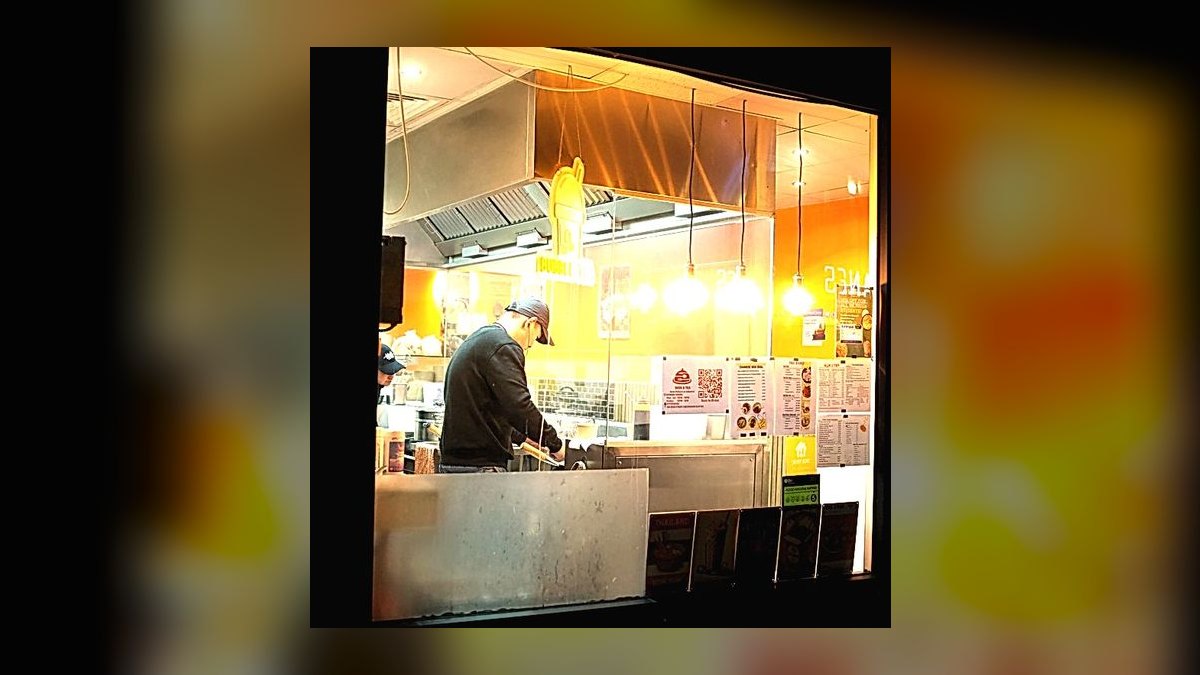
The third failure is expecting brand pull the brand does not have. Poke Bros is a real system with real support — training, site selection assistance, an operations playbook, and supply chain relationships — but it is not a household name in most markets. That means your local marketing is not a supplement to the brand fund, it is the primary demand driver in year one. Budget for it, staff for it, and treat it as an ongoing operating function: office-park drop-offs and catering samples, a launch relationship with every gym within a mile, a loyalty program that gets repeat customers off the aggregators, and a genuine grand-opening push rather than a soft open that nobody notices.
The fourth failure is under-capitalization dressed up as optimism. The operator who scrapes together the minimum, spends the working capital on a buildout overrun, and opens with $8,000 in the bank has no ability to absorb a slow first quarter, a broken compressor, or a two-week permitting delay on the patio. Every one of those is normal. If your financing plan has no slack, the plan assumes nothing goes wrong, and something always does.
The fifth failure is operational rather than financial: losing the lunch rush. This concept lives or dies on throughput between 11:30 and 1:30. If the line moves slowly, the office worker with a forty-five-minute break does not come back. The countermeasures are mundane and effective — prep everything preppable before 11:00, cross-train every employee on both the line and the register so you can flex coverage, put your fastest assembler at the protein station where the bottleneck actually is, and add three to five signature bowls that staff can build faster than a fully custom order while carrying a higher check average. Watch a competitor's line during rush and time it. Then time your own during training and fix what is slow before opening day, because opening week is exactly when word of mouth forms.
Decision framework: when Poke Bros makes sense and when something else does
The honest framing is that Poke Bros occupies a specific niche in the franchise landscape: lower capital than most fast-casual, a lower ceiling than most fast-casual, and heavy dependence on trade area quality. Match yourself to that shape or pick a different concept.
Choose Poke Bros if you have $250,000 to $500,000 in total project capital including a real working-capital cushion, you have identified a lunch-heavy trade area that is not already served by two or three bowl concepts, you intend to be in the store full-time for at least the first year, and you are targeting owner income in the $60,000 to $160,000 range rather than a large multi-unit empire. It is a genuinely good fit for an owner-operator who wants a manageable, capital-efficient entry into food service without a hot line, and it scales reasonably to three to five units under centralized management if the first one works.
Choose something else if any of these are true. If you are in a poke-saturated market, the category's maturity means you are fighting for share against incumbents with established habits — a Mediterranean, grain-bowl, or salad-forward concept in the same healthy fast-casual demand pool may have open runway where poke does not. If you want a passive investment, this is the wrong business entirely; food service at this size requires an operator in the building. If you need $500,000 in annual profit from a single location, the ceiling here is wrong and you should look at concepts with higher AUVs and correspondingly higher investment — a top poke unit around $900,000 in sales is simply a different business from a concept doing $2 million-plus per unit. And if you cannot manage perishable inventory with discipline, pick a concept built on frozen or shelf-stable inputs, because fresh fish will find every gap in your process.
On the adjacent-options question, the realistic comparison set includes other poke systems such as Pokeworks and Island Fin Poke, broader healthy fast-casual concepts in the salad and grain-bowl space, Mediterranean bowl concepts, and — genuinely worth considering — an independent poke shop. The independent route saves you the $30,000 fee and roughly 8% of gross in ongoing royalty and brand fund, which on a $650,000 unit is over $50,000 a year. What you give up is the buildout playbook, the supply chain relationships, the training system, and any brand recognition that does exist. For a first-time restaurant operator, the franchise system is usually worth the 8%. For someone who has already run three restaurants and has distributor relationships, it often is not — and that is a legitimate conclusion to reach.
Finally, think about the exit before you enter. Franchise resales in this segment tend to trade around two and a half to three and a half times annual seller's discretionary earnings, meaning a unit clearing $120,000 might list somewhere in the $300,000 to $420,000 range. On a $375,000 investment held five to seven years, that is a reasonable but not spectacular outcome — the return comes primarily from the owner income along the way, not the sale. Two things protect resale value: remaining lease term with options intact, and clean books that a buyer's lender can underwrite. Keep both from day one.
Related questions
How long does it take to open a Poke Bros location?
Typically six to twelve months from signed franchise agreement to opening day. Site selection and lease negotiation take two to four months, municipal permitting one to three months, buildout two to four months, and training plus soft open two to four weeks. Permitting is the least predictable step.
Can I run a Poke Bros as an absentee owner?
Not realistically in year one. At this unit size, margin comes from tight labor scheduling, daily waste control, and lunch-rush throughput — all of which degrade without an owner present. Semi-absentee becomes plausible only after you have a proven general manager and stable numbers.
Is poke still a growing category in 2027?
The category matured after its 2015–2020 boom and now grows in the low single digits in most regions rather than double digits. Demand is real and habit-driven, but you win by taking share in a specific trade area, not by riding category growth.
What is a healthy rent-to-sales ratio for a poke shop?
Roughly 8% to 12% of gross sales. Above 14%, occupancy cost starts consuming the margin the concept was designed to produce. Model rent against a conservative sales forecast, not your optimistic one, before signing a ten-year lease.
Should I buy an existing Poke Bros unit instead of opening new?
Buying an operating unit gives you verifiable sales history, an existing crew, and immediate cash flow, usually at two and a half to three and a half times annual owner earnings. Verify remaining lease term and options — a short lease undermines the whole purchase.
FAQ
How much does it cost to open a Poke Bros franchise?
Total initial investment runs roughly $250,000 to $500,000 per the 2026 FDD, including a franchise fee near $30,000. The spread is driven mostly by the condition of your space — second-generation restaurant space with existing plumbing and HVAC lands near the low end, while a vanilla shell requiring new plumbing, panel upgrades, and code work lands near the high end. Verify the current Item 7 for your specific market before budgeting.
What are the ongoing fees?
Expect a royalty near 6% of gross sales plus a marketing or brand-fund contribution on top. Together these typically consume around 8% of revenue before you pay rent, food, or labor. Confirm the exact percentages and any local advertising minimums in Item 6 of the current FDD, since franchisors periodically adjust both.
How much can I actually earn?
Mature units gross roughly $450,000 to $900,000, and after food cost of 30% to 34%, labor of 25% to 30%, occupancy, royalty, and marketing, restaurant-level margins generally land between 11% and 18%. That produces owner income in the $60,000 to $160,000 range. Treat the low end as the planning case and the high end as the reward for an excellent site.
How much cash do I need on hand?
Lenders in this segment generally want to see $80,000 to $160,000 in genuinely liquid funds plus net worth comfortably above total project cost. Beyond lender requirements, budget at least three months of full operating expenses as working capital that you do not touch during buildout. Spending the cushion on construction overruns is the most common route to a year-one failure.
How do I control fresh-fish cost?
Negotiate six-month fixed-price contracts on core proteins rather than buying at spot, approve a backup distributor before you need one, use frozen-at-sea product where quality permits to extend shelf life, and log discarded protein nightly under strict FIFO rotation. Target food waste under 5% of COGS and cut prep quantities the same day demand drops.
What support does the franchisor provide, and what is still on me?
Expect training, site selection assistance, a buildout specification, supply chain relationships, and ongoing operational support. What remains entirely yours is local marketing, hiring and scheduling, waste control, and lunch-rush execution. In a brand without strong national recognition, local demand generation is your job — not a supplement to the brand fund.
Sources
- https://www.ftc.gov/business-guidance/resources/franchise-rule-compliance-guide
- https://www.sba.gov/funding-programs/loans/7a-loans
- https://www.franchise.org/
- https://www.entrepreneur.com/franchises
- https://www.nrn.com/
- https://restaurantbusinessonline.com/
- https://www.restaurant.org/research-and-media/research/
- https://www.fda.gov/food/retail-food-protection/fda-food-code
- https://www.bls.gov/oes/current/oes350000.htm
- https://www.fisheries.noaa.gov/topic/sustainable-seafood
Related on PULSE
This page will be disappearing soon. Save it to your device for $1 — or read it free while it is here.
@Kory-White- · if Venmo asks, the last 4 of my number are 2012
This page is gone.
This one is off the shelf now. $1 keeps it on your phone for good — the whole page, pictures and diagrams included.
 franchiseShould I open or buy a Crunch Fitness franchise in 2027?
 franchiseShould I open a Christmas light installation business in 2027?
 franchiseShould I open or buy a Waxing the City franchise in 2027?
 franchiseShould I open or buy an Archadeck Outdoor Living franchise in 2027?
 franchiseShould I open or buy a Bach to Rock franchise in 2027?
 franchiseShould I open or buy a Jimmy John's franchise in 2027?
 franchiseShould I open or buy a Sub Zero Nitrogen Ice Cream franchise in 2027?
 franchiseShould I open or buy a The DRIPBaR franchise in 2027?
 franchiseShould I open or buy a Chip City franchise in 2027?
 franchiseShould I open or buy a LongHorn Steakhouse franchise in 2027?