
Should I open or buy a Senske Services franchise in 2027?
 Curated byKory White · Fractional CRO · Maryland
 PULSEKNOWLEDGE LIBRARY
Quality
Certified
Open a Senske Services franchise only if you can operate inside or near its Pacific Northwest and Intermountain West footprint, sell aggressively, and staff licensed applicators for both lawn and pest. Expect roughly $100,000 to $250,000 all-in, 7%–9% royalty, and 12–24 months to real profitability.
The kitchen-table scenario that actually decides this
Picture a 43-year-old former territory sales manager in Meridian, Idaho. She has $180,000 in liquid capital from a house sale, a working spouse carrying the family's health insurance, and eighteen months of runway before the math gets uncomfortable. She has never held a pesticide applicator license. She has, however, spent a decade selling recurring contracts to residential buyers, which turns out to matter more than anything on the equipment list.
This is the person a Senske Services franchise is actually built for, and framing the decision through her constraints clarifies it faster than any comparison chart. Her question is not "is lawn care a good business." Lawn care is a fine business. Her question is whether paying a franchise fee in the $30,000 to $45,000 range plus ongoing royalty near 7%–9% of gross buys her something she could not assemble independently for less.
Work the counterfactual honestly. An independent lawn-and-pest startup in the same market costs her maybe $70,000 to $130,000 — she skips the franchise fee, skips the royalty, skips the marketing fund, buys a used spray rig instead of a branded new one, and runs her own Google Ads. Over five years at $900,000 gross, that royalty-plus-marketing spread of roughly 9%–11% represents somewhere near $400,000 in cumulative payments. That is the real price tag, and nobody puts it on the Item 7 table.

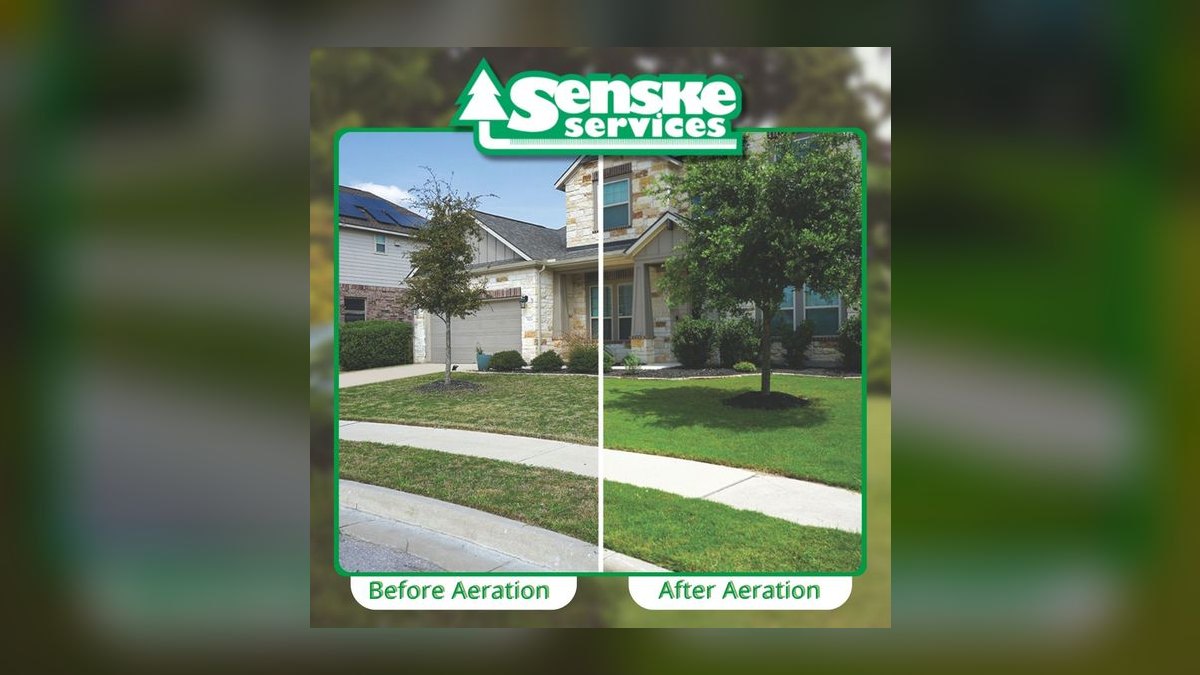
What she buys for that money is a brand that has been in the ground since 1947, an operating playbook for a two-service route business, route-density logic she would otherwise learn by burning fuel, and — critically — a supported path through licensing and technician training in two separate regulated disciplines. If she is in Spokane, Boise, Salt Lake, or the Tri-Cities, the name means something to homeowners over fifty. If she is in Charlotte, it means nothing at all, and she is paying heritage-brand pricing for a logo nobody recognizes.
That single geographic fact swings the entire decision. Inside the footprint, the brand does measurable customer-acquisition work and the royalty is defensible. Outside it, she is buying a system and a manual, not a brand, and she should price it that way and negotiate accordingly — or look at concepts with genuine national awareness.
The second decisive factor is her tolerance for being a salesperson for two years. Route-based home services do not fill from a phone that rings. They fill from door-to-door canvassing, neighbor-referral programs, seasonal direct mail keyed to spring green-up, and relentless cross-selling of the second service into an existing customer file. Owners who treat the first eighteen months as a sales job with a truck attached hit their numbers. Owners who treat it as an operations job with occasional marketing stall out around 400 customers and never reach density.
How the two-service route machine actually works
Strip away the branding and a Senske-style operation is a density arbitrage. Every stop on a technician's day carries a fixed cost of drive time, and drive time is the single largest destroyer of margin in the entire model. The whole business is a campaign to shrink the distance between stops.

Here is the mechanic in numbers. A technician doing residential lawn treatments handles somewhere in the range of 14 to 22 stops per day depending on lot size and drive distance. At the low end, the day is half windshield. At the high end — a technician working a subdivision where forty customers live inside a two-mile square — the same labor hour produces meaningfully more revenue with less fuel and less vehicle wear. The revenue per truck-day can differ by 40% or more between a scattered route and a dense one, with identical labor cost.
Now layer the second service. A pest control stop at an address you already service for lawn costs almost nothing incremental in drive time if it is scheduled on the same route day or an adjacent one. That is the entire economic argument for a dual lawn-and-pest model: the second service rides on drive time you have already paid for. Cross-selling is not a nice-to-have revenue add. It is a margin mechanism, because it raises revenue per mile rather than just revenue per customer.
Seasonality is the second half of the mechanism. Lawn care in the Intermountain West is brutally seasonal — spring green-up through fall, with a dead stretch from roughly November through February in colder markets. Pest control is closer to year-round, with its own summer peak but a winter tail of rodent and interior work that lawn care simply does not have. An operator running both services can carry a technician through a shoulder season instead of laying them off and rehiring in March, and rehiring in March is expensive in ways that never show up as a line item: recertification, retraining, route knowledge lost, and customers who notice a new face.

The customer relationship compounds too. Recurring service agreements — the multi-application lawn program, the quarterly pest plan — mean revenue renews by default rather than by decision. Retention is the quiet variable that determines whether year four is comfortable or grim. A book of business churning at 30% annually requires selling three hundred new customers a year just to stand still on a thousand-customer base. Churning at 20% requires two hundred. That hundred-customer difference is roughly the entire gap between a stressed operator and a relaxed one, and multi-service households are consistently stickier than single-service ones across the home-services category because there are simply more touchpoints and more inertia.
The operational implication is concrete: measure everything per route-day, not per customer. Track stops per truck-day, revenue per truck-day, and percentage of customers holding two or more services. Those three numbers predict profitability better than gross revenue does, and an operator who only watches gross revenue can grow into a worse business by adding scattered customers at the edge of the map.
Real numbers, ranges, and the benchmarks that matter
The investment picture from the 2026 disclosure sits in a range of roughly $100,000 to $250,000 total for Item 7, with an initial franchise fee somewhere between $30,000 and $45,000. That range is wide for a reason — it spans a lean single-truck home-based start and a two-truck launch with a leased warehouse bay.
Where the money goes, roughly:
- Franchise fee: $30,000–$45,000. One-time, non-refundable, paid at signing.
- Vehicles and spray equipment: $35,000–$100,000. The swing here is used versus new and one truck versus two. A used truck with a rebuilt rig is the single largest lever for lowering entry cost, and it is the lever most first-time franchisees refuse to pull.
- Vehicle branding and wrap: $5,000–$18,000. Genuinely worth it in-footprint; a wrapped truck parked in a subdivision is the cheapest impression you will ever buy.
- Warehouse or office setup: $8,000–$30,000. Chemical storage carries real regulatory requirements — secure, ventilated, properly labeled. Do not plan on a residential garage without checking local rules and your insurer.
- Initial marketing: $15,000–$45,000. Underspend here and the ramp stretches by six months.
- Training and travel: $10,000–$28,000. Covers you and your first technicians.
- Licensing and insurance: $10,000–$30,000. Two disciplines, two regulatory tracks, general liability plus commercial auto plus pollution coverage.
- Working capital: $25,000–$70,000. The most commonly underestimated line on the entire sheet.
Add ongoing royalty near 7%–9% of gross plus a marketing fee around 2%. Combined, roughly one dollar in ten leaves before you pay a technician. Model that as a permanent haircut on gross margin, not an expense you can optimize away.
On the revenue side, mature units are described as grossing anywhere from $600,000 to $2.5 million or more, with owner earnings landing between $100,000 and $400,000. Treat both ranges with appropriate suspicion — the top of a range is always somebody's best year in their best territory, and "mature" is doing enormous work in that sentence. The Item 19 financial performance representation is where you find out what the distribution actually looks like, and the questions to bring to it are: how many units are in the reported group, what is the median rather than the average, how many years in operation, and how many units were excluded and why.

A workable model for a single-territory operator reaching maturity around year four:
- Gross revenue: $1.5 million across both service lines
- Labor, including payroll taxes and workers' comp: roughly 33% — call it $495,000
- Vehicles, fuel, and chemical materials: roughly 16% — $240,000
- Royalty and marketing fee combined: roughly 11% — $165,000
- Remaining operating expenses (insurance, office, admin, software, licensing): roughly 17% — $255,000
- Owner earnings: roughly $345,000
Those percentages are the load-bearing part, not the dollar figures. Scale them to whatever revenue you actually model. And note what the structure implies: at $600,000 gross, the same percentages leave roughly $138,000 in owner earnings — a real living, but one where the owner is almost certainly still running a route personally.
Working capital deserves its own paragraph because it is where undercapitalized operators die. In a seasonal business, you pay technicians in March for work that generates cash in April and May, and you pay them through a winter that generates far less. If you launch in spring, your first winter arrives before your customer base is large enough to carry it. Sixty to seventy thousand in genuine reserve — not a credit line you intend to draw, actual cash — is the difference between managing a slow February and panic-discounting your annual programs to make payroll.
Break-even and profitability timelines in this category typically run 12 to 24 months. The variance is driven almost entirely by acquisition speed. Two operators with identical capital, identical territory quality, and identical equipment will diverge enormously based on whether one of them knocked doors six days a week in their first two springs.
Trade-offs, alternatives, and what else you could do with $200,000
The honest comparison set is broader than the lawn-and-pest category, and evaluating it properly requires being clear about what you are optimizing for.
Against other lawn-care franchises. Concepts like TruGreen, Weed Man, and Lawn Doctor bring wider national brand recognition and, in some cases, more mature marketing infrastructure. What they generally do not bring is an integrated second service line under the same brand. If you want dual lawn-and-pest under one banner with one customer list and one route, that integration is the specific thing Senske Services offers, and it is not trivially replicated by bolting a pest division onto a single-service franchise agreement — most agreements restrict what else you may sell.
Against pest-only concepts. Pest control runs closer to year-round, often carries better gross margin per stop, and requires less equipment capital than lawn treatment. The counterargument is that lawn care is the easier door-opener in a residential subdivision — a visibly greener lawn is the best advertisement in the industry, and it sells the neighbors without a conversation. Pest control's results are invisible by definition. Nobody points at the house without ants.
Against independence. The five-year royalty math is genuinely large. If you already hold applicator licenses in both disciplines, already know the local market, and already have a book of referral sources, the franchise premium buys you less than it buys a career-changer. Conversely, if you are learning two regulated trades and a route business simultaneously, the playbook has real value. The honest test: write down the three things you expect the franchisor to do for you that you could not do yourself, then ask three current franchisees whether the franchisor actually does those three things.
Against buying an existing operation. This is the underexplored path and often the better one. Buying a resale — a franchise unit or an independent lawn-and-pest company — means buying an existing customer file, existing routes, existing technicians, and existing cash flow. You skip the eighteen-month acquisition grind entirely. Established route businesses in this category typically trade in a multiple range of roughly 2.5x to 3.5x annual EBITDA, with density and staff stability driving where in that range a deal lands. If a franchise unit with 2,000 active customers and a stable manager sells at a price you can finance, the effective return on your $200,000 can beat a cold start substantially — you are buying revenue instead of building it.
Against adjacent recurring home services entirely. Pool service, gutter and exterior cleaning, HVAC maintenance plans, and holiday lighting all share the same underlying structure: recurring agreements, route density, technician labor, seasonal skew. If what attracts you is the recurring-revenue route model rather than lawn and pest specifically, survey that whole category before signing. Some of those concepts carry lower licensing burden, and licensing burden is a real ongoing tax on your ability to hire.
One more trade-off nobody advertises: territory exclusivity cuts both ways. A protected territory covering a large household count keeps other franchisees out, which is genuinely valuable. It also caps you. If your territory is 60,000 households and you saturate at 3% penetration, your ceiling is roughly 1,800 customers unless you buy a second territory. Ask before signing what the second-unit terms look like, whether adjacent open territory exists, and whether right-of-first-refusal on neighboring areas is written into the agreement or merely mentioned in a sales conversation.
Pitfalls that end operations, and how to sidestep each one
Underestimating technician licensing as a hiring constraint. Every state regulates pesticide application, and commercial applicators generally need certification in specific categories — turf and ornamental for lawn, structural for pest. That means your hiring pool is not "anyone willing to work outdoors." It is a narrower pool, and in tight labor markets it is genuinely scarce. Mitigation: build a trainee pipeline from day one. Hire uncertified people into a technician-in-training role, pay for study materials and exam fees, and structure a wage bump on certification. Operators who wait until they need a licensed applicator to start looking for one lose an entire season.
Treating cross-selling as an eventual project. The dual-service advantage is real but it does not happen automatically. If technicians are not trained and compensated to identify and refer the second service, the average customer stays at one service indefinitely and you have paid for a dual-service system while running a single-service business. Mitigation: a technician spiff on qualified cross-sell referrals, a standing item on every route sheet, and a monthly report on the percentage of customers holding two or more services. Manage that percentage like a KPI, because it is one.
Growing the map instead of the density. The seductive failure. A customer twelve miles outside your cluster looks like $600 of annual revenue and it is — but it costs forty minutes of round-trip drive time on every visit, which at eight visits a year is more than five hours of technician time against a $600 sale. Mitigation: draw your territory into zones, assign each zone a route day, and either decline out-of-zone customers or price them at a documented distance surcharge. Saying no to revenue feels wrong in year one and saves the business in year three.
Discounting the first-year program to fill routes. The pressure to hit customer counts fast pushes operators into aggressive introductory pricing. The problem is that a discounted customer is anchored at the discounted price, and the churn spike arrives in year two when you try to normalize. Mitigation: compete on service guarantee and response time rather than price, and if you must discount, discount the first application rather than the annual program.
Assuming a resale is clean because it is inside a franchise system. Buying an existing unit means inheriting its customer file, and customer files rot in specific ways: a large share of "active" customers who have not been serviced in a year, concentration in one aging subdivision, or a book that was propped up with heavy discounting before the sale. Mitigation: demand twelve months of service records, not just revenue. Count customers who received every scheduled application. Check the service mix — a book that is 85% lawn and 15% pest is not the dual-service business you think you are buying, and rebalancing it is a multi-year project.
Ignoring the winter. In a market where lawn work stops in November, an operator with no pest book and no winter offering faces four months of payroll against a fraction of the revenue. Mitigation beyond pest: some route operators add seasonal adjacencies — holiday lighting installation, gutter clearing, ice-melt or snow service — specifically to carry crews through. Check your franchise agreement first, because many restrict what you may sell under or alongside the brand.
Skipping the operator interviews. The single highest-return diligence activity available to you, and the most commonly rushed. Call at least eight to ten current franchisees plus every former franchisee listed in Item 20. Former franchisees are the ones with nothing to sell you. Ask specific, unflattering questions: what did you gross last year and what did you actually take home; how long did it take to hire your first certified applicator; what did the franchisor promise that did not materialize; would you write the check again knowing what you know.
Signing without a lawyer who does franchise work. Not a general business attorney — a franchise attorney. The disclosure document is long and the agreement is longer, and the clauses that matter later are the ones about transfer rights, renewal terms, post-termination non-compete radius and duration, and what happens to your customer list if the relationship ends. Budget a few thousand dollars for this review. It is the cheapest insurance on the entire list.
Related questions
How long before a Senske Services franchise pays me a real salary?
Plan on 12 to 24 months to profitability and closer to 30 to 36 months before owner earnings reach a comfortable full-time income. Speed depends almost entirely on customer-acquisition pace during your first two spring seasons, not on operational polish.
Can I run this without a pesticide applicator license myself?
Generally yes — you can employ certified applicators rather than hold certification personally, though requirements vary by state and some jurisdictions require a licensed supervisor on staff. Most owners get certified anyway, because it lets you cover routes during turnover and understand what you are managing.
Is it better to buy an existing franchise unit than to open a new one?
Often, yes. A resale delivers existing routes and cash flow immediately, skipping the acquisition grind that breaks most cold starts. You pay more upfront and inherit whatever problems the seller had, so demand twelve months of service records and verify customer activity, not just revenue.
What happens if I want out after five years?
Established single-territory route operations in this category typically sell in a 2.5x to 3.5x annual EBITDA range, with density and staff stability driving the multiple. Franchisors commonly hold a right of first refusal. A business with a stable manager in place sells materially faster than an owner-operated one.
Does the dual lawn-and-pest model really beat a single-service business?
The advantage is structural, not automatic. The second service rides on drive time already paid for and fills winter capacity, which improves both margin and retention — but only if you actively cross-sell. Owners who do not train and incentivize referrals capture none of it.
FAQ
How much does it cost to open a Senske Services franchise?
Total initial investment per the 2026 disclosure runs roughly $100,000 to $250,000, including a franchise fee of about $30,000 to $45,000. The wide range reflects whether you start home-based with one used truck or launch with two trucks and a leased warehouse bay. Ongoing costs include royalty near 7%–9% of gross plus a marketing fee around 2%.
Do I need experience in lawn care or pest control?
No prior industry experience is required, and the franchisor provides training on operations and technician management. What genuinely matters more is sales aptitude — this is a customer-acquisition business for the first two years. Candidates from sales, route distribution, or service management backgrounds tend to ramp faster than those from purely operational roles.
Where can I actually get a territory?
Senske Services is regionally concentrated in the Pacific Northwest and Intermountain West, with strength in markets like Washington, Idaho, Utah, and Colorado. Availability outside that footprint may be limited, and brand recognition drops sharply beyond it. Confirm current open territory directly with the franchisor before doing any other diligence, because geography determines whether the brand premium is worth paying.
Can I own this passively while keeping my job?
Not realistically at the start. This is an owner-operator model requiring daily involvement in sales, customer service, and technician oversight during the ramp. Some operators reach semi-absentee status after installing a strong general manager, typically around year three or four, but budgeting for a manager's salary changes your earnings math significantly.
What is the single biggest reason new units underperform?
Slow customer acquisition combined with scattered route geography. Operators who chase any customer anywhere build a book that looks fine on a revenue report and bleeds margin on every route day. Density beats raw customer count, and the operators who hit their numbers are the ones who sold hard inside a tight geographic cluster.
How seasonal is the revenue really?
Lawn care in cold-winter markets effectively stops from roughly November through February, which is why the pest line matters. Pest control runs closer to year-round with a summer peak and a winter tail of rodent and interior work. Even with both lines running, expect a meaningful winter dip and carry sixty to seventy thousand in real working capital to absorb it.
Sources
- https://www.ftc.gov/business-guidance/resources/franchise-rule-compliance-guide
- https://www.sba.gov/business-guide/plan-your-business/buy-existing-business-or-franchise
- https://www.epa.gov/pesticide-worker-safety/pesticide-applicator-certification-training
- https://www.bls.gov/ooh/building-and-grounds-cleaning/grounds-maintenance-workers.htm
- https://www.bls.gov/ooh/building-and-grounds-cleaning/pest-control-workers.htm
- https://www.franchise.org/
- https://www.entrepreneur.com/franchises
- https://www.ibisworld.com/united-states/market-research-reports/lawn-landscaping-services-industry/
- https://www.npmapestworld.org/
- https://www.irs.gov/businesses/small-businesses-self-employed
Related on PULSE
- Best home services franchises to buy in 2027
- Should I open or buy a HomeWell Care Services franchise in 2027?
- Should I open or buy a Padgett Business Services franchise in 2027?
- Should I open or buy an Ace Handyman Services franchise in 2027?
- Should I open or buy an Aftermath Services franchise in 2027?
- Should I open or buy an Always Best Care Senior Services franchise in 2027?
This page will be disappearing soon. Save it to your device for $1 — or read it free while it is here.
@Kory-White- · if Venmo asks, the last 4 of my number are 2012
This page is gone.
This one is off the shelf now. $1 keeps it on your phone for good — the whole page, pictures and diagrams included.
 franchiseShould I open or buy a Marble Slab Creamery franchise in 2027?
 franchiseShould I open or buy a Domino's franchise in 2027?
 franchiseShould I open or buy a Drama Kids franchise in 2027?
 franchiseShould I open or buy a Pestmaster franchise in 2027?
 franchiseShould I open or buy a Jeremiah's Italian Ice franchise in 2027?
 franchiseShould I open or buy an H&R Block franchise in 2027?
 franchiseShould I open or buy a Red Lobster franchise in 2027?
 franchiseShould I open or buy a Playa Bowls franchise in 2027?
 franchiseShould I open or buy a World Gym franchise in 2027?
 franchiseShould I open or buy a Rockin’ Jump trampoline park franchise in 2027?