
Should I open or buy a LaVida Massage franchise in 2027?
 PULSEKNOWLEDGE LIBRARY
Open a LaVida Massage franchise in 2027 only if you can recruit and retain licensed massage therapists — that single constraint decides the outcome. Expect roughly $300,000 to $600,000 all-in, a franchise fee near $35,000 to $45,000, and about 6% royalty. Mature studios can gross $600,000 to $1.3 million.
What a membership massage studio actually is, and why the model behaves the way it does
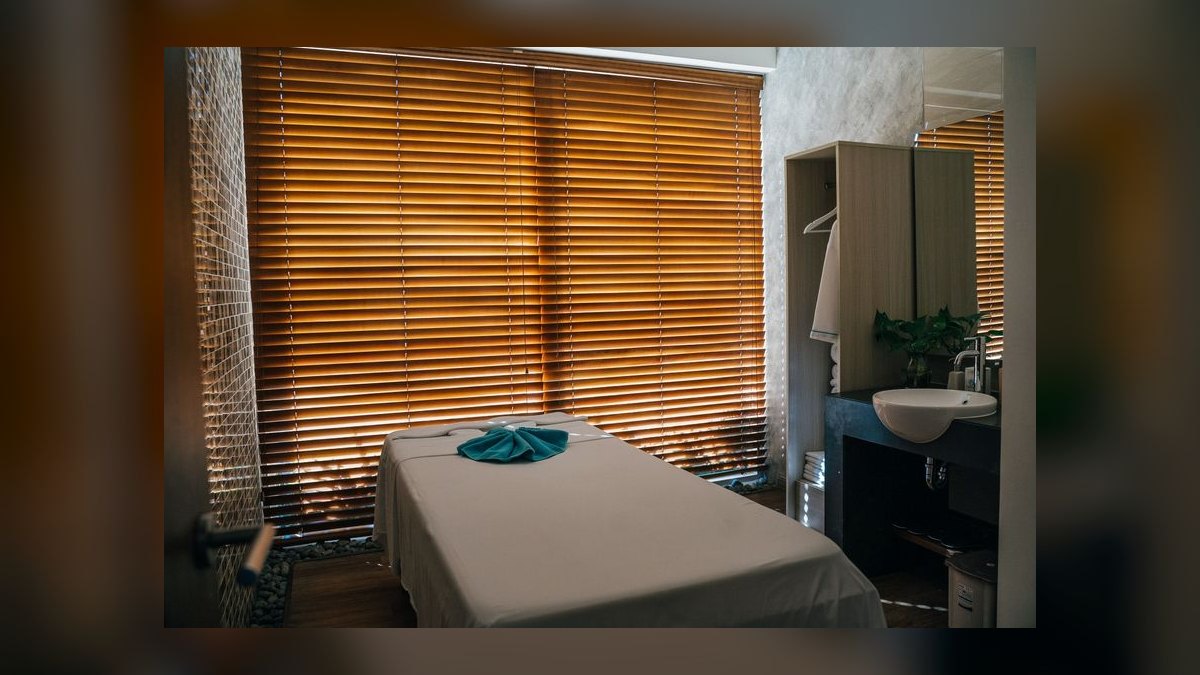
A LaVida Massage location is not a spa in the resort sense and it is not a medical clinic. It is a 2,500 to 3,800 square foot retail-adjacent studio, usually in a strip center, built out with six to ten treatment rooms — most configured for therapeutic massage, one or two for skincare and facials. The physical plant is modest compared to a restaurant or a gym: no kitchen, no heavy mechanicals beyond laundry and HVAC balancing, no expensive equipment beyond tables, facial beds, linens, and a booking system. What you are actually buying is a subscription business wearing a retail storefront.
That distinction matters more than any other fact on this page. The economics of a massage-and-wellness studio look like a gym's economics far more than they look like a salon's. Revenue arrives on the first of the month whether or not the member walks in. In a mature LaVida studio, somewhere between half and seventy percent of gross revenue comes from recurring memberships — typically $59 to $99 monthly for one 60-minute service, usually on a twelve-month commitment, with member pricing on additional sessions and retail products. The remainder is walk-in and gift-card volume, upgrades, add-on modalities, and skincare.
Because the revenue is recurring, three numbers govern everything: how many members you add each month, how much it costs you to add each one, and how long each one stays. Everything else — rent, royalty, decor, brand awareness — is secondary arithmetic layered on top of those three. A studio adding forty members a month at $110 acquisition cost with an eleven-month average tenure is a healthy business. The same studio adding twenty at $160 with a seven-month tenure is a slow bleed, and the P&L will not tell you which one you have until month fourteen or so, because the deferred nature of membership revenue flatters early results.

The wellness positioning is genuinely a tailwind here, and it is worth being precise about why rather than gesturing at "the self-care trend." Massage has migrated over the last fifteen years from an occasional luxury purchase to a routine maintenance purchase, roughly the same migration that gym memberships made in the 1990s and that dental cleanings made a generation before. LaVida's brand posture is deliberately accessible — welcoming, broad-demographic, not premium-boutique — which is the correct posture for a maintenance purchase. A boutique brand like The NOW competes on atmosphere and design; LaVida competes on being the reasonable, convenient, unintimidating choice near where you already shop. That has a real strategic consequence: your marketing is proximity-and-habit marketing, not aspiration marketing, and it means your trade area is small and your competitive radius is tight.
The skincare and facial add is a meaningful diversification lever rather than a rounding error. Estheticians have a different labor market than massage therapists, facial services carry higher retail attach rates, and a member who books both massage and skincare is materially stickier than a massage-only member. Franchisees who treat the facial rooms as an afterthought — one esthetician working three days, no dedicated retail merchandising — leave the easiest available margin on the table.
The step-by-step process from inquiry to a stabilized studio
The sequence below is what a disciplined 2027 entry looks like. The temptation is to compress it; the franchisees who struggle are almost always the ones who signed before they finished validating the two things that actually matter, which are Item 19 unit economics and local therapist supply.

Days 1 through 20 — document work. Request and read the current Franchise Disclosure Document cover to cover, with particular attention to Item 5 (initial fees), Item 6 (ongoing fees — royalty near 6% plus a marketing contribution typically around 2%), Item 7 (the estimated initial investment table), Item 19 (financial performance representations), and Item 20 (outlet and franchisee information, including transfers, terminations, and non-renewals over the last three years). Item 20 is the single most under-read section in franchising. A brand with healthy Item 20 turnover numbers tells you more than a glossy Item 19 average. Have a franchise attorney read it too; the $1,500 to $4,000 that costs is trivial against a $450,000 commitment.
Days 21 through 40 — validation calls. Item 20 gives you the current and former franchisee contact list. Call at least eight current operators and, importantly, at least two former ones. Ask about therapist recruitment specifically: how long it took to staff to opening minimum, what they pay, what turnover looked like in year one, and whether they have ever had to close treatment rooms or refuse bookings for lack of staff. Ask about membership ramp month by month for the first year, cancellation rate, and — bluntly — owner take-home after debt service. Operators will tell you far more than any brochure.

Days 41 through 60 — market validation. Run a competitive density analysis on your target trade area. Count every massage studio within three miles, franchised and independent, plus chiropractic offices offering massage, day spas, and gyms with in-house therapists. Look at household income, age and gender distribution, and daytime population. Pull commercial real estate availability in the anchored centers you would want.
Days 61 through 100 — build-out and recruiting in parallel. This is the step new franchisees most reliably get wrong: they treat recruiting as something that starts when the walls are painted. It has to start when the lease is signed. Post roles, visit every massage school within an hour's drive, get on their externship rotation, and start building a bench before you have a room to put anyone in.
Days 101 through 130 — presell and open. Presale memberships during build-out at a founding-member rate. A studio that opens with 150 to 250 presold members has a fundamentally different first year than one that opens at zero.

Costs, timelines, and the ranges you should actually underwrite
The FDD Item 7 range for a LaVida Massage studio runs roughly $300,000 to $600,000 all in. The components break down along familiar lines: a franchise fee of $35,000 to $45,000; leasehold improvements and build-out in the $160,000 to $340,000 band, driven mostly by how much plumbing, partitioning, and HVAC zoning the raw space needs; equipment and furnishings of $60,000 to $140,000 covering massage tables, facial beds, laundry equipment, front-desk systems, and treatment room furnishings; signage and decor from $18,000 to $48,000; opening inventory of retail product and consumables at $10,000 to $28,000; a grand-opening and presale marketing budget of $22,000 to $55,000; training and travel of $10,000 to $30,000; and working capital of $35,000 to $90,000 covering the first three to six months.
Underwrite to the high end, not the midpoint. Two line items blow past estimates with predictable regularity. The first is build-out, because treatment-room-dense floor plans require far more plumbing and ventilation work than the square footage suggests, and because landlord tenant-improvement allowances in 2026 and 2027 have generally not kept pace with construction costs. The second is working capital, because the ramp to breakeven takes longer than most first-time franchisees model. Plan on $120,000 to $200,000 of genuinely liquid capital on top of whatever you finance, and treat any lender that tells you a smaller cushion is fine as an optimist rather than an authority.
Ongoing fees are straightforward: royalty around 6% of gross and a marketing fee around 2%. Together that is 8% off the top, which is normal for the category but is not nothing — on a $950,000 studio it is $76,000 a year that never touches your P&L below the line. Judge that spend by what the brand actually delivers in national marketing, technology, and supply agreements, and ask franchisees during validation calls whether they feel it earns its keep.

Now the operating picture. On a mature studio grossing roughly $950,000, a realistic structure looks something like: therapist and front-desk labor at 40% to 45% of revenue, which is by far your largest cost and is the number that most differentiates a good year from a bad one; rent, CAM, laundry, linens, and product cost of goods at roughly 16% to 20%; royalty and marketing fees at 8%; and remaining operating expenses — insurance, utilities, local marketing above the fee, software, credit card processing, repairs — at 12% to 15%. That leaves owner earnings in the neighborhood of $150,000 to $200,000 before debt service, which lines up with the broader $100,000 to $300,000 range reported for the brand.
Two adjustments matter to that arithmetic. First, if you are servicing an SBA 7(a) loan on $400,000 at prevailing rates over ten years, debt service will consume a meaningful share of that owner earnings figure — model it explicitly rather than treating owner earnings as take-home. Second, an absentee or semi-absentee structure requires a studio manager at $50,000 to $70,000 fully loaded, which comes straight out of the same line. LaVida is an owner-operator concept for a reason; the semi-absentee version works, but only after stabilization and only with a manager you would trust with the checkbook.
On timeline: from signed franchise agreement to open doors, plan on nine to fourteen months, of which site selection and lease negotiation typically consume three to six and build-out and permitting four to seven. Permitting timelines vary enormously by municipality, and massage establishments in particular are subject to local licensing regimes in many jurisdictions — some cities require establishment permits, background checks on owners, or zoning approvals that add weeks. Confirm the local regulatory posture before you sign a lease, not after.

Breakeven for a well-run studio with a solid presale typically arrives somewhere between month eight and month sixteen. Stabilization — the point at which member count plateaus and the P&L is predictable — is usually a year past that.
Where operators get it wrong
They treat therapist staffing as an HR task instead of the core business constraint. This is the defining failure mode of the entire membership massage category, not just LaVida. A licensed massage therapist shortage has persisted across the industry for years; enrollment in massage schools has not kept pace with the number of studio seats the franchised brands have built. Your revenue capacity is literally the number of therapist-hours you can put on the schedule. A ten-room studio staffed for six rooms is a six-room studio with extra rent.
The practical implications are concrete. You will need something like four to eight full-time-equivalent therapists to run a single studio at reasonable capacity. Building that roster usually takes three to six months, and first-year turnover in this category runs high — expect substantial churn and plan for it structurally rather than being surprised by it. Therapists leave for chiropractic and medical settings that pay more per hour, for high-end spas with better gratuities, and increasingly for direct-to-consumer platforms that let them keep a larger share of the fee and set their own hours. You are competing against all three.

Winning that competition costs money and is mostly not about money. Pay competitively — the market range for studio LMTs generally sits in the $25 to $40 per hour band depending on region and tenure, plus gratuities. But the retention levers that actually work tend to be scheduling autonomy, a body-mechanics-friendly schedule that does not burn people out with back-to-back deep tissue, continuing education support, and a front desk that does not overbook. Therapists leave managers, not brands. Franchisees who build a relationship with local massage schools, take externs, and hire from that pipeline consistently staff faster than those who post on job boards and wait.
They underestimate membership churn and misread early results. A membership base is a leaky bucket, and the leak is invisible in month three. Acquisition cost per member typically runs $80 to $150 through digital advertising, local partnerships, and in-studio conversion. Average tenure commonly lands somewhere in the eight-to-fourteen-month range. That math means you need three to four months of membership dues just to recover acquisition cost — so any month where cancellations exceed new adds is not flat, it is negative, because you have spent acquisition dollars to stand still.
Hold monthly cancellation under roughly 8% and the model compounds. Let it drift to 12% and you are running an expensive treadmill. The most common cancellation reasons are mundane: the member moved, money got tight, or — critically and controllably — they could not get an appointment when they wanted one. That last reason ties directly back to staffing. Poor therapist coverage does not just cap revenue, it manufactures churn. The two failure modes are the same failure mode.
They pick a site by rent rather than by trade area. A cheap end-cap in a dying center is more expensive than a market-rate space next to a grocery anchor. You want strong daily-needs co-tenancy, easy parking, and visibility. Rent in the $25 to $45 per square foot range plus $15 to $25 in CAM is normal for the kind of center that works; paying less usually means paying in marketing spend forever.
They open into a saturated radius. If there are already three or more massage studios within three miles, you are not entering a market, you are entering a price war. In that scenario you need a genuine differentiator — extended appointment windows, modalities the competitors do not offer, a stronger skincare program — or you should look at the next trade area over.

They neglect the front desk. Membership businesses are sold at the front desk. The person who converts a walk-in gift-card redemption into a member is worth more to your P&L than almost any marketing channel. Underpaying and underinvesting in that role is a false economy repeated across the category.
Decision framework: LaVida versus the alternatives versus doing nothing
The honest comparison set for a prospective LaVida franchisee is not just other massage brands. It includes independent studios, adjacent wellness concepts, and the option of buying an existing unit rather than opening a new one.
LaVida versus other franchised massage brands. Massage Envy is the category's scale player with the largest brand recognition and correspondingly larger systems and obligations. Hand & Stone and Elements Massage occupy similar membership territory with their own positioning. MassageLuXe competes on the same accessible-membership axis. The NOW is the boutique-design play at a different price point and a different customer. LaVida's differentiation is the accessible-broad positioning plus the massage-and-skincare combination. In practical terms, the brand choice matters less than three things: the specific territory available to you, the quality of the local franchise support, and whether you can staff. A great territory under a mid-tier brand beats a mediocre territory under the category leader most of the time.

Franchise versus independent. An independent massage studio saves you the $40,000 fee and the 8% ongoing, which on a $950,000 studio is roughly $116,000 in year one and $76,000 every year after. That is real money. What you give up is brand recognition that drives walk-in and gift-card traffic, a built membership platform and software stack, negotiated supply pricing, site selection support, and a peer network of operators who have already solved the problems you are about to hit. The independent route works best for operators who are already licensed therapists with an existing client book and a local reputation. It works poorly for career-changers with capital and no industry relationships.
New unit versus resale. Buying an existing LaVida or comparable studio is frequently the better risk-adjusted trade for a first-time operator, and it is under-considered. A resale comes with an existing member base, a trained therapist roster, and — most valuably — an actual P&L instead of a projection. You pay a multiple for that, typically two to three-and-a-half times seller's discretionary earnings depending on quality, and you inherit whatever culture and deferred maintenance came with it. Diligence a resale hard on two points: member count trend over the last eighteen months, and therapist tenure. A studio whose members are declining and whose senior therapists just left is being sold for a reason.
Adjacent concepts worth pricing before you commit. If what attracts you is recurring revenue in wellness rather than massage specifically, the adjacent set includes stretch and recovery studios, IV and med-spa concepts, boutique fitness, and cryotherapy or contrast-therapy studios. Several of these have materially different labor profiles — a med-spa concept trades the LMT shortage for nurse-practitioner supervision requirements and higher regulatory complexity, while a recovery or stretch concept uses a less credentialed labor pool but has a shallower proven demand base. Price at least two adjacent concepts before signing, if only so you understand what you are choosing against.
Related questions
How long until a new LaVida Massage studio breaks even?
A well-presold studio with adequate staffing typically reaches monthly breakeven between month eight and month sixteen, with full stabilization roughly a year later. Studios that open understaffed or without a presale push those dates out substantially, which is why working capital should cover six months minimum.
Can this be run semi-absentee?
Yes, but not from day one. Semi-absentee operation requires a studio manager at roughly $50,000 to $70,000 fully loaded and a stabilized membership base. Attempting it during the ramp usually produces the exact staffing and retention problems that sink new units.
Is a resale better than opening a new unit?
Often, for first-time operators. A resale delivers an existing member base, a trained therapist roster, and real financials instead of projections. Verify eighteen months of member-count trend and therapist tenure before pricing it, typically at two to three-and-a-half times seller's discretionary earnings.
What single metric predicts success best?
Net member adds per month, sustained. It captures acquisition effectiveness and churn simultaneously, and because appointment availability drives cancellations, it indirectly captures whether you are adequately staffed. Track it weekly from presale onward.
How much does the 8% in fees actually matter?
On a $950,000 studio, royalty and marketing fees total about $76,000 annually. That is standard for the category. Judge it against what the brand delivers in national marketing, technology, supply pricing, and support — and ask existing franchisees directly during validation calls.
FAQ
What is the total investment needed to open a LaVida Massage franchise?
The estimated initial investment generally runs $300,000 to $600,000, including a franchise fee of roughly $35,000 to $45,000. That covers build-out, equipment, opening inventory, grand-opening marketing, training, and working capital. Actual costs depend heavily on the condition of the space, local construction pricing, and lease terms. Underwrite toward the high end and plan on $120,000 to $200,000 in liquid capital.
How much can a LaVida Massage franchise owner expect to earn?
Mature studios commonly gross $600,000 to $1.3 million annually, with owner earnings in the $100,000 to $300,000 range. Where you land inside that band is determined mostly by membership retention and therapist staffing. Model debt service separately — owner earnings before debt service is not take-home pay, and a manager salary in a semi-absentee structure comes out of the same line.
What is the single biggest risk with this franchise?
Recruiting and retaining licensed massage therapists. The shortage is industry-wide and predates any single brand. Your revenue ceiling is the number of therapist-hours you can schedule, and inadequate coverage also drives member cancellations because people leave when they cannot book. Staffing and retention are effectively the same problem viewed from two ends.
How does the membership model work in practice?
Members pay a recurring monthly fee — commonly in the $59 to $99 range — for one included service per month, plus member pricing on additional sessions and retail. It produces predictable revenue that lenders view favorably. The trade-off is that you carry an acquisition cost of roughly $80 to $150 per member and need several months of dues to recover it, so churn control is the whole game.
Is this suitable for a first-time franchise owner?
It can be, particularly for operators with customer service, retail, or small-business management backgrounds. The brand expects hands-on involvement in hiring, scheduling, and culture. First-timers should seriously evaluate buying an existing studio rather than building new — a resale trades a higher purchase price for a working member base, a staffed roster, and financials you can actually verify.
What should I focus on during franchisee validation calls?
Ask about therapist recruitment timelines and turnover, month-by-month membership ramp in year one, current cancellation rate, actual owner take-home after debt service, and whether they would sign again. Call former franchisees from Item 20 as well as current ones — the people who exited will tell you what the system's weak points are more candidly than anyone else.
Sources
- https://www.ftc.gov/business-guidance/resources/franchise-rule-compliance-guide
- https://www.sba.gov/funding-programs/loans/7a-loans
- https://www.bls.gov/ooh/personal-care-and-service/massage-therapists.htm
- https://www.bls.gov/oes/current/oes319011.htm
- https://www.entrepreneur.com/franchises
- https://www.ifa.org/
- https://www.abmp.com/
- https://www.amtamassage.org/
- https://www.franchisebusinessreview.com/
- https://www.census.gov/programs-surveys/susb.html
Related on PULSE
- [Should I open or buy a The NOW Massage franchise in 2027?](/knowledge/fr0968)
- [Should I open or buy a Massage Heights (re-do) franchise in 2027?](/knowledge/fr0503)
- [Should I open or buy an Elements Massage franchise in 2027?](/knowledge/fr0502)
- [Should I open or buy a Hand and Stone Massage franchise in 2027?](/knowledge/fr0046)
- [Should I open or buy a Massage Envy franchise in 2027?](/knowledge/fr0045)
 pulse-toolsHow Many Sales Reps Do I Need to Hire for My Office Furniture Dealership?
 pulse-skillsSkill Drill: Active Listening for Automotive Dealerships
 pulse-skillsSkill Drill: Cold Calling for Commercial Real Estate
 pulse-reviewsTop 10 Cabin Cruiser Boats 2027
 pulse-moviesTop 10 Action Movies of All Time in 2027
 pulse-toolsHow Many Staff Should I Schedule Each Shift at My Sushi Restaurant?
 pulse-toolsHow Many Staff Should I Schedule Each Shift at My Gym?
 mvTop 10 Horror Movies of All Time in 2027
 pulse-skillsSkill Drill: Discovery Questions for Medical Device Sales
 pulse-toolsHow Many Salespeople Should I Schedule Each Day at My Shoe Store?