
Should I open or buy a DoodyCalls franchise in 2027?
 Curated byKory White · Fractional CRO · Maryland
 PULSEKNOWLEDGE LIBRARY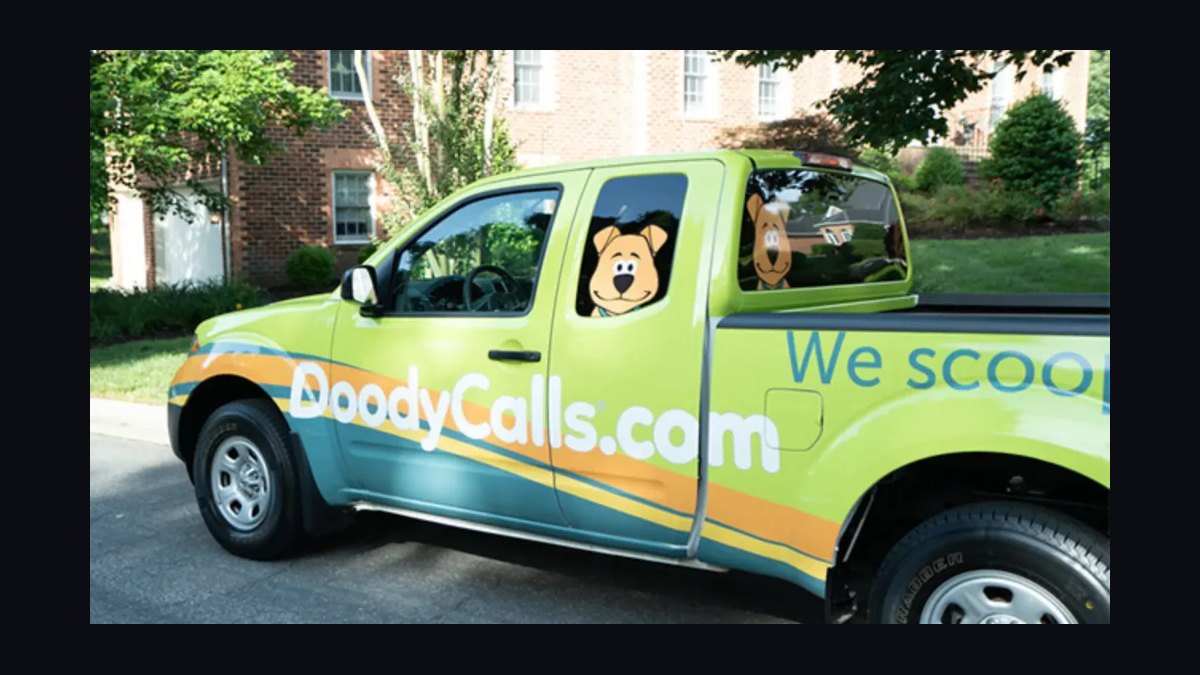
Yes, for a service-and-management-minded operator: DoodyCalls offers a low-capital pet-waste-removal franchise ($60,000–$120,000 total investment) built on a dual residential-plus-commercial model. The residential subscriptions and HOA/apartment station contracts diversify recurring revenue, and the pet-ownership boom keeps demand resilient — but you must be able to recruit technicians and sell into HOAs to make it work in 2027.
A Startup Considering the DoodyCalls Model
Picture a prospective franchisee in a mid-sized suburban metro — say, a market with 40,000 single-family households and a growing cluster of garden-style apartment complexes nearby. They have roughly $80,000 in liquid capital, a pickup truck they already own, and a background in operations management rather than pet care. This is close to the profile DoodyCalls is actually built for: someone who can run a route, manage a small crew, and sell a recurring service — not necessarily someone who loves scooping yards personally.
The scenario matters because it clarifies what "should I open" really means here. It isn't a question of whether pet-waste removal is a viable service category — it clearly is, given the size of the pet-ownership base and the rise of pet-friendly multi-family housing. It's a question of whether this specific person can execute the dual-channel sales motion the model depends on. A DoodyCalls franchise succeeds or stalls based on two separate skill sets operating at once: consumer-facing residential sales (subscriptions sold door-to-door, via Google Ads, and by referral) and B2B sales into property managers, HOA boards, and apartment leasing offices. Someone strong in one and weak in the other will plateau well below the brand's stated ceiling.
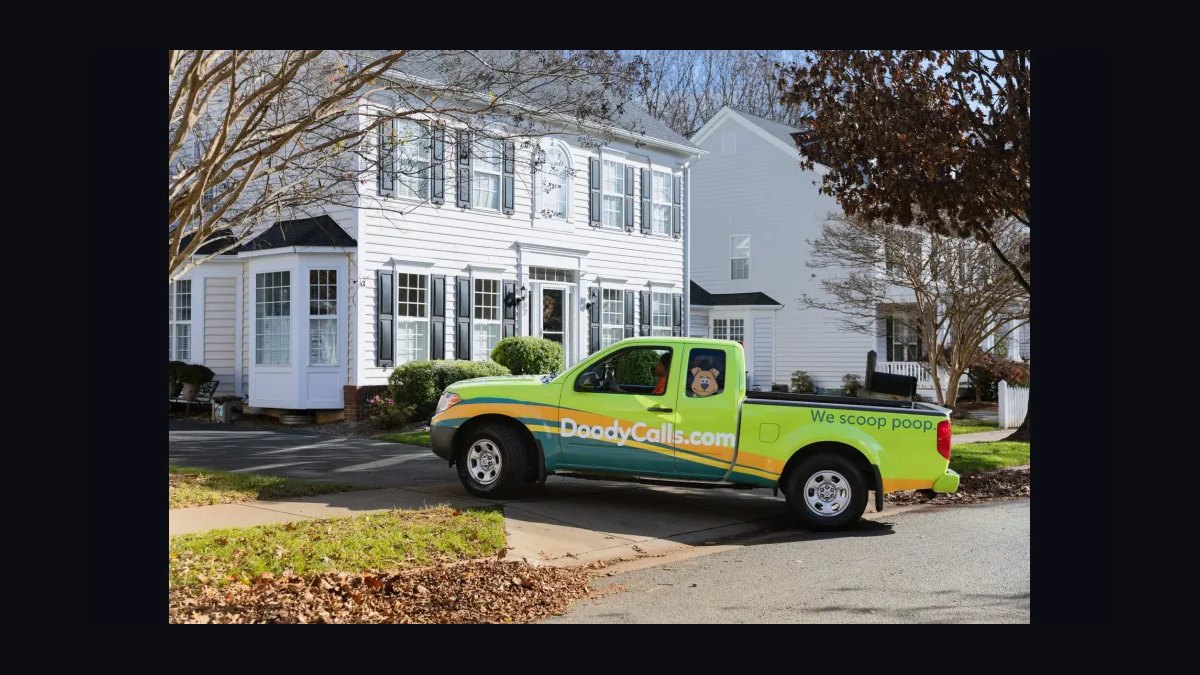
In this scenario, the operator spends their first 60 days doing two things in parallel: signing up residential yard-cleanup subscriptions in their immediate neighborhood radius (to build route density fast) while also cold-calling the ten largest HOA management companies and apartment operators in their territory (to land the first commercial pet-station contracts, which take longer to close but pay considerably more per stop). By month six, if both tracks are working, they should have upward of 100 residential accounts and two or three signed commercial contracts — a mix that starts to look like the 60/40 or 50/50 residential-to-commercial ratio that mature, high-performing territories tend to reach. If only the residential track is working, revenue grows but plateaus at a lower ceiling, because low-ticket $80–$150/month yard accounts alone rarely generate the margin cushion that commercial contracts ($500–$2,500/month per site) provide.
How the DoodyCalls Revenue Engine Works
The mechanism behind a DoodyCalls unit is simpler than most home-service franchises because there is no retail buildout, no inventory beyond bags and cleaning supplies, and no licensed-trade certification requirement. The business is a route: a technician (who may be the owner in year one) drives a branded vehicle to a sequence of stops, performs a short service at each one, and moves on. Revenue accrues from two distinct stop types that get serviced differently.

Residential stops are weekly or biweekly yard visits billed on a flat recurring subscription — the technician removes waste, may sanitize a specific area, and leaves. These are fast (5–15 minutes per stop) and low-value individually, but they compound quickly once route density rises, because the marginal cost of adding one more stop on an existing street is close to zero. Commercial stops — HOA common areas, apartment-complex pet-waste stations — are serviced on a contracted schedule (often 1–3 times per week) and include restocking of bag dispensers, station cleaning, and sometimes signage or maintenance. These pay far more per visit and are billed under multi-month or annual contracts, which is what gives the model its revenue stability: a residential subscriber can cancel with 30 days' notice, but an HOA contract is typically locked for a full service term.
What this diagram makes clear is that route density is the throughline connecting both revenue types — a stop only becomes profitable once enough other stops exist nearby to keep a technician's truck moving efficiently rather than driving long gaps between jobs. This is why the earliest months of a new DoodyCalls territory are disproportionately about geographic concentration: signing up ten accounts scattered across a 40,000-household territory produces far worse unit economics than signing up ten accounts on five adjacent streets. Franchisees who understand this prioritize saturating a small radius before expanding outward, even if it means temporarily turning away leads outside that radius.

Real Numbers: Investment, Revenue, and Profit Benchmarks
The Item 7 investment range per the 2026 FDD runs roughly $60,000 to $120,000, which is genuinely low compared to most brick-and-mortar or equipment-heavy franchise categories. That range breaks down roughly into a $25,000–$40,000 franchise fee, $10,000–$35,000 for a vehicle and cleanup equipment, $3,000–$12,000 for vehicle branding/wrap, $3,000–$12,000 for home-office setup (most units run from the owner's home rather than a leased space), $10,000–$30,000 for initial marketing covering both residential lead-gen and commercial outreach materials, $5,000–$15,000 for training and travel, $4,000–$12,000 for licensing and general-liability insurance, and $8,000–$25,000 of working capital to cover the ramp period before the route reaches breakeven density. Ongoing costs are a royalty near 7%–9% of gross revenue plus roughly a 2% marketing fee.
On the revenue side, a realistic multi-year ramp looks like this: Year 1 revenue commonly lands between $60,000 and $120,000, with the owner working 40–60 hours a week across service, sales, and admin, and net profit in the $20,000–$45,000 range after royalties and operating costs. Year 2, with 150–250 residential accounts and 5–15 commercial contracts on the books, revenue often climbs to $150,000–$300,000, and hiring a first full-time technician lets the owner redirect time toward sales; net profit improves to roughly $50,000–$90,000. By Year 3, at 300–500 residential accounts and 15–30 commercial contracts, revenue can reach $300,000–$600,000 with owner profit in the $80,000–$150,000 band. Fully mature units — several years in, with strong commercial penetration — can gross $300,000 to $1,200,000-plus, with owner earnings between $80,000 and $350,000.

Those ranges are wide because the commercial mix drives so much of the variance. A franchisee who never lands more than a handful of HOA contracts will sit toward the bottom of every range; one who builds a genuinely balanced book will trend toward the top. This is also why comparing DoodyCalls to a purely residential-focused pet-waste brand understates its ceiling — the commercial layer is the differentiator, not an afterthought.
Trade-offs Against Alternatives
Buying an existing DoodyCalls territory versus opening a new one is its own decision inside the larger "should I do this" question. Existing territories typically sell for 2–4 times annual net profit, with total prices ranging from roughly $80,000 to $350,000 depending on account base, contract quality, and equipment condition. Buying gets you immediate cash flow, trained technicians, and an established local reputation, but you inherit whatever weaknesses the previous owner built in — thin client retention, aging equipment, or a residential-heavy mix with little commercial diversification. A 30–60 day due-diligence window, three years of profit-and-loss statements, and direct conversations with 5–10 current commercial clients are the standard checks before closing.

Opening new gives you full control over territory shape (commonly 50,000–150,000 households) and lets you design your own residential/commercial balance from day one, but it means 6–18 months of below-target revenue while density builds, plus a heavier local marketing spend — often $5,000–$15,000 beyond the brand's national fund — to generate the first wave of leads.
Beyond the buy-versus-open decision, it's worth weighing DoodyCalls against adjacent options. Competing pet-waste franchise brands like Pet Butler and Scoop Soldiers occupy similar investment ranges but generally lean more heavily residential, so their revenue ceilings tend to sit lower without a strong commercial arm. An independent, unbranded pet-waste-removal startup avoids royalty and marketing-fee payments entirely (saving roughly 9%–11% of gross) but forfeits the training systems, national vendor relationships for bags and stations, and brand credibility that help franchisees close HOA deals — a meaningful disadvantage when pitching property managers who are naturally cautious about unproven vendors. For someone weighing capital-efficient, recurring-revenue service businesses broadly, other home-service franchise categories (lawn care, pool maintenance, junk removal) share the low-overhead, route-based structure but usually lack DoodyCalls' specific commercial/HOA niche, which is a genuine point of differentiation in a market where most competitors chase the same residential customer.

Common Pitfalls and How to Avoid Them
The most common failure mode is treating the business as residential-only. Franchisees who never build a commercial sales motion cap themselves at the low end of every revenue range in this article, because $80–$150 monthly residential accounts alone rarely generate enough margin to support more than one or two technicians. The fix is structural: budget dedicated time — not leftover time — each week for outreach to property managers and HOA boards from month one, rather than treating commercial sales as something to "get to later" once residential is established.
A second pitfall is underestimating technician turnover. The work is physical, sometimes seasonal in colder climates, and entry-level in pay structure, which makes retention harder than in office-based franchise models. Franchisees who succeed tend to build a clear wage-plus-incentive structure and a visible path to route-lead or crew-lead roles, rather than treating technicians as interchangeable labor. Skipping this leads to a cycle of constant hiring and retraining that quietly erodes margin.

A third pitfall is poor route geography in the opening months — signing whichever leads come in regardless of location, rather than concentrating sales efforts within a tight radius. This inflates drive time between stops and makes early unit economics look worse than the model actually supports, sometimes discouraging a new owner before density has a chance to build. A fourth, related pitfall is skipping the due-diligence steps when buying an existing territory — failing to verify client retention rates or speak directly with commercial accounts before closing can mean inheriting contracts that don't renew, which guts the purchase price's justification within the first year. Finally, some buyers underweight Item 19 review and skip calling multiple existing operators before signing — a step that consistently surfaces the gap between advertised averages and what a specific territory's demographics and competitive density will actually support.
Related questions
How long does it take a DoodyCalls franchise to break even?
Most units reach operating breakeven somewhere in the 12–24 month range, depending on how quickly the owner builds route density and lands the first commercial contracts. Faster commercial traction shortens this window meaningfully.
Is pet-waste removal a recession-resistant business?
Generally yes — pet ownership and the willingness to pay for related services have historically held up well during downturns, since pet owners tend to treat basic pet care as non-discretionary even when trimming elsewhere.
What territory size does a DoodyCalls franchise typically cover?
Territories are commonly sized between 50,000 and 150,000 households, though exact boundaries depend on local population density and the mix of single-family versus multi-family housing available.
Can I run a DoodyCalls franchise part-time?
Technically some owners start part-time while transitioning from another job, but building both residential and commercial channels fast enough to hit typical Year 1–3 benchmarks generally requires full-time attention, especially during the first year.
FAQ
What is the total investment to start a DoodyCalls franchise? The total investment ranges from roughly $60,000 to $120,000, including a franchise fee of $25,000 to $40,000. This covers a home- or truck-based operation with no retail location required, making it one of the lower-cost franchise categories in the pet-services space.
How much can I expect to earn as a DoodyCalls owner? Mature units typically generate annual gross revenue between $300,000 and $1,200,000, with owner earnings in the range of $80,000 to $350,000. Actual results depend heavily on market size, route density, and how much commercial/HOA business is developed.
What are the main revenue sources for a DoodyCalls franchise? Revenue comes from recurring residential yard cleanup, billed weekly or biweekly, and commercial services such as installing and maintaining pet-waste stations for HOAs, apartment complexes, and multi-family properties. The commercial side generally carries higher margins and contract-based stability.
How hard is it to find and keep technicians? Staffing is one of the more common operational challenges, since the work is physical and can be seasonal in colder climates. Franchisees who offer competitive wages, predictable scheduling, and a visible advancement path tend to retain staff more successfully than those who don't.
Do I need experience in pet care or waste removal to open one? No prior hands-on pet-waste experience is required. The franchise provides training on operations, sales, and route management, so management ability and comfort selling to both consumers and property managers matter more than technical pet-care skills.
How does DoodyCalls compare to other pet-waste franchises? DoodyCalls stands out for its dual residential-and-commercial model, which adds revenue stability through contract-based HOA and apartment clients. Its investment range is broadly similar to competitors like Pet Butler or Scoop Soldiers, but the commercial angle can produce a higher revenue ceiling in dense suburban or multi-family markets.
Sources
- https://www.entrepreneur.com/franchises/directory
- https://www.ibisworld.com
- https://www.statista.com
- https://www.franchisebusinessreview.com
- https://www.franchise.org
- https://www.census.gov
- https://www.sba.gov/business-guide/plan-your-business/franchise
- https://www.ftc.gov/business-guidance/industry/franchises-business-opportunities
Related on PULSE
- [How long does it take to open a franchise and break even in 2027?](/knowledge/fr1104)
- [Should I open or buy a Tommy Gun's Original Barbershop franchise in 2027?](/knowledge/fr1095)
- [Should I open or buy a Painting with a Twist franchise in 2027?](/knowledge/fr1058)
- [What's the difference between opening a new territory and buying an existing franchise?](/knowledge/fr1104)
@Kory-White- · if Venmo asks, the last 4 of my number are 2012
 pulse-moviesTop 10 Movies on Netflix 2027
 pulse-moviesTop 10 Movies on Max 2027
 pulse-moviesTop 10 Fantasy Movies of All Time in 2027
 pulse-moviesTop 10 Documentaries of All Time in 2027
 pulse-moviesTop 10 Superhero Movies of All Time in 2027
 pulse-moviesTop 10 Romance Movies of All Time in 2027
 pulse-moviesTop 10 Westerns of All Time in 2027
 pulse-moviesTop 10 Musical Movies of All Time in 2027
 pulse-moviesTop 10 Thriller Movies of All Time in 2027
 pulse-moviesTop 10 Crime Movies of All Time in 2027