
Should I open or buy a Board & Brush franchise in 2027?
 Curated byKory White · Fractional CRO · Maryland
 PULSEKNOWLEDGE LIBRARY
Quality
Certified
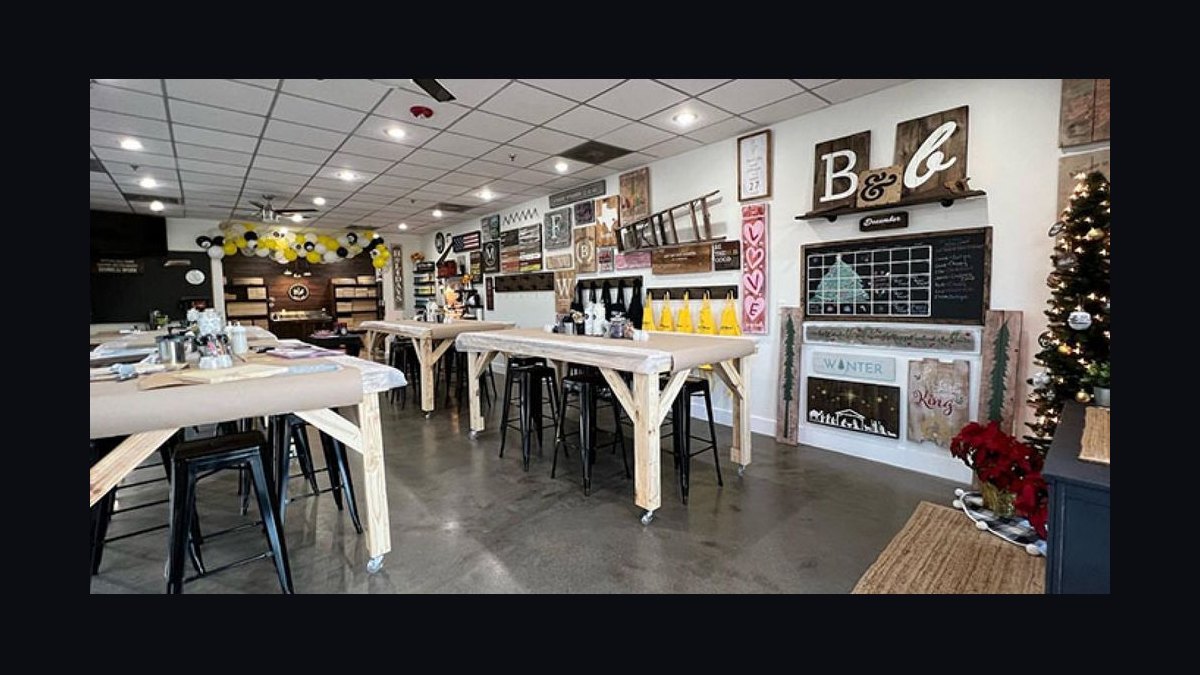
Open a Board & Brush franchise in 2027 only if you will personally sell private events every week. The roughly $80,000–$200,000 entry is low for franchising and workshop material margins are strong, but revenue is seats sold times ticket price. Passive owners with empty calendars lose money quickly.
What a Board & Brush studio actually is, and why the category behaves the way it does
Board & Brush Creative Studio sits in the DIY workshop segment of experiential retail. A guest books a seat, arrives at a studio with workbenches instead of dining tables, and spends roughly two to three hours distressing, staining, and stenciling a wooden sign or piece of home decor that they carry out the door the same night. The back of house cuts and preps wood; the front of house is closer to a hospitality venue than a store. Most studios operate BYOB, which shifts the evening from a craft class toward a social outing.
That distinction matters more than any line on the franchise disclosure document. You are not selling wood. You are selling a Friday night. The competitive set is not lumber yards or craft retailers — it is paint-and-sip studios, axe throwing, escape rooms, pottery painting, candle bars, restaurant patios, and the couch. Every one of those competes for the same discretionary dollar and the same three-hour block of a customer's week. When people search "things to do near me," you either appear or you do not exist.
The structural consequence is that a Board & Brush studio has almost no passive revenue. A pizza franchise gets walk-ins. A gym gets dues from members who never show up. A workshop studio gets exactly what it books. Every dollar arrives because someone put a class on a calendar, marketed it, and filled the seats. There is no drift income, no subscription base, and no accidental customer. Owners who come from retail or food service are frequently blindsided by this: the storefront generates almost nothing on its own.

The upside of that same structure is unusually clean unit economics. Materials for a project — the wood blank, stain, paint, stencil, hardware — run a modest fraction of the ticket price, typically in the neighborhood of fifteen to twenty-five dollars per guest against tickets that commonly land in the $45–$85 range depending on project size and market. That yields gross margins in the sixty to seventy percent band before labor. Compare that to a restaurant fighting thirty percent food cost plus spoilage. The craft-experience model does not lose on cost of goods; it loses on empty chairs.
Two adjacent forces shape the category heading into 2027. First, the experiential-spending trend that lifted every "do something, don't buy something" concept has matured. Growth no longer comes free from novelty; it comes from execution. Second, the private-event economy — bridal showers, birthdays, team offsites, church groups, school fundraisers, real-estate client appreciation nights — has become the profit engine for the strongest operators. A studio that treats itself as a small event venue that happens to make signs consistently outperforms one that treats itself as a craft store that occasionally hosts parties.
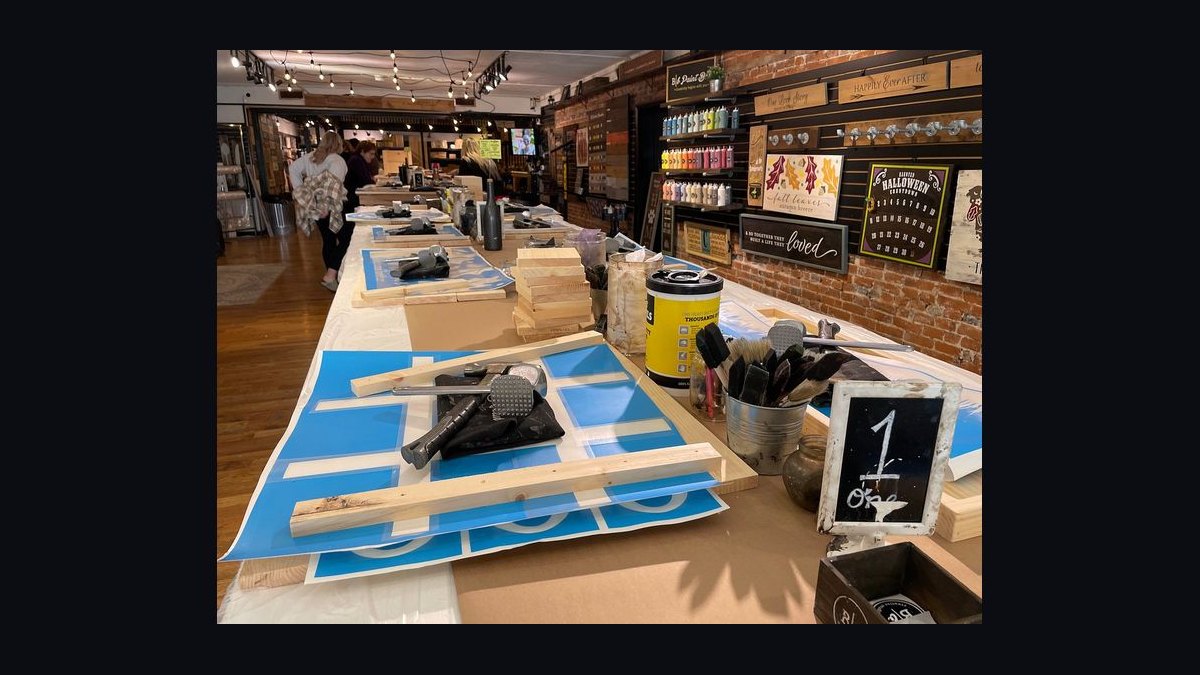
The step-by-step process from inquiry to a filled opening calendar
The path from first inquiry to opening night follows a predictable arc, and where prospective owners lose money is almost always in compressing the pre-opening sales work rather than the buildout. Below is the sequence a disciplined candidate should run, with the diligence gates that actually change the decision.
Start with the franchise disclosure document. You want Item 5 (initial fee), Item 6 (ongoing royalty and brand fund), Item 7 (total investment range), Item 12 (territory), Item 19 (financial performance representation, if provided), and Item 20 (unit counts, transfers, terminations). Item 20 is the underrated one: a table showing steady openings with few terminations and few transfers tells a very different story than one showing churn. Count closures over the trailing three years against the system size and do the arithmetic yourself rather than accepting a summary.
Then call franchisees — not the three the franchisor suggests, but eight to twelve you pick from the Item 20 list, deliberately including a mix of strong-looking markets and marginal ones. Ask a narrow set of questions: What percentage of your revenue is private events versus public workshops? How many workshops do you run in a slow February week? What is your average seats-per-workshop, not your capacity? What did your first six months of revenue look like month by month? How many hours a week do you personally work, and how many of those are selling? Owners will talk candidly about fill rate if you ask about fill rate specifically instead of asking whether they are happy.

Territory validation comes next and deserves real fieldwork. Drive the trade area at 7 p.m. on a Thursday. Count the competing experience venues within a fifteen-minute drive. Look up the local wedding and bridal-show calendar, the number of employers with fifty-plus staff who buy team-building, the density of households in the income bands that spend sixty-five dollars on a night out. A suburb with strong local event culture and thin craft-workshop competition beats a denser urban market with four rivals and double the rent.
The step most candidates skip is pre-selling. The franchisees who reach break-even in six to eight months rather than eighteen to twenty-four almost universally opened with a partially booked calendar — private parties sold during buildout, corporate nights committed before the doors opened, a launch list of a few hundred local emails collected at farmers markets and bridal shows. Grand-opening marketing spend, commonly $5,000–$20,000, is far more productive when it amplifies bookings that already exist than when it tries to create demand from zero on week one.
An adjacent note worth absorbing: this sequence is nearly identical whether you are evaluating Board & Brush, a paint-and-sip brand, a pottery studio, or a candle bar. The diligence framework travels. What changes between concepts is the differentiator — here, a durable take-home wood product and the BYOB social format — and the resulting price ceiling. A take-home sign that hangs in someone's entryway supports a higher ticket than a canvas that ends up in a closet, and that pricing headroom is the single most concrete argument for the wood-workshop format over its nearest neighbors.

Costs, timelines, and the ranges you should plan against
The total initial investment for a Board & Brush studio runs roughly $80,000 to $200,000 per the franchisor's disclosed range, with an initial franchise fee in the neighborhood of $40,000. Ongoing royalty sits in the high-single-digit percent of revenue, with an additional smaller brand and marketing fund contribution. Confirm every one of those figures against the current FDD — fee structures change year to year, and a stale number found in a blog post is not diligence.
Inside that range, the buildout is comparatively light because the studio is workbenches, storage, a stain and prep area, restrooms, and a photogenic front room. Leasehold improvements commonly land somewhere between $15,000 and $70,000 depending on the condition of the space and how much the landlord contributes. Tools, benches, and fixtures add roughly $10,000 to $40,000. Signage and interior branding run $5,000 to $20,000. Opening inventory of wood blanks, stains, and stencils lands around $5,000 to $15,000. Grand-opening marketing takes $5,000 to $20,000. Working capital for the first three to six months of rent and labor before the ramp completes typically needs $15,000 to $45,000.
That working-capital line is where undercapitalized owners die, and it deserves a harder look than the fee. If your rent is $4,000 a month and your instructor payroll is $3,000 a month, you are burning $7,000 monthly before royalty and utilities. Six months of that is $42,000 — the top of the range, not the bottom. Plan to the top. An owner who opens with $15,000 of runway and a slow first quarter is forced into panic discounting, which trains the local market to wait for a coupon and permanently damages the price point.

On the revenue side, a well-located and well-marketed studio commonly generates annual revenue in the $200,000 to $450,000 range, with the stronger reported units clustering around the $300,000 to $400,000 band and top suburban performers exceeding that. Owner earnings in the $40,000 to $120,000 range are the realistic outcome when workshops consistently fill and private events are booked. Treat any figure you see anywhere — including here — as a hypothesis to test against the current Item 19 and against the franchisees you interview.
The arithmetic that makes those numbers concrete: an average workshop seats roughly twelve to twenty guests at $45–$65 per person for public classes, with private events commanding higher per-person pricing in the $55–$85 range. At sixteen guests and a $55 average ticket, one workshop grosses $880. Hitting $250,000 in annual revenue means running roughly fifteen to twenty-five workshops a month, every month, including the dead weeks in late January and mid-summer. That cadence is the whole business, and it is worth writing on the wall of the studio.
Against that revenue, the cost stack is predictable. Materials consume fifteen to twenty percent. Labor — studio manager plus workshop instructors — is the single largest variable expense at roughly twenty-five to thirty-five percent of revenue, and it is rising: minimum wages in the $15–$20 range in many states have permanently reset the floor. Rent should be held under about twelve percent of revenue; if the only available space pushes it to eighteen percent, the deal is probably dead regardless of how nice the storefront looks. Royalty plus brand fund takes its high-single-digit-plus cut off the top line. What remains is owner earnings.
Timelines: expect roughly six to twelve months from signing to opening, driven mostly by site selection and lease negotiation rather than construction. Break-even most commonly lands in the twelve-to-twenty-four-month window, stretching toward thirty-six months for slow ramps or high-rent locations, and compressing to six to eight months for owners who opened with pre-sold events. Full recovery of the initial investment typically takes three to five years under normal conditions. If a projection you are shown implies a one-year payback, that projection is describing an outlier, not a plan.
The daily reality, and the places owners consistently get it wrong
Prospective franchisees imagine the job is teaching workshops. It is not. In a healthy week, roughly thirty to forty percent of an owner's working hours go to private-event sales — calling employers about team-building nights, following up with bridal parties, pitching schools and nonprofits on fundraiser splits, reconnecting with last year's holiday-party bookers. Another twenty to thirty percent goes to social content: photographing finished signs, filming short workshop clips, posting guest testimonials, replying to comments and DMs where most private-event inquiries actually originate. Fifteen to twenty percent is preparation — cutting, sanding, staging stencils and stain. Only ten to fifteen percent is actually standing in front of a room teaching, and you will do that perhaps two to four times a week.
The single most expensive mistake is the passive-owner assumption. Semi-absentee operation is extremely difficult in the first year and often in the second. The calendar does not fill itself, and a hired manager rarely sells private events with an owner's urgency because a manager does not personally feel the rent. Owners who bought expecting to check in twice a week almost uniformly report a slower ramp and thinner margins, and several end up buying back their own time by taking the sales function back personally.
The second mistake is treating the concept as a craft rather than a business. Loving woodworking is a pleasant bonus and a poor qualification. The people who thrive are local marketers and event salespeople who happen to run a studio. If cold-calling a regional HR manager about a team-building night makes you queasy, that discomfort will show up directly in your P&L within ninety days. You do not need woodworking experience; the franchisor trains the process. You need the willingness to ask strangers for bookings, repeatedly, for years.
Third: underweighting private events. Public workshops fill the calendar and build the email list; private bookings pay the mortgage. A private party arrives as a single sale that fills the whole room, requires no per-seat marketing, prices higher per person, and generates a cohort of first-time guests who become future public-class bookings. Operators who only run public classes are doing more marketing work for less money and wondering why the business feels like a treadmill.
Fourth: seasonality denial. Craft-experience demand is not flat. The stretch from October through December is enormous — holiday decor, corporate parties, gift-making. Spring brings bridal and graduation. Late January, February in some markets, and midsummer are soft. Owners who spend December's cash as though it is the run rate get caught in February. Build the annual plan around the peaks funding the troughs, and use the slow weeks for the sales calls that fill the next peak.
Fifth: pricing timidity. With labor costs rising, the studios that hold margin are the ones charging premium prices — often in the $65–$85 band for private events and seasonal specialty projects — and defending those prices with a genuinely better experience rather than discounting into a race with every other Thursday-night option in town. Discounting is seductive because it fills a specific class. It is corrosive because it resets what your market believes the experience is worth.
Sixth, and most technical: neglecting local search. Something on the order of half of new customer discovery for "things to do near me" businesses comes through local digital surfaces — Google Business Profile, map results, local SEO, targeted social ads. A studio with fifteen reviews and no posts loses to a studio down the road with two hundred reviews and weekly photos, even if the second studio makes worse signs. This is unglamorous, learnable, and directly monetizable work that many owners simply never do.
An adjacent failure worth naming because it recurs across the whole experiential category: cross-promotion left on the table. The strongest operators partner with nearby wineries, breweries, and restaurants — a workshop followed by dinner, a brewery night hosted in your space, a joint bridal-shower package. Those partnerships cost nothing but effort and reach exactly the audience you want. Studios that never leave the four walls of their unit consistently underperform ones that behave like a node in a local entertainment network.
A decision framework: buy new, buy resale, or walk
There are three real options, and prospective owners often only consider one. Opening a new unit gives you site choice and a clean slate but requires the full initial fee, the buildout, and a ramp from zero. Buying an existing studio from a departing franchisee costs more up front in many cases but delivers an existing customer list, a proven fill rate, trained instructors, and immediate cash flow — and lets you underwrite against actual historical numbers rather than projections. Walking away is the third option and is correct more often than franchise-brokerage marketing suggests.
Resale deserves more attention than it gets. When you buy a going concern you can inspect three years of bank statements, see the real seasonality curve, and calculate an actual multiple on seller's discretionary earnings rather than trusting an Item 19 average. The critical diligence question on a resale is why the seller is leaving. Burnout in a business that demands relentless event sales is common and not necessarily a red flag — but declining revenue, a new competitor two miles away, or an expiring lease with a large rent increase all are. Ask for the franchisor's transfer requirements early; you will typically owe a transfer fee and must qualify as a new franchisee regardless.
The honest disqualifiers are worth stating plainly. If you cannot fund the top of the working-capital range, wait. If you will not personally sell events, do not sign. If the only territory available has three direct competitors and rent that exceeds fifteen percent of a realistic revenue projection, pass. If your motivation is that you enjoy making signs, buy tools and a garage — that is a far cheaper way to get the thing you actually want.
Use the framework in that order rather than starting with the money. Capital is the easiest constraint to solve — SBA lending is available for franchise concepts in this investment band, and the relatively low entry cost is precisely what widens the buyer pool. Temperament is the constraint you cannot finance. The franchise sells you a system, a brand, a project library, and training. It cannot sell you the willingness to make twenty sales calls on a Tuesday morning in February when nobody is booking, which is the actual determinant of whether this works.
Related questions
How does Board & Brush compare with a paint-and-sip franchise?
Both are ticketed group-experience businesses with similar economics and similar fill-rate dependence. The wood-workshop format's edge is a durable take-home product that supports higher pricing, plus the BYOB social format. Paint-and-sip concepts are often cheaper to open and easier to staff.
Can I run a second studio in a nearby territory?
Multi-unit ownership is common in this category once the first studio is stable, because event-sales skill and instructor bench strength transfer. Do not attempt it before the first unit reliably fills its calendar without you personally covering every gap.
What happens if consumer spending tightens?
Discretionary entertainment softens first. Studios with a strong private-event and corporate mix hold up better than those dependent on public classes, because employer team-building and pre-committed shower and party bookings are less impulse-driven than a Thursday-night walk-up.
Do I need to sign a long-term lease before signing the franchise agreement?
No, and you generally should not. Sequence the franchise agreement and financing first, then negotiate the lease with the franchisor's site criteria in hand. Locking a lease before you are approved leaves you paying rent on a space you may never open.
How many franchisees actually hit the top of the revenue range?
Very few, and the FDD's Item 19 will usually show the distribution rather than just an average. Underwrite your plan against the median or below, not the top quartile, and treat outperformance as upside rather than assumption.
FAQ
What is the typical revenue range for a Board & Brush franchise?
Reported annual gross revenue commonly falls between roughly $200,000 and $450,000, with stronger units clustering in the $300,000–$400,000 band and top suburban locations exceeding it. Outcomes depend heavily on territory quality, local event culture, and how aggressively the owner sells private bookings. Verify current figures against the franchisor's Item 19 and direct franchisee conversations before modeling anything.
How long does it take to break even?
Most owners report break-even somewhere in the twelve-to-twenty-four-month range, extending toward thirty-six months when rent is high or the ramp is slow. The fastest cases — six to eight months — belong almost exclusively to owners who pre-sold private events during buildout and opened with a partially booked calendar rather than an empty one.
Do I need prior woodworking or craft experience?
No. The franchisor trains the workshop process, project library, and instruction method, and instructors handle guest guidance during sessions. What you genuinely need is local marketing capability, comfort with social content, and the willingness to sell private and corporate events week after week. Craft skill is pleasant; sales skill is the actual qualification.
Can I run this as a semi-absentee owner?
It is difficult and generally inadvisable in the first year. The model depends on continuous booking effort, guest relationships, and local partnership building — activities that a hired manager rarely pursues with an owner's urgency. Plan on full-time involvement until the calendar fills reliably, then delegate operations before you delegate sales.
What are the biggest ongoing costs besides royalty?
Labor is the largest, typically twenty-five to thirty-five percent of revenue for a studio manager and instructors, and it has been rising with state minimum wages. Rent should stay under roughly twelve percent of revenue. Project materials run fifteen to twenty percent, and local marketing spend is meaningful if you are running paid social to fill classes.
Is the franchise territory exclusive?
Territories are defined, but the specific protections vary by agreement and market. Read Item 12 of the FDD carefully, confirm the exact boundaries in writing, and ask directly what prevents a new studio from opening just outside your line and marketing into your trade area. Do not rely on verbal assurances during the discovery process.
Sources
- https://www.boardandbrush.com/franchise/
- https://www.entrepreneur.com/franchises/directory
- https://www.franchisedirect.com/
- https://www.ftc.gov/business-guidance/resources/franchise-rule-compliance-guide
- https://www.sba.gov/funding-programs/loans/7a-loans
- https://www.franchise.org/franchise-information
- https://www.ibisworld.com/united-states/market-research-reports/
- https://www.sba.gov/business-guide/plan-your-business/buy-existing-business-or-franchise
Related on PULSE
- [How long does it take to open a franchise and break even in 2027?](/knowledge/fr1104)
- [Should I open or buy a Painting with a Twist franchise in 2027?](/knowledge/fr1058)
- [Should I open or buy a Tommy Gun's Original Barbershop franchise in 2027?](/knowledge/fr1095)
This page will be disappearing soon. Save it to your device for $1 — or read it free while it is here.
@Kory-White- · if Venmo asks, the last 4 of my number are 2012
This page is gone.
This one is off the shelf now. $1 keeps it on your phone for good — the whole page, pictures and diagrams included.
 pulse-franchisesFranchise vs. independent business: which should I start in 2027?
 pulse-franchisesBest home-healthcare franchises to buy in 2027
 pulse-franchisesShould I open or buy an AFC Urgent Care franchise in 2027?
 pulse-franchisesShould I open or buy a Holiday Inn Express franchise in 2027?
 pulse-franchisesHow do you get started with Franchises in 2027?
 pulse-franchisesWhat are the best med spa franchise opportunities to buy in 2027?
 pulse-franchisesShould I open or buy a Restoration 1 franchise in 2027?
 pulse-franchisesShould I open or buy a Painting with a Twist franchise in 2027?
 pulse-franchisesShould I open or buy a Comfort Inn franchise in 2027?
 pulse-franchisesBest franchises for veterans in 2027