
Should I open or buy a franchise versus a dealer or distributor model in 2027?
 Curated by Kory White · Fractional CRO · Maryland
 PULSEKNOWLEDGE LIBRARY
For most operators entering 2027, buying an established franchise offers the lowest risk and fastest path to profitability, while dealer or distributor models provide greater independence and higher margins but demand stronger sales capability and capital reserves. The right choice depends on your operational strengths, available funding, and tolerance for brand restrictions. Franchises suit first-time owners; dealer or distributor models reward experienced operators with existing networks and sales infrastructure.
The outcome you should expect
The decision between a franchise versus a dealer or distributor model in 2027 is not a single fork in the road but a cascading series of choices that shape your revenue ceiling, your daily operational freedom, and your exit options. Each path produces a fundamentally different business profile, and understanding those end states before you commit capital is the difference between building an asset and buying a job.
With a franchise, the outcome you should expect is a business that trades autonomy for predictability. You operate under a proven playbook, pay ongoing royalties typically ranging from 4 to 12 percent of gross revenue, and follow brand standards that limit your ability to experiment with pricing, suppliers, or marketing. In exchange, you receive supplier pricing, national advertising support, and a recognized name that shortens your customer acquisition curve. The realistic outcome after three to five years of competent operation is a stable cash-flowing business that may sell for three to five times EBITDA, depending on the brand's strength and your territory's demographics.
A dealer model, by contrast, produces a business where you hold the customer relationship but not the product ownership. You sign agreements with manufacturers or wholesalers, maintain inventory and showroom space, and earn margins on the spread between wholesale and retail pricing. The outcome you should expect is thinner margins per unit but higher inventory turnover and the ability to represent multiple brands simultaneously. Your business value depends heavily on your sales team, your service department, and your ability to negotiate favorable floorplanning terms with lenders.

The distributor model pushes further into logistics and territory management. You purchase products in volume, warehouse them, manage delivery fleets, and service retail accounts within a defined geographic area. The outcome is a business with higher fixed costs, larger working capital requirements, and margins that improve with scale. Distributors who consolidate multiple complementary product lines and build route density can achieve operating margins in the 8 to 15 percent range, but the capital intensity is substantially higher than either franchising or dealership.
What most operators underestimate is the time horizon. Franchise profitability typically arrives within 12 to 24 months if you follow the system. Dealer models can generate revenue immediately but often require 24 to 36 months to build a service and repeat-customer base that drives real profitability. Distributor models take the longest to mature, frequently requiring three to five years to achieve route density and warehouse utilization that justify the initial investment. Your personal financial runway must match the model you choose, and most failures occur because operators run out of cash before their chosen model reaches breakeven.

What drives that outcome
The structural forces that separate franchise versus dealer versus distributor outcomes are embedded in the agreements themselves, the capital requirements, and the competitive dynamics of 2027's market. Understanding these drivers before signing anything is essential because they determine whether your business compounds or merely survives.
The first driver is the legal structure of the agreement. Franchise agreements are governed by the Federal Trade Commission's Franchise Rule, which requires a Franchise Disclosure Document containing 23 specific items about fees, obligations, and financial performance. This regulatory framework provides transparency and recourse that dealer and distributor agreements lack. Dealer agreements are typically governed by state-specific dealer protection laws, which vary significantly by industry and jurisdiction. Distributor agreements are usually pure commercial contracts with minimal statutory protection, meaning your rights depend entirely on the negotiation strength you bring to the table.
The second driver is capital intensity and financing availability. Franchises benefit from established lending programs through the Small Business Administration, with 7(a) loans available up to 5 million dollars and franchise registry programs that streamline approval for recognized brands. Dealers often rely on floorplan financing, where the lender pays the manufacturer for inventory and the dealer repays as units sell. This creates interest-rate sensitivity that becomes acute when rates fluctuate. Distributors face the highest capital barrier, requiring investment in warehouse space, delivery vehicles, inventory management systems, and often a 60 to 90 day cash conversion cycle that demands substantial working capital lines.
The third driver is the competitive landscape in 2027. Consumer behavior continues shifting toward research-heavy purchasing, which benefits brands with strong digital presences. Franchises benefit from centralized digital marketing that individual dealers and distributors cannot match. However, the rise of direct-to-consumer channels from manufacturers is compressing margins for both dealers and distributors. Manufacturers who previously relied exclusively on distribution networks are increasingly testing hybrid models, creating tension between channel partners and principals. This dynamic makes the franchise model relatively more stable, because franchise brands rarely compete directly with their franchisees, while manufacturers frequently experiment with direct sales that undercut their own dealers and distributors.
The fourth driver is labor and talent. Franchise systems provide training programs, operations manuals, and ongoing support that make it feasible to hire managers without deep industry experience. Dealer and distributor models require hiring sales professionals and logistics specialists who understand the product category, and these people command premium salaries. In 2027's tight labor market, the franchise model's ability to systematize training is a meaningful competitive advantage for operators who lack deep industry networks.

Benchmarks and realistic ranges
Concrete numbers separate serious planning from wishful thinking. While every opportunity differs, established benchmarks from franchise disclosure documents, dealer financial statements, and distribution industry surveys provide realistic ranges for modeling your decision.
Franchise investment costs vary widely by category. Quick-service restaurants typically require total investments between 250,000 and 1.5 million dollars, with liquid capital requirements often set at 30 to 50 percent of the total investment. Home services franchises, such as cleaning, landscaping, or restoration, generally require 100,000 to 500,000 dollars. Business-to-business service franchises, including marketing, accounting, or IT support, can start as low as 50,000 dollars. Royalty fees cluster between 4 and 8 percent of gross sales for most brands, with some charging 10 to 12 percent for high-support models. Advertising fees add another 1 to 3 percent. The median franchise unit generates approximately 500,000 to 1 million dollars in annual revenue, with wide variation by industry.
Dealer benchmarks depend heavily on the product category. Automotive dealerships represent the most capital-intensive dealer model, with average new car dealerships generating 60 to 70 million dollars in annual revenue but operating on net profit margins of only 1.5 to 2.5 percent. The real profit driver is parts and service, which typically contributes 40 to 50 percent of gross profit despite representing only 10 to 15 percent of revenue. Equipment dealers, such as agricultural or construction machinery, operate on gross margins of 15 to 25 percent for equipment sales and 30 to 40 percent for parts and service. The benchmark to watch is the parts-to-sales ratio, with successful dealers maintaining parts and service revenue at 30 percent or more of total revenue.

Distributor benchmarks center on efficiency ratios. The wholesale distribution industry operates on average net margins of 2 to 4 percent, with the top quartile achieving 5 to 7 percent. Gross margins typically range from 20 to 30 percent depending on product category, with commodity products at the low end and specialized technical products at the high end. The critical benchmark is inventory turnover, with successful distributors turning inventory 4 to 8 times annually. Operating expenses, including warehousing, delivery, and sales, should consume 15 to 20 percent of revenue. Cash conversion cycles of 45 to 75 days are typical, meaning a distributor doing 5 million dollars in annual revenue needs roughly 600,000 to 1 million dollars in working capital.
Return on investment benchmarks also differ. Franchise units typically achieve EBITDA margins of 10 to 20 percent, with payback periods of 2 to 4 years for well-chosen locations. Dealer models show EBITDA margins of 5 to 10 percent on much larger revenue bases, with payback periods of 3 to 5 years. Distributor models show EBITDA margins of 6 to 12 percent, with payback periods of 4 to 6 years due to the capital intensity. These ranges assume competent execution and no major market disruptions, so conservative planning should use the lower end of each range.

Exit multiples provide another benchmark for comparison. Franchise businesses sell for 3 to 5 times EBITDA in most categories, with strong regional brands commanding higher multiples. Dealer businesses sell for 4 to 6 times EBITDA, particularly when the dealership has a strong service department and loyal customer base. Distributors sell for 5 to 8 times EBITDA, reflecting the value of route density, customer contracts, and warehouse infrastructure. The higher exit multiples for distributors partially offset their higher capital requirements and longer payback periods.
Risks, edge cases, and failure modes
Every model has failure modes that are predictable and therefore avoidable. The operators who fail are rarely victims of bad luck; they are victims of mismatched expectations and avoidable execution errors. Understanding the specific ways each model breaks down is essential preparation.
Franchise failures cluster around three causes. The first is undercapitalization, where operators stretch to meet initial investment requirements but lack reserves for the 6 to 12 month ramp-up period. Industry data consistently shows that franchise units with less than 6 months of operating expenses in reserve have dramatically higher failure rates. The second is location dependence, where franchisees accept marginal territories that the franchisor could not sell to more experienced operators. Territory quality drives revenue potential more than any other controllable factor, and franchisees who compromise on location to save money often pay for that decision for years. The third is royalty fatigue, where operators who successfully build their business begin resenting the ongoing fees and either cut corners on brand standards or attempt to negotiate reduced royalties, both of which typically end badly.

Dealer failures follow different patterns. The most common is inventory mismanagement, where dealers over-order to capture manufacturer incentives and then face floorplan interest costs that erode margins. The second is service underinvestment, where dealers treat the service department as an afterthought rather than the profit center it should be. Dealers who fail to invest in technician training and diagnostic equipment lose service revenue to independents and create a downward spiral of declining customer retention. The third is manufacturer dependency, where dealers who rely on a single brand face catastrophic consequences when that manufacturer changes distribution strategy, reduces dealer margins, or experiences quality problems that damage the brand's reputation.
Distributor failures are typically slower and more structural. The most significant is route density miscalculation, where distributors acquire territories too large to serve efficiently or too small to achieve economies of scale. Distribution economics depend on delivery density, and distributors who spread deliveries across too many miles see fuel and labor costs consume their margins. The second is customer concentration, where distributors who rely on a few large accounts face devastating consequences when those accounts switch suppliers or negotiate price reductions. The third is technology lag, where distributors who fail to invest in warehouse management systems, route optimization software, and e-commerce capabilities lose ground to more efficient competitors.

Edge cases deserve attention as well. Multi-unit franchise ownership can be highly profitable, but the transition from single-unit to multi-unit operator requires a fundamental shift from hands-on management to systems management. Dealers who add secondary product lines can smooth revenue cycles, but each additional line adds complexity and working capital demands. Distributors who expand into adjacent geographic territories often discover that the logistics advantages that made their original territory profitable do not transfer automatically. The 2027 market also brings new edge cases around e-commerce integration, with franchise systems rolling out centralized online ordering, dealers building their own digital storefronts, and distributors facing competition from marketplace platforms that connect buyers directly with manufacturers.
A practical rollout plan
The decision framework that follows assumes you have done preliminary research and are ready to move from analysis to action. This plan works whether you are leaning toward a franchise, dealer, or distributor model, and it is designed to surface the information that actually matters before you commit capital.
Step one is defining your constraints in writing. Document your total available capital, including what you can borrow against home equity or retirement accounts. Specify your industry experience and whether you intend to operate the business yourself or hire a manager. Be honest about your risk tolerance and your required monthly income to cover personal expenses. These constraints will eliminate most opportunities before you spend time investigating them.
Step two is screening opportunities against your constraints. For franchises, request the Franchise Disclosure Document and focus on Item 19, which discloses financial performance representations. Compare the disclosed revenue and profit figures against your required income and your available capital. For dealer opportunities, request the proposed dealer agreement and pay particular attention to territory rights, performance requirements, and termination clauses. For distributor opportunities, request the supply agreement and analyze minimum purchase requirements, price adjustment mechanisms, and exclusivity terms.
Step three is validation through direct research. Talk to at least 10 current operators in the system you are considering, asking specifically about the gap between the disclosed financials and their actual experience. Visit their locations and observe operations. Analyze the territory demographics using census data and local economic indicators. Build a financial model that projects revenue, expenses, and cash flow for the first 36 months, using conservative assumptions. Test the market by talking to potential customers in the territory to gauge brand awareness and purchase intent.

Step four is securing financing. For franchises, apply through the SBA's franchise registry program, which pre-approves many established brands. For dealers, establish floorplan financing relationships with lenders who understand your product category. For distributors, secure a working capital line of credit before signing any supply agreement. The financing terms you secure will influence your negotiating position, so complete this step before entering serious negotiations.
Step five is negotiating the agreement. Franchise agreements are largely non-negotiable, but you can negotiate the territory description and any development schedule. Dealer agreements offer more room, particularly around performance targets, inventory requirements, and termination protections. Distributor agreements are the most negotiable, with room to discuss minimum purchase volumes, price adjustment formulas, and territory boundaries. In every case, have an attorney experienced in the relevant model review the agreement before signing.
Step six is execution. The first three months should focus on setup, hiring, and training. Months four through six should be a soft launch where you work out operational kinks before full marketing investment. Months seven through twelve should be full operations with aggressive customer acquisition. The second year should focus on optimization, analyzing which customers, products, and marketing channels drive profitability and reallocating resources accordingly. Throughout the first 24 months, track your actual results against your financial model monthly and adjust before small variances become existential problems.
Related questions
How much capital do I need to open a franchise versus a dealer or distributor?
Franchise investments range from 50,000 to over 1.5 million dollars depending on the brand. Dealer models require substantial inventory financing and typically 500,000 to several million in capital. Distributor models demand the most capital, often 1 to 5 million dollars including warehouse, fleet, and working capital.
Which model has the highest profit margin?
Distributor models offer the highest potential margins at scale, with top-quartile operators achieving 5 to 7 percent net margins. Franchise units typically achieve 10 to 20 percent EBITDA margins on smaller revenue bases. Dealer models operate on the thinnest margins, often 1.5 to 2.5 percent net, but generate significant absolute profit through high volume.
Can I switch from a dealer or distributor model to a franchise later?
Switching is possible but expensive. The capital invested in dealer or distributor infrastructure rarely transfers to a franchise model. You would likely sell your existing business and use the proceeds to fund a franchise purchase. The exit multiple on your existing business will determine how much capital you have available for the transition.
What is the typical payback period for each model?
Franchise units typically achieve payback in 2 to 4 years. Dealer models require 3 to 5 years due to the capital intensity of inventory and facilities. Distributor models take the longest, often 4 to 6 years, because warehouse infrastructure and route density take time to build.
How do I evaluate a franchise opportunity versus a dealer or distributor opportunity?
Start with the Franchise Disclosure Document for franchises, the dealer agreement for dealerships, and the supply agreement for distributorships. Then talk to at least 10 current operators in each system. Build a 36-month financial model using conservative assumptions and compare the projected returns against your capital requirements and risk tolerance.
FAQ
What is the difference between a franchise and a dealer or distributor model?
A franchise grants you the right to operate under an established brand using a proven system, in exchange for ongoing royalties and adherence to brand standards. A dealer purchases products from a manufacturer and resells them to customers, earning margin on the spread. A distributor purchases products in volume, warehouses them, and supplies retail accounts within a defined territory, earning margins based on volume and efficiency.
Which model is best for a first-time business owner?
Franchises are generally the best fit for first-time owners because they provide training, operational systems, and brand recognition that reduce the learning curve. Dealer and distributor models assume existing industry knowledge, sales capability, and operational experience. First-time owners who choose dealer or distributor models without relevant experience face a significantly higher failure risk.
How much ongoing revenue do franchisors take?
Franchise royalties typically range from 4 to 8 percent of gross sales, with some brands charging up to 12 percent. Advertising fees add another 1 to 3 percent. These fees are paid monthly and are non-negotiable for most brands. The total ongoing cost of 5 to 15 percent of revenue must be factored into your financial projections.
What are the hidden costs of dealer and distributor models?
Dealer models carry floorplan interest costs, which fluctuate with interest rates, plus facility costs, insurance, and compliance requirements. Distributor models carry warehouse costs, delivery fleet expenses, inventory holding costs, and technology investments for warehouse management and route optimization. Both models require working capital to cover the gap between paying suppliers and collecting from customers.
How important is territory in choosing between these models?
Territory is critical in all three models. Franchise territories are defined by the franchisor and protected in the agreement. Dealer territories are typically negotiated and may be non-exclusive. Distributor territories are defined in the supply agreement and may be exclusive or shared. A strong territory with favorable demographics, limited competition, and good logistics access can be the difference between success and failure.
Can I own multiple locations or territories?
Franchise systems increasingly encourage multi-unit ownership, with some brands requiring it for certain territories. Dealer models allow multiple locations but each requires separate floorplan financing and management. Distributor models naturally scale through territory expansion, though each additional territory requires proportional investment in warehouse and delivery capacity.
Sources
https://www.ftc.gov/business-guidance/resources/franchise-rule-compliance-guide https://www.sba.gov/funding-programs/loans/7a-loans https://www.nada.org/ https://www.naw.org/ https://www.franchise.org/ https://www.entrepreneur.com/franchises https://www.ibisworld.com/ https://www.statista.com/ https://www.investopedia.com/terms/f/franchise.asp https://www.census.gov/
Related on PULSE
- How to structure a franchise exit strategy before you sign
- The hidden costs of dealer floorplan financing in a high-rate environment
- Building route density: the distributor playbook for 2027
- Franchise validation: what to ask existing franchisees before buying
- Dealer versus direct: how manufacturer channel shifts affect your business
- Working capital requirements for distribution businesses: a practical guide
 franchiseShould I open or buy a franchise instead of an independent startup in 2027?
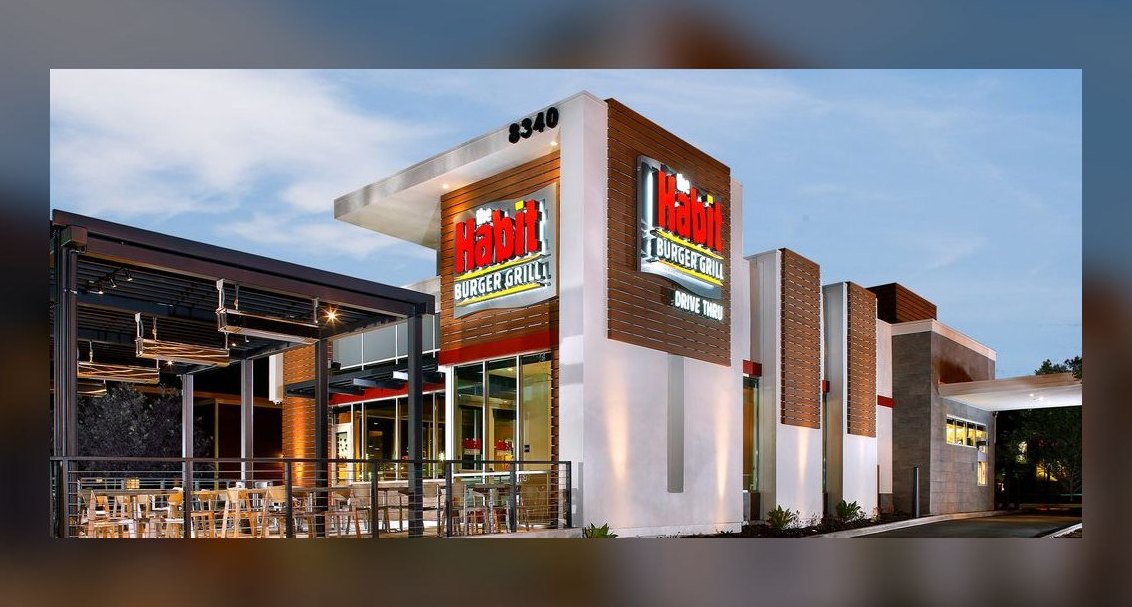 franchiseShould I open or buy a Habit Burger Grill franchise in 2027?
 franchiseShould I open or buy a Senior Helpers franchise in 2027?
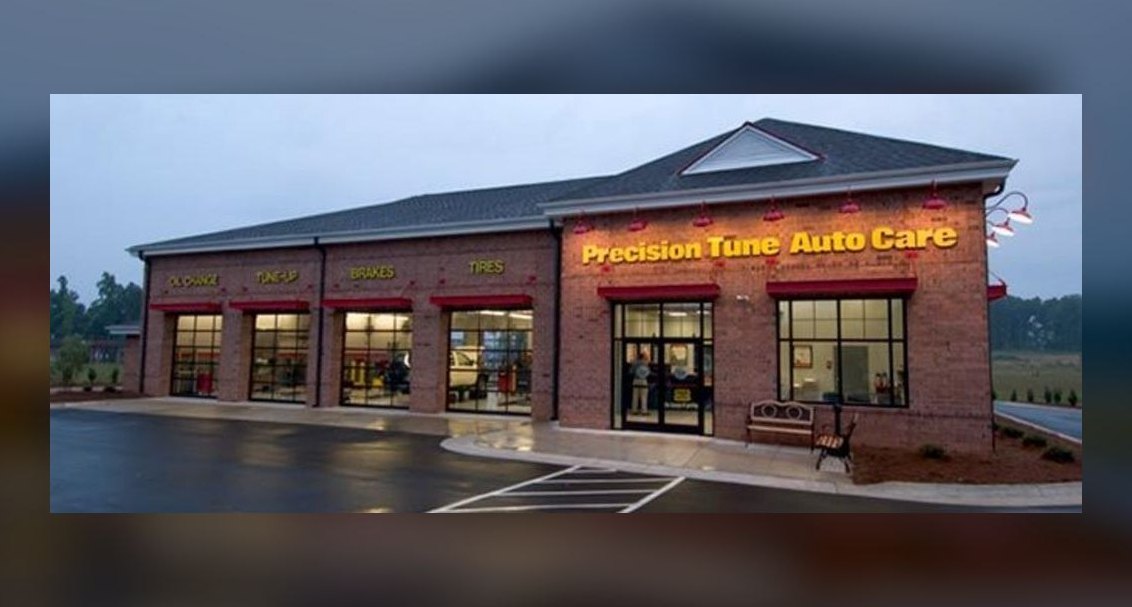 franchiseShould I open or buy a Precision Tune Auto Care franchise in 2027?
 franchiseShould I open a consignment sneaker shop or buy a Stadium Goods franchise in 2027?
 franchiseShould I open or buy a Cinnabon franchise in 2027?
 franchiseShould I open or buy a Rocky Mountain Chocolate Factory franchise in 2027?
 franchiseShould I open or buy a mobile franchise in 2027?
 franchiseShould I open or buy a franchise versus a licensing agreement in 2027?
 franchiseShould I open or buy a home care franchise versus an independent home care agency in 2027?