
Should I open a Tropical Smoothie Cafe franchise in 2027?
 Curated byKory White · Fractional CRO · Maryland
 PULSEKNOWLEDGE LIBRARY
Quality
Certified

Open a Tropical Smoothie Cafe franchise in 2027 only if you have roughly $150,000 liquid, an A-grade suburban site, and the willingness to run it yourself or as a disciplined multi-unit operator. The brand's health-forward menu and reported $1.1M+ average unit volume are real advantages, but absentee owners in average locations get crushed by rent and labor.
The scenario that decides this before you sign anything
Picture two people signing the same franchise agreement in the same month of 2027. Both pay the same ~$30,000 franchise fee. Both agree to the same ~6 percent royalty and ~3 percent brand-fund contribution. Both build out a roughly 1,400–1,600 square foot cafe. On paper, they bought the identical business. Eighteen months later one is producing enough cash to justify a second unit and the other is putting personal savings back into payroll.
The difference almost never comes from the brand. It comes from three variables that are set before the doors open and are nearly impossible to change afterward: the lease, the capital cushion, and whether the owner is physically in the building.
Operator A finds a second-ring suburban end-cap ten minutes outside the hottest retail corridor. Base rent runs about $5,500 a month plus roughly $1,400 in CAM. Combined occupancy lands near 8 percent of projected sales. Operator A works the counter five days a week for the first year, writes the schedule personally, and learns which two hours of Tuesday are overstaffed. Labor settles around 28 percent.
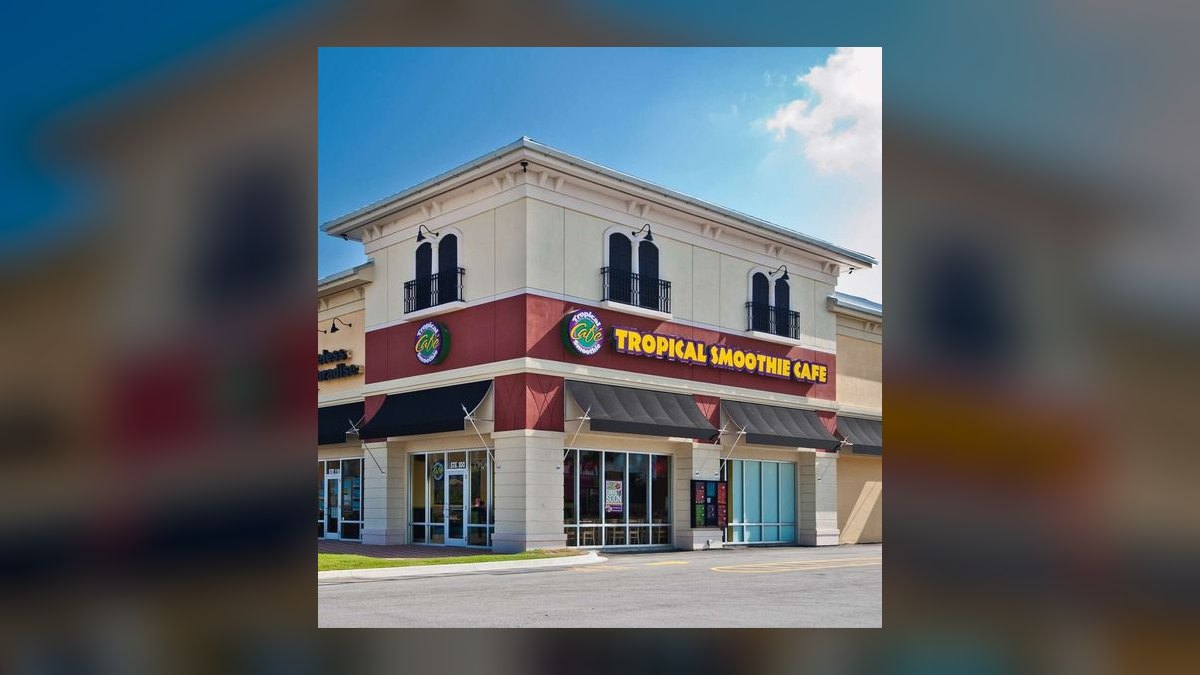
Operator B signs in the trophy center because the demographic report looked spectacular. Rent is $8,800 plus $1,900 CAM — north of 11 percent of sales. Operator B lives forty minutes away, hires a general manager at $62,000, and visits on Saturdays. Labor drifts to 33 percent because nobody is trimming the schedule in real time.
Run those two P&Ls at the same $1.05 million in revenue and the gap is not subtle. Operator A clears somewhere in the mid-teens at store level. Operator B is scraping low single digits before debt service, and debt service on a $500,000 SBA 7(a) note is real money every month. Same brand. Same menu. Same smoothie. Entirely different outcome.
That is the actual question you are answering when you ask whether to open a Tropical Smoothie Cafe franchise in 2027. You are not evaluating a brand. You are evaluating whether you can be Operator A.
The same logic applies to adjacent decisions in food franchising generally — a bowl concept, a coffee franchise, a fast-casual Mediterranean brand. The brand supplies the demand. The operator supplies the margin. Anyone selling you the opposite story is selling you something.
How the unit economics actually work, line by line
Fast-casual store economics are simple arithmetic with very little forgiveness. Revenue comes in at the register and through digital channels. Four large costs come out before you see anything: food, labor, occupancy, and franchise fees. What survives is store-level EBITDA, and that number — not top-line AUV — is what you actually own.
Start with revenue. A mature, well-sited Tropical Smoothie unit is commonly reported above $1.1 million in average unit volume. Treat that as a system-wide midpoint, not a promise. Top-quartile locations run materially higher; newer units, non-traditional units, and units in weak trade areas run lower. A new build typically needs 12 to 18 months to ramp toward mature volume, and your first-year model should assume something like 70 to 85 percent of the mature number.
Food cost in this segment realistically runs 28 to 32 percent of sales. Frozen fruit, protein powders, dairy alternatives, and produce for the wraps and flatbreads make up the bulk. The franchise purchasing cooperative gives you real leverage here — you are buying at scale you could never negotiate independently — but it does not immunize you against commodity swings. A bad harvest season in a major fruit-exporting region can push core input costs up 10 to 15 percent for a quarter. Sane operators plan for a $0.25 to $0.50 menu price lever they can pull without alienating regulars.
Labor is where 2027 gets uncomfortable. Many markets now sit at $16 to $18 an hour for quick-service roles, and you are not only competing with other restaurants — you are competing with retail, warehouse fulfillment, and gig platforms that offer more predictable hours. Model labor at 28 to 34 percent of sales depending on your local wage floor. On $1.1 million, that is roughly $308,000 to $374,000 a year. Turnover in this segment commonly runs 120 to 150 percent annually, which means recruiting and training are permanent line items, not one-time startup costs.
Occupancy should land at 8 to 10 percent of sales. Above that, the model stops working, and no amount of operational excellence fixes it. This is the single most irreversible number in the entire deal, because a lease is a decade-long contract signed on day one based on a revenue figure you have not yet earned.
Then royalties: roughly 6 percent of gross sales plus about 3 percent to the marketing fund. Nine points off the top, calculated on revenue, not profit. That is the standard trade for brand recognition, supply chain access, national advertising, and the app infrastructure. It is a fair trade — but it is not optional, and it does not scale down in a bad month.

Notice what the diagram makes obvious: every one of those four cost buckets is a percentage of revenue, which means they all scale up with your success. Growing sales does not automatically grow margin. Only fixing the cost percentages does that.
The real numbers you should be underwriting against
Here is the concrete 2027 picture for a single unit, drawn from the brand's franchise disclosure document and standard fast-casual benchmarks.
Capital in. Franchise fee around $30,000 for a single unit. Total initial investment roughly $295,000 to $660,000. That range is enormous, and the spread is almost entirely real estate and build-out. A second-generation restaurant space with usable infrastructure lands near the bottom; a cold shell in an expensive construction market lands near the top. Construction costs stayed elevated after the post-2024 run-up, so budget toward the upper half unless you have a specific reason not to.
Qualification thresholds. Expect a liquidity requirement in the neighborhood of $125,000 to $150,000 and a net worth requirement around $350,000 or above. Meeting the minimum is not the same as being adequately capitalized. The minimum gets you approved. Surviving an 18-month ramp with a slower-than-projected opening requires a cushion beyond it — plan on carrying six months of fixed costs in reserve after the store opens, not counting your build-out budget.
Ongoing fees. Royalty near 6 percent. Marketing near 3 percent. Both on gross sales.
Target margin. Disciplined operators aim for 15 to 20 percent store-level EBITDA after royalties. That target is achievable and it is also fragile: a four-point labor overrun and a two-point occupancy overrun together can take a 17 percent store to under 11 percent, which is roughly the difference between a business and a hobby with a payroll.
Financing. SBA 7(a) is the common path for food franchises, and Tropical Smoothie's presence on the SBA franchise directory streamlines lender review. Expect to put 20 to 30 percent down, personally guarantee the note, and pledge collateral. Run your debt-service coverage ratio at your conservative revenue case, not your optimistic one — lenders will, and you should beat them to it.
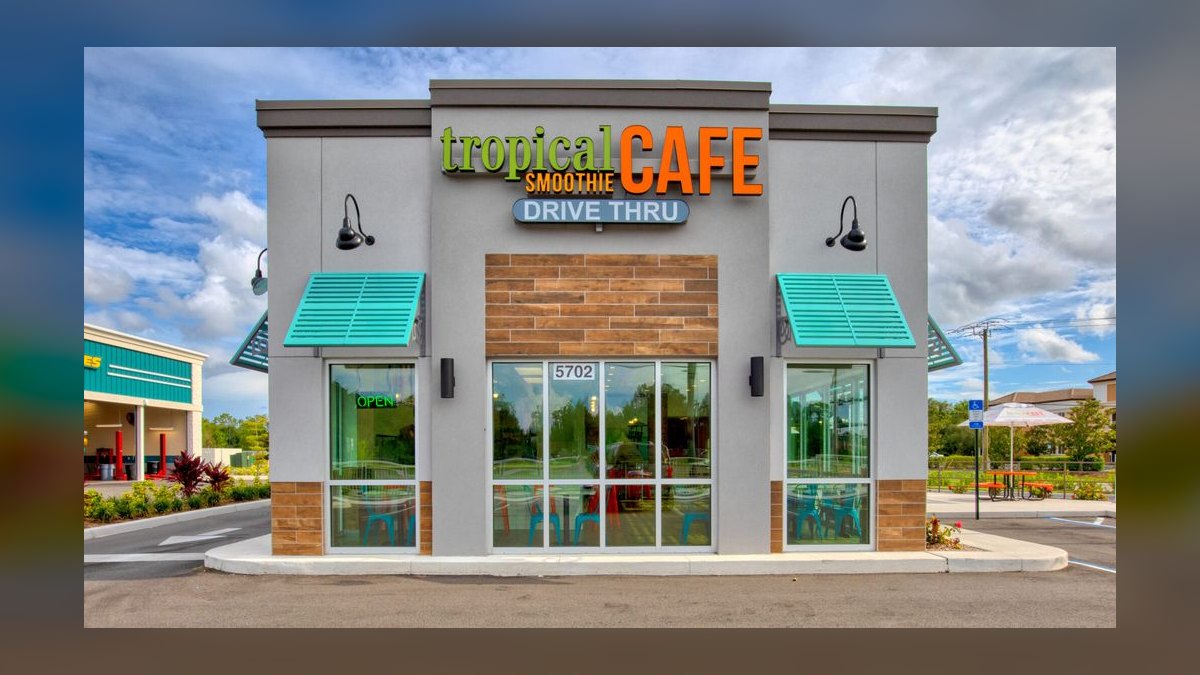
Digital mix. App and third-party delivery volume has been climbing across the whole segment. Plan for a meaningful and growing share of orders arriving digitally rather than at the counter. That changes your labor model: you need a functioning kitchen display system, a dedicated pickup shelf, and a lunch-rush staffing plan that assumes a queue you cannot see from the register.
The single most useful exercise before signing: build your pro forma twice. Once at system-average AUV with best-case costs, and once at 80 percent of system-average AUV with labor at 33 percent and occupancy at 10 percent. If the pessimistic model still services debt and pays you something, you have a deal. If the deal only works in the optimistic model, you do not have a deal — you have a bet.
And read Item 19 of the FDD carefully. Financial performance representations vary in what they include and exclude. An AUV figure that reflects only units open more than three years tells you very little about your first two years. Then call franchisees — not the ones on the referral list, but ten or twelve you find yourself in the disclosure document's franchisee roster, including at least two who left the system.

Trade-offs, alternatives, and the paths that are not a new build
Opening a new Tropical Smoothie unit is one of several ways to deploy the same capital, and it is worth being honest that it is not automatically the best one.
Buying an existing cash-flowing unit removes the single biggest risk in the whole equation: the ramp. You pay a multiple on proven earnings, typically somewhere in the range of two to four times store-level cash flow depending on lease terms and remaining franchise agreement length, and you skip the 12-to-18-month period where you are paying full fixed costs on partial revenue. The trade-off is that you inherit whatever is wrong with the store — a bad lease, a burned-out staff, a reputation problem in the trade area. Do a thorough transfer diligence and read the remaining lease term as carefully as you would read a new one.
Multi-unit area development — signing for three to five cafes — is where franchise economics genuinely improve. You amortize a district manager across multiple stores, you gain negotiating weight with landlords, you build a real internal promotion pipeline, and you can move a strong shift lead from a slow store to a busy one. The trade-off is that a 3-to-5 unit commitment locks you into a development schedule, and if unit one underperforms you are still contractually obligated to open unit two. That obligation has ended more franchisees than any single bad location.

Non-traditional locations — hospital cafeterias, college campuses, travel plazas — usually come with lower build-out because the landlord provides the shell and existing infrastructure. Foot traffic is captive. The trade-offs are meaningful: percentage rent structures are typically higher, operating hours may be dictated by the host institution, and volumes tend to run lower than a strong freestanding suburban unit. Lower ceiling, lower floor, less capital at risk. If you can negotiate a shorter initial term with options, it is a defensible way to test an operating model.
Adjacent categories entirely. Service franchises — home services, pet care, fitness — generally carry lower labor intensity and dramatically lower occupancy cost, because a van-based or small-footprint business does not need an A-grade retail lease. Margins per revenue dollar can be higher. What you give up is the walk-in demand a food brand generates for free; service franchises require you to build demand through sales and marketing, which is a different skill set. If your genuine advantage is operations and hospitality, food fits. If your advantage is sales, a service concept may fit better.
Where operators actually lose money, and how to avoid it
The failure modes in this business are boringly consistent. None of them are exotic.
Signing the lease emotionally. The most expensive mistake available to you happens before you sell a single smoothie. Landlords and brokers are skilled at selling a corridor. Do your own traffic counts at three different times of day on three different days. Verify daytime population within a one-mile radius yourself — you want meaningful daytime employment density from office parks, medical campuses, or schools, plus a residential base with household income high enough to support a $9 smoothie as a habit rather than a treat. The franchisor's real estate team is helpful and genuinely wants you to succeed, but they are not the one signing a ten-year personal guarantee.
Underwriting to averages. System average AUV is a statistical artifact. Your store will do what your trade area, your execution, and your hours support. Build the model on your rent, your wage floor, your projected volume. Never use a system average as a plug for a number you have not researched.
Being undercapitalized at exactly the wrong moment. The classic pattern: build-out runs 15 percent over, opening slips six weeks, and the operator enters month one with no reserve. Now every operational decision is driven by cash panic — understaffing the lunch rush, skipping local marketing, deferring equipment maintenance. Each of those saves a little cash this month and costs revenue for the next two years. Reserve is not optional capital; it is operating capital.
Treating labor as a fixed cost. Labor is the only major expense line you can move weekly. Operators who write the schedule from last week's actual hourly sales data, rather than copying last month's template, routinely run two to four points better than peers. That is $22,000 to $44,000 a year on a $1.1 million store — often the entire difference between a good year and a flat one. Use a real scheduling tool, not a spreadsheet, and read the hourly sales report every single week.

Ignoring the digital channel. Franchisees who skip app promotions and loyalty integration reliably lag peers on same-store sales. The system provides the technology; execution is on you. Configure the kitchen display properly, staff a dedicated expediter during the lunch peak, and keep the pickup shelf organized. A digital order that sits eight minutes on a shelf produces a one-star review that costs you far more than the labor hour you saved.
Letting turnover become a permanent tax. With segment turnover commonly running 120 to 150 percent, you will always be hiring. The countermeasure is a promote-from-within pipeline: identify a shift lead in month three, train them deliberately, and give them a reason to stay. Replacing an hourly employee costs real money in training hours and lost throughput. Replacing a general manager costs vastly more and can flatten a store for a quarter.
Confusing brand tailwind with personal outcome. Health-forward positioning is a genuine advantage. Consumer demand has shifted toward protein, fiber, and lower sugar, and Tropical Smoothie's wraps, bowls, and smoothie lineup sit on the right side of that shift compared with fried-food QSR. That tailwind raises the ceiling for the whole system. It does not raise the floor for a badly sited, badly staffed store. Category tailwinds help good operators more than they rescue bad ones.
Related questions
How long until a new Tropical Smoothie Cafe breaks even?
Plan for 12 to 18 months to approach mature volume, with cash-flow breakeven often landing somewhere in the middle of that window for a well-sited unit. Weak locations may never get there. Hold six months of fixed costs in reserve past opening.
Can I own a Tropical Smoothie franchise while keeping my day job?
Rarely well, at least in year one. The economics depend on tight weekly labor control and hands-on local marketing. If you must be absentee, budget a $55,000–$70,000 general manager plus bonus and accept several points of margin as the cost.
Is a smoothie franchise more seasonal than other fast-casual concepts?
Yes, somewhat. Warm-weather months typically outperform, and northern markets see a wider seasonal swing than southern ones. Food and wrap sales soften the curve. Model your slowest quarter, not your average quarter, when sizing your working capital reserve.
What should I ask existing franchisees before signing?
Ask for actual labor and occupancy percentages, first-year revenue versus projection, how long build-out really took, and what they would do differently on their lease. Ask specifically whether they would sign again — the hesitation before the answer is informative.
Does a 3-to-5 unit area agreement actually improve returns?
It can, through overhead leverage and management depth. But it also commits you to a development schedule regardless of how unit one performs. Only sign multi-unit if you can fund the second store from reserves without depending on the first store's cash flow.
FAQ
What is the total investment needed to open a Tropical Smoothie Cafe franchise?
Roughly $295,000 to $660,000 in total initial investment, including a franchise fee near $30,000. The spread is driven almost entirely by real estate and build-out — a second-generation restaurant space costs far less to convert than a cold shell, and construction costs remained elevated heading into 2027.
How much revenue does a Tropical Smoothie Cafe generate?
Reported average unit volume for established cafes runs above $1.1 million, with top-quartile units materially higher and newer or non-traditional units lower. Revenue is not earnings, though — food, labor, occupancy, and the roughly 9 percent in combined royalty and marketing fees come out before you see anything.
Do I need to work in the store to succeed?
The strongest results come from owner-operators or multi-unit developers with real management depth. Absentee ownership in food franchising is possible but expensive: you pay a general manager, you lose the weekly labor discipline that comes from being present, and you typically surrender several margin points.
How much liquid capital do I need to qualify?
Expect a liquidity requirement around $125,000 to $150,000 and net worth near $350,000 or above. Treat those as approval thresholds rather than adequacy thresholds — you also want six months of fixed operating costs in reserve after the store opens.
What kind of location performs best?
High-traffic suburban sites with strong daytime population — office parks, medical campuses, schools, gyms — and a residential base with solid household income. Occupancy cost should land at 8 to 10 percent of projected sales; above that, the unit economics deteriorate quickly regardless of execution quality.
Is 2027 a good year to open one?
For the right operator, yes. Health-forward demand and a growing digital order mix are genuine tailwinds. Elevated construction costs and wage pressure are genuine headwinds. Secure the site and the capital cushion first — the brand is the easy part of this decision.
Sources
- https://www.sba.gov/funding-programs/loans/7a-loans
- https://www.ftc.gov/business-guidance/resources/consumers-guide-buying-franchise
- https://www.franchise.org/
- https://www.qsrmagazine.com/
- https://www.restaurantbusinessonline.com/
- https://www.nrn.com/
- https://www.bls.gov/oes/current/oes353023.htm
- https://www.franchisetimes.com/
- https://www.tropicalsmoothiecafe.com/franchise/
Related on PULSE
- [Should I open or buy a Tropical Smoothie Cafe alternative — Frutta Bowls — franchise in 2027?](/knowledge/fr0384)
- [Should I open or buy a Tropical Smoothie Cafe franchise in 2027?](/knowledge/fr0009)
- [Should I open or buy a Pollo Tropical franchise in 2027?](/knowledge/fr0085)
- [Best smoothie and juice-bar franchises to buy in 2027](/knowledge/fr1123)
- [Should I open or buy a Smoothie Factory franchise in 2027?](/knowledge/fr0415)
- [Should I open or buy a Planet Smoothie franchise in 2027?](/knowledge/fr0346)
This page will be disappearing soon. Save it to your device for $1 — or read it free while it is here.
@Kory-White- · if Venmo asks, the last 4 of my number are 2012
This page is gone.
This one is off the shelf now. $1 keeps it on your phone for good — the whole page, pictures and diagrams included.
 franchiseShould I open or buy an Andy’s Frozen Custard franchise in 2027?
 franchiseShould I open or buy a Realty ONE Group franchise in 2027?
 franchiseWhat is the step-by-step process for buying an existing franchise resale instead of building a new location in 2027?
 franchiseShould I open or buy a Marco's Pizza franchise in 2027?
 franchiseShould I open or buy a Taco Bell franchise or open an independent sandwich shop in 2027?
 franchiseShould I open or buy a Public Storage franchise in 2027?
 franchiseShould I open or buy a Whataburger franchise in 2027?
 franchiseShould I open or buy a Jet’s Pizza franchise in 2027?
 franchiseShould I open or buy a K9 Resorts Luxury Pet Hotel franchise in 2027?
 franchiseShould I open or buy a Shake Shack franchise or open an independent sandwich shop in 2027?