
How far in advance should you send out invitations for a family reunion in 2027?
 Curated byKory White · Fractional CRO · Maryland
 PULSEKNOWLEDGE LIBRARY
Send save-the-date notices for a 2027 family reunion 12 to 14 months ahead, and mail formal invitations 4 to 6 months before the event. For destination or holiday-weekend reunions, add two to three months to both windows. This gives relatives time to request leave, budget, and book travel.
A concrete scenario that frames the problem
Picture a family spread across four states and two countries. A cousin in Denver hears about the reunion in June 2027 only eight weeks before it happens. She has already used her vacation days, airfare has tripled, and her kids are in summer camp. She skips it. Multiply that by a dozen households and the reunion shrinks from sixty people to twenty-five, which changes the catering contract, the venue size, and the whole feel of the weekend.
Now run the same scenario with a fourteen-month runway. That cousin gets a save-the-date in early 2026, blocks the week, sets aside $600 in a travel fund, and books a $280 flight instead of an $840 one. Multiply that by a dozen households and you get a full reunion with predictable headcount, which lets the organizer lock a block of hotel rooms and negotiate a group rate. The difference between those two outcomes is not effort or budget. It is calendar discipline, and it starts with how far in advance you send invitations.
The reason this matters more for 2027 than for a generic year is that 2027 is an ordinary calendar year with no major global travel disruption expected, which means the constraint is not external chaos. It is the normal competition for prime weekends: graduations, weddings, youth sports nationals, and summer holiday travel. Families that plan early win those weekends. Families that plan late get whatever is left.

How the mechanism actually works
Sending invitations early is not one action. It is a sequence of three or four separate mailings, each with a different job. Treating them as one event is the most common planning error, because a single invitation sent nine months out either gets lost, gets forgotten, or forces people to commit before they know their work schedule.
The mechanism works like this. The save-the-date creates awareness and lets people protect the date. The formal invitation requests a decision and captures a headcount. The reminder catches the people who intended to respond and did not. The logistics packet delivers the practical details once the headcount is locked. Each stage has its own lead time, and the lead times stack backward from the event date.
Read that diagram backward and it becomes an action plan. If the reunion is in July 2027, the organizing committee should exist by mid-2025, the venue should be contracted by early 2026, save-the-dates should go out in spring or early summer 2026, formal invitations should mail between January and March 2027, RSVPs should close in April or May 2027, and the logistics packet should land in June 2027.

The reason the save-the-date window is so long is that it is competing against other people's vacation planning cycles. Many employers open vacation bidding in the fall for the following calendar year. If your save-the-date arrives after that bidding window closes, you have already lost the people with the least flexible jobs. Sending in the spring or early summer of 2026 puts your date in front of relatives before they commit their 2027 leave.
The reason the formal invitation window is shorter, four to six months, is that it asks for a decision. Send it too early and people cannot answer honestly because they do not yet know their summer obligations. Send it too late and flights and hotel blocks are gone. Four to six months is the sweet spot where schedules are knowable and inventory still exists.
There is also a sequencing trap worth naming. If you send the formal invitation before the venue and date are truly locked, you will end up re-mailing corrections, and each correction erodes trust in the next mailing. Lock the contract first, then mail. Every mailing after that should reinforce the same date, not revise it.

Real numbers, ranges, and benchmarks
The table below summarizes the working windows that experienced reunion organizers converge on. These are planning ranges, not rules handed down by any authority, but they reflect how travel, leave, and budgeting actually behave.
| Milestone | Standard reunion | Destination or holiday weekend |
|---|---|---|
| Committee formed | 18-24 months out | 24 months out |
| Venue contracted | 12-15 months out | 15-18 months out |
| Save-the-date sent | 12-14 months out | 14-16 months out |
| Formal invitations mailed | 4-6 months out | 6-8 months out |
| RSVP deadline | 8-10 weeks out | 10-12 weeks out |
| Logistics packet | 3-4 weeks out | 4-6 weeks out |
| Final headcount to venue | 2-3 weeks out | 3-4 weeks out |
A few numbers behind those windows are worth understanding.
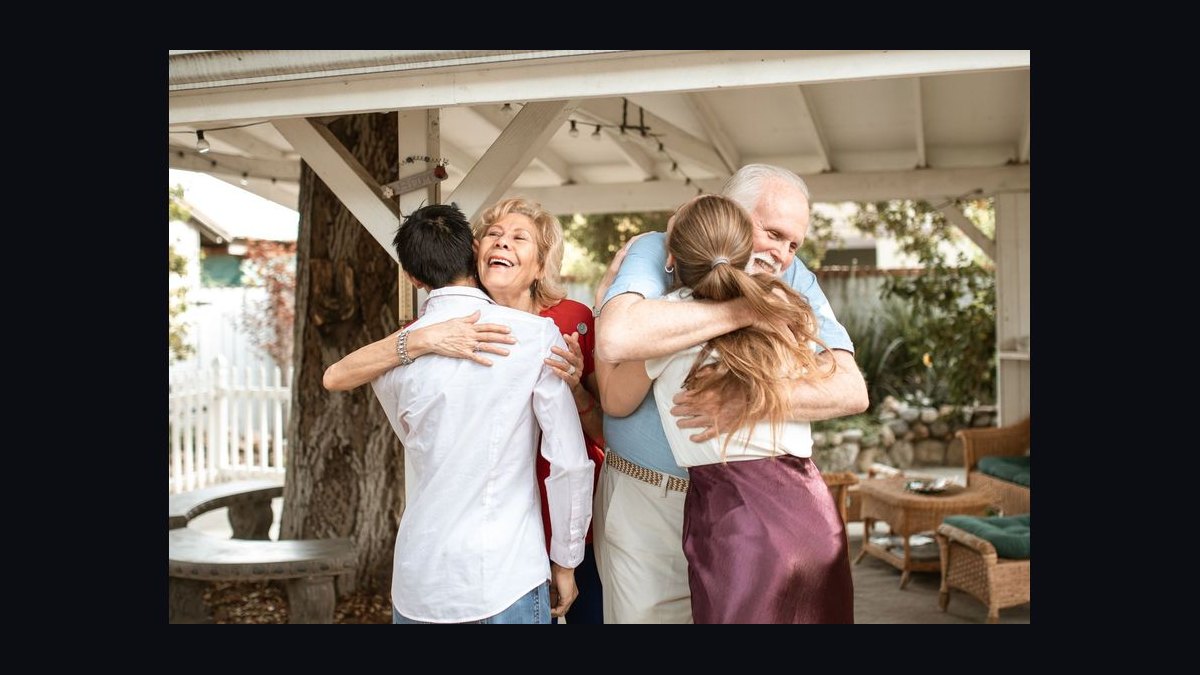
Airfare. Domestic airfare for a fixed summer date is typically cheapest when booked roughly two to four months out, and it climbs sharply inside the final six weeks. That is the single strongest argument for getting the formal invitation into people's hands by the four-month mark. If your relatives do not know the date until three months out, many of them are already buying at the expensive end of the curve.
Hotel room blocks. Hotels commonly release unbooked rooms in a group block 30 to 45 days before arrival. If your family has not booked by then, the block evaporates and latecomers pay rack rate or stay somewhere else. This is why the RSVP deadline should sit at least eight to ten weeks out, comfortably before the block release date.
Vacation bidding. Many large employers, school districts, and hospital systems open vacation selection in October or November for the following year. A save-the-date that lands before that window gives your relatives a fighting chance at the week they want.

Headcount accuracy. Caterers and venues typically want a guaranteed count 7 to 14 days before the event, and they charge for the guaranteed number whether or not those people show. Build a 5 to 10 percent buffer into your guarantee to absorb no-shows, and expect roughly 10 to 20 percent of invited households to drop out between the save-the-date and the event.
Response rates. A save-the-date alone typically produces no formal responses, which is fine. A formal invitation with a clear RSVP deadline and two reminder nudges usually converts 70 to 85 percent of reachable households. The remaining 15 to 30 percent require direct phone calls, and those calls should start the week after the RSVP deadline, not the week before the event.

Cost per household. For a typical three-day reunion with lodging and meals, budget $250 to $600 per adult and $100 to $250 per child, depending on whether lodging is a hotel, rental house, or campground. Telling relatives this range in the save-the-date, even roughly, dramatically improves attendance because it lets them start saving.
Trade-offs and alternatives
Long lead times are not free. They carry real costs, and a good organizer names them before committing.
The first trade-off is commitment fatigue. A family that receives a save-the-date fourteen months out, a formal invitation six months out, a reminder four months out, and a logistics packet three weeks out has received four pieces of mail about one weekend. Some relatives will find that excessive. The mitigation is to make each mailing genuinely different in content, not a repeat of the same information, and to keep the early ones short. A save-the-date can be a single card with the date, city, and a one-line note. It does not need a full itinerary.

The second trade-off is premature specificity. The further out you mail, the more likely something changes. Venues get rebooked, prices shift, a key family member's health changes. If your save-the-date promises a specific hotel at a specific rate, you own that promise for fourteen months. The mitigation is to commit only to the date and the metro area early, and hold specific venues, rates, and schedules for the formal invitation.
The third trade-off is the cost of multiple mailings. Four mailings to eighty households is real money, plus postage, plus the labor of chasing addresses. A common alternative is to send the save-the-date by email and text, then mail only the formal invitation and the logistics packet. Digital save-the-dates cost nothing and reach people faster, but they get buried in inboxes. The strongest pattern is a hybrid: digital save-the-date for speed, physical formal invitation for weight, digital reminders for follow-through.
The fourth trade-off is early commitment versus flexibility. Asking people to RSVP six months out maximizes your planning accuracy but forces them to decide before they know their summer. A workable compromise is a two-stage RSVP: ask for a soft yes or no at the formal invitation stage, then a hard confirmation at the eight-to-ten-week mark. The soft count drives venue and lodging decisions. The hard count drives catering.

The fifth trade-off is inclusion versus logistics. A long lead time lets you invite extended branches of the family, but every additional household adds coordination load. Some organizers split the difference by holding a smaller core weekend for immediate family and a larger one-day gathering for the extended clan, each with its own mailing schedule.
Common pitfalls and how to avoid them
Pitfall: sending everything at once, very early. A single mega-invitation mailed twelve months out feels thorough but fails, because most recipients cannot act on it. They cannot book flights a year out, they do not know their leave, and the invitation gets filed and forgotten. Fix: split into save-the-date and formal invitation, and keep the early piece short.
Pitfall: sending too late because the venue is not locked. Organizers often wait for a signed contract before mailing anything, and the contract slips to eight months out. By then the save-the-date window is gone. Fix: send the save-the-date as soon as the date and city are firm, even if the venue is still being negotiated. Date and city are enough for people to plan around.

Pitfall: no RSVP deadline, or a soft one. "Let us know if you can make it" produces a permanent maybe. Fix: state a specific date, a specific method, and what happens if no response arrives. A line like "Please reply by April 15 using the enclosed card or the family group chat; we will assume no if we have not heard by April 22" is uncomfortable but effective.
Pitfall: chasing addresses at the last minute. Address collection is the single most common cause of late mailings. Fix: start the address audit at the same time you form the committee, eighteen to twenty-four months out, and assign one person to own it.
Pitfall: ignoring the 10 to 20 percent dropout. Organizers who plan catering for the full invited list overspend. Fix: plan the guarantee at 85 to 90 percent of confirmed RSVPs and keep a small contingency.

Pitfall: burying the cost. Relatives who do not know the cost cannot decide. Fix: include a rough per-person or per-household cost range in the formal invitation, and note whether deposits are required.
Pitfall: one channel only. A physical invitation reaches older relatives; a group chat reaches younger ones. Fix: send the formal invitation physically and follow up digitally, and keep a shared spreadsheet of who has responded.
Pitfall: forgetting the 2027 calendar itself. Check the specific weekend against school calendars, major holidays, and local events in the host city. A reunion that lands on a graduation weekend or a major festival will cost more and strand relatives in traffic. Fix: verify the date against at least three calendars before the save-the-date goes out.
Related questions
Should the save-the-date and the invitation be separate mailings?
Yes. Send the save-the-date 12 to 14 months out to protect the date, then the formal invitation 4 to 6 months out to capture the decision. Combining them forces an early commitment most relatives cannot make and wastes your best planning window.
What if the reunion is at a destination rather than a hometown?
Add two to three months to every window. Destination reunions require passports, flights, and rental cars, so send the save-the-date 14 to 16 months out and formal invitations 6 to 8 months out. Confirm passport validity early.
How do we handle relatives who never respond?
Set a hard RSVP deadline, send two reminders, then call the non-responders directly the week after the deadline. Treat silence as a no for planning purposes, but keep the door open for late additions if the venue allows.
Is a digital invitation acceptable for a family reunion?
Yes, especially for the save-the-date. A hybrid approach works best: digital save-the-date for speed and cost, physical formal invitation for weight and formality, and digital reminders for follow-through.
When should we collect money from relatives?
Collect deposits when the formal invitation goes out, 4 to 6 months ahead, and final balances 4 to 6 weeks before the event. Early deposits fund venue and lodging commitments and reduce no-shows.
FAQ
How far in advance should you send out invitations for a family reunion in 2027? Send save-the-dates 12 to 14 months ahead, so spring or early summer 2026 for a summer 2027 reunion. Mail formal invitations 4 to 6 months ahead, roughly January through March 2027. Destination or holiday-weekend reunions should add two to three months to both windows.
What is the single most important mailing? The save-the-date. It is the piece that lets relatives protect the date before vacation bidding, camp registration, and flight booking begin. Everything else can be adjusted; a missed save-the-date window cannot be recovered.
How many reminders should we send? Two. One about three weeks before the RSVP deadline and one in the final week. After the deadline, switch to direct phone calls rather than more mass messages, which get ignored.
Does the size of the family change the timeline? Yes. Under thirty people, you can compress the formal invitation to about four months out. Over eighty people, extend to six months and add a dedicated RSVP tracker, because manual chasing at scale takes weeks.
What should the save-the-date actually contain? The date, the city, the general shape of the weekend, and a rough cost range. Nothing more. Specific venues, rates, and schedules belong in the formal invitation, once they are locked.
How do we avoid re-mailing corrections? Lock the date and city before the save-the-date, and lock the venue and rate before the formal invitation. Never mail a commitment you have not signed.
Sources
- The Knot — Wedding and Event Planning Timelines
- Emily Post Institute — Invitation Timing and Etiquette
- American Automobile Association (AAA) — Air Travel Booking Research
- U.S. Department of Transportation — Airline Consumer Guidance
- U.S. Bureau of Labor Statistics — Employee Benefits: Paid Leave
- National Park Service — Group and Event Planning Resources
- Centers for Disease Control and Prevention — Large Gathering Planning
Related on PULSE
- How to build a reunion budget that relatives will actually accept
- Choosing a reunion venue: hotel block versus rental house versus campground
- Running an RSVP tracker without losing your mind
- Planning a reunion for a family spread across multiple time zones
- Digital versus printed invitations: what gets the best response rate
- Building a reunion committee and dividing the work
This page will be disappearing soon. Save it to your device for $1 — or read it free while it is here.
@Kory-White- · if Venmo asks, the last 4 of my number are 2012
 pulse-recentThe 10 Best Affordable Corporate Retreat Venues Under $5,000 in 2027
 pulse-gatheringsThe 10 Best Maui Wedding Venues in 2027
 pulse-recentWhat is the first step in organizing a family reunion in 2027?
 pulse-gatheringsThe 10 Best Denver Wedding Venues in 2027
 pulse-recentWhat is the average per-person cost of a wedding venue in 2027?
 pulse-gatheringsThe 10 Best Santa Barbara Wedding Venues in 2027
 pulse-gatheringsThe 10 Best Mexico All-Inclusive Wedding Resorts in 2027
 pulse-gatheringsThe 10 Best Austin Wedding Venues in 2027
 pulse-recentHow many people attend the average family reunion in 2027?
 pulse-gatheringsThe 10 Best Phoenix Wedding Venues in 2027