

What is the easiest way to set up my first planted aquarium as a complete beginner in 2027?

The easiest beginner planted aquarium is a 10–20 gallon low-tech setup: an inert or aquasoil substrate, a basic LED light on a 6–8 hour timer, a gentle filter, and a heavy dose of fast-growing, undemanding plants on day one. Skip CO2, dose liquid fertilizer weekly, and stock fish only after cycling.
The 20-gallon kitchen-counter scenario
Picture the most common version of this project. Someone buys a 20-gallon long tank on sale, a hang-on-back filter, a heater, and a bag of gravel, then adds three plants and six fish the same afternoon. Two weeks later the water is cloudy green, the plants are melting into brown mush, and two fish are dead. Nothing about that outcome was bad luck — it was three predictable mistakes stacked on top of each other: no biological filtration established, not enough plant mass to compete with algae, and a light running twelve hours a day over a tank with almost nothing green in it.
Now picture the easy version of the same weekend. Same 20-gallon long, same budget, different order of operations. The substrate goes in first — either a commercial aquarium soil or plain inert gravel or sand with root tabs pushed underneath. The hardscape (a couple of pieces of driftwood, some stone) gets arranged while the tank is dry, because rearranging rock through eighteen inches of water is miserable. Water goes in over a plate or a plastic bag so the substrate isn't blasted into a cloud. Then — and this is the part beginners skip — the tank gets planted heavily on day one. Not three plants. Fifteen or twenty, mostly cheap fast growers.
The 20-gallon long (30" × 12" × 12") is arguably the ideal first planted tank because of its footprint. It's shallow enough that a modest light penetrates to the substrate, wide enough to create depth in an aquascape, and holds enough water that a mistake in dosing or temperature dilutes instead of spiking. A 5-gallon nano looks approachable and is actually harder: small water volumes swing fast, evaporation concentrates minerals, and a single overfed meal can crash the parameters. If someone insists on small, a 10-gallon is the practical floor.
The other quiet advantage of starting bigger is the stocking window. A 20-gallon supports a small school of ten to twelve nano fish plus a cleanup crew, which is a genuinely satisfying display. A 5-gallon supports a betta and some shrimp — lovely, but it doesn't give a new hobbyist the feedback loop of watching a functioning ecosystem. The tank that keeps people in the hobby is the one that looks alive within a month.

Budget check for that scenario, and these are broad ranges that shift by region and by whether you buy used: tank and lid roughly $40–90 new for a 20-gallon, LED light $40–150, filter $25–60, heater $20–40, substrate $25–70 depending on whether you choose aquasoil or inert gravel plus root tabs, hardscape $20–60, plants $40–90 for a heavy initial planting, and a liquid test kit around $30–40. Total for a well-equipped first tank lands somewhere near $250–450. The single best place to spend more is plants and light; the single best place to spend less is decor.
One more framing point before the mechanics. "Easiest" in a planted tank does not mean "least equipment." It means the fewest variables you have to actively manage. A low-tech tank with no CO2 injection has fewer failure modes than a high-tech one, but it earns that simplicity by requiring the right plant list. Choose plants that need injected CO2 and the low-tech setup becomes the hardest possible version of this hobby.
How a planted tank actually stabilizes
The mechanism underneath every healthy planted aquarium is a competition for nutrients between plants and algae, refereed by light and mediated by a bacterial colony that converts fish waste into something plants can use.
Fish and decaying food release ammonia. Ammonia is toxic to fish at very low concentrations — meaningful harm starts well under 1 ppm. Two families of bacteria, *Nitrosomonas*-type and *Nitrobacter*/*Nitrospira*-type, colonize every surface in the tank, especially filter media and substrate. The first group oxidizes ammonia into nitrite, which is also toxic. The second oxidizes nitrite into nitrate, which is far less toxic and, conveniently, is plant food. That chain is the nitrogen cycle, and establishing it before adding fish is the single most important thing a beginner does.
A fishless cycle takes roughly three to six weeks. The method: fill and plant the tank, run the filter and heater, then add an ammonia source — pure unscented ammonium hydroxide dosed to about 2 ppm, or a small pinch of fish food left to rot. Test every two or three days. You'll watch ammonia climb, then fall as nitrite climbs, then nitrite fall as nitrate appears. When the tank converts 2 ppm of ammonia to zero ammonia and zero nitrite within 24 hours, it's cycled. Do a large water change and stock lightly.
Heavily planted tanks can shortcut some of this, because plants consume ammonium directly and fast growers pull a surprising amount of nitrogen out of the water column. A densely planted tank with plenty of stems can sometimes take a light bioload after two weeks. But "can" is not "reliably will," and a $35 test kit is cheaper than replacing fish.
Light is the throttle on the whole system. More light means faster plant growth, which means higher demand for CO2 and nutrients. In a low-tech tank the CO2 supply is fixed — whatever diffuses in from the atmosphere and comes off fish respiration, typically around 2–3 ppm. Push light beyond what that CO2 level can support and plants stall while algae, which are far less picky, take the surplus. This is why "my light is too strong" is a real beginner problem and "my light is too weak" is usually just slow growth.
The practical translation: run the light 6–8 hours a day on a cheap outlet timer, not sunrise to bedtime. Consistency matters more than duration. If algae appears, the first lever is cutting the photoperiod by an hour or two, not buying an algaecide.
Substrate is the other half of the mechanism. Aquarium soils — the baked-clay products sold specifically for planted tanks — carry nutrients and have a high cation exchange capacity, meaning they hold fertilizer and release it to roots. They also typically leach ammonia for the first few weeks, which is fine during a fishless cycle and a problem if you stocked immediately. Inert substrates like pool filter sand or fine gravel carry nothing, so root-feeding plants need root tabs pressed into the substrate every three to four months. Both approaches work. Soil is easier for plants and messier to rescape; inert is cheaper and more forgiving of rearrangement.
Numbers that actually matter
Beginners drown in numbers, most of which don't matter. Here's the short list that does, with ranges rather than false precision.
Photoperiod: 6–8 hours daily. Start at 6. A siesta schedule (4 hours on, 3 off, 4 on) is a legitimate algae tactic in low-tech tanks, though a straight 7-hour block is simpler and works fine.
Light intensity: For low-tech, aim for something in the low-to-moderate PAR range at the substrate — roughly 15–40 µmol/m²/s. Most inexpensive planted-tank LEDs over a 12-inch-deep tank land in this window at 50–70% brightness. If your light has a dimmer, use it. Many algae problems are a full-blast light over an under-planted tank.
Temperature: 74–78°F (23–26°C) suits the overwhelming majority of community fish and plants. Running at the lower end slows metabolism, reduces bioload, and mildly increases dissolved oxygen. A 20-gallon typically needs a 50–75 watt heater; the rough rule is 3–5 watts per gallon depending on room temperature.
pH, KH, GH: For a first tank, use your tap water and stock fish suited to it. pH anywhere from 6.5 to 7.8 is workable. GH (general hardness) of 4–8 dGH suits most plants and community fish; very soft water may need remineralization for shrimp and snails to build shells. Do not chase pH with chemical adjusters — unstable pH kills far more fish than a stable "wrong" pH.
Nitrate: In a stocked planted tank, 10–30 ppm is a healthy working range. Zero nitrate in a planted tank often means plants are nitrogen-starved, which shows up as yellowing older leaves. Above roughly 40–50 ppm, increase water changes.
Water changes: 25–50% weekly for the first couple of months while the tank finds equilibrium, then many low-tech tanks settle into 25–30% every one to two weeks. Match temperature roughly and use a dechlorinator on tap water — chloramine, common in municipal supply, will damage the bacterial colony.
Fertilizer: An all-in-one liquid dosed weekly at the label rate is enough for most low-tech tanks. If you'd rather mix dry salts, the "estimative index" lean variant is a common low-tech approach. Root tabs every 3–4 months for heavy root feeders like swords and crypts in inert substrate.
Stocking: The old "one inch of fish per gallon" rule is crude but not useless as a ceiling. Better: add fish in groups over 6–8 weeks, testing after each addition. A 20-gallon might reasonably end at 10–12 small schooling fish, a small bottom-dweller group, and a cleanup crew of snails or shrimp.
Plant density at setup: This is the number nobody tells beginners. Plant at least 50–70% of the substrate footprint on day one. Under-planting is the single most reliable way to get an algae farm.
Beginner plant list, all low-light and undemanding: Java fern and Anubias (both attach to wood or rock — never bury their rhizomes), Cryptocoryne wendtii, Amazon sword, Vallisneria, Java moss, hornwort, water sprite, and any of the common stem plants like Bacopa or Hygrophila. Floating plants — duckweed's better-behaved cousins like frogbit or red root floaters — are a beginner's secret weapon: they shade the tank, soak up excess nutrients fast, and are trivially easy to remove by the handful.
Low-tech versus high-tech, and the honest trade-offs
The fork in the road for a complete beginner is whether to inject CO2. The honest answer for a first tank is no, and it's worth understanding why rather than taking it on faith.
Injected CO2 raises dissolved carbon from roughly 2–3 ppm to a target near 25–30 ppm. Plants grow dramatically faster, carpet species become viable, red plants color up, and the tank looks like the photographs that got you into this. The cost is that every other variable now has to keep up. Light must be higher, fertilizer must be dosed more heavily and consistently, trimming becomes a weekly chore rather than a monthly one, and CO2 itself is dangerous to fish if the regulator drifts or the solenoid fails overnight. A high-tech tank punishes a missed week; a low-tech tank barely notices.
There's a middle path worth knowing about: liquid carbon products (glutaraldehyde-based). They are not a CO2 substitute in any meaningful sense — the carbon contribution is minimal — but they do have algaecidal properties, which is why people report success with them against black beard algae. Treat them as a spot-treatment tool, not a growth strategy, and note that some plants (Vallisneria, some mosses) melt when exposed.
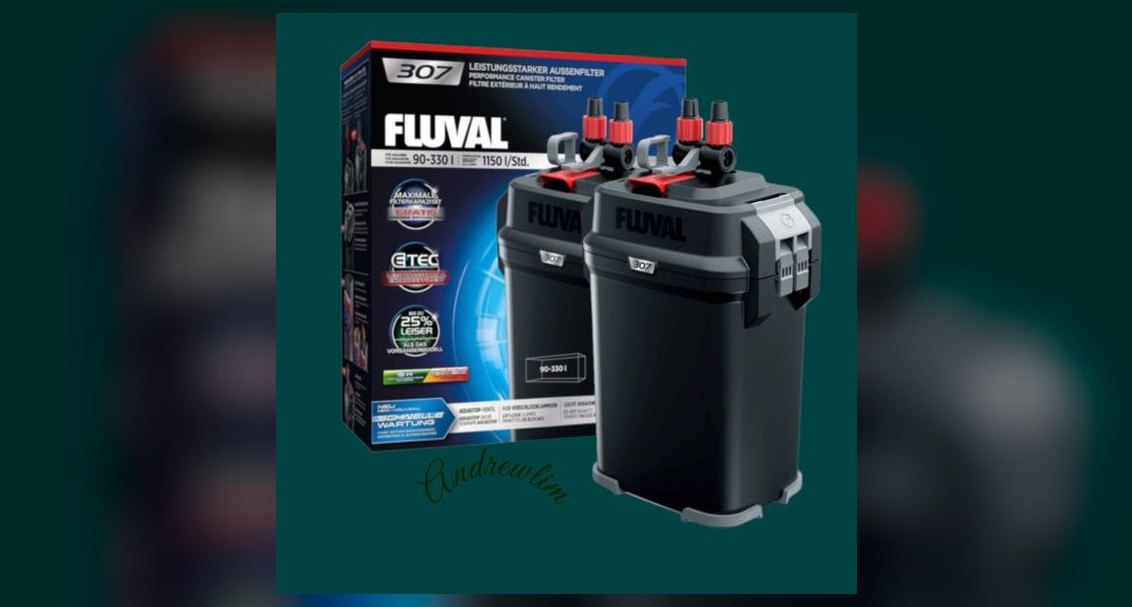
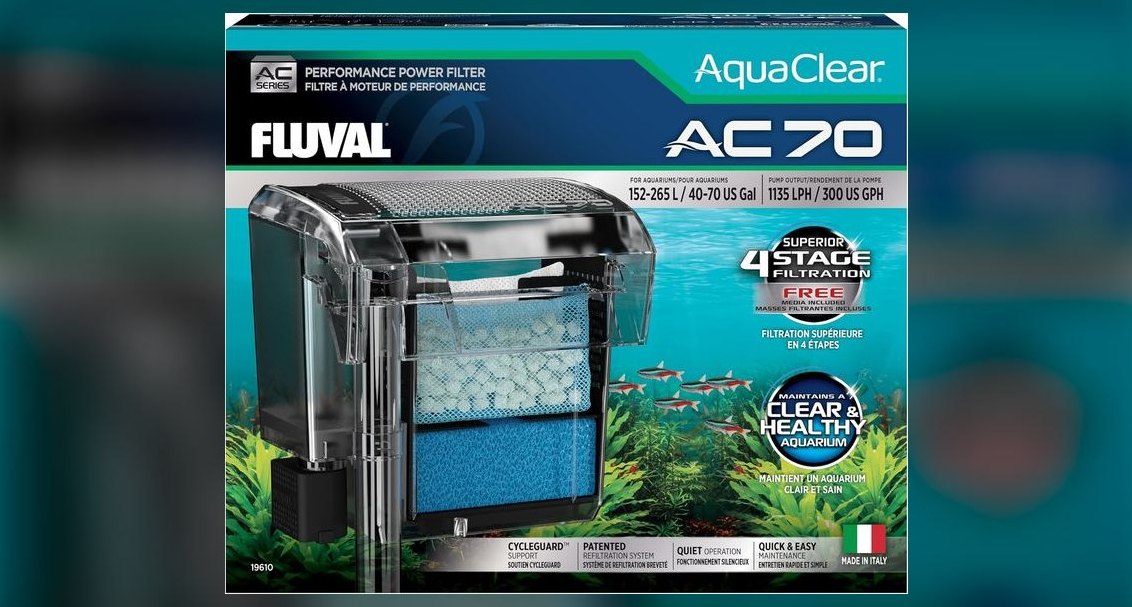
The equipment trade-offs follow a similar logic. Filtration: a hang-on-back filter is cheap, easy to service, and adds surface agitation — which is good for oxygen and bad for retaining CO2, irrelevant in a low-tech tank. A canister filter is quieter, holds more media, and hides the plumbing, at two to three times the price. A sponge filter is the cheapest, gentlest option and is genuinely excellent for shrimp tanks and heavily planted tanks where plants do much of the filtration work. For a first tank, a hang-on-back rated for slightly more than your tank volume is the path of least resistance.
Lighting trade-offs: a basic fixed-output LED with a timer will grow every plant on the beginner list. A programmable light with ramping and color control is nicer to look at and lets you dial intensity down when algae appears — genuinely useful, but not necessary. Avoid the very cheapest no-name fixtures with no published output; you can't dim what you can't measure.
Adjacent to all this, and worth mentioning because it changes the calculus: a Walstad-style dirted tank uses a thin layer of organic potting soil capped with inert sand, no filter, and often no heater. It is elegant, cheap, and low-maintenance once established — and it is not the easiest first tank, because the setup phase is fussy (soil must be mineralized or at least screened, the cap must be right, and the first two months can be turbulent). It's an excellent second tank. Similarly, a shrimp-only or snail-only planted tank sidesteps most bioload concerns and can be genuinely easier than a fish tank, at the cost of needing more stable water parameters for molting.

Where beginners actually go wrong
Stocking before cycling. Still the number one killer. The fix is patience and a liquid test kit. Test strips are convenient but notoriously imprecise for nitrite and ammonia; a drop-based kit costs a little more and lasts hundreds of tests.
Under-planting. Three plants in a 20-gallon leaves 90% of the nutrients unclaimed, and algae claims them. Buy more plants than feels reasonable. Tissue-culture cups are convenient and pest-free; potted plants are cheaper per stem; a bag of trimmings from a local hobbyist is cheapest of all and often the healthiest.
Burying rhizomes. Anubias and Java fern rot if their horizontal rhizome is under substrate. Tie or glue them to wood or rock with cyanoacrylate gel — the same superglue gel used everywhere in this hobby, which is aquarium-safe once cured.
Running the light too long or too bright. Twelve hours because it looks nice in the evening is an algae recipe. Use a timer, start at 6 hours, adjust up only if plants look leggy.
Overfeeding. Feed once daily, an amount consumed in under two minutes, and skip a day a week. Uneaten food is the largest avoidable ammonia source in most beginner tanks.
Panicking at melt. Nearly every plant sold emersed-grown — most crypts, many stems, most tissue culture — will drop its emersed leaves and regrow submersed ones. Crypts in particular can melt to nothing and come back in a month. Don't pull them.
Chasing parameters. Adding pH-down, buffers, and clarifiers to fix a two-week-old tank creates instability. The overwhelming majority of beginner problems resolve with time, water changes, and less light.
Cleaning the filter with tap water. Chlorine kills the bacterial colony living in the media. Rinse sponges in a bucket of removed tank water, and never replace all media at once.
New tank syndrome haze. A bacterial bloom — milky white water around days 3–10 — is normal and clears on its own. Resist the urge to do anything about it.
Buying fish that outgrow the tank. Common pleco, bala shark, and goldfish are all sold small and all wrong for a 20-gallon planted community. Research adult size before buying, and prefer nano schoolers, small tetras, rasboras, corydoras, and shrimp.
The meta-lesson is that a planted tank rewards doing less. Set it up correctly, plant it heavily, keep the light modest and on a timer, feed lightly, change water weekly, and then leave it alone. The hobbyists with the best-looking tanks are usually the ones who touch them least.
Related questions
Do I need CO2 injection for a beginner planted tank?
No. A low-tech tank with atmospheric CO2 grows Java fern, Anubias, crypts, Vallisneria, mosses, and most stem plants perfectly well. CO2 is for carpets, red plants, and fast results — all of which add maintenance and risk that a first tank doesn't need.
How long before I can add fish?
Typically 3–6 weeks with a fishless cycle. The tank is ready when it converts 2 ppm ammonia to zero ammonia and zero nitrite within 24 hours. Heavily planted tanks may be ready sooner, but test rather than assume.
What's the best substrate for a first planted tank?
Either aquarium soil (nutrient-rich, easier for plants, leaches ammonia early) or inert sand/gravel with root tabs (cheaper, more stable, easier to rescape). Both work. Choose soil if you want maximum plant growth, inert if you expect to rearrange.
Why are my new plants melting?
Most aquarium plants are grown emersed and must convert to submersed growth. Old leaves die back while new ones form, especially in Cryptocoryne. Keep conditions stable, don't remove the plant, and expect recovery within two to four weeks.
Can I use regular potting soil?
Only in a Walstad-style dirted tank, capped with an inch of inert sand or gravel, and only with plain topsoil containing no added fertilizers, wetting agents, or manure. It's a legitimate method but a fussier setup than a beginner needs.
FAQ
How big should my first planted aquarium be? Twenty gallons is the sweet spot — specifically a 20-gallon long, whose shallow 12-inch depth lets modest lighting reach the substrate while the wide footprint allows real aquascaping. Ten gallons is the practical minimum. Anything under 10 gallons swings in temperature and chemistry fast enough that small mistakes become fish losses, which is exactly what a complete beginner should avoid.
How many hours a day should the light run? Six to eight hours on an inexpensive outlet timer. Start at six. Longer photoperiods don't make plants grow proportionally faster in a low-tech tank because carbon, not light, is the limiting factor — the surplus light feeds algae instead. If algae appears, cut an hour before changing anything else.
Which plants are genuinely hardest to kill? Java fern, Anubias, Cryptocoryne wendtii, Vallisneria, Java moss, hornwort, and water sprite. All tolerate low light and no injected CO2. Java fern and Anubias attach to hardscape rather than rooting in substrate, so they work in any tank. Floating plants like frogbit are also nearly indestructible and actively suppress algae.
Do I need a special filter for a planted tank? No. A hang-on-back filter rated slightly above your tank volume is the easiest option. Sponge filters are cheaper and gentler, which suits shrimp and heavily planted tanks. Canisters are quieter and hold more media at higher cost. Plants themselves handle a meaningful share of filtration in a densely planted tank.
How much does a complete beginner setup cost? Roughly $250–450 for a well-equipped 20-gallon, spread across tank, LED light, filter, heater, substrate, hardscape, plants, and a liquid test kit. Ranges vary widely by region and by buying used. Spend more on light and plants; spend less on decorations and gadgets like clarifiers and algaecides.
What is the easiest way to avoid algae from the start? Plant heavily on day one, covering at least half the substrate footprint, and keep the light modest and timed. Algae is opportunistic — it colonizes nutrients and light that plants aren't using. A densely planted tank with a six-hour photoperiod rarely develops a serious algae problem.
Sources
- https://www.epa.gov/nutrientpollution/problem — EPA on nutrient pollution and algal growth drivers
- https://www.usgs.gov/special-topics/water-science-school/science/nitrogen-and-water — USGS Water Science School on the nitrogen cycle in water
- https://www.fisheries.noaa.gov/ — NOAA Fisheries, aquatic species and habitat information
- https://extension.psu.edu/ — Penn State Extension, water quality and aquaculture fact sheets
- https://www.aces.edu/ — Alabama Cooperative Extension System, aquaculture and pond/aquarium water quality resources
- https://www.fws.gov/program/aquatic-invasive-species — US Fish & Wildlife Service on aquatic invasive species (why never to release plants or fish)
- https://www.britannica.com/science/nitrogen-cycle — Encyclopaedia Britannica overview of the nitrogen cycle
- https://www.rspca.org.uk/adviceandwelfare/pets/fish — RSPCA fish welfare and husbandry guidance
- https://kb.osu.edu/ — Ohio State University Knowledge Bank, extension publications on water quality
Related on PULSE
- How to cycle a new aquarium without killing fish
- Low-light aquarium plants that survive beginner mistakes
- Choosing between aquasoil and inert substrate
- A practical guide to aquarium lighting and photoperiod
- Shrimp-only planted tanks: an easier alternative to fish
- Diagnosing and fixing common aquarium algae types
 pulse-petsTop 10 aquarium cycling methods 2027
 petsHow do I choose a pet insurance plan that covers hereditary conditions in 2027?
 pulse-petsTop 10 aquarium decor ideas 2027
 pulse-petsTop 10 Turquoise Rainbowfish 2027
 pulse-petsTop 10 fish swim bladder issues 2027
 pulse-petsTop 10 Hang-On-Back Aquarium Filters 2027
 petsTop 10 Cat Brushes for Long-Haired Breed Shedding Control in 2027
 petsTop 10 Aquarium Snake Species for Experienced Keepers in 2027
 petsTop 10 interactive cat toys for indoor enrichment in 2027
 petsTop 10 hypoallergenic cat breeds for allergy sufferers in 2027