


What is the RevOps playbook for partner deal registration conflicts during land-and-expand on Salesforce when no dedicated RevOps hire yet in 2027?
Quality
Certified

Without a dedicated RevOps hire, resolve partner deal registration conflicts during land-and-expand on Salesforce with a manual triage protocol: log every claim with a timestamp, apply first-touch-wins logic backed by three documents (registration date, first sales activity, first marketing touch), default to a 50/50 split when timing is ambiguous, and escalate unresolved cases within 48 hours.
What it is and why it matters
A partner deal registration conflict happens when more than one channel partner — or a partner and a direct sales rep — claims credit for the same account at the same moment in the deal lifecycle. In a land-and-expand motion this risk compounds: the partner who sourced the original "land" deal often assumes they own every future "expand" opportunity on that account, while the sales team assumes expansion work they personally drove (a new department adopting the product, an upsell to a bigger seat count) belongs to whoever closed it. Salesforce, as the system of record, has no native concept of "registration expiration" or "land vs. expand" — those are business rules your org has to build, and without a dedicated RevOps hire, nobody is naturally accountable for building them.
This matters for three concrete reasons. First, unresolved conflicts stall deals — a rep or partner who isn't sure they'll get credit slows down, and deals sit in "Negotiation" for weeks past their normal cycle time. Second, conflicts erode partner trust; a partner who loses a dispute without a documented, consistent rationale will deprioritize your product in favor of a vendor with clearer rules. Third, and most overlooked, unresolved conflicts corrupt your Salesforce data. If Primary_Partner__c, Partner_Registration_Status__c, or similar fields are inconsistently populated because nobody owns the resolution process, every downstream report — partner-sourced pipeline, channel ROI, comp calculations — becomes unreliable. RevOps work, in the absence of a RevOps title, is really just "who owns the field, the rule, and the report." Land-and-expand motions make this harder because the same account generates multiple opportunities over time, each one a fresh chance for a conflicting claim, and each one dependent on data hygiene set up months earlier during the original registration.

The playbook below is deliberately low-tech. It assumes a founder, sales leader, or ops-minded generalist — not a RevOps specialist — is running it part-time alongside other responsibilities, using only native Salesforce objects, fields, Flow (no-code automation), and a shared Slack channel or spreadsheet for the human judgment calls that can't yet be automated.
The step-by-step process
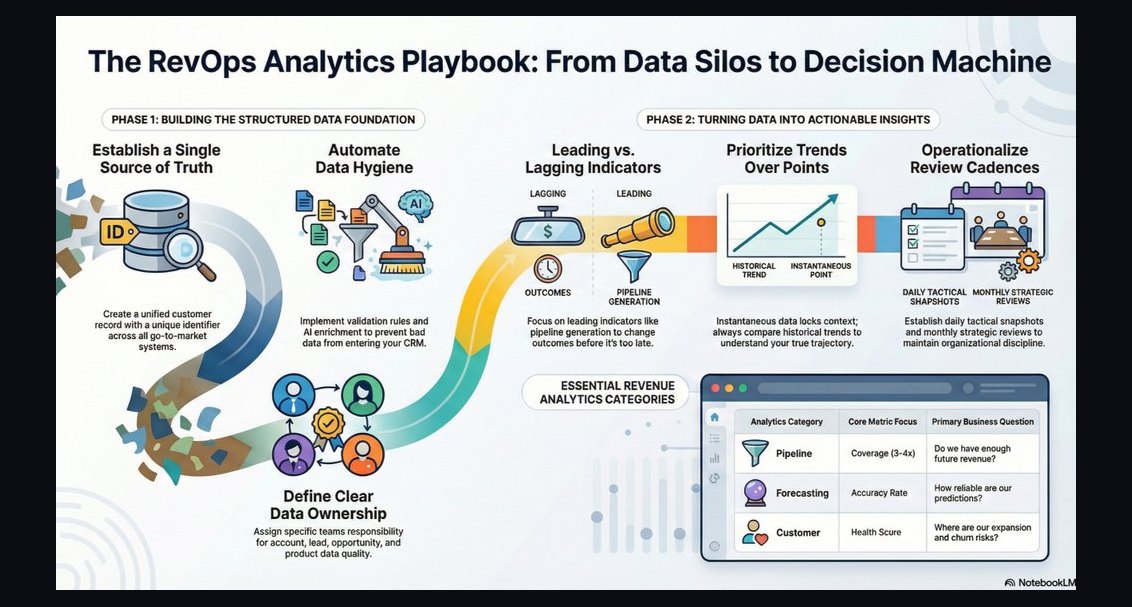
The process runs as a loop: audit what exists, define the rule, apply the rule manually until it's proven, then automate only the parts that are stable.
Step 1 — Field audit. Export every custom field on Opportunity and Account that touches partners: things like Partner_Registration_Status__c, Partner_Deal_ID__c, Primary_Partner__c, and Registration_Date__c. Run a report of Opportunities where the deal source is "Partner" but the registration field is blank — this single report typically surfaces a large share of partner-sourced deals that were never properly registered, which is a process gap, not a partner problem.

Step 2 — Build the conflict heatmap. Run a cross-object report for Accounts that have two open Opportunities tied to different partner IDs, or where Primary_Partner__c on the Account doesn't match the partner credited on a closed-won Opportunity. This heatmap tells you which accounts, reps, or partners generate conflicts repeatedly, so you fix the highest-frequency pattern first instead of trying to solve every case at once.
Step 3 — Apply the 24-hour hold. The moment a conflict is flagged — by a report, a partner email, or a rep complaint — move the Opportunity to a "Partner Conflict Review" stage (add this picklist value if it doesn't exist) and set a Conflict_Status__c field to "Under Review." This stops both sides from advancing the deal while it's disputed, which prevents the far worse outcome of a deal closing with unresolved credit and turning into a compensation dispute months later.
Step 4 — Run the three-document check. Pull the partner's date-stamped registration submission, the sales rep's first logged Activity on the account, and the account's first-touch attribution from your marketing automation or lead-source field. Whichever came first generally wins the claim. Document this rule once, in a short internal doc — "Partner Conflict Resolution Criteria" — so it's applied the same way every time rather than re-litigated per case.

Step 5 — Default to 50/50 when timing is ambiguous. If both parties have activity within the same short window (roughly the same week), split the revenue credit 50/50 using a Revenue_Split__c percent field on the Opportunity. This costs nothing in total booked revenue and avoids the "winner take all" dynamic that damages one of the two relationships every time.
Step 6 — Escalate what can't be resolved. Anything outside the documented rule goes to a one-page escalation form (Google Forms or Typeform is enough) capturing deal name, partner names, registration dates, rep name, and the specific disagreement. Set a 48-hour SLA with leadership; if no decision comes back in that window, the default falls back to the 50/50 split so deals never stall indefinitely.
Step 7 — Log the pattern. After every resolution, add one row to a running "Conflict Patterns" sheet: partner name, reason for the conflict, resolution, and date. After roughly 10-15 logged conflicts, patterns become visible — a specific partner who consistently registers after reps have already engaged, or a vertical where conflicts cluster — and those patterns tell you exactly which manual step to automate next.
Costs, timelines, and typical ranges
None of this requires new software spend if you're already on Salesforce — the fields, picklist values, Flow automations, Reports, and Dashboards used here are native to every edition that supports custom fields and Process Automation. The real cost is operator time, not license fees.

Initial setup — the field audit, conflict heatmap, and the first version of the resolution-criteria document — typically takes a single focused operator somewhere in the range of a few hours to a full day, depending on how many custom objects and legacy fields already exist. Building the "Partner Registration Window" date field, the required Partner_Deal_Type__c picklist, and a basic Flow that auto-assigns Primary_Partner__c when a registration window is still open is comparable no-code Flow work — typically an afternoon for someone comfortable with Salesforce's Flow builder, with no Apex or paid integration required.
Ongoing time cost is the more important number to plan around. Each individual conflict, once the three-document check and escalation form exist, should take roughly 10-15 minutes of hands-on review; the target resolution time from flag to decision is under 48 hours, with a stretch goal of under 5 business days average once the pilot period passes. A team running 5-20 sales reps against 3-10 active partners should expect this manual process to consume well under an hour of leadership time per week once the initial pattern-logging phase (the first 10-15 conflicts) is behind them.
A common registration-window length to start with is 90 days from the original registration date — long enough to cover a normal land-and-expand sales cycle, short enough that a partner can't claim credit on an account they haven't touched in over a year. Some teams extend this to 180 days for longer enterprise cycles; either way, pick one number, write it into the resolution-criteria document, and apply it consistently rather than negotiating it deal by deal.

This manual approach is explicitly a bridge, not a permanent state. It's appropriate while conflict volume is roughly under 10 partner deals in flight per month, or while resolution work is consuming under about 5 hours of sales leadership time weekly. Once volume or time cost exceeds that, the math starts favoring either a fractional RevOps consultant, a senior sales-ops hire, or a paid partner-management layer (tools like PartnerStack, Allbound, or Impartner sit on top of Salesforce specifically to formalize registration and conflict logic) — but none of that is required to run a clean version of this playbook at small scale.
Where teams get it wrong
The single most common mistake is automating before the manual process has been validated. Teams without a dedicated RevOps hire often jump straight to building a complex Flow or buying a partner-management tool before they've tested the three-document check and the 50/50 fallback on even a handful of real conflicts. The result is an automated system encoding a rule nobody has actually proven works, and reversing a bad automated rule is far more disruptive to partner trust than adjusting a manual one.
A second common failure is leaving the registration field optional. If Partner_Deal_Type__c or Partner_Registration_Status__c can be left blank at Closed Won, reps will leave it blank — not out of malice, but because filling it in isn't required and it's one more field in a busy pipeline review. A validation rule that blocks the stage transition to Closed Won until the field is populated is a small change that fixes a large share of the downstream reporting problem.

A third failure is letting partner registrations run forever. Without an expiration window, a partner who made a single introduction two or three years ago can still show up demanding credit on an expansion deal they had no role in. This is exactly what a 90-to-180-day Partner_Registration_Window_End__c field and a nightly scheduled Flow are for — expired registrations should clear automatically and notify the partner manager, forcing a deliberate re-registration decision rather than an indefinite standing claim.
A fourth failure is letting conflicts sit unresolved while the deal itself keeps moving. If there's no hard stage gate — no "Partner Conflict Review" status that actually blocks progression — deals close with the dispute still open, and the argument shifts from "who gets registration credit" to "who gets paid," which is a much harder and more expensive conversation to have after the fact. The 24-hour hold exists specifically to prevent this sequencing error.
A fifth, subtler failure is applying the resolution criteria inconsistently across partners. If Partner A's disputes are resolved by asking "did the rep touch the account first?" and Partner B's disputes are resolved by a different, unwritten standard, partners will notice — often by comparing notes with each other — and the perceived fairness of the whole program collapses. Writing the criteria down once, in a document every stakeholder can see, is a cheap fix for an expensive trust problem.
Decision framework: when to choose what

Not every organization needs the same depth of solution at the same time, and choosing the wrong depth wastes either time (over-automating too early) or credibility (under-automating past the point where it's stalling deals). Use conflict volume and time cost as the two variables that decide what to build next.
If you're seeing occasional, low-frequency conflicts — a handful a month — the manual triage protocol alone (24-hour hold, three-document check, 50/50 fallback, escalation form) is sufficient and appropriate; building automation at this volume is premature and will consume more setup time than it saves. If conflict frequency is increasing but leadership time spent resolving them is still modest, that's the signal to build the native Salesforce prevention layer — the registration-window field, the required Partner_Deal_Type__c picklist, and the auto-assignment Flow — since these are one-time builds using tools already licensed. If conflict volume crosses roughly 10 deals in flight per month, or resolution is consuming more than about 5 hours of leadership time weekly, that's the threshold where a fractional RevOps consultant, a senior ops hire, or a dedicated partner-management platform becomes the right next investment rather than adding more manual process on top of an already-strained system.
The through-line across every branch of this decision tree is the same: never automate a pattern you haven't seen resolved manually and consistently at least 10-15 times. The pattern log from Step 7 of the process above is what tells you which specific rule is safe to hand to a Flow, and which ones still need a human's judgment.
Related questions

What's the difference between deal registration and lead registration?
Deal registration protects a partner's claim on an active opportunity they're actively working; lead registration protects a claim on an early, unqualified prospect before real sales activity has started. Conflicts are far more common on the deal side because more stakeholders touch the account by then.
Should partner registration windows differ by deal size?
Many teams start with one fixed window (commonly 90 days) for simplicity, then split it by segment only after they have enough logged conflict data to justify the added complexity — starting simple avoids building rules nobody has validated yet.
Can Salesforce Flow fully automate conflict resolution without any human review?
Not reliably. Flow can automate assignment when the rule is unambiguous (an active registration window, one clear partner), but ambiguous timing conflicts still need a documented human judgment call, at least until a pattern has been proven stable across many resolved cases.
How do you compensate a rep who loses a registration dispute?
Most teams either preserve a smaller "assist" credit for the rep even when the partner wins full deal credit, or apply the same 50/50 split logic used for ambiguous timing — the key is writing the rule down before the first dispute, not deciding compensation case by case.
What happens to unresolved conflicts if leadership misses the 48-hour SLA?

The documented fallback is a 50/50 split by policy, applied automatically rather than left open — this is what prevents an unanswered escalation from stalling a deal indefinitely while everyone waits for a decision that never comes.
FAQ
What is the most common root cause of partner deal registration conflicts during land-and-expand? The most common root cause is the absence of a documented, enforceable rule for whether a partner's registration on the original "land" deal automatically extends to later "expand" opportunities. Without that written policy, reps and partners each assume a different scope, and the dispute is really a disagreement about an unwritten rule, not about the facts of who did what.
How can I start resolving these conflicts without a dedicated RevOps hire? Start with a field audit of your existing Salesforce partner-related fields, then define a small set of proof fields — registration date, first-activity date, first-touch source — and pilot the manual three-document resolution check on one partner segment before building any automation.
What Salesforce fields should I prioritize for tracking partner deal registration?

Prioritize the original registration date, a partner-role field distinguishing lead partner from co-sell partner, a "Land vs. Expand" flag on the Opportunity, and a registration-window expiration date (commonly 90-180 days) so stale claims expire automatically instead of persisting indefinitely.
How do I measure whether the new process is actually working? Track a single weekly metric — unresolved partner disputes older than 30 days, target zero — alongside average resolution time from flag to decision, targeting under 48 hours during triage and under 5 business days overall once the process is mature.
What is the biggest mistake companies make when designing this playbook? The biggest mistake is building Salesforce automation before validating the resolution logic manually. Teams that skip straight to Flow-based automation without first testing the three-document check on real, live conflicts end up encoding an unproven rule and then have to unwind it after it damages a partner relationship.
When should I consider hiring a dedicated RevOps person for this specifically? Consider it once you're running more than roughly 10 partner deals in flight per month, or once conflict resolution is consuming more than about 5 hours of sales leadership's time weekly — below that threshold, a fractional consultant or a senior ops-minded generalist running this exact playbook part-time is sufficient.
Sources
- https://help.salesforce.com
- https://www.partnerstack.com/blog
- https://www.allbound.com/blog
- https://impartner.com/blog
- https://www.gartner.com/en/sales/topics/revenue-operations
- https://www.leandata.com/blog
- https://www.salesforce.com/resources/articles/channel-sales
Related on PULSE
- What is the RevOps playbook for partner deal registration conflicts during full-cycle AE on Salesforce when no dedicated RevOps hire yet?
- What is the RevOps playbook for partner deal registration conflicts during channel co-sell on Salesforce when no dedicated RevOps hire yet?
- What is the RevOps playbook for partner deal registration conflicts during inbound SDR on Salesforce when no dedicated RevOps hire yet?
- How do you build a lead-routing policy in Salesforce without a dedicated RevOps hire?
- What fields should track partner attribution across a multi-touch land-and-expand account?
This page will be disappearing soon. Save it to your device for $1 — or read it free while it is here.
@Kory-White- · if Venmo asks, the last 4 of my number are 2012
This page is gone.
This one is off the shelf now. $1 keeps it on your phone for good — the whole page, pictures and diagrams included.
 revopsWhat is the RevOps playbook for partner deal registration conflicts during inbound SDR on Salesforce when sales on Outreach in 2027?
 revopsWhat is the RevOps playbook for partner deal registration conflicts during channel co-sell on Salesforce when sales on Outreach in 2027?
 revopsWhat is the RevOps playbook for partner deal registration conflicts during full-cycle AE on Salesforce when no dedicated RevOps hire yet in 2027?
 revopsWhat is the RevOps playbook for partner deal registration conflicts during channel co-sell on Salesforce when no dedicated RevOps hire yet in 2027?
 revopsWhat is the RevOps playbook for partner deal registration conflicts during inbound SDR on Salesforce when parent-company rollup reporting in 2027?
 revopsWhat is the RevOps playbook for partner deal registration conflicts during land-and-expand on Salesforce when sales on Outreach in 2027?
 revopsWhat is the RevOps playbook for partner deal registration conflicts during inbound SDR on Salesforce when no dedicated RevOps hire yet in 2027?
 revopsWhat is the RevOps playbook for partner deal registration conflicts during land-and-expand on Salesforce when parent-company rollup reporting in 2027?
 revopsWhat is the RevOps playbook for partner deal registration conflicts during channel co-sell on Salesforce when parent-company rollup reporting in 2027?
 revopsWhat is the RevOps playbook for partner deal registration conflicts during full-cycle AE on Salesforce when sales on Outreach in 2027?