


What's the best CPQ tool for B2B SaaS in 2027?
Quality
Certified

There is no single best CPQ tool for every B2B SaaS company in 2027 — the answer splits by seller count and pricing model. Under roughly 30 sellers with simple discounting, PandaDoc CPQ fits. Between 30 and 150 sellers, DealHub balances speed and depth. Past 150 sellers inside Salesforce, Salesforce CPQ wins by gravity. Usage-based billing points elsewhere entirely.
The real contenders, and what each one is actually good at
The CPQ category looks crowded from the outside and is genuinely narrow from the inside. Once you strip out the point solutions that call themselves CPQ but are really document-generation tools, and the billing platforms that get pitched as CPQ because they touch price, you are left with a handful of serious options and one adjacent flank that matters more every year.
Salesforce CPQ carries the Steelbrick lineage and the gravitational pull of the Salesforce ecosystem. Its actual advantage is not product quality — it is that when your opportunity object, your forecast, your territory model, your partner portal and your approval hierarchy already live in Salesforce, every non-Salesforce CPQ adds an integration surface that someone has to own forever. That integration tax is real and it compounds. The cost is the flip side: Salesforce CPQ implementations are the longest and most expensive in the category, the admin burden is ongoing rather than one-time, and the product-option/price-rule model rewards teams that have a dedicated CPQ admin and punishes teams that do not. Note also that Salesforce's own roadmap has shifted toward Revenue Cloud Advanced as the forward-looking product, which means anyone signing a multi-year Salesforce CPQ commitment in 2027 should ask direct questions about migration path and support horizon rather than assuming continuity.
DealHub is the tool most likely to be the right answer for a net-new mid-market buyer. Its differentiator is that it was built around guided selling rather than contract assembly — the rep experience is a configurator that asks questions and narrows to a bundle, not a form that assembles line items. It is also the rare CPQ that feels native in both Salesforce and HubSpot, which matters disproportionately for companies that have not fully committed to one CRM or that expect a migration in the next three years. Where it thins out is deep enterprise customization: if your quoting logic requires dozens of interdependent price rules, complex proration across amendment scenarios, and channel-tier pricing that varies by partner class, you will eventually hit the edge of what configuration alone can express.
PandaDoc CPQ is the honest SMB answer. Its rules engine is limited compared with the enterprise tools, and its strength is that reps actually open it. A quoting tool with 90% adoption and a modest rules engine beats a sophisticated tool with 40% adoption every single time, and CPQ adoption failures are far more common than CPQ capability failures. If your motion is a handful of SKUs, one or two discount tiers, and a quote that is mostly a price and a signature block, this is the correct choice and buying up-market is waste.

Conga CPQ (the Apttus lineage) still runs real workloads in large enterprises, but it wins very few greenfield bake-offs. If you are already on it, the calculus is a migration-cost question rather than a product-quality one. If you are not on it, the burden of proof is high.
Then there is the flank: Subskribe, Maxio, and the broader quote-to-revenue category. These are not traditional configure-price-quote tools — they are built around the assumption that price is a function of consumption over time rather than a number agreed once at signature. If your product meters API calls, compute, tokens, seats-plus-overage, or any hybrid of those, a classic CPQ will require you to bolt usage logic onto a system that fundamentally models static line items. That bolt-on is where budgets die.
One more thing worth naming: HubSpot's native quoting and product library has matured considerably. For a team under about 50 sellers running entirely inside HubSpot with a manageable SKU count, it is now genuinely plausible to defer a dedicated CPQ purchase for a year or more. That was a much weaker claim three years ago. The best tool is sometimes the one you already pay for.
When the honest answer is "not yet"
The most common CPQ mistake in B2B SaaS is not choosing the wrong vendor — it is buying at all, too early. CPQ is infrastructure, and infrastructure has carrying cost. Even the fastest serious implementation consumes weeks of RevOps capacity up front and then creates a permanent maintenance obligation: every new SKU, every packaging change, every promotional bundle, every discount policy revision has to be encoded by someone who understands the rules engine.

If your sales motion is fewer than three or four SKUs, fewer than three discount tiers, and fewer than ten sellers, a templated quote document plus a written discount policy plus a Slack approval channel will beat any CPQ on both cycle time and adoption. You will not have quote-accuracy problems at that scale because a human is reading every quote.
The signals that you have genuinely outgrown that setup are specific and observable:
- Quote errors are reaching closed-won. Not caught-in-review errors — errors that made it into a signed contract and then into billing. When finance is issuing credits because a quote had the wrong term length or a stale price, the manual system has failed.
- Approval latency exceeds a day. If a rep waits more than 24 hours for a discount decision, deals slip and reps start pre-negotiating around the process. Approval routing is one of the highest-ROI things CPQ does.
- Bundles vary by segment. The moment the right package for a mid-market prospect differs materially from the right package for enterprise, and reps have to remember which is which, you need a configurator.
- Finance flags quote-to-order inconsistency. Revenue recognition depends on structured contract data. If your quotes are documents rather than records, finance is reconstructing revenue schedules by hand.
- Amendments and co-terms are common. Mid-term upsells, co-terminated add-ons, and partial downgrades are where spreadsheet quoting collapses fastest, because each one requires proration math that nobody wants to do twice.
Until at least two of those are showing up weekly, the honest recommendation is to fix pricing governance instead. Write the discount matrix down. Define what each SKU includes. Decide who approves what. That work is a prerequisite for CPQ anyway — buying the tool first just means paying a vendor to encode an undefined process.
There is also a sequencing argument. Companies that implement CPQ after they have stable packaging spend far less on it, because the configuration work is a transcription exercise rather than a discovery exercise. Companies that implement during a repackaging cycle end up paying professional services rates to have consultants sit in pricing meetings.
How to decide between them

The decision is not a feature comparison — it is a sequence of forks, and the order of the forks matters. Pricing model comes first, because it can eliminate the entire traditional CPQ category before seller count or CRM ever enter the conversation. If you meter usage, the tools that model consumption natively are the shortlist, and a classic CPQ becomes at best a front end paired with a billing engine behind it.
Second fork: CRM commitment. If you are Salesforce-only and expect to stay that way for five years, the integration-tax argument pulls hard toward staying in-family. If you are on HubSpot, or you are honestly uncertain, the multi-CRM tools protect optionality that has real monetary value during a migration.
Third fork: seller count as a proxy for process complexity. Seller count is a crude measure, but it correlates well with the things that actually matter — number of approval stages, number of pricing exceptions per quarter, and whether you have a deal desk at all.
Fourth: whether you need guided selling or just quote-to-signature. This is the fork buyers skip and then regret. A team that wants the configurator to steer reps toward the right bundle is buying a different product than a team that wants a faster path to a signed PDF.
Run the forks in that order and most companies land on an answer in a single afternoon. Where teams get stuck is running them backward — starting with a vendor shortlist someone saw in an analyst grid, then reverse-engineering requirements to justify it. The shortlist should fall out of the forks, not the other way around.
One practical addition: whatever the forks produce, run a bake-off on your own worst quote. Not a demo scenario — the actual gnarliest deal your team closed last year, with the weird co-term, the three-way bundle, the multi-year ramp, and the partner discount. Vendors will happily configure a clean scenario. Handing all finalists the same real, ugly quote and timing how long each takes to build it is the single most predictive evaluation exercise available, and it costs nothing but a week.
What the numbers actually look like

Public pricing in this category is deliberately thin, and any specific per-seat figure you see quoted publicly should be treated as a starting point for negotiation rather than a rate card. What is more reliable, and more useful for budgeting, is the *shape* of the cost.
License cost is the smaller half. For traditional enterprise CPQ, implementation and services routinely exceed first-year license spend, sometimes by a multiple. For mid-market tools, services are a meaningful fraction of license rather than a multiple of it. For lightweight tools, services can be near zero because configuration is self-service. That ratio — services-to-license — is the single most useful number to ask each vendor for, and the one they are most reluctant to volunteer. Ask for it as a range across their last ten comparable customers, not as a quote for you.
Budget a multiplier, not a line item. A defensible planning rule for first-year total cost is somewhere between 1.5x and 3x annual license, depending on tier. Lightweight tools sit at the low end. Enterprise CPQ with channel pricing, multi-currency, and tax integration sits at the high end or beyond. If your finance team budgets license only, the project will be over budget in month three and the conversation becomes political rather than technical.
The recurring costs people forget:

- Tax and compliance. Multi-jurisdiction selling generally requires a dedicated tax engine alongside the CPQ. That is a separate vendor, a separate subscription, and a separate integration to maintain.
- E-signature. Some CPQ tools include it; others assume you bring your own. Check which, because it is a per-seat or per-envelope cost either way.
- Sandbox and environment management. Enterprise CPQ changes need a testing environment. In some ecosystems that is included; in others it is licensed.
- Admin headcount. The honest one. At mid-market scale, expect CPQ to consume a meaningful fraction of one RevOps person indefinitely. At enterprise scale with heavy price-rule logic, expect a dedicated admin. If you cannot name the person who will own it on day 90, you are not ready to sign.
- Change requests. Every packaging change is a configuration project. Teams that repackage annually should weight configurability far more heavily than teams with stable SKUs.
Timeline shape matters as much as cost. Lightweight quoting tools go live in weeks. Mid-market CPQ implementations run one to two months when the pricing taxonomy is already clean, and considerably longer when it is not. Enterprise CPQ programs run multiple quarters and behave like software projects — with scope, phases, UAT, and a change-management workstream. The variance is driven far more by the state of your pricing data than by vendor capability, which is why the pre-work matters so much.
What you should measure after go-live, so the investment is defensible at renewal: average quote-creation time, approval cycle time, percentage of quotes requiring rework, discount distribution by segment, and quote-to-close rate. Capture baselines *before* implementation. Teams that skip the baseline can never prove ROI and end up defending the tool on vibes when the CFO asks.
The three failure modes, and how implementation should actually sequence

Almost every CPQ project that goes badly fails in one of three ways, and none of them are vendor-selection problems.
Failure mode one: implementing before the pricing taxonomy is clean. CPQ is a downstream system. It encodes whatever pricing logic you hand it. If SKU definitions are inconsistent across marketing, sales, and finance, if bundle contents live in three different spreadsheets, and if the discount matrix is tribal knowledge held by two tenured reps, the CPQ will faithfully encode that mess — at consulting rates. A short, focused pricing audit before vendor selection has rescued more implementations than any amount of careful vendor evaluation. The audit output is boring and essential: one authoritative SKU list, one bundle definition per package, one discount matrix with named approvers per threshold, and a written policy for the exception cases.
Failure mode two: buying CPQ to enforce discipline the organization does not have. This is the most seductive one. Leadership sees reps discounting past policy, bundling unauthorized SKUs, and routing around approvals, and concludes that a system will impose order. It will not. Reps route around any tool that slows a live deal — they will build the quote in a side document, negotiate it verbally, and enter it into CPQ at the end as a compliance formality. CPQ amplifies the sales process you already run; it does not replace it. If the discount policy is not followed when it lives in a shared doc, it will not be followed when it lives in a rules engine. Fix the policy, the approval SLA, and the accountability first. Then the tool has something real to enforce.
Failure mode three: treating CPQ as a contract tool when you bought it for guided selling. The lowest-return deployments use CPQ as a more elaborate signature workflow — generate document, collect signature, done. The highest-return deployments treat it as a selling system: the configurator surfaces the right bundle for the segment, the rules engine nudges toward higher-attach products, and the approval step becomes a coaching surface where deal desk shapes deal quality instead of rubber-stamping. Mismatched intent predicts eighteen-month regret better than vendor choice does. Decide which product you are actually buying before you sign, and staff accordingly — guided selling needs someone who owns the selling logic, not just someone who owns the admin console.
The sequencing that avoids all three is unglamorous and works:

- Audit pricing. Produce the authoritative SKU list, bundle definitions, and discount matrix. Two weeks, RevOps plus finance plus product marketing.
- Write the approval policy. Thresholds, approvers, SLAs, and the escalation path. This is a business decision, not a configuration decision, and doing it in the tool is backwards.
- Baseline the metrics. Quote cycle time, approval latency, rework rate, discount distribution. You cannot prove improvement without a before.
- Bake off on your worst real quote. Same scenario, all finalists, timed.
- Pilot on one segment. One team, one product line, real deals. Fix what breaks before it becomes organizational.
- Roll out with enablement, not an email. Adoption is the whole game. A tool reps do not open produces zero return regardless of its rules engine.
- Wire the downstream handoff. Quote to order to billing to revenue recognition. This is where CPQ pays for itself in finance hours, and it is routinely deferred to "phase two" and then never done.
Where CPQ touches the rest of the RevOps stack
CPQ is rarely a standalone decision, and the adjacent systems determine how much value it delivers.
Upstream, it depends on the product catalog. Whoever owns SKU creation — product marketing, finance, or RevOps — becomes a dependency for every quoting change. Teams that leave catalog ownership ambiguous discover it during the first packaging launch, when nobody is accountable for getting the new bundle into the configurator before the campaign goes live. Name the owner during implementation.
Downstream, it feeds billing and revenue recognition. This is where the real finance ROI sits and where projects most often stop short. A quote that produces a structured order record — with term dates, ramp schedules, and line-level amounts — lets billing invoice without re-keying and lets finance build revenue schedules automatically. A quote that produces only a PDF leaves both teams doing manual reconstruction. If the implementation budget forces a cut, cut something else; this handoff is the payoff.

Sideways, it affects forecasting quality. Structured quote data makes pipeline math better: you know what is actually in each deal, what the discount looks like, and what the term structure implies for ARR versus billings. Sales leaders who have only opportunity amounts are forecasting a single number; sales leaders with quote line data are forecasting a composition.
Renewals and expansion are the underrated case. Most SaaS revenue after year one comes from renewal and expansion, and most CPQ evaluations focus entirely on new logo. Ask each vendor how amendments work: mid-term upsell with co-termination, partial downgrade at renewal, multi-year ramp with a mid-term add-on. These scenarios are where quoting systems either save the customer-success and renewals teams enormous time or quietly force them back into spreadsheets. A CPQ that handles new business beautifully and amendments poorly will disappoint you in year two, exactly when the renewal base becomes the bigger number.
Partner and channel motion changes the calculus entirely. If you sell through resellers, you need partner-tier pricing, deal registration, and margin protection logic. That capability is concentrated in the enterprise tools, and it is a legitimate reason to buy up-market earlier than seller count alone would suggest.
Finally, adjacent categories keep encroaching. Billing platforms are adding quoting. CRM vendors are strengthening native quoting. Contract lifecycle management tools overlap on the document and approval side. The practical implication for a 2027 buyer is to avoid long, inflexible commitments in a category with this much boundary movement, and to weight data portability — can you export your catalog, rules, and quote history in a usable form — more heavily than you would in a settled market.
Related questions
Does AI change the CPQ decision in 2027?
It changes the evaluation criteria more than the shortlist. Ask vendors what their AI features are trained on, whether recommendations are auditable, and whether a rep can see why a discount was suggested. Unexplainable pricing guidance creates governance problems that outweigh convenience gains.
Can we use CPQ without a deal desk?

Yes, but the approval routing carries more weight. Without a deal desk, approvals fall to sales managers who are optimizing for their own numbers. Define thresholds tightly and review discount distribution quarterly, or approvals become automatic in practice.
How do we migrate off a CPQ we regret?
Export the catalog, rules, and historical quotes first — portability is where migrations stall. Run both systems in parallel for one quarter on new deals only, keeping amendments on the legacy system until the renewal base rolls over naturally.
Should the CPQ or the billing system own pricing truth?
The catalog should have one source of truth, usually whichever system finance trusts for revenue. Sync one direction, never bidirectionally. Two systems both claiming authority over price produces reconciliation work that never ends.
What headcount does CPQ require ongoing?
At mid-market scale, a meaningful fraction of one RevOps person indefinitely. At enterprise scale with complex price rules, a dedicated admin. If nobody is named as owner before signing, the configuration decays within two quarters and reps route around it.
FAQ
How do we know whether we are ready to buy CPQ at all?
Look for observable symptoms rather than a revenue threshold: quote errors reaching signed contracts, approval decisions taking more than a day, bundles that differ by segment, finance reconstructing revenue schedules manually, or frequent mid-term amendments. Two or more of those appearing weekly means the manual system has failed. One occasional symptom means fix the process first.

Why does pricing taxonomy matter more than vendor choice?
Because CPQ encodes whatever logic you give it. Inconsistent SKUs, bundle definitions scattered across spreadsheets, and an undocumented discount matrix all get faithfully reproduced in the tool — at professional-services rates. Teams that clean the taxonomy first turn implementation into transcription. Teams that skip it pay consultants to run their pricing meetings.
Is it reasonable to stay on native CRM quoting instead?
For smaller teams with a manageable SKU count running entirely inside one CRM, yes — native quoting has matured enough to defer a dedicated purchase. Revisit when bundles start varying by segment, when approval routing needs multiple stages, or when amendment volume grows. Deferring is a legitimate decision, not a failure to invest.
How should we handle usage-based or hybrid pricing?
Traditional CPQ models static line items, so metered pricing requires bolting consumption logic onto a system that was not designed for it. Tools built around quote-to-revenue handle usage ingestion, overage, and consumption billing natively. If any meaningful share of revenue is metered, evaluate that category first rather than retrofitting a classic CPQ.
What is the single most predictive evaluation exercise?
Give every finalist the same real, difficult quote from your own history — the one with the co-term, the multi-year ramp, the multi-product bundle, and the partner discount — and time how long each takes to configure it. Demo scenarios are curated. Your worst real quote is not, and it exposes the rules-engine limits that matter.
How do we prove ROI at renewal?
Baseline before implementation: quote-creation time, approval cycle time, rework rate, discount distribution by segment, and quote-to-close rate. Without a before, the renewal conversation becomes a debate about impressions. With one, you can show cycle-time reduction and discount-leakage improvement in numbers finance accepts.
Sources
- https://www.gartner.com/reviews/market/configure-price-quote-application-suites
- https://www.g2.com/categories/cpq
- https://www.salesforce.com/products/revenue-cloud/
- https://help.salesforce.com/s/articleView?id=sf.cpq_overview.htm&type=5
- https://www.dealhub.io/
- https://www.pandadoc.com/cpq-software/
- https://conga.com/products/conga-cpq
- https://www.forrester.com/blogs/category/configure-price-quote-cpq/
- https://knowledge.hubspot.com/quotes/create-and-manage-quotes
- https://www.trustradius.com/cpq
Related on PULSE
- How do you choose a CPQ tool in 2027?
- How is AI changing CPQ and deal pricing in 2027?
- What is DealHub and why is it a hot RevOps CPQ and quote-to-revenue platform for 2027?
- For a founder-led B2B SaaS org scaling from $5M to $25M ARR, what's the clearest signal that the founder should hire RevOps instead of doing a full CPQ overhaul — and when does it switch the other way?
- What's the core tension between founder pricing authority and CFO/FP&A governance in a growing B2B org — and how do you structure CPQ so both stakeholders feel they own the output?
- How do you design a RevOps control tower for GTM alerts that catches co-term renewals with partial downgrades before weekly commit calls?
This page will be disappearing soon. Save it to your device for $1 — or read it free while it is here.
@Kory-White- · if Venmo asks, the last 4 of my number are 2012
This page is gone.
This one is off the shelf now. $1 keeps it on your phone for good — the whole page, pictures and diagrams included.
 revopsWhat are UConn Huskies men's basketball's 2027 NIL needs and strategy?
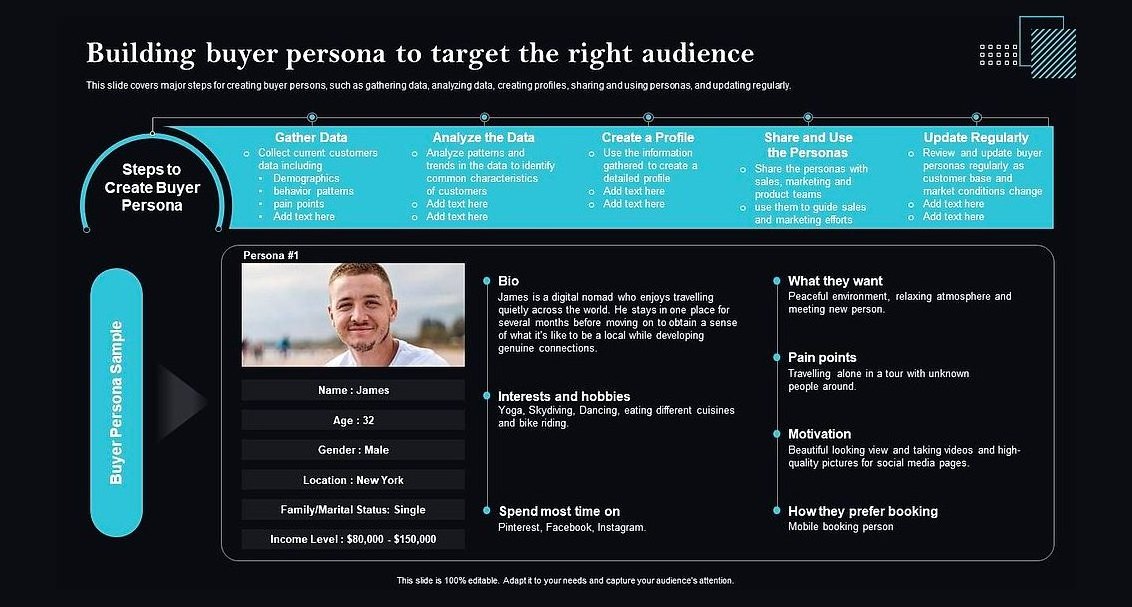 revopsHow do you build a buyer persona that sales actually uses in 2027?
 revopsHow should a 2027 CRO and CEO align before a board meeting?
 revopsWhat's a healthy AE ramp time — and how do you actually design ramp in 2027?
 revopsHow do you actually use AI in B2B SaaS sales — and what's hype vs real in 2027?
 revopsHow do you build a customer reference program that AEs can actually use in 2027?
 revopsWhat are Kentucky Wildcats men's basketball's 2027 NIL needs and strategy?
 revopsHow do you explain a missed quarter to the board in 2027?
 revopsHow should a 2027 CS team attribute expansion vs save revenue?
 revopsRevOps-as-strategy vs RevOps-as-operations: which positioning in 2027?