


What's the right sales coaching framework — and which ones actually change behavior in 2027?
Quality
Certified
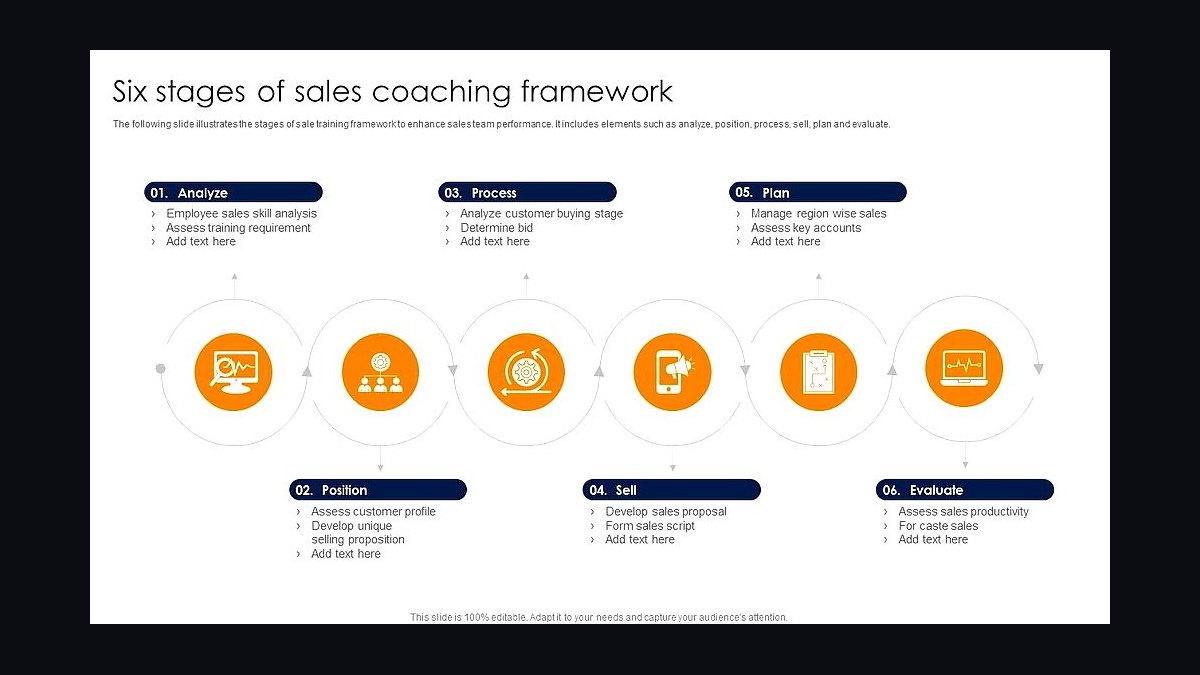
The framework matters less than the cadence and the observation behind it. Pick one shared coaching framework as your org default — GROW for simplicity, MEDDPICC-anchored for complex B2B deals, Challenger for category creation, or Weinberg's 60/30/10 for new managers — then run one weekly deal-coaching session plus one weekly skill block per rep, always anchored to a recorded call, never a guess. That cadence, not the framework's name, is what actually changes behavior.
The outcome you should expect
If you implement a single default framework and pair it with weekly, recording-anchored coaching, the realistic timeline for visible behavior change is 60 to 90 days — not the two-week turnaround leadership decks like to promise. The first four weeks look like almost nothing: reps stumble through role-plays, managers over-talk in sessions because the habit of narrating is stronger than the habit of listening, and call scores barely move. Weeks five through eight are where the skill starts to show up unprompted in live calls — a rep asks a MEDDPICC-style qualifying question without being coached to, or opens a Challenger-style reframe on their own. By week twelve, the change should be visible in aggregate metrics, not just anecdotes.
Pavilion's 2024 State of Sales Coaching data found that managers running one deal-coaching session plus one skill block per rep per week outperformed managers running frequent status reviews by 19 percentage points on attainment. That gap is the headline number worth remembering, but the more useful signal for a RevOps team building a coaching program is what sits underneath it: the lift didn't come from more manager hours, it came from converting existing manager hours away from status checks and into observed, rehearsed behavior change. A $35M ARR Series C SaaS company that made this swap — killing three of five weekly status meetings to make room for MEDDPICC-anchored deal coaching plus a Gong review and a skill block — saw average deal-cycle drop 22 days and win rate climb 14 points over two quarters. The clearest tell that the program had actually taken hold wasn't the metrics themselves; it was that manager-of-manager 1:1s stopped being "where are we on the number" conversations and became "which reps are stuck on which specific skill" conversations. That shift in what leadership talks about is the leading indicator, and it shows up before the trailing revenue metrics do.

Expect a J-curve, not a straight line. Some managers will resist the framework because it forces a slower, more deliberate cadence than the status-review habit they've built over years, and a few reps will resent role-play because it feels like being tested. Both of those frictions are normal and both fade by week six or seven if the cadence holds. What should worry you is if the friction is still present at week ten — that usually means the coaching sessions have quietly reverted to status updates, which is the single most common way this outcome fails to arrive.
What drives that outcome (mermaid)
Three mechanisms sit underneath the attainment lift, and understanding them matters more than memorizing the framework names, because they explain why the framework choice is secondary to how it's delivered.

The first mechanism is spaced retrieval combined with interleaving. A 2024 study in the Journal of Applied Psychology that examined 14 sales coaching programs across SaaS, medtech, and industrial distribution found that the strongest predictor of behavior change wasn't which framework a program used — it was whether sessions forced reps to reconstruct a skill from memory (spaced retrieval) rather than passively review it, and whether sessions mixed two different skills instead of drilling one in isolation (interleaving). Programs using spaced retrieval saw 34% higher retention of new sales behaviors after 90 days than programs using blocked, single-skill drills. Practically, this means a manager should not walk a rep through a MEDDPICC scorecard together — the manager should ask the rep to recite each letter from memory and only fill gaps the rep can't reach on their own. That's the testing effect, and it's a stronger lever than any specific framework's content.
The second mechanism is implementation intentions — concrete "if-then" plans built during the session itself. A rep working the Challenger "teach" step who commits to "if the prospect says our current vendor is fine, I will respond with: that's exactly why we should talk, the cost of staying put is usually invisible" is far more likely to actually use that line in the next live call than a rep who was simply told to "be more challenging." A 2025 Gong Labs analysis of more than 8,000 call recordings found reps who wrote down three such if-then plans during coaching sessions showed 27% higher adoption of new questioning techniques in subsequent calls. The framework supplies the vocabulary; the if-then plan supplies the trigger that fires in the moment the skill is needed.
The third mechanism is observation itself — coaching a real recording instead of a rep's self-report. AEs consistently narrate their own calls about 30% more favorably than the recording shows, so a manager coaching from memory or from the rep's account is coaching the rep's self-image, not their skill. This is why Gong- or Chorus-anchored review is now table stakes rather than a nice-to-have for any RevOps org serious about the coaching motion.
Benchmarks and realistic ranges

Set expectations against ranges, not single numbers, because the underlying studies measure different populations and the variance across orgs is real.
- Attainment lift from cadence over status reviews: roughly 15-20 percentage points, with Pavilion's 2024 benchmark at 19%. Expect the lower end if your managers are new to observed coaching; expect the higher end once the habit is a year old.
- Retention from spaced retrieval vs. blocked drilling: around 30-35% higher skill retention at the 90-day mark. This is the number that justifies spending the extra ten minutes per session making a rep recall the framework instead of reviewing it together.
- Adoption lift from implementation intentions: roughly 25-30% higher adoption of a newly coached technique in subsequent calls, per the Gong Labs sample. This is a short-cycle metric — it shows up in the next few calls, not months later.
- Coaching-bias reduction from a calibration loop: a 2024 Sales Management Association study found managers who ran a 10-minute pre-1:1 calibration exercise — writing down three expected behaviors before watching a clip, then comparing notes to what actually happened — reduced their own confirmation bias by roughly 40% over eight weeks, as measured by third-party call scoring.
- Prevalence of coaching-bias itself: a 2025 Revenue.io survey of 1,200 sales managers found 68% admitted to confirmation bias during deal coaching — focusing on evidence that confirmed what they already believed about a rep's skill level rather than what the call actually showed. Budget for this being the default state of your manager bench, not an outlier.
- Sessions that are secretly status reviews: a 2025 analysis of 15,000 logged coaching sessions in Clari found 52% of sessions labeled "deal coaching" were actually pipeline reviews where the manager talked 70% or more of the time. Treat "over half" as the realistic base rate for coaching-in-name-only unless you actively enforce a talk-time ratio.
- Close-rate improvement from enforcing talk-time discipline: a 2024 Pavilion benchmark found managers enforcing a 60%-rep-talk-time rule saw about 23% higher improvement in close rates among coached reps over six months, compared to managers who let sessions drift.
- Deal-cycle and win-rate movement in a real rollout: the $35M ARR case above saw a 22-day deal-cycle reduction and a 14-point win-rate increase over two quarters — useful as an upper-bound anchor for what a well-run rollout can produce, not a guaranteed outcome for every org.
The pattern across every one of these ranges is the same: the framework itself contributes little of the variance. Cadence, observation, and the specific mechanics of the session (recall over review, if-then plans, talk-time discipline) explain almost all of it.

Risks, edge cases, and failure modes
The most common failure mode in remote-first RevOps orgs is what practitioners call the Slack-reaction manager: a thumbs-up emoji on a deal update, a "nice work" dropped in a deal-desk channel, and no live observation, role-play, or written take-back. Reps read this as benign neglect. It costs nothing to run, produces no resentment, and changes precisely zero behavior — which makes it the failure mode leadership is slowest to notice, because nothing about it looks broken from the outside.

A second failure mode is coaching from the rep's narration instead of the recording. Because a rep's account of their own call is reliably more flattering than the transcript, a manager who skips the recording is coaching an inflated self-image. This failure is especially dangerous inside a MEDDPICC-anchored program, where a manager who already believes a rep is weak on discovery will over-index on the "P" (pain) letter in the framework while missing a real gap sitting in "C" (champion access) — confirmation bias operating directly through the framework's own structure.
A third failure mode is framework fragmentation: every manager running a private model. A rep promoted from a GROW-trained pod into a Challenger-trained pod loses months relearning the shared language, and cross-pod coaching calibration becomes impossible because there's no common vocabulary to calibrate against. This is the argument for an org-wide default even when a particular manager has a personal preference — the value of a shared framework is portability across the org, not superiority of the model itself.
The subtlest and most expensive failure mode is the cadence trap: coaching sessions that quietly become status reviews wearing the coaching label. The Clari data above puts this at roughly half of all logged "coaching" sessions — the manager talks 70% of the time, the rep updates a forecast field, and nothing gets rehearsed. Because the calendar invite still says "coaching," this failure mode hides in plain sight on every dashboard that tracks coaching-session count as a proxy for coaching quality. Counting sessions is not the same as measuring behavior change, and an org that rewards managers for hitting a session quota without checking talk-time ratio will get exactly this outcome.

Finally, watch for the manager-bench edge case: a first-time manager promoted for being a strong individual contributor is often the worst-equipped to run observation-based coaching, because their instinct is to tell the rep what they would have done rather than draw the answer out of the rep. This is precisely the gap Weinberg's 60/30/10 model was built to close, and it's worth defaulting new managers into that structure for their first two quarters even if the broader org runs MEDDPICC-anchored coaching for tenured managers.
A practical rollout plan (mermaid)
Roll the program out in two layers: a quarter-long organizational rollout, and a weekly per-rep cadence that becomes the steady state once the framework is chosen.
For the organizational layer, spend the first two to three weeks selecting the single default framework based on deal complexity and manager tenure — GROW or Weinberg's 60/30/10 for SMB and new-manager pods, MEDDPICC-anchored for complex B2B motions over roughly $50K ACV, Challenger where the motion depends on creating category awareness rather than responding to a known need. Spend weeks three through six training every frontline manager on that one framework and standing up the calibration loop described above so managers start checking their own bias from day one rather than after a review cycle exposes it. By week seven, every manager should be running the weekly cadence below, and by week twelve you should be looking for the leading indicator described earlier: manager-of-manager 1:1s shifting from number-status conversations to skill-gap conversations.

The weekly per-rep cadence is where the actual behavior change gets manufactured. Monday holds a short pipeline review that is explicitly not coaching — it's a status check, and calling it anything else is how the cadence trap starts. Tuesday is pre-call coaching: 30 minutes before a key discovery or close call, walking the framework's scorecard, naming the one or two elements most at risk, and rehearsing the exact language the rep will use. Wednesday is the post-call review of a recorded call — three moments marked, one strength, one miss, one pattern — with the rep writing the take-back in their own words, since a verbal acknowledgment fades within a day while a written reflection holds for weeks. Thursday is the skill block: 30 minutes on one skill only, run as spaced repetition roughly every 48 hours during the first month a new skill is introduced. Friday closes the loop with a short commitments check — what changed, what's next, logged where the next week's Tuesday session can reference it.
Related questions
How is MEDDPICC-anchored coaching different from a Challenger coaching motion?
MEDDPICC ties every coaching conversation to eight specific deal elements — metrics, economic buyer, decision criteria, and more — so it works best when a live deal supplies the scorecard. Challenger coaching instead trains reps to reframe a prospect's assumptions and teach a new perspective, which fits category-creation motions better than data-anchored enterprise sales.
What should a RevOps team track to prove coaching is producing behavior change?
Track call-level behaviors across successive recordings for the same rep — objection handling, discovery question quality, multi-thread outreach — rather than deal velocity alone. If those specific behaviors repeat across several recorded calls, that's real change; if only pipeline metrics move without call-level shifts, it's more likely market timing than coaching.
How does a talk-time ratio get enforced without feeling punitive?

A simple phone timer during the session works better than software dashboards for most teams, because the rep can see it too. The target is the rep speaking at least 60% of the time; if the manager catches themselves over 40%, the honest move is to stop and ask a question rather than keep talking.
Does a coaching framework need to change when a company scales from SMB to enterprise?
Often yes. A GROW-based motion suited to fast, transactional SMB deals usually breaks down once deal cycles lengthen and multiple stakeholders enter the picture, which is when most orgs migrate their default to a MEDDPICC-anchored model. The transition point is roughly when average deal size crosses the $50K ACV range and multi-threading becomes the norm rather than the exception.
FAQ
What's the difference between GROW and MEDDPICC-anchored coaching? GROW (Goal, Reality, Options, Will) is a general-purpose coaching structure that works for any sales motion, especially when a rep needs help thinking through their own next step. MEDDPICC-anchored coaching ties every session to specific deal mechanics — metrics, economic buyer, decision criteria — making it better suited to complex B2B deals where the coaching conversation needs a shared scoreboard.
How often should managers actually coach for behavior change to show up? One weekly deal-coaching session plus one weekly skill block per rep, both anchored to an observed call recording, is the cadence with the strongest evidence behind it — Pavilion's 2024 data ties this cadence to roughly a 19-point attainment lift over managers who rely mainly on status reviews.

Can a RevOps org mix multiple coaching frameworks across teams? It's better not to. A single shared default lets coaching language survive a rep's move between managers or pods; borrowing individual tactics from other models is fine, but the underlying structure should stay consistent so sessions build on each other instead of resetting the vocabulary each time.
What's the best framework for a brand-new frontline manager? Weinberg's 60/30/10 Frontline model tends to work best here because it forces explicit time allocation — 60% on pipeline-generating behavior, 30% on deal progression, 10% on administrative work — which gives a manager without deep coaching instincts a structure to lean on rather than improvising.
How much of coaching's impact actually comes from the framework versus the delivery mechanics? Based on the available research, very little comes from the framework's name. Spaced retrieval, implementation intentions, and coaching from an actual recording rather than a rep's account explain most of the measured variance in behavior change — the framework mainly supplies a shared vocabulary for those mechanics to run through.
Is Challenger coaching a fit outside of enterprise or category-creation sales? Not usually. It performs best when reps need to challenge an existing assumption or create new demand, which is common in enterprise and complex B2B motions. In transactional or low-consideration sales, where the rep's role leans more toward fulfillment than teaching, a simpler framework like GROW typically fits better.
Sources
- Force Management — Command of the Message and Command of the Coach curricula: https://www.forcemanagement.com
- Gong Labs — The State of Coaching report series: https://www.gong.io
- Chorus.ai (ZoomInfo) — conversation intelligence research: https://www.chorus.ai
- Clari — revenue operations and forecasting analysis: https://www.clari.com
- Mindtickle — sales readiness and spaced-repetition research: https://www.mindtickle.com
- Second Nature AI — sales role-play simulation: https://www.secondnature.ai
- Gartner (formerly CEB) — Challenger Sale research: https://www.gartner.com
- Harvard Business Review — sales management and coaching research: https://hbr.org
- Revenue.io — sales manager coaching survey research: https://www.revenue.io
Related on PULSE
- Does your 2027 revenue engine treat AI-generated leads differently from human-sourced ones?
- Why do 2027 B2B RevOps leaders report that AI-generated lead lists have a 30% lower conversion rate than curated ones?
- Which 2027 vendor consolidation trends are causing the most data silo removals, and which are creating new ones?
- How do we design competitive battlecards that actually change rep behavior in the field?
- How do we design commission accelerators that actually change rep behavior without blowing the cap?
This page will be disappearing soon. Save it to your device for $1 — or read it free while it is here.
@Kory-White- · if Venmo asks, the last 4 of my number are 2012
This page is gone.
This one is off the shelf now. $1 keeps it on your phone for good — the whole page, pictures and diagrams included.
 revopsWhat is the product-led-sales (PLS) playbook in 2027?
 revopsWhat are Kansas Jayhawks men's basketball's 2027 NIL needs and strategy?
 revopsWhat are Tennessee Volunteers men's basketball's 2027 NIL needs and strategy?
 revopsHow should a 2027 startup design compensation for the first AE?
 revopsHow do you respond to a sudden churn spike in 2027?
 revopsRevOps-as-strategy vs RevOps-as-operations: which positioning in 2027?
 revopsHow do you compare quotas across sales segments in 2027?
 revopsHow do you actually use AI in B2B SaaS sales — and what's hype vs real in 2027?
 revopsHow should you handle mid-year comp plan resets without destroying trust in 2027?
 revopsHow should a 2027 startup run a founder-shadow program for the first AE?