


How do you run customer onboarding that actually drives retention in 2027?
Quality
Certified

Customer onboarding that actually drives retention treats the first 90 days as a measurable value-delivery process, not a training calendar. Run a five-stage workflow — pre-kickoff handoff, working kickoff, first-workflow co-build, expansion mapping, and adoption handoff — gated by four KPIs: time-to-first-value, day-30 activation, onboarding NPS, and day-90 adoption. RevOps owns the instrumentation and the gates.
A churn that was visible 70 days before the renewal call
Picture a $60K mid-market deal closed in March. The AE runs a polished kickoff, the Implementation team delivers six training sessions over eight weeks, and the customer's IT lead attends every one. Go-live is declared in week nine. The implementation ticket closes. Everyone moves on.
Nine months later the renewal call happens. The IT lead who attended everything has been reorged into a different function. The new decision-maker — a VP of Operations who never met anyone from your company — opens the account, sees eleven logins in nine months, and asks a reasonable question: "What has this actually done for us?" Nobody on your side can answer it, because nobody ever wrote down what success was supposed to look like. The deal discounts 20% to renew, or churns outright.
Here is the part that matters: every signal of that outcome was available by day 70. The customer had no named executive sponsor. The success criteria were never written down in the customer's own words. The "onboarding complete" flag fired on go-live rather than on first value achieved. The account was technically healthy and structurally doomed.

That pattern is not bad luck. It is a design failure, and it is fixable with process rather than heroics. Retention is largely decided in the window between contract signature and roughly day 90 — long before anyone in the revenue org is thinking about a renewal. The rest of this page is about how to run that window deliberately, what to measure, and where the trade-offs sit.
How the mechanism actually works
The core insight is that onboarding is a value-delivery pipeline with stage gates, not a relationship-building exercise with a curriculum attached. Each stage has a named owner, a required output, and an exit criterion. If the exit criterion is not met, the customer does not advance — they stay in the current stage with a remediation plan. This is the single biggest structural difference between onboarding programs that correlate with net revenue retention and programs that produce happy-sounding check-ins and then churn.
The five stages, in order:
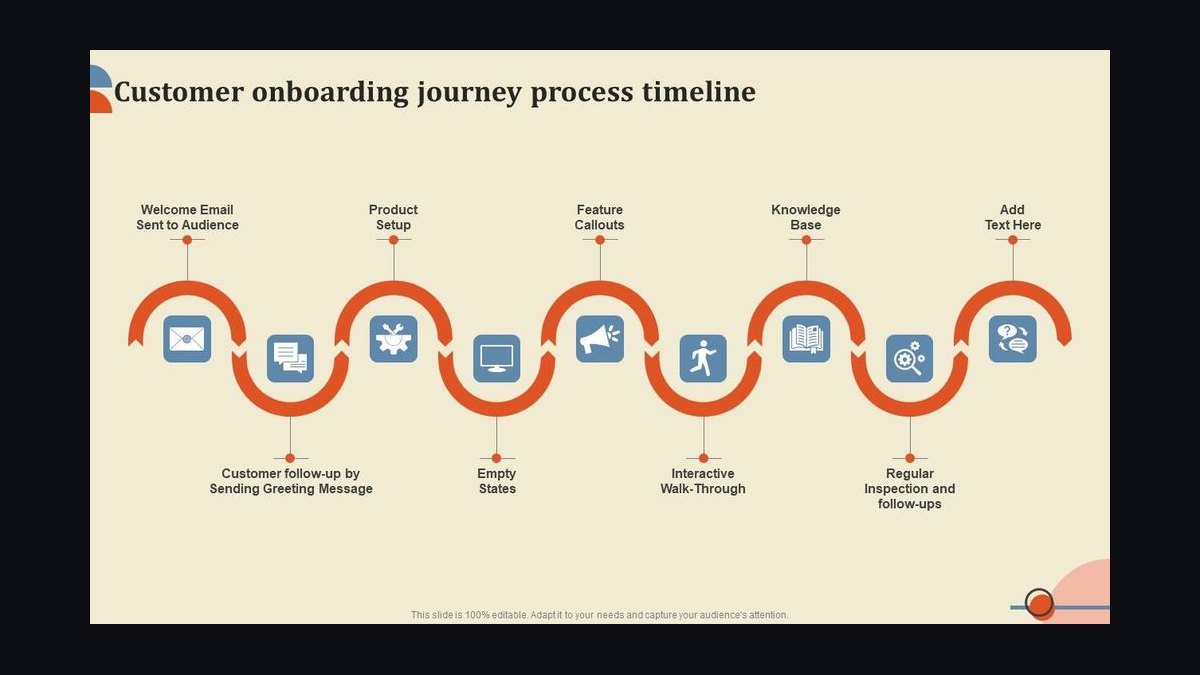
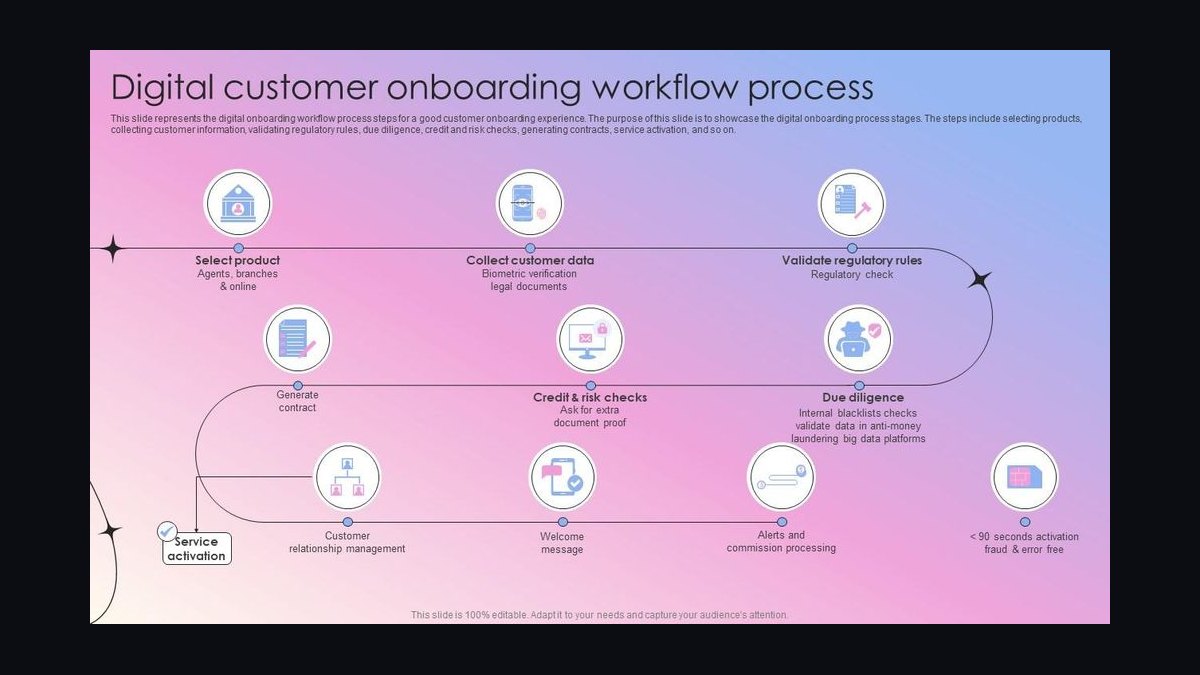
Stage 1 — Pre-kickoff handoff (week 0). The AE writes a brief covering what the customer bought, the business case they approved internally, the named executive sponsor, success in the customer's own words, and any landmines from the sales cycle (budget politics, a competing internal tool, a champion who is not the decision-maker). The CSM or implementation lead reads the brief and the call recordings before the kickoff. Skipping this step is the most common cause of a kickoff that feels like the customer is re-explaining themselves to a stranger — and buyers notice sloppiness immediately.
Stage 2 — Kickoff call (week 1). This is a working session, not a welcome. Three outputs are mandatory before the call ends: written success criteria the customer explicitly agrees to, a named customer-side champion who owns internal adoption (attending is not the same as owning), and a scheduled date for the first-workflow co-build. A kickoff that ends without those three artifacts failed, regardless of how warm the room felt.
Stage 3 — First-workflow co-build (weeks 2-4). The highest-leverage stage and the one most teams skip. Instead of generic training, the implementation specialist builds the first real workflow with the customer, in the customer's actual instance, with the customer's actual data. The customer configures it themselves while your team guides. Value ships before week four. This is the mechanism that pulls time-to-first-value from 90 days down to 30.
Stage 4 — Expansion mapping (weeks 6-8). With the first workflow live, the CSM runs a structured conversation to identify the next two use cases the customer already wants. This is not selling — it is surfacing demand that exists. The output feeds both the day-90 adoption plan and the AE's expansion pipeline, which is why onboarding and expansion should never be separate motions.
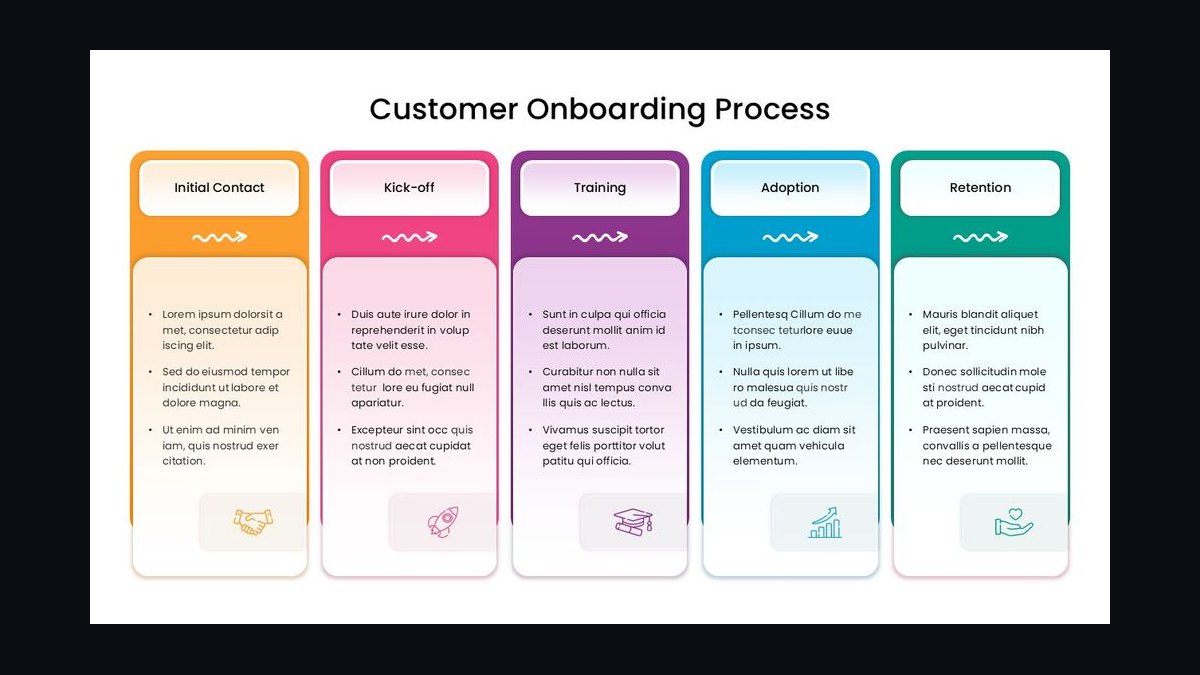
Stage 5 — Adoption handoff (day 90). The customer transitions from high-touch implementation to a scaled CSM. The handoff is gated on three exit criteria: onboarding NPS at or above +40, adoption at or above 60% of contracted seats active in a meaningful workflow, and a documented expansion plan. Customers who miss the gate stay in implementation another 30 days rather than being thrown over the wall into a scaled motion they are not ready for.
The gate at day 90 is the part most organizations skip, and it is the part that converts onboarding from a hope into a control. Without a gate, "onboarding complete" becomes a date on a project plan rather than a statement about customer state.
Instrumentation is what makes the gates real. A weekly 30-minute review with CS, Product, and the closing AE should route every account that is red on any of the four KPIs into a named remediation owner. The review is not a status meeting — it is a triage meeting, and its output is decisions, not updates. RevOps typically owns the dashboard, the KPI definitions, and the escalation thresholds, because the definitions are where these programs quietly break: if two teams disagree about what counts as an "active seat," every downstream number is noise.
Real numbers, ranges, and benchmarks
Benchmarks vary by segment and product complexity, so treat the following as planning ranges to calibrate against your own data rather than universal truths. The directional pattern — earlier value correlates with better retention — holds consistently across customer success research.
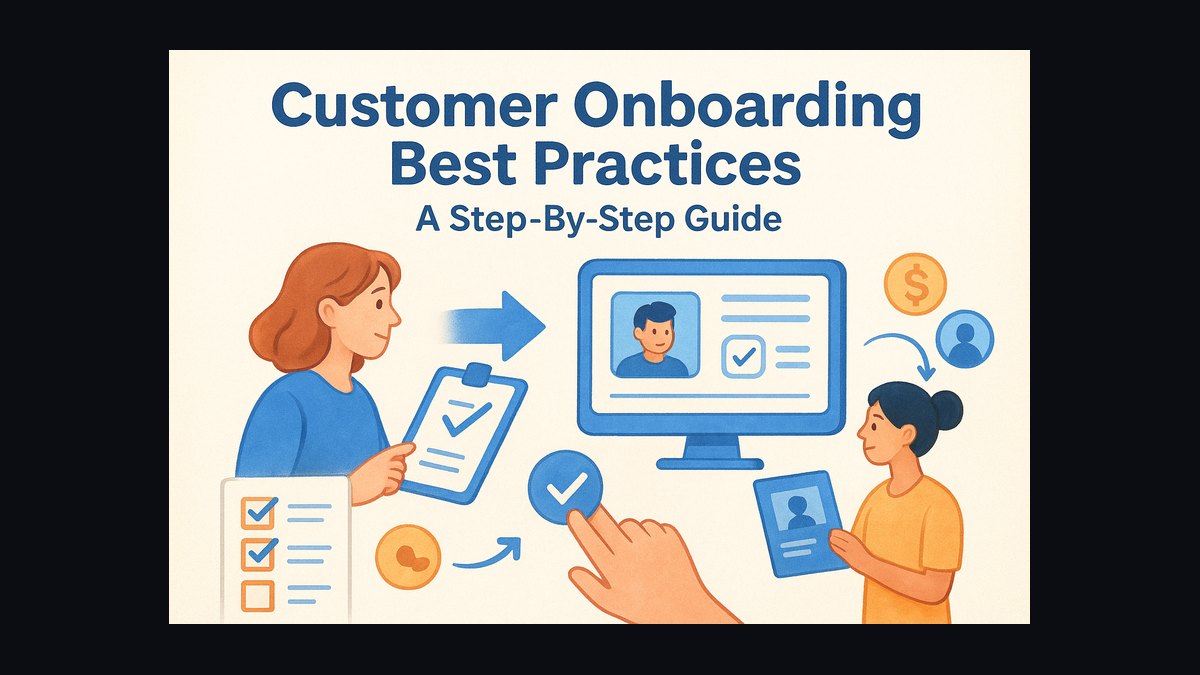
Time-to-first-value (TTFV). Days from contract signature to the first measurable customer win, defined per use case. Reasonable targets: 14-30 days for SMB, 45-60 days for mid-market, 60-90 days for enterprise. Red flag: beyond 60 days for SMB or beyond 120 days for mid-market. TTFV compounds — every week shaved off tends to show up as measurable retention improvement in the following year, which is why it is worth more operational attention than almost any other onboarding metric.
Day-30 activation rate. Percentage of new customers reaching a defined activation event within 30 days of go-live. Target 70% or higher; below 50% usually means the onboarding script is broken, not that the customer is difficult. Define activation as a small number of meaningful actions — for example, first data import, first report shared with a colleague, first team member invited — not as a login.
Onboarding NPS (oNPS). Surveyed at day 30 and again at day 90, specifically about the onboarding experience. Do not wait for annual NPS; by then the signal is historical. Target +40 or higher at day 30 and +50 by day 90. Below +20 at day 30 is a strong indicator that the kickoff was a training dump rather than a co-build.
Day-90 adoption. Percentage of contracted seats active in a meaningful workflow — not merely logged in — at day 90. Target 60% or higher; below 40% suggests the buyer is not seeing the value they signed for, which is a commercial problem disguised as a usage problem.
Segment-tiered delivery. A workable structure for a scaling company: self-service for deals under roughly $5K ARR (automated email sequence, in-app guidance, knowledge base, no human touch); assisted for $5K-$50K ARR (a four-week structured program with two live calls, a shared project tracker, and a CSM carrying up to about 40 concurrent accounts); white-glove above $50K ARR (60-90 days, weekly calls, a dedicated implementation manager, a named executive sponsor, and a customized success plan). Automate tier assignment from contract value and segment, and review tier performance quarterly — programs that never adjust their tiers tend to see onboarding satisfaction drift down within a couple of quarters as deal mix changes.
Sponsor presence. Accounts without a named customer-side executive sponsor by roughly day 60 churn at a materially higher rate than accounts with one. The exact multiple varies by study, but the direction is consistent enough that mandating sponsor identification by day 30 is a low-cost, high-yield rule.
One more number worth internalizing: a large share of churn in the first 24 months traces back to a broken first 90 days. That is why onboarding metrics are leading indicators of retention while renewal rates are lagging ones — by the time renewal arrives, the outcome has usually been determined for months.
Trade-offs and alternatives
There is no single correct onboarding design. The right shape depends on deal size, product complexity, and how much implementation work the customer can absorb. Four tensions come up repeatedly.
Speed versus depth. Compressing onboarding to four weeks drives TTFV down and retention up, but it only works when the first workflow is genuinely representative of the customer's core use case. Compress too aggressively on a complex enterprise deployment and you ship a shallow configuration the customer outgrows in a quarter, forcing a rebuild. The practical rule: compress the curriculum, never compress the co-build.

Standardization versus customization. A standardized core path — roughly 80% of the flow — is what makes onboarding predictable and scalable. The remaining 20% is where legitimate customer-specific tailoring lives. Teams that invert that ratio, customizing everything, get inconsistent experiences, CSMs who spend their time rebuilding processes instead of driving value, and no ability to forecast onboarding capacity.
High-touch versus self-service. White-glove onboarding correlates with retention but does not scale economically below a certain contract value. The alternative is a tiered model, which introduces its own risk: customers can feel demoted when they land in a lower tier. The mitigation is transparency — publish what each tier includes so the tier is a product decision, not a judgment about the customer.
Human handoff versus continuity. Handing a customer from implementation to a scaled CSM at day 90 is efficient and usually correct. The alternative — one owner across the whole lifecycle — produces better continuity but caps how many customers a single person can carry. Whichever you choose, the handoff itself must be warm: a structured introduction meeting within 48 hours of the transition, with the outgoing owner present. Cold handoffs are one of the most reliable predictors of an adoption dip in the following month.
A useful framing for the trade-off conversation: onboarding design is really a bet about where value comes from. If value comes from configuration depth, invest in implementation capacity. If value comes from time-to-first-insight, invest in co-build speed. Most B2B SaaS products sit closer to the second, which is why the four-week co-build pattern shows up so often in retention-improvement stories.
Common pitfalls and how to avoid them
Kickoff as a one-way training session. The CSM walks through 90 slides, the buyer nods, nobody touches the product, everyone leaves overwhelmed, and the customer never meaningfully returns. The fix is structural: make the kickoff a working session with required customer-side output before the call ends. If the customer has not produced something — agreed success criteria, a named champion, a scheduled co-build — the meeting is not finished.
No named executive sponsor. The AE built the relationship with a champion, but no executive ever signed off on the success criteria. When the champion leaves, gets reorged, or loses budget influence, the deal has no anchor, and the new decision-maker reasonably asks what the product is doing for them. The fix is to mandate a named executive sponsor at kickoff and get that person into a business review by day 90 — not as a courtesy, but as a program requirement.
Measuring go-live instead of value achieved. The dashboard says onboarding is complete, the implementation ticket is closed, the customer is technically using the product — but they have not won anything they can point to. At renewal they cannot articulate ROI, so the conversation becomes a price negotiation rather than an expansion discussion. The fix is replacing "go-live" with "first value achieved" as the completion criterion, and refusing to count a customer as onboarded until that gate clears.
Handoff abandonment. Implementation declares done, the CSM inherits a cold account, and nobody schedules the warm introduction. Adoption metrics commonly dip in the month following a cold handoff. The fix is a mandatory handoff checklist and a joint meeting within 48 hours.
Over-customization without guardrails. Tailoring every workflow to every customer feels customer-centric and destroys predictability. Cap customization at roughly 20% of the flow and enforce the standardized core path.
The silent churner. Customers who complete every onboarding task but never identify an executive sponsor look healthy on task-completion dashboards and are structurally at risk. Task completion is not the same as value realization, and dashboards that only track tasks will hide this profile until renewal.
No instrumentation owner. If nobody owns KPI definitions and escalation thresholds, the program degrades into anecdote. This is squarely a RevOps responsibility: define the metrics, build the dashboard, run the weekly triage, and hold the gates.
Related questions
Who should own onboarding — implementation, professional services, or the CSM?
Ownership varies by company size. Smaller organizations often give it to the CSM; larger ones split implementation and scaled success. What matters is not the title but clear stage ownership, documented exit criteria, and a warm handoff between whoever holds the account at each stage.
How long should onboarding take before a customer is considered ramped?
Most B2B programs run 30 to 120 days from signature to fully ramped. SMB lands nearer 30, enterprise nearer 90-120. The better question is not elapsed time but whether the day-90 gate — adoption, onboarding NPS, and a documented expansion plan — has been cleared.
What is the single strongest leading indicator of renewal?

Day-90 adoption against contracted seats is the closest leading indicator, because it reflects whether the buyer is getting the value they paid for. Onboarding NPS at day 30 is the earliest useful warning signal, and time-to-first-value is the metric most directly under your operational control.
How do you onboard customers without a dedicated implementation team?
Tier the motion. Self-service for small deals, a lightweight assisted track with two live calls for mid-market, and reserve human-heavy onboarding for the deals that justify it economically. Automate tier assignment from contract value so the decision is not made ad hoc by each rep.
Should onboarding and expansion be separate teams?
No — they should share a handoff. Expansion mapping at weeks 6-8 feeds the AE's pipeline, and the day-90 gate produces the expansion plan. Splitting them creates a gap where the customer's next use case is identified by nobody.
FAQ
How long should customer onboarding take? The typical window is 30 to 120 days from contract signature to a fully ramped customer, depending on product complexity and segment. SMB customers often ramp in about 30 days; enterprise deployments commonly run 90-120. The completion criterion should be value achieved, not go-live.
What are the most important metrics to track during onboarding?

Four: time-to-first-value, day-30 activation rate, onboarding NPS at day 30 and 90, and day-90 adoption against contracted seats. Together they tell you whether the customer is seeing value early, whether the process scales, and whether renewal risk is building.
Who should own the onboarding process? It varies by organization size — implementation, professional services, or the CSM. The key is clear stage ownership, documented exit criteria, and a warm handoff between owners. RevOps should own the KPI definitions and the gating review regardless of who runs delivery.
How do you prevent churn during onboarding? Secure a named executive sponsor, run a five-stage workflow that ends in a gated adoption handoff, and route any account that misses a KPI threshold into a named remediation plan. Early engagement plus milestone check-ins reduces the risk of quiet disengagement.
What is the biggest mistake in customer onboarding? Treating go-live as completion. A customer who is technically live but has not achieved a value milestone they can articulate to their own leadership is a renewal risk, no matter how clean the implementation project looked.
How do you measure onboarding success beyond retention? Track day-30 activation and onboarding NPS as leading indicators, and day-90 adoption as the clearest picture of long-term value realization. If those are strong, retention typically follows — but only if the metrics are defined consistently and reviewed weekly.
Sources
- Gainsight, customer success and onboarding benchmark resources: https://www.gainsight.com/
- ChurnZero, customer success leadership research: https://churnzero.com/
- Bessemer Venture Partners, State of the Cloud: https://www.bvp.com/atlas
- Lincoln Murphy, Sixteen Ventures, customer success playbooks: https://sixteenventures.com/
- Rocketlane, state of customer onboarding research: https://www.rocketlane.com/
- OpenView Partners, SaaS benchmarks: https://openviewpartners.com/
- Customer Success Collective, onboarding and retention resources: https://www.customersuccesscollective.com/
- Harvard Business Review, customer retention and onboarding coverage: https://hbr.org/
Related on PULSE
- How do I run a quarterly business review that drives expansion?
- How do you build a customer expansion playbook that drives 120%+ NRR?
- How do you design a sales compensation plan that drives the right behavior?
- What is the operator playbook for a 25-minute weekly pipeline review that drives real forecast accuracy vs becoming theatre?
- What drives playbook adoption if your reps think the playbook is trash?
This page will be disappearing soon. Save it to your device for $1 — or read it free while it is here.
@Kory-White- · if Venmo asks, the last 4 of my number are 2012
This page is gone.
This one is off the shelf now. $1 keeps it on your phone for good — the whole page, pictures and diagrams included.
 revopsWhat is lemlist and why is it a hot RevOps multichannel outreach platform for 2027?
 revopsHow should a 2027 sales org structure deal review templates?
 revopsRevOps-as-strategy vs RevOps-as-operations: which positioning in 2027?
 revopsWhat capacity-planning models do SaaS sales teams use in 2027?
 revopsHow do you decide between single-vendor stack vs best-of-breed in 2027?
 revopsWhat are Kansas Jayhawks men's basketball's 2027 NIL needs and strategy?
 revopsWhat's a healthy AE ramp time — and how do you actually design ramp in 2027?
 revopsWhat is the product-led-sales (PLS) playbook in 2027?
 revopsWhat are the first 90 days of a new Chief Revenue Officer in 2027?
 revopsHow do you respond to a sudden churn spike in 2027?