


What is quota relief — and when should you actually grant it in 2027?

Quota relief is the deliberate, documented downward adjustment of an AE's quota — temporary or permanent — when external circumstances outside the rep's control make the original target genuinely unachievable. The legitimate triggers are narrow: mid-quarter territory carve-outs, product outages or launch delays, comp plan rewrites mid-period, and force majeure events like an acquired anchor account or regulatory shock. Everything else — slippage, soft macro, "I just didn't hit it" — is performance, not relief. Mature orgs keep relief under 5 percent of comp adjustments.
TL;DR
- Quota relief lowers an AE's number when an EXTERNAL event killed the path to plan — not when the rep underperformed.
- Only four triggers qualify: territory change, product outage, mid-quarter plan rewrite, force majeure.
- Three triggers that look legitimate but are not: missed number with no cause, deal slippage, blaming the macro.
- Design rules are non-negotiable: signed documentation, pro-rated to the disruption window, dual approval by RevOps and Finance.
- Healthy benchmark per Pavilion 2024: legitimate relief runs under 5% of comp adjustments; above 10% means the quota was wrong at the start of the year or the culture has drifted into entitlement.
The 4 Legitimate Triggers
Four scenarios where granting relief protects comp-plan integrity rather than corroding it. The common thread: each represents a structural change the rep could not have anticipated, mitigated, or out-sold. If you cannot point to a specific external event with a date, an artifact, and an owner outside the rep's seat, you are looking at a coaching case dressed up as a relief case.

| Trigger | Evidence Required | Relief Calculation |
|---|---|---|
| Territory change mid-quarter (rep loses 30 percent or more of named accounts) | Pre and post territory map, CRM account ownership history, signed territory letter from sales leadership | Pro-rate quota down by the lost pipeline coverage ratio for the remaining days in the quarter only |
| Product outage or launch delay (the SKU the rep was selling did not ship) | Engineering release notes, customer-facing comms, list of deals in stage 3 or later tied to that SKU | Reduce quota by forecasted-but-now-impossible bookings attributable to the missing product, capped at deals already in pipeline |
| Comp plan rewrite mid-quarter (the rules changed materially after the rep started the period) | Old plan PDF, new plan PDF, side-by-side diff showing material change to OTE, accelerators, or quota | Hold the rep harmless on bookings already in stage 3-plus under the prior plan, apply the new plan only to net-new pipeline |
| Force majeure (anchor account M&A, regulatory shock, named-account bankruptcy outside rep control) | Public press release or signed customer notice, original opportunity record showing forecast category, account ownership log | Remove the affected forecasted ARR from quota for the impacted period, pro-rated to days remaining when the event hit |
The discipline is not in the triggers — most managers can recite them — but in the evidence requirement. Pavilion's 2024 Compensation Adjustment Survey found orgs demanding a date, an artifact, and an external owner for every request cut frivolous claims by roughly half within two quarters. Strong reps thanked leadership for it.
The 3 Illegitimate Asks (and why granting them breaks the comp plan)

The first illegitimate ask is "I just didn't hit it." No external cause, no event, no artifact — only a number on a dashboard. Granting relief here tells every rep that quota is a suggestion. Within two quarters, your top stack-rank starts wondering why they should carry a heavy load. CaptivateIQ's 2024 Comp Trends report flagged this drift as the fastest way to lose A-players.

The second is "my deals slipped." Slippage is the AE's core job — managing close dates, multithreading champions, getting procurement in early. A slipped deal is one the rep did not finish managing; rolling quota down to match it means paying the rep to not finish the job. Alexander Group's 2024 research is explicit: slippage relief converts a comp plan into a participation trophy.
The third is "the macro is tough." Every quota was set with the macro in view — the board approved it knowing the Fed's posture, the IT spending pullback, the buyer-committee elongation. Granting macro relief says planning assumptions were wrong — sometimes true — but the correct response is a board-level re-plan for the entire sales org, not a one-off adjustment for whoever complained loudest. Force Management warns macro-relief is the precedent that swallows the comp plan whole.

The 3 Design Rules That Keep Relief Honest
The first rule is documented and signed by both AE and manager. Verbal relief is comp dispute fuel. The moment a rep believes they were promised an adjustment that does not appear in their statement, you are headed for a legal letter or a regretted termination. Notion templates with a signature block or a Salesforce custom Comp Adjustment object both work — the medium matters less than the artifact.

The second rule is pro-ration to the disruption window. If the outage lasted nine days, relief covers nine days, not the whole quarter. If a territory change hit on day 47, relief scales to the 43 days remaining. OpenView's 2024 benchmarks showed clean pro-ration maintains comp predictability, while whole-period relief drives comp expense volatility 15 percent or more.
The third rule is dual review by RevOps and Finance. Single-manager approval is the largest source of comp leakage in mid-market orgs — managers want their team paid, they want retention, they want to avoid the awkward conversation. RevOps brings objectivity on the evidence; Finance brings discipline on dollar impact and precedent. Spiff and CaptivateIQ ship native dual-approval workflows for this reason.

A $30 million ARR company we worked with had relief running at 18 percent of comp adjustments — pure cultural drift, with managers granting it for slippage and soft quarters. They tightened to the four triggers, required signed documentation, and routed every request through RevOps and Finance. Relief dropped to 4 percent in two quarters, and AE engagement improved on the next survey. Top reps had quietly resented a culture where their effort and weaker reps' excuses produced the same outcome.
Related on PULSE
- What is the 2027 quota relief policy for ramping AEs?
- How do you design quota relief policies for reps facing prolonged non-sales technical delays?
- How do you design quota relief policies for reps facing prolonged non-sales technical delays?
- How Do I Get Rent Relief When My Business Is Struggling?
- Why are longer sales cycles forcing RevOps to revise quota models in 2027?
- How should RevOps adjust quota setting when AI in the funnel accelerates lead velocity?
The Hidden Cost of Generous Quota Relief
Quota relief isn't just a compensation adjustment — it's a behavioral signal that ripples through your entire sales organization. When relief is granted too freely, AEs learn that missed targets can be erased rather than owned. This erodes the very accountability that drives high performance. In orgs where relief exceeds 10–15% of quarterly adjustments, pipeline hygiene typically deteriorates because reps stop distinguishing between real external blockers and their own execution gaps.
The financial impact compounds. Every dollar of quota relief effectively rewrites your commission expense forecast. If you grant $100K in relief to a rep earning 10% commission, that's $10K in unexpected comp cost — plus the lost revenue that relief represents. Over a full year, a team of 15 AEs with even moderate relief patterns can create $150K–$300K in unplanned comp expense. More critically, relief-adjusted quotas make it nearly impossible to accurately measure sales capacity or predict attainment rates for future quarters.
Building a Quota Relief Governance System
Rather than treating relief as a one-off judgment call, establish a formal review process with clear guardrails. The most effective systems use a tiered approach:
Tier 1 — Manager Approval (up to 5% of quarterly quota): Requires documented proof of the external event and a signed acknowledgment that relief is a one-time accommodation. No carryover to future quarters.
Tier 2 — Revenue Operations Review (5–15%): Requires a written impact analysis showing how the external factor specifically blocked 3+ qualified opportunities. Must include pipeline evidence (lost deals, delayed signatures, product unavailability dates).
Tier 3 — Executive Committee (above 15%): Triggers a formal investigation into whether the territory assignment, account segmentation, or product strategy itself needs adjustment. Relief at this level should be rare — fewer than 2–3% of all quarterly adjustments in mature orgs.
Every relief grant should be logged in a central tracker with: rep name, original quota, relief amount, reason code (from a predefined list), approver, and date. Review this log quarterly to spot patterns — if one manager grants 3x more relief than peers, that's a coaching opportunity, not a policy problem.
When Relief Becomes a Strategic Tool
While most quota relief is reactive, forward-thinking orgs use it proactively in specific scenarios. Consider pre-announced relief windows for new hires: grant 50–75% quota for the first full quarter, stepping to 100% by quarter three. This removes the "ramp penalty" that drives early attrition while maintaining long-term accountability.
Another strategic use is during major product transitions. If you're sunsetting a legacy product and launching a replacement, offer a 30–60 day relief window for any rep who loses 3+ active deals due to the transition. This protects your team from internal decisions while preserving the incentive to sell the new product.
The key distinction: strategic relief is pre-communicated, time-boxed, and tied to specific organizational actions. It's not a response to missed targets — it's a calculated investment in retention and focus during periods of unavoidable disruption. Used this way, relief becomes a retention tool rather than a performance crutch.
FAQ
What exactly counts as a legitimate reason for quota relief? Only events completely outside the rep’s control: mid-quarter territory splits, product outages or launch delays, comp plan changes mid-period, and force majeure like a regulatory shock or acquired anchor account. Slippage, soft macro, or simply missing the number do not qualify.
How much quota relief is normal in a mature sales organization? Most well-run companies keep quota relief under 5 percent of all compensation adjustments. If you’re seeing double-digit percentages, it’s usually a sign the original quotas were set poorly or relief is being used as a performance crutch.
Can quota relief be temporary, or does it have to be permanent? Both are valid. Temporary relief might last one or two months until a product outage is resolved, while permanent relief is used when a territory is permanently reduced. The key is documenting the reason and duration clearly in the comp plan.
Does quota relief affect the rep’s commission rate or just the target? It only adjusts the target number—the commission rate, accelerators, and other terms stay the same. If you change the rate too, that’s a comp plan rewrite, not relief, and should be handled separately.
What’s the difference between quota relief and a comp plan exception? Quota relief lowers the target for a defined period due to external factors. A comp plan exception changes the payout structure itself—like adding a spiff or altering accelerators—and usually requires higher-level approval. Relief is narrower and more common.
How should a rep request quota relief without sounding like they’re making excuses? They should present specific, verifiable evidence—like a timeline of the product outage or the exact date of a territory change—and tie it directly to lost pipeline or closed deals. Avoid vague claims; focus on facts that a manager can independently confirm.
Sources
- Pavilion 2024 Compensation Adjustment Survey — benchmark data on legitimate-relief percentages and evidence-based gating
- Alexander Group 2024 Sales Compensation Practices research — slippage versus relief framing and comp-plan integrity
- CaptivateIQ 2024 Comp Trends Report — drift patterns and the comp adjustment workflow stack
- Force Management — quota-setting discipline and the macro-relief precedent risk
- OpenView 2024 SaaS Sales Operations Benchmarks — pro-ration practices and comp expense volatility data
- Spiff product documentation on override approval workflows and audit retention
- Salesforce reference architecture for custom Comp Adjustment objects with approval chains
- The Bridge Group 2024 SaaS AE Metrics — AE engagement and retention impact of comp-plan consistency
This page will be disappearing soon. Save it to your device for $1 — or read it free while it is here.
@Kory-White- · if Venmo asks, the last 4 of my number are 2012
This page is gone.
This one is off the shelf now. $1 keeps it on your phone for good — the whole page, pictures and diagrams included.
 revopsWhat are Kansas Jayhawks men's basketball's 2027 NIL needs and strategy?
 revopsWhen should a 2027 acquirer unify GTM motions vs keep them separate?
 revopsWhat capacity-planning models do SaaS sales teams use in 2027?
 revopsWhat are the 2027 predictive interview signals for hiring AEs?
 revopsWhat are Auburn Tigers football's 2027 NIL needs and strategy?
 revopsWhat are Tennessee Volunteers men's basketball's 2027 NIL needs and strategy?
 revopsHow should a 2027 startup design compensation for the first AE?
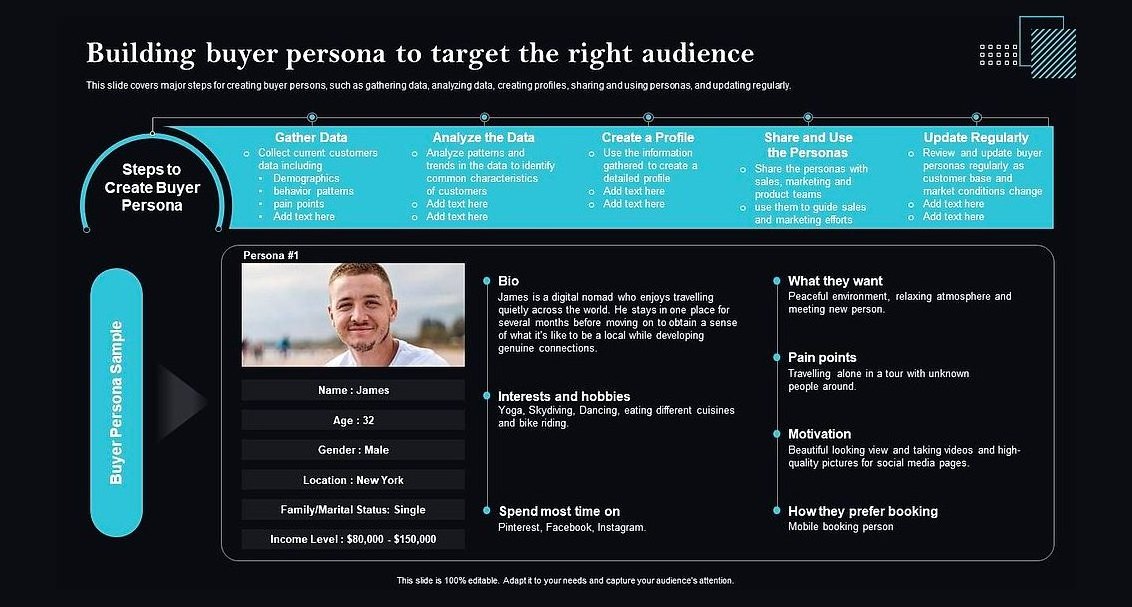 revopsHow do you build a buyer persona that sales actually uses in 2027?
 revopsWhat are UConn Huskies men's basketball's 2027 NIL needs and strategy?
 revopsHow do you use revenue intelligence for renewals and customer success in 2027?