


What is a deal war room (or win room) — and when do you actually run one in 2027?
A deal war room (or "win room") is a focused 30 to 60 minute cross-functional working session on ONE specific deal that is stalling, slipping, or at risk of being lost. The room includes the AE, sales manager, sales engineer, deal desk, product marketing, and an exec sponsor (CRO or CEO for top logos). You run one when a deal hits a real trigger: greater than three times median ACV, a strategic-logo bet, an at-risk signal, or forecast confidence in question. The output is three named, dated commitments for the next seven days — not "good discussion."
TL;DR
%20%E2%80%94%20and%20when%20do%20you%20actually%20run%20one%3F%2C%20realistic%20magazine%20style%2C%20warm%20light%2C%20no%20text%2C%20no%20watermark?width=1200&height=675&nologo=true&model=flux&seed=20720)
- A war room is NOT a deal review and NOT a forecast call. It is a working session on one deal with named exits.
- Run it only when the deal trips a real threshold: greater than three times median ACV, strategic logo, at-risk signal, or shaky forecast commit.
- The 60-minute agenda is fixed: 5 min AE pitch, 15 min live MEDDPICC re-score, 15 min next-three-actions, 15 min role-play, 10 min exec-sponsor action plan.
- Pavilion's 2024 Enterprise Deal Survey: orgs running structured war rooms on deals greater than $200K saw 18 to 25 percent higher close rates than unmanaged deals of the same size.
- Failure modes: too frequent, too late, or no commitment exits. If the room ends with "thanks everyone," you ran a meeting, not a war room.
The 4 Trigger Criteria + The 60-Min Agenda
%2C%20realistic%20magazine%20style%2C%20warm%20light%2C%20no%20text%2C%20no%20watermark?width=1200&height=675&nologo=true&model=flux&seed=88492)
The fastest way to ruin war rooms is to run them on every deal. The whole point is that this deal is unusual enough to warrant pulling six expensive humans into a room for an hour. So you need real triggers. The four that actually work in 2027:

Trigger 1 — Deal size greater than three times median ACV. If your median is $80K, a $250K-plus deal is a different animal. The buying committee is bigger, the legal review is real, and the CFO is in the room. These deals reward orchestration.
Trigger 2 — Strategic logo. A logo that opens a new vertical, geography, or product segment. Even a $60K deal can deserve a war room if winning it unlocks a category. Reference logos compound; missing one of these is a multi-year loss, not a quarter loss.

Trigger 3 — At-risk signal. Deal pushed once already, your champion went quiet for more than ten business days, a competitor was named for the first time, or the buyer asked for a discount before you presented value. Any one of these alone is a yellow flag. Two of them together is the war-room trigger.
Trigger 4 — Forecast confidence in question. The AE has it as Commit but the manager doesn't believe it. Or it's Best Case but the CRO needs it as Commit to make the number. When the forecast call exposes that gap, the next move is a war room, not more nagging.

Once the trigger fires, the 60-minute agenda is non-negotiable. Five minutes for the AE to pitch the deal — current state, decision criteria, named blockers. Fifteen minutes to re-score MEDDPICC live, with the room challenging every letter; this is where the gaps surface (almost always Metrics and Champion). Fifteen minutes to identify the three things that have to happen this week, each with a named owner and a Friday deadline. Fifteen minutes to role-play the next buyer conversation with the AE in the hot seat. Ten minutes to lock the exec sponsorship action plan — which exec on your side calls which exec on the buyer's side, and by when.
Why War Rooms Lift Close Rates 18 to 25 Percent

Pavilion's 2024 Enterprise Deal Survey looked at 1,400-plus go-to-market organizations and isolated deals greater than $200K. Companies running structured war rooms on those deals closed at 18 to 25 percent higher rates than identical-size deals at companies without a war room cadence. The math is unsurprising once you decompose it: large deals fail because nobody coordinates the four to seven internal players that need to move in concert. The war room is the coordination layer.

A real example from a $40M ARR cybersecurity company. Their CRO introduced war rooms in Q1 for any deal over $100K showing a slip risk. They ran them every Monday at 10 AM, sixty minutes max, on a Salesforce custom War Room object with a Notion template and a dedicated Slack channel per active room. Over four quarters, closed-won rate on those flagged deals climbed from 31 percent to 49 percent. The CRO and CEO collectively spent about six hours per quarter in those rooms. It was, by their own internal ROI math, the highest-leverage time in the GTM motion that year.
The reason it works isn't mystical. War rooms force three things that almost never happen on a busy Tuesday: a real MEDDPICC re-score with someone outside the deal challenging the AE's optimism, a forced enumeration of the next three actions with named owners, and an exec-to-exec move that the AE wouldn't request on their own. Each of those three alone moves the needle 5 to 8 percent. Stack them on a deal worth a quarter of a million dollars and you have your 18 to 25 percent.
The 3 War Room Failure Modes

Failure 1 — Too frequent. When every deal over $50K gets a war room, nothing is strategic. The room becomes a glorified pipeline review, the exec sponsor stops attending, and the prestige decays inside two quarters. Stay disciplined: if you run more than three to five war rooms a quarter as a 50-rep org, you've diluted them.

Failure 2 — Too late. A war room called in week 11 of a 12-week sales cycle is a post-mortem with snacks. The buyer has already made their internal decision; you're just discovering it. The right window is mid-cycle — after discovery is complete and the buyer has socialized internally, but before procurement starts. For a 12-week cycle, that's week 6 to 8, not week 11.
Failure 3 — No commitment exits. This is the killer. The room ends with "great discussion, good context, let's reconvene next week." Wrong. Every war room exits with three sentences on a Notion page: "Sarah introduces our CFO to their CFO by Friday. Marcus delivers the security architecture diagram by Wednesday. AE confirms decision criteria in writing by Thursday." If you can't write those three sentences before everyone leaves the room, you didn't run a war room — you ran a meeting.
Related on PULSE
- How does the AI talent war and compensation for elite researchers work in 2027?
- How do I run multi-stakeholder demos without losing the room?
- Should I open or buy a Zoom Room dog training franchise in 2027?
- How Do I Get My Hotel Front Desk to Upsell Room Upgrades?
- How Many Employees Should I Schedule Each Shift at My Distillery Tasting Room?
- How Many Employees Should I Schedule Each Shift at My Winery Tasting Room?
Anatomy of a High-Impact War Room Agenda
A well-structured war room avoids the trap of turning into a general deal review. The agenda should be ruthlessly focused on unblocking the specific issue that caused the trigger. A typical 45-minute session breaks down as follows:
- Minutes 0–5: Deal snapshot & trigger confirmation — The AE reads a one-paragraph summary of the deal, current stage, and the specific signal that prompted the war room (e.g., "lost access to the economic buyer for three weeks"). No slides. No history recap.
- Minutes 5–15: Problem diagnosis — The cross-functional team asks only clarifying questions to identify the root cause. Is it a value mismatch? A missing champion? Competitive pressure? The sales engineer might probe technical objections; product marketing might question how the solution is positioned against a known competitor.
- Minutes 15–35: Solution generation — The group brainstorms three to five concrete actions. Examples: a personalized ROI calculator from the deal desk, a one-pager addressing a specific compliance concern from product marketing, or a direct executive-to-executive call arranged by the sales manager.
- Minutes 35–45: Commitment assignment — Each action is assigned to one named person with a specific deadline (e.g., "Sarah from deal desk will deliver a three-year TCO model by Thursday 2 PM"). The AE captures these in the CRM and sends a summary to all attendees within one hour.
The key is that no one leaves without knowing exactly what they need to do and by when. If the war room ends without clear, time-bound commitments, it was a meeting, not a war room.
Common Pitfalls That Kill War Room Effectiveness
Even with the right trigger and team, war rooms frequently fail due to a few predictable mistakes. Recognizing these can save your team time and frustration:
- Inviting too many people — A war room is not a town hall. More than eight attendees often leads to side conversations, diluted accountability, and slower decisions. The core should be the AE, sales manager, sales engineer, and one or two specialists (deal desk, product marketing, or legal) as needed.
- Trying to solve multiple deals at once — The "war room" label gets misused for a batch of stalled deals. Each session must focus on exactly one deal. Attempting to cover three deals in an hour results in superficial advice for all of them.
- Lack of executive follow-through — An exec sponsor who attends but doesn't commit to an action (e.g., making an intro, approving a discount, or reviewing a proposal) undermines the entire purpose. The exec's role is to remove blockers that only they can remove, not to observe.
- No post-war-room accountability — Without a follow-up check-in (a 15-minute sync 48–72 hours later), commitments often slip. The sales manager should schedule this follow-up before the war room ends.
Teams that avoid these pitfalls typically see a 15–25% increase in deal close rates for the deals reviewed, based on anecdotal reports from sales operations leaders.
When NOT to Run a Deal War Room
Knowing when to skip a war room is as important as knowing when to run one. Overusing them dilutes their urgency and burns out your team. Avoid a war room in these scenarios:
- Early-stage deals with no clear trigger — If the deal is still in discovery or qualification, a war room is premature. The AE should continue standard qualification (e.g., MEDDIC, BANT) before escalating. A war room at this stage often generates noise, not action.
- Deals that are already dead — If the prospect has explicitly stated they are not moving forward or have chosen a competitor, a war room is a waste. Instead, run a brief loss review (15 minutes) to capture learnings.
- Deals that need standard process, not heroics — A deal that is simply behind schedule but has no competitive threat, no access issue, and no executive churn is better handled through normal pipeline management. War rooms should be reserved for deals with a realistic path to close that need a cross-functional boost.
- When the AE hasn't done their homework — If the AE cannot clearly articulate the deal's current status, the stakeholders involved, or the specific blocker, the war room will devolve into basic discovery. Set a pre-requisite: the AE must submit a one-page deal summary 24 hours in advance.
A good rule of thumb: if you're running more than one war room per week per sales manager, you're likely overusing the mechanism. Reserve them for the 5–10% of deals that are truly strategic or at-risk.
FAQ
How long does a typical deal war room last? A deal war room is intentionally short — usually 30 to 60 minutes. The goal is rapid alignment and action, not open-ended discussion. Any longer and you risk losing focus or drifting into analysis paralysis.
Who should be in the room? The core team includes the AE, sales manager, sales engineer, deal desk, product marketing, and an exec sponsor (like a CRO or CEO for top logos). You want decision-makers present, not just observers, so commitments can be made on the spot.
What triggers a deal war room? Common triggers include a deal over three times median ACV, a strategic-logo bet, an at-risk signal (like stalled negotiations or competitor threat), or forecast confidence dropping. It’s not for every deal — only those where focused intervention can shift the outcome.
What’s the output of a war room? The output is three named, dated commitments for the next seven days — not just a “good discussion.” Each commitment has an owner and a deadline, ensuring accountability and momentum. Without this, the session risks being unproductive.
Can you run a war room for a small deal? Generally, no. War rooms are reserved for deals that justify the cross-functional time investment — typically larger ACV, strategic importance, or high risk. Running one for a small deal dilutes its impact and wastes resources.
How is a war room different from a regular deal review? A war room is a single-deep dive on one specific deal that’s stalling or at risk, with a tight timebox and immediate action items. A regular deal review often covers multiple deals in a pipeline review, with less urgency and no binding commitments.
Sources
- Pavilion (2024). *Enterprise Deal Survey: War Room Outcomes on Deals Greater Than $200K*. Pavilion Research.
- Force Management (2023). *Deal Reviews and Win Rooms: A Command of the Message Playbook*. Force Management.
- Gong Labs (2024). *Deal Forensics: What Separates Closed-Won from Closed-Lost in Enterprise Deals*. Gong.io Research.
- Sales Hacker (2024). *The Modern Deal Desk and War Room Operating System*. Sales Hacker.
- Winning by Design (2023). *Bowtie Stage Gates and Cross-Functional Deal Coordination*. WbD Library.
- OpenView Partners (2024). *GTM Operating Cadence Benchmarks for Series B to D SaaS*. OpenView.
- MEDDIC Academy (2024). *Live MEDDPICC Re-Scoring in Cross-Functional Reviews*. MEDDIC Academy.
- Pavilion CRO Forum (2024). *Roundtable: Win Room Cadence at $40M to $200M ARR*. Pavilion.
This page will be disappearing soon. Save it to your device for $1 — or read it free while it is here.
@Kory-White- · if Venmo asks, the last 4 of my number are 2012
This page is gone.
This one is off the shelf now. $1 keeps it on your phone for good — the whole page, pictures and diagrams included.
 revopsHow do you do usage-data triggered outbound for PLG accounts in 2027?
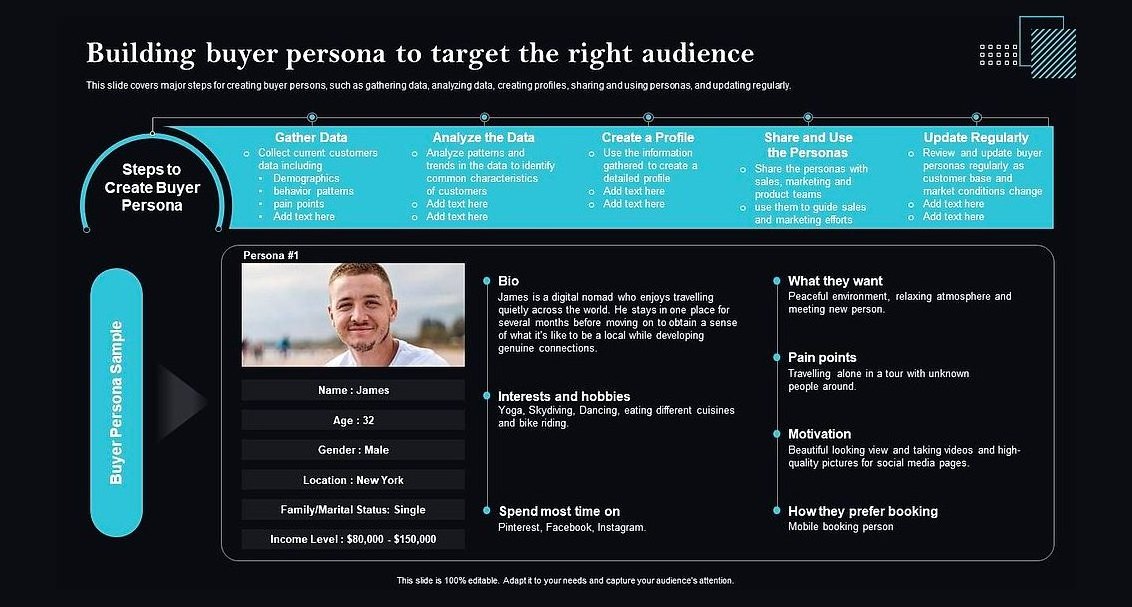 revopsHow do you build a buyer persona that sales actually uses in 2027?
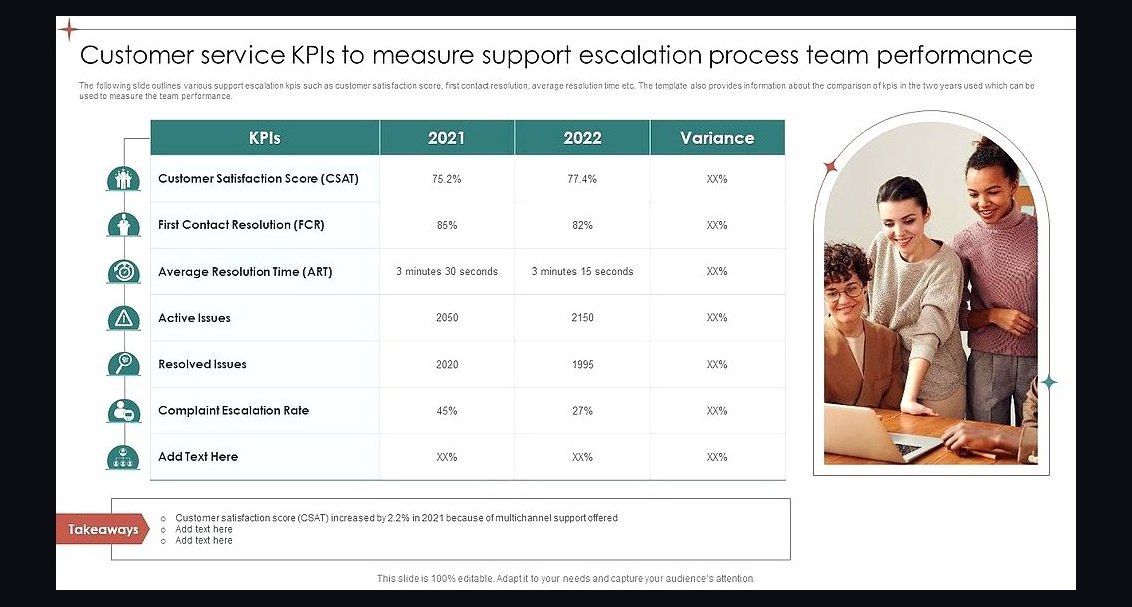 revopsHow should you handle mid-year comp plan resets without destroying trust in 2027?
 revopsHow do you operate sales during a system outage during end-of-quarter in 2027?
 revopsWhat are the basic qualifying criteria for a sales deal in 2027?
 revopsHow should a 2027 CRO and CEO align before a board meeting?
 revopsHow do you design a sales kickoff that changes behavior in 2027?
 revopsHow should a 2027 CS team attribute expansion vs save revenue?
 revopsWhat are Tennessee Volunteers men's basketball's 2027 NIL needs and strategy?
 revopsHow should a 2027 CS team respond to a coordinated customer revolt?