


How do you get into Chief women's network — application, requirements, and what actually gets you in in 2027?
Quality
Certified
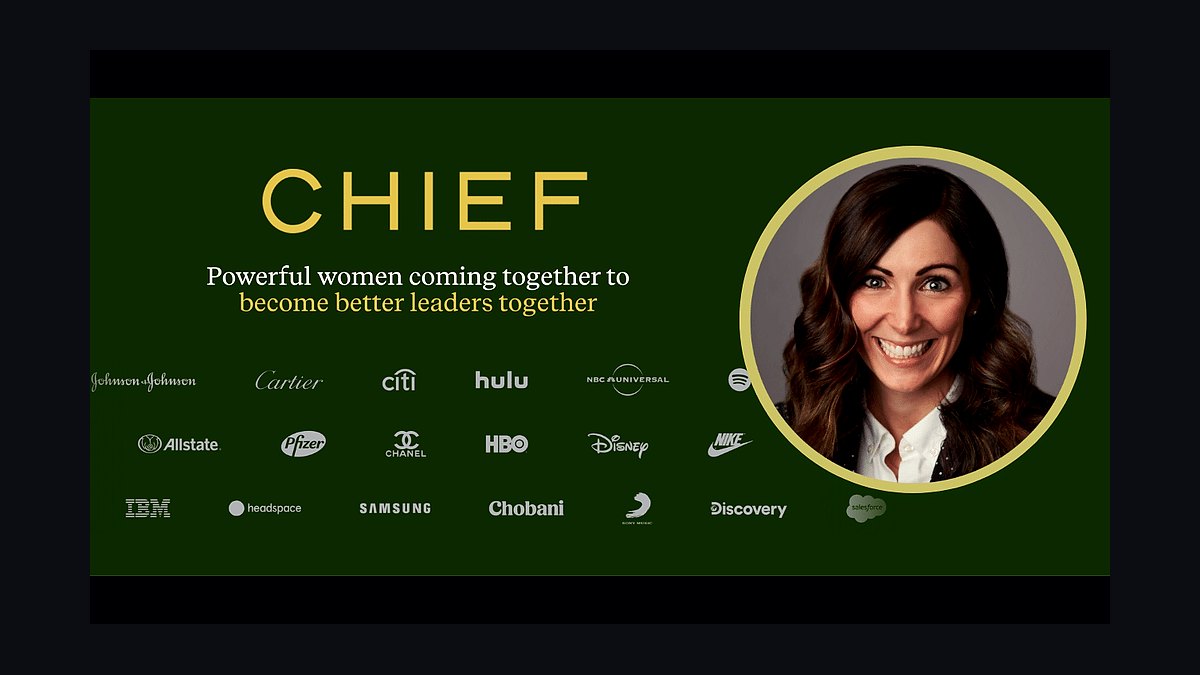
Chief's stated bar is "VP+ at a credentialed company, C-suite, board director, or founder with $2M+ ARR or venture funding" — but in 2027 what actually gets you in is the combination of title-plus-company-stage (a VP at a no-name seed startup gets rejected, a VP at a Series C+ or Fortune 1000 sails through), plus a named referral from an existing member, plus filling a cohort gap (Chief overweights tech/finance/media and is hungry for industrial, healthcare ops, and public-sector execs). The 60,000-person waitlist is real, but it is not first-come-first-served — referrals and cohort fit skip the line.
TL;DR: VP+ title at a real-revenue company, two member references, and an underrepresented-industry angle is the formula. Title without company stage is the #1 reason qualified-looking applicants get rejected.
1The Stated Eligibility Criteria
Chief publishes its bar at chief.com/membership-criteria, and as of the October 2025 expansion the published categories are: (1) C-suite executives at any organization with material revenue or institutional backing; (2) VP-level and above at "credentialed" companies, which Chief defines through a combination of headcount, funding stage, and brand recognition; (3) board directors of public or private companies; (4) founders and solopreneurs whose business generates $2 million or more in annual revenue, or who have raised institutional venture funding; and (5) fractional executives, consultants, and leaders in career transition whose most recent role meets the VP+ or CXO bar at a credentialed company.
Industry adjustments are baked in. Chief explicitly notes that "VP" means different things in different sectors — at a national or global bank, Managing Director and above is the equivalent bar, while at a regional bank a VP three levels below the CEO qualifies. Tech and media tend to inflate titles, so Chief implicitly discounts them; industrials, healthcare systems, and government tend to deflate titles, so Chief implicitly inflates them. The annual membership fee sits at $5,800 for Core membership and roughly $7,900 for Executive (the C-suite tier with coaching), and roughly seventy percent of members have their dues sponsored by their employer. The application itself is short, the response window is around two weeks, and successful applicants get a thirty-minute interview before final approval. None of this is unusual for a vetted private network — what is unusual is the size of the waitlist, currently north of 60,000 names.

2What Actually Gets You In (vs the Marketing Bar)
%20How%20do%20you%20get%20into%20Chief%20wo%2C%20realistic%20magazine%20style%2C%20warm%20light%2C%20no%20text%2C%20no%20watermark?width=1200&height=675&nologo=true&model=flux&seed=93878)
Here is the unvarnished version, drawn from talking to current and former members and reading between the lines of Chief's own publishing.
Title inflation is tolerated only up to a point. A "VP of Marketing" at a five-person seed startup with no revenue is a near-automatic rejection, even though the literal title clears the bar. Chief's reviewers are pattern-matching on company stage as much as job title. The internal heuristic, as best as outside observers can reconstruct it, is roughly "$5M+ in ARR or $50M+ in cumulative funding" for the company to count as credentialed. Below that line, the title does not carry weight.

Referrals materially help. Chief publicly says you can apply without a referral and that is true, but a named reference from an existing member moves your application from the open queue to a faster-track review. Two references is the sweet spot — one looks transactional, three looks rehearsed. The references do not need to write essays; a simple "I vouch for this person, here is the context of our working relationship" is enough.
Cohort fit is the under-discussed lever. Chief organizes members into Core Groups of roughly ten peers, and recruiters actively work to balance industry, function, and geography inside each cohort. If you are the third CMO of a B2B SaaS company in New York applying that week, you compete with the other two. If you are a VP of Operations at a regional health system in Cleveland, you fill a gap and your odds jump materially.

Geography skews coastal. NYC, LA, San Francisco, Boston, and DC have dense Chief presence and faster acceptance. Atlanta, Chicago, and Miami are growing. Mid-tier markets get accepted but typically routed to virtual cohorts, which some applicants treat as a soft rejection.
| Profile | Acceptance odds | Why |
|---|---|---|
| C-suite at Series C+ SaaS | High | Core ICP, brand value |
| VP at Fortune 500 | High | Pedigree screen passes |
| VP at <$10M ARR startup | Low | Title without stage |
| Solo consultant / coach | Very low | No org standing, unless prior CXO |
| Public-company board director | High | Board signal is its own credential |
| Niche industry (industrial, gov, healthcare ops) exec | Mid-to-high | Fills cohort gap |
| Founder, $2M+ ARR | High | Meets explicit revenue bar |

3The 2027 Application Playbook — 5 Moves
Move 1: Lead with title, company stage, and headcount in the first line. The application has a short "tell us about your role" field. Wasting it on mission statements is a tell that you do not have the credentials. Write "VP of Product, [Company], Series C, 240 employees, $80M ARR." Reviewers read hundreds a week. Make the screen pass automatic.
Move 2: Name two existing Chief members as references in the referral field. Do not name three. Do not name one. Two is the configuration that signals you are connected without looking coached. If you do not know two members, spend a week on LinkedIn finding mutuals — Chief members openly tag themselves and most will take a fifteen-minute call.

Move 3: Frame your "what I bring" answer around a gap, not a strength. Do not say "I bring fifteen years of marketing leadership." Say "I bring operating experience from regulated healthcare, an industry currently underrepresented in Chief's NYC cohorts." Cohort gap framing is the single highest-leverage edit you can make.
Move 4: Apply in months 8 through 10 of the cohort cycle, not in January. January and September are peak inbound, when New Year and post-summer resolutions hit. May through July, and October through November, are quieter for recruiters and your application gets more attention.

Move 5: Skip the waitlist with a direct email. If you get waitlisted, do not wait passively. Email the membership team at membership@chief.com with a one-paragraph update — a promotion, a board seat, a new funding round, a speaking gig. Updates trigger re-review. Roughly a third of waitlisted applicants who send a substantive update inside ninety days get pulled into the next cohort.

Related on PULSE
- How do you structure prime-sub RevOps when Palantir holds the platform award and you sell the application layer?
- How do you model quota credit when Palantir delivers the platform and you sell the application layer?
- How do you coach a rep who gets ghosted after strong first calls?
- How do you coach a rep who gets defensive in 1:1s?
- How should discount governance evolve as the company scales from founder-led to a hired VP Sales or CRO — what gets locked in now to make the handoff clean?
- What is the right Salesforce permission set architecture for a 30-rep team that does not break governance when an SDR gets promoted to AE?
What Happens After You’re Accepted — The First 90 Days
Getting into Chief is only the start; the real value comes from how you use the first quarter of membership. Upon acceptance, you’re assigned a “pod” of 8–10 non-competing senior women from similar-stage companies, and you’re expected to attend a monthly 90-minute pod meeting (virtual or in-person, depending on your city). In 2027, pods are algorithmically matched based on industry, company stage, and stated goals (e.g., “preparing for first board seat” vs. “scaling a $50M division”). Members who skip more than two pod meetings in a row risk being moved to an inactive status, which limits access to the private app and events. The most successful new members schedule 1:1 coffee chats with at least three pod mates within the first month — these personal connections are what unlock referrals for board seats, funding intros, and speaking opportunities. Chief also runs a “New Member Onboarding” series (four 60-minute virtual sessions) covering how to navigate the platform, request introductions, and apply for the executive-in-residence program. Completing onboarding within 45 days is strongly correlated with higher retention and satisfaction in year one.
Three Common Application Mistakes That Get You Waitlisted
Even VP+ candidates with solid companies get stuck on the waitlist due to avoidable errors. First, vague or generic answers in the “Why Chief?” essay — admissions reads hundreds of these per week, and responses like “I want to network with other women leaders” are instant red flags. Strong essays cite a specific challenge (e.g., “I’m leading a digital transformation at a legacy manufacturer and need peer input on change management”) and name a Chief program or resource they intend to use (e.g., the Executive Coaching track or the Board Readiness module). Second, failing to list your company’s stage or revenue in the application — Chief’s system auto-verifies LinkedIn and Crunchbase, but if your company is private and not widely covered, you must manually add ARR or funding round in the “Additional Context” field. Third, applying with only one reference instead of two — the system will accept a single reference, but it flags your application as incomplete, and incomplete applications are deprioritized behind those with both references submitted. A fourth, less obvious mistake: applying during a month when your industry cohort is already full (e.g., fintech in Q1 2027 had a 14-month waitlist, while healthcare operations had a 3-month waitlist). Checking with a member about current cohort demand before submitting can save you months of waiting.
How to Get a Referral Without Knowing a Member
If you don’t have two existing Chief members to vouch for you, you’re not out of luck — but you need to be strategic. Chief runs a “Member Ambassador” program where active members earn perks (like free event tickets or coaching credits) for referring strong candidates. The best way to get on their radar is to attend a public Chief event — they host 30–40 free virtual panels and workshops per year, often with registration open to non-members. After attending, connect with the panelists or organizers on LinkedIn, mention something specific you learned, and ask if they’d be open to a 15-minute call to discuss whether Chief is a fit for your goals. Alternatively, join a Chief-affiliated community like the “Chief Women in Tech” LinkedIn group (which has ~15,000 non-member participants) and engage thoughtfully in discussions. Members often lurk there and will proactively offer referrals to engaged contributors. A third route: if your company has a corporate membership with Chief (common at Fortune 500s and large professional services firms), your internal HR or DEI team can submit a bulk referral that bypasses the individual reference requirement entirely. In 2027, roughly 1 in 4 new members enter through corporate partnerships rather than individual referrals, so check with your employer before applying solo.
FAQ
Do I need to be a VP at a Fortune 500 company to get in? Not necessarily, but your company needs real revenue or funding—think Series C+ or Fortune 1000. A VP at a seed-stage startup with no traction is typically rejected, while a VP at a well-funded growth company or established firm usually sails through.
How important is a member referral for the Chief application? Very important—it can skip you past much of the waitlist. Two named referrals from existing members significantly boost your chances, as the network heavily weights community vouching over cold applications.
What happens if I apply without a referral? You’ll likely enter the general waitlist, which is real and can take 6–18 months for a spot. Referrals and cohort fit (like being from an underrepresented industry) can move you to the front of the line.
Is there an interview, and what do they ask? Yes, a 30-minute interview follows if your application passes initial checks. They focus on your leadership experience, why you want to join, and how you’d contribute—not hard stats, but alignment with the network’s peer-support mission.
Can I reapply if rejected? Yes, and many do after gaining a stronger title, company stage, or referral. The rejection is often about timing or cohort fit, not permanent—reapplying with a clearer angle (e.g., moving to a funded company) can work.
What industries give me an edge in 2027? Chief currently overweights tech, finance, and media, so it’s actively recruiting from industrial, healthcare operations, and public-sector execs. If you’re in one of these underrepresented fields, your application gets a closer look even with a slightly lower title.
Sources
- Chief Membership Criteria (official)
- Chief Apply Page (official)
- Chief FAQ (official)
- Chief (women's network) — Wikipedia)
- Yahoo Finance / Fortune coverage of Chief's $1B valuation and 60,000-person waitlist
- US Chamber of Commerce profile on Chief's growth pivot
- Hollywood Reporter — Inside Chief L.A.
- WomenCEO alternative-to-Chief analysis (independent perspective on selectivity)
People also search for: get into chief women's network · how to get into chief women's network · get into chief women's network guide
This page will be disappearing soon. Save it to your device for $1 — or read it free while it is here.
@Kory-White- · if Venmo asks, the last 4 of my number are 2012
This page is gone.
This one is off the shelf now. $1 keeps it on your phone for good — the whole page, pictures and diagrams included.
 women-execChief's gender-identity policy — non-binary, trans, and gender-fluid executives in 2027
 women-execWhy Chief's content library is generic LinkedIn fodder — and what executives actually need instead in 2027
 women-execWhy Chief's Annual Summit is overpriced and underwhelming in 2027?
 women-execIs Chief's Annual Summit worth attending — the in-person event review in 2027
 women-execShould Chief ditch the Clubhouses and become a women's vacation club instead in 2027?
 women-execIs Chief's no-men policy outdated — the case for opening up in 2027
 women-execChief's diversity gap — what the marketing says vs what the cohorts look like in 2027
 women-execChief's biggest unforced error — the October criteria expansion in 2026
 women-execChief's coastal-only problem — heartland women execs are effectively excluded in 2027
 women-execWhen should you cancel your Chief membership — and where to go next in 2027