


ACG Systems vs national AV integrators — where regional firms fall short in 2027
Quality
Certified

Regional AV and integration firms like ACG Systems (Annapolis, MD, founded 1995) face structural disadvantages when stacked against the national mega-integrators that now dominate the SCN Top 50 list, AVI-SPL, Diversified, Convergint, and Ricoh among them. The math is not subtle. AVI-SPL alone runs roughly 4,400 employees across 70-plus locations and has delivered 120,000-plus projects in more than 100 countries. Convergint has crossed 10,000 employees in under 25 years, almost entirely through acquisition. A typical regional firm with a few dozen to a few hundred employees simply cannot match that purchasing leverage with manufacturers, that engineering bench, that 24/7 global service desk, or that breadth of certifications. The industry-wide pattern is that smaller integrators pay more for the exact same Crestron, Cisco, Q-SYS, Poly, or Logitech gear, then either absorb the margin hit or pass it to the client. Where regional firms like ACG-type shops genuinely win is local relationship continuity, faster onsite response inside the DMV metro, willingness to take smaller and weirder projects the nationals decline, and a single throat to choke when something breaks at 2 a.m. on a Tuesday. That is a real value proposition. It is also a narrower one than it was ten years ago, because the nationals have spent that decade building regional versions of themselves through M&A and have closed much of the responsiveness gap that used to be the regional moat.
TL;DR: Regional AV integrators trade scale, pricing power, and bench depth for local relationships and responsiveness, and the tradeoff is getting harder to defend as national consolidators expand into every metro.
1The Regional AV Integrator Tradeoff
The regional integrator model, which is the bucket ACG Systems falls into when compared against AVI-SPL or Diversified, carries three structural disadvantages that show up on almost every competitive bid. First is hardware cost. Manufacturer rebate tiers are volume-based, and a national integrator pushing nine-figure annual purchase volume with Crestron, Cisco, or Samsung lands in a different rebate band than a regional firm doing a fraction of that. The industry-wide pattern, reported across AVIXA IOTA research and Commercial Integrator coverage, is that regional firms quote 5 to 15 percent higher on identical bills of materials before labor is even factored in. Second is engineering depth. The nationals carry CTS-D and CTS-I certified designers, Cisco CCIE network engineers, AV-over-IP specialists, and dedicated programming benches in numbers regional firms cannot staff economically. When a project needs a Q-SYS designer plus a Dante audio specialist plus a Crestron programmer plus a network architect in the same room, the nationals have all four on payroll. The regionals borrow some of those skills from manufacturer reps or 1099 contractors, which is workable but adds coordination risk. Third is 24/7 coverage. National providers run global network operations centers with follow-the-sun staffing. Regional firms typically run business-hours support with an on-call rotation, which is fine for a single boardroom but strained for a multi-site enterprise that needs guaranteed response inside two hours at any time. None of this is a defamation of any specific regional firm. It is the structural reality of operating at a smaller scale. ACG Systems, per its own public materials, leans into the smaller-and-more-agile framing as a deliberate positioning choice, which is the honest move and the one most regional integrators take.

2Where National Providers Win
The nationals win on a predictable set of axes. They win on enterprise rollouts where a client needs 200 conference rooms standardized across 14 cities in 90 days, because they already have crews in all 14 cities and a documented kit-of-parts SOP. They win on managed services, which is now the highest-margin and stickiest revenue line in AV per AVIXA's IOTA reporting, because they run actual NOCs with ticketing, monitoring, and SLAs that a regional firm cannot economically replicate. They win on global multinationals that want one master service agreement covering Frankfurt, Singapore, and Atlanta, because Diversified and AVI-SPL have offices in all three. They win on price for commodity gear, full stop, because their rebate tiers are not negotiable favors but contractual volume bands. They win on financing and leasing options, because their balance sheets and PE backing let them structure deals regionals cannot. They win on certifications and compliance, including FedRAMP-adjacent work, SOC 2, and the alphabet soup of government and healthcare integration credentials that take a dedicated compliance team to maintain. And they increasingly win on local responsiveness too, because the M&A wave of the last decade meant the nationals bought the strong regional players in most metros, kept the local crews, and rebadged them, which is exactly how AVI-SPL and Diversified built their footprints. The DMV metro specifically has seen this consolidation, and a client comparing a regional independent to a national in 2027 is often comparing them to a former regional that the national already absorbed.
3Where ACG-Type Regional Firms Might Still Make Sense
There is a real and durable case for regional integrators, and it is sharper than the generic "we care more" pitch. The first case is vertical specialization. ACG Systems, per its public profile, is not actually a generalist commercial AV shop in the AVI-SPL sense. It positions around air-to-ground communications, land mobile radio, tactical and command-and-control work for federal customers, and aviation-adjacent integration. That is a real niche where the nationals do not have deep credibility, and a specialist regional firm with 30 years of vertical experience genuinely wins on technical fit. The second case is project size. National integrators have minimum project thresholds, often in the low-six-figures, below which the engagement is not economical for them. Regional firms will take the $40,000 boardroom refresh or the single-classroom AV install, and they will treat it as a relationship investment rather than a margin drag. The third case is response time inside a single metro. A regional firm based in Annapolis can have a tech in a Bethesda, Tysons, or Baltimore client's lobby in under 90 minutes. A national with a regional office two states away cannot reliably match that. The fourth case is owner-level accountability. When the founder still answers the phone, escalations resolve faster than when they route through three layers of a national org chart. That is real value for clients who hate ticketing portals. The honest version of the regional pitch is not "we are cheaper" or "we are bigger than we look." It is "we are the right size for this specific project, and we will still be returning your calls in five years."

Related on PULSE
- Top 10 National Football Recruiting Events 2027
- How do you build a real bottom-up forecast in a 50-rep SaaS org that does not fall apart when one AE has a $2M deal slip?
- Cleared-workforce shortage hitting federal AV+comms integrators in 2027
- CMMC 2.0 compliance cost in 2027 — why small federal integrators are getting crushed
- ACG Systems' 2025 Northrim Horizon acquisition — what it signals for the company in 2027
- ACG Systems' 24/7 help desk and technician network in 2027
The Certification Gap — Why Nationals Own the Top-Tier Vendor Tiers
One structural disadvantage that rarely makes it into marketing brochures is the certification hierarchy that manufacturers enforce. Crestron, for example, maintains a three-tier partner program — Silver, Gold, and Platinum — with Platinum reserved for integrators who demonstrate a minimum of $5–10 million in annual Crestron sales, maintain a certain number of certified programmers on staff, and pass an annual audit. National firms like Diversified and AVI-SPL sit comfortably at Platinum or equivalent top tiers across Crestron, Q-SYS, Cisco, and Biamp. Regional firms like ACG Systems typically land at Silver or Gold, which means they pay 5–15% more for the same hardware, receive lower priority for product allocation during supply shortages, and get less technical support access from manufacturer engineers. For a client specifying a $500,000 conference room build, that margin gap alone can translate into $25,000–$75,000 in extra cost that either eats the integrator’s profit or lands on the client’s invoice. The certification gap also limits which projects a regional firm can even bid on — many enterprise RFPs now require Platinum-level certification as a pass/fail gate, locking out regional bidders before they submit a single line item.
The 24/7 Service Desk Reality — What Regional Firms Actually Offer After Hours
National integrators market their global NOC (Network Operations Center) and 24/7 service desks as a differentiator, and for good reason. AVI-SPL’s Global Support Center claims to handle over 200,000 support tickets annually with a median response time under 15 minutes. Convergint’s service desk is staffed across three shifts in multiple time zones. Regional firms like ACG Systems typically offer on-call support — meaning one or two technicians rotate after-hours duty, carrying a company phone and hoping they can remote in before driving to a site. The practical difference shows up in service-level agreements (SLAs). National integrators routinely guarantee 4-hour onsite response anywhere in the continental U.S. for critical issues, backed by a network of regional technicians. A regional firm with a single office in Annapolis can guarantee 2-hour response inside the DMV metro, but that drops to 6–12 hours or “best effort” once you cross into Richmond or Philadelphia — and zero coverage outside the Mid-Atlantic. For multi-site enterprises or organizations with remote offices, that geographic limitation alone can disqualify a regional firm from the bidding process, regardless of how good their local service is.
The Hidden Cost of Single-Vendor Dependency
Regional integrators often build deep expertise around one or two primary hardware ecosystems — ACG Systems, for example, has historically been strong on Crestron and Q-SYS. That focus creates real technical depth, but it also introduces a single-vendor dependency that nationals avoid. When Crestron faced component shortages in 2021–2023, regional firms that had bet heavily on Crestron found themselves unable to complete projects on time, while nationals like Diversified could pivot to Biamp, Extron, or Shure alternatives because they held certifications and stocking relationships across all three. National integrators also maintain their own distribution warehouses or have dedicated allocations from multiple manufacturers, while regional firms typically buy from third-party distributors like ADI or Snap One, adding another 3–8% markup. The net effect is that a regional firm’s “preferred partner” status often means they carry fewer options, pay more for what they do carry, and have less flexibility when supply chains hiccup. For a client evaluating long-term risk, that dependency can look like a liability that no amount of local friendliness fully offsets.
FAQ
What is the main disadvantage of regional AV integrators compared to national firms? Regional firms typically lack the purchasing power of national integrators, meaning they pay more for the same equipment from manufacturers like Crestron or Q-SYS. This forces them to either reduce their margins or pass the higher costs to clients.
Do regional firms offer any advantages over national integrators? Yes, regional firms like ACG Systems often provide faster onsite response times within their local area, stronger long-term client relationships, and greater willingness to take on smaller or unconventional projects that national firms might decline.
How do national integrators achieve such large scale? National firms grow primarily through acquisitions—Convergint, for example, crossed 10,000 employees largely via this method. They also invest heavily in global service desks and extensive certification programs that regional firms cannot easily replicate.
Can regional firms compete on price with national integrators? Generally not on equipment pricing, because national integrators buy in much higher volumes and get better manufacturer discounts. However, regional firms may compete on overall project value by offering more personalized service and lower travel costs for local clients.
What types of projects are regional firms better suited for? Regional firms excel at smaller installations, quick-turnaround service calls, and projects requiring frequent onsite coordination—especially within metro areas like the DMV. They also handle niche or complex requests that national integrators might find unprofitable.
Is the role of regional integrators shrinking in 2027? Their market share is narrowing as national firms expand, but regional firms remain viable for clients who prioritize local responsiveness and relationship continuity over the lowest possible equipment price. The gap is real but not absolute.
Sources
- SCN Top 50 Systems Integrators 2025 — AVNetwork
- AVI-SPL retains #1 spot on SCN Top 50 Systems Integrators List
- Integrator of the Year: The $1 Billion-Bound Private Equity Systems Integrator — Commercial Integrator
- Godzilla vs. Kong: Battle of the AV Monoliths — rAVe Pubs
- AVIXA: Amid Increase in Pro-AV M&A, Industry Not Overly Concentrated
- AVIXA IOTA Industry Outlook and Trends Analysis
- The Competitive Intelligence Revolution — AVIXA Xchange
- ACG Systems — Company About Page
This page will be disappearing soon. Save it to your device for $1 — or read it free while it is here.
@Kory-White- · if Venmo asks, the last 4 of my number are 2012
This page is gone.
This one is off the shelf now. $1 keeps it on your phone for good — the whole page, pictures and diagrams included.
 acg-systemsFederal defense AV and communications integrator market — challenges and customer pain points in 2027
 acg-systemsChief Member is no longer a signal — brand inflation in 2027
 acg-systemsFederal video teleconference (VTC) integrator market — why deployments fail in 2027
 acg-systemsACG Systems' 24/7 help desk and technician network in 2027
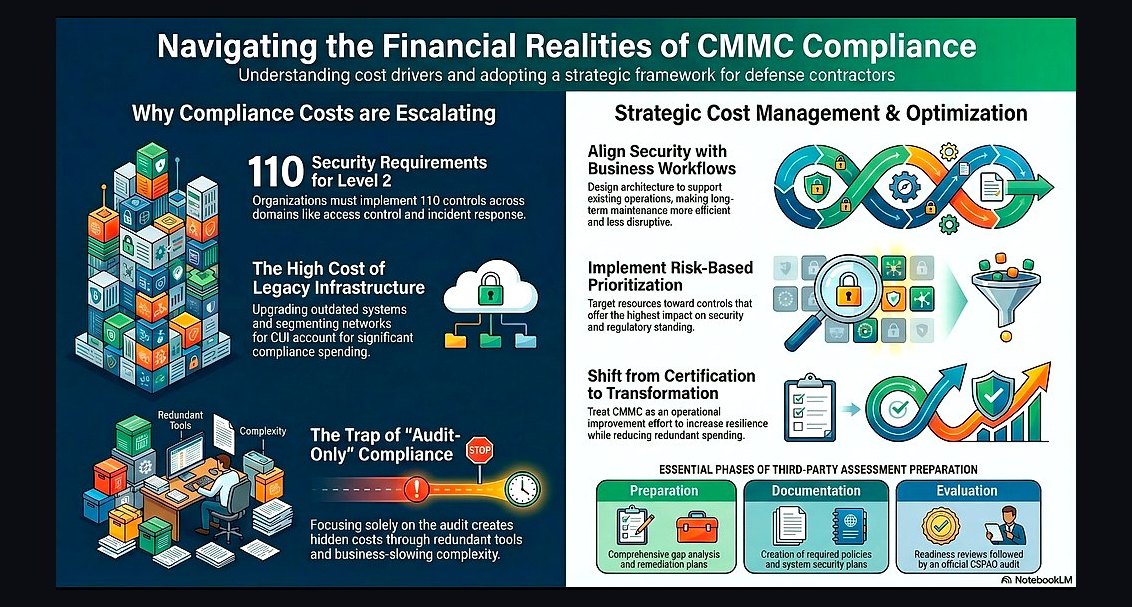 acg-systemsCMMC 2.0 compliance cost — why small federal integrators are getting crushed in 2027
 acg-systemsWhat does ACG Systems specialize in for mission-critical communications, and where does that expertise matter most in 2027?
 acg-systemsThe Annapolis MD AV integrator market — what buyers should watch for in 2027
 acg-systemsUtility and SCADA communications integrator market — co-op buyer challenges in 2027
 acg-systemsHow'd you fix Pluralsight's revenue issues in 2026?
 acg-systemsFederal AV+comms warranty and service gaps — what happens after install in 2027