


Federal defense AV and communications integrator market — challenges and customer pain points in 2027
Quality
Certified
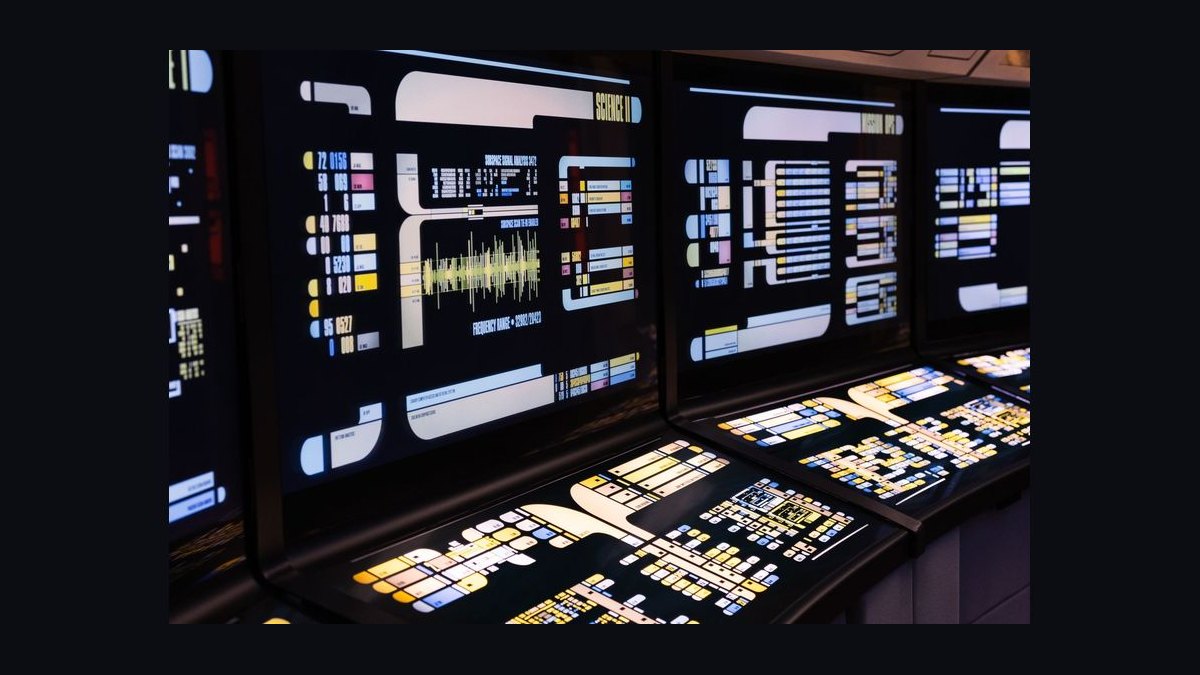
By 2027, federal defense AV and communications integrator market challenges center on SCIF accreditation backlogs stretching 24–36 months, a cleared-labor shortage pushing staffing substitutions past 50% of mid-tier projects, CMMC 2.0 compliance costs that price out smaller bidders, unfunded post-quantum cryptography migration, and vendor lock-in marketed as open architecture. Customer pain points: schedule slips, change-order inflation, junior on-site teams, and vague security roadmaps.
The two delivery models compared: prime-led integration versus best-of-breed assembly
Federal defense buyers in 2027 face a fork in how they buy AV and communications integration. The first option is a single prime integrator holding the whole scope — design, procurement, installation, accreditation support, and sustainment — under one contract vehicle. The second is best-of-breed assembly: the program office or a systems integrator of record buys the control system, DSP, codecs, and structured cabling from separate vendors and stitches them together with in-house or contracted engineering.
The prime-led model wins on accountability. When a SCIF build slips, there is one throat to choke, one schedule to re-baseline, and one entity responsible for the accreditation package submitted to the cognizant security authority. It loses on margin transparency and lock-in risk: the prime controls which control-system ecosystem lands in the room, and switching costs after award are brutal.
Best-of-breed wins on flexibility and price discovery. A program office that buys its own Q-SYS or Crestron core, its own codecs, and its own DSP can hold each vendor to its own warranty and roadmap. It loses on integration risk — the seams between products become the government's problem, and every firmware mismatch becomes a troubleshooting ticket the program office owns.
For 2027 specifically, the calculus has shifted. CMMC 2.0 Level 2 flow-down means every subcontractor touching controlled unclassified information must itself be assessed, which makes sprawling best-of-breed supply chains more expensive to assemble than they were in 2023. That tilts marginal buyers toward primes — but only primes that can actually staff cleared labor, which many cannot.
How to decide between them
The decision hinges on four variables: scope volatility, in-house engineering depth, accreditation exposure, and sustainment horizon. If the requirement is stable and the program office has organic CTS-D-level design capacity, best-of-breed usually wins on total cost of ownership over a five-year horizon. If the requirement is volatile, the facility is accreditation-sensitive, or the office lacks cleared engineering staff, prime-led is safer even at a 12–20% price premium.
A practical screen: count the number of interface points between subsystems in the proposed design. Under roughly fifteen, best-of-breed is manageable. Over thirty, the integration burden usually exceeds what a government team can absorb alongside its day job, and a prime becomes the rational choice.
Neither path removes the underlying 2027 pressures. Both still run into ICD-705 accreditation queues, cleared-labor scarcity, and PQC uncertainty. The model choice only determines who absorbs the pain and where the contract leverage sits.
Concrete numbers behind each option

Prime-led integration on a mid-size classified conferencing build — call it twelve rooms across two facilities — typically carries a program value in the $3M–$8M range depending on codec density and TEMPEST shielding requirements. Realized gross margin for the integrator on that work, by industry-typical accounts, has compressed to the low double digits after accreditation delays and change orders, versus mid-twenties on comparable commercial work. That compression is why primes back-load discovery and thin senior engineering benches.
Best-of-breed on the same scope usually lands 10–18% cheaper on hardware line items because the government buys at published GSA or NASA SEWP pricing rather than through a prime's markup. But the program office absorbs integration labor it rarely budgets for: figure 800–1,600 engineering hours to commission and document a twelve-room classified build, plus recurring firmware and configuration management.
Cleared labor is the dominant cost driver in both models. A TS/SCI-cleared senior AV engineer commands a loaded rate commonly reported in the $180–$260 per hour band, and the population of engineers who hold both that clearance and deep control-system programming skill is measured in the low thousands nationally. Prime-led teams mitigate this by staffing one cleared lead per project and surrounding them with uncleared technicians under escort — which works until the escort ratio forces a second cleared body the prime does not have.
CMMC 2.0 Level 2 assessment costs sit in the mid-six figures for a small or mid-sized firm, a fixed cost that must be amortized across a limited number of qualifying task orders. That arithmetic pushes smaller integrators out of the bidding pool entirely, which reduces competition and, counterintuitively, gives remaining primes more pricing power.
Post-quantum migration is the unfunded line nobody has priced. Rip-and-replace of a single SCIF's AV infrastructure for PQC-capable hardware can run $200,000–$500,000, and there is no dedicated appropriation for it. Buyers who lock into a three-year sustainment tail in 2027 should assume at least one cryptographic refresh inside that window.
Implementation details and sequencing
Whichever model the customer selects, the sequencing that survives 2027 looks similar. Start with a sponsor-facing accreditation pre-brief before any hardware is ordered — confirm the cognizant security authority's current ICD-705 interpretation in writing, because local interpretations vary and a design that passed in one region can be rejected in another. Then lock the design freeze, name the cleared lead engineer in the contract with a no-silent-substitution clause, and stage payments against accreditation milestones rather than substantial completion.
Procurement sequencing matters as much as technical sequencing. Order long-lead shielded enclosures and TEMPEST-rated components first — lead times on specialized RF shielding have stretched well beyond standard commercial AV gear. Commission the control and management layer before the codecs, because management-plane problems are cheaper to find before endpoints are mounted.
For RevOps teams supporting defense-focused integrators, the same sequencing applies to the revenue side: milestone-based revenue recognition should track accreditation gates, not calendar quarters, or the forecast will drift every time an AO queue backs up. Pipeline hygiene in this segment depends on modeling accreditation latency as a first-class variable rather than an exception.
The holdback percentage is the single most useful lever. Withholding 15–25% against final accreditation, rather than against substantial completion, aligns the integrator's cash flow with the outcome the mission actually needs. Integrators will resist; the clause is nonetheless standard practice in well-run programs and defensible in source selection.
Where the customer pain actually concentrates
Five symptoms recur across integrators large and small in 2027. Schedule slips driven by accreditation queues. Scope inflation through change orders that should have been in the original design. Junior-heavy on-site teams with the cleared lead appearing only at milestones. Vague answers on post-quantum and zero-trust roadmaps. And lock-in dressed as modular open systems compliance.
The lock-in symptom deserves particular attention because it is the hardest to detect at proposal stage. An integrator can claim open architecture while delivering a stack tied to one control ecosystem, one DSP family, and a proprietary cloud management plane the government cannot migrate off without a forklift. The test is concrete: ask for the exit plan. If migrating to a different control system in year three requires replacing endpoints, the architecture is not open regardless of what the slide deck says.
Budget pressure compounds every symptom. Continuing resolutions delay obligation authority, which delays kickoff, which pushes work into a compressed execution window where corners get cut. Program offices that planned a fiscal-year delivery find themselves re-baselining against the next authorization cycle and absorbing the political cost of a slipped capability.
Related questions
Why are SCIF accreditation timelines stretching past 24 months in 2027?
The 2025 ICD-705 refresh tightened RF shielding, TEMPEST zoning, and acoustic isolation criteria, invalidating much of the existing installed base. Cognizant security authority backlogs and sponsor review queues add six to eighteen months on top of a standard nine-month accreditation cycle, and integrators quoting shorter timelines are typically optimistic.
How much does cleared labor scarcity raise project costs?

A TS/SCI-cleared senior AV engineer commands loaded rates commonly reported between $180 and $260 per hour. Integrators maintaining a 25–30% cleared bench to avoid substitutions pass 15–25% price increases to customers, and many choose to under-staff instead, which surfaces later as schedule slips.
Is post-quantum cryptography actually a 2027 buying criterion?
Yes, if the system has a sustainment tail past 2030. NSA's CNSA 2.0 timeline targets PQC migration by 2030, and most currently shipping AV codecs lack hardware roots of trust for CRYSTALS-Kyber or CRYSTALS-Dilithium. Buyers should require line-item part numbers and a written migration plan, not roadmap slides.
What contract clauses best protect a defense AV buyer?
Name the cleared lead engineer with a no-silent-substitution clause. Withhold 15–25% against final accreditation rather than substantial completion. Require a documented exit path from the control and management stack. Require a written PQC migration plan with specific part numbers.
How does CMMC 2.0 change the bidding pool?

Level 2 assessment costs sit in the mid-six figures for small and mid-sized firms, a fixed cost amortized across limited qualifying task orders. That arithmetic pushes smaller integrators out of contention, reducing competition and giving remaining primes more pricing power on classified work.
FAQ
What is the single biggest challenge in the federal defense AV and communications integrator market in 2027? SCIF accreditation latency. The 2025 ICD-705 refresh plus cognizant security authority backlogs routinely push new builds toward 24–36 months, which breaks fiscal-year delivery plans and forces program offices to re-baseline funding and re-justify obligations to comptrollers.
Why do integrators keep under-delivering on classified AV projects? The economics push them there. Federal work carries heavier bid-and-proposal burden, higher cleared-labor costs, and slower revenue recognition than commercial work, so integrators thin senior benches and back-load discovery. Customers experience the result as scope drift, change-order inflation, and unfamiliar faces on site.
How real is the vendor lock-in problem in defense AV?

Real and under-detected. Modular open systems approach language appears in most proposals, but delivery frequently ties the government to one control ecosystem, one DSP family, and proprietary cloud management. The practical test is whether migrating control systems in year three requires replacing endpoints.
What should a program office do about post-quantum cryptography in 2027? Demand specifics at proposal stage. Ask for part numbers, hardware root-of-trust documentation, and a firmware update path supporting CRYSTALS-Kyber or CRYSTALS-Dilithium. Systems without a credible PQC story will need rip-and-replace inside their sustainment window, at $200,000–$500,000 per SCIF.
Does best-of-breed assembly avoid these problems? It shifts them rather than solving them. Best-of-breed can cut hardware costs 10–18% and preserve flexibility, but the program office absorbs integration labor — roughly 800–1,600 engineering hours on a twelve-room build — and owns every firmware mismatch and interface failure.
How should RevOps teams forecast defense AV integrator revenue in 2027? Model accreditation latency as a first-class pipeline variable rather than an exception. Tie revenue recognition milestones to accreditation gates, not calendar quarters, and stress-test forecasts against AO queue scenarios. Programs that forecast on calendar assumptions will miss repeatedly.
Sources
- https://www.acq.osd.mil/
- https://www.gao.gov/
- https://www.defense.gov/
- https://www.dni.gov/
- https://www.nsa.gov/
- https://www.cmmcab.org/
- https://www.csis.org/
- https://www.ndia.org/
- https://www.securityindustry.org/
- https://www.nist.gov/
Related on PULSE
- Federal SATCOM teleport integrator market in 2027 — buyer pain points
- Utility and SCADA communications integrator market in 2027 — co-op buyer challenges
- Federal AV+comms supply chain disruption in 2027 — TAA Section 889 challenges
- The Maryland defense contracting market in 2027 — DoD procurement challenges for Annapolis-area firms
- ACG Systems' aviation communications work in 2027 — defense and commercial niche
- Which single question helps a rep map their talk track directly to the buyer's pain points?
This page will be disappearing soon. Save it to your device for $1 — or read it free while it is here.
@Kory-White- · if Venmo asks, the last 4 of my number are 2012
This page is gone.
This one is off the shelf now. $1 keeps it on your phone for good — the whole page, pictures and diagrams included.
 acg-systemsLand Mobile Radio integrator market — public safety buying gotchas in 2027
 acg-systemsFederal comms integrator cybersecurity gaps — STIG and zero-trust compliance in 2027
 acg-systemsSCIF buildout integrator market — why ICD-705 schedules slip in 2027
 acg-systemsHow do you start a fractional CFO firm business in 2027?
 acg-systemsDispatch and command-and-control integrator market — gotchas for buyers in 2027
 acg-systemsFederal AV+comms supply chain disruption — TAA Section 889 challenges in 2027
 acg-systemsCleared-workforce shortage hitting federal AV+comms integrators in 2027
 acg-systemsFederal microwave backhaul and RF infrastructure integrator market in 2027
 acg-systemsHow'd you fix Pluralsight's revenue issues in 2026?
 acg-systemsFederal IDIQ and GWAC contract integrator market — buyer + integrator friction in 2027