


The Project 25 P25 radio integrator market — public safety procurement gotchas in 2027
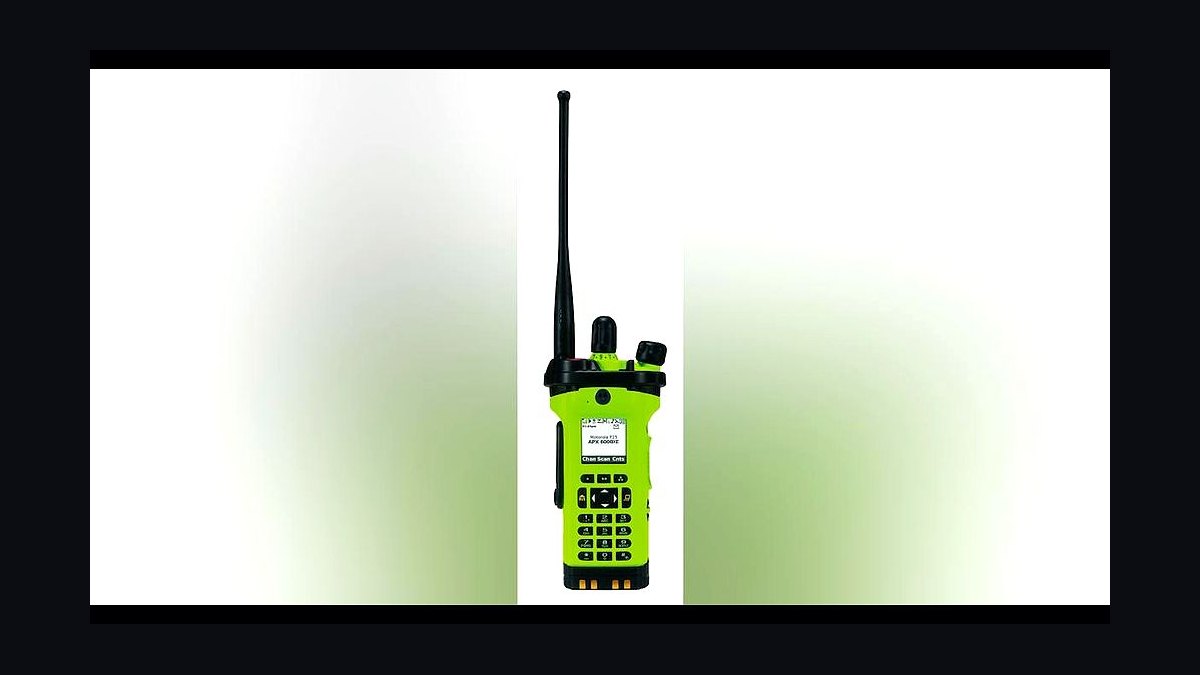
The P25 integrator market in 2027 looks healthy from the outside — eleven thousand-plus agencies, a published TIA standard, a federal Compliance Assessment Program, a half-dozen badged manufacturers, and a long tail of regional resellers. From the inside of a procurement file, it looks like a cartel with a compliance sticker. Sole-source justifications still dominate sheriff-office buys, subscriber-radio quotes still come in at three to five times the bill-of-materials cost, and the "open standard" continues to ship with proprietary encryption keys, proprietary console interfaces, and proprietary site-link microwave that quietly lock every follow-on dollar to the original vendor. Buyers in 2027 are not getting fleeced because they are stupid. They are getting fleeced because the integrator channel has been engineered, deliberately, to make the second decision in any P25 lifecycle look impossible.
1The standard was supposed to fix this, and it did not
P25 was chartered in 1989 with one explicit purpose: end the proprietary lock-in that had let a single vendor charge whatever it wanted for public-safety LMR. Thirty-eight years later the standard exists, the Compliance Assessment Program tests against it, and the dominant manufacturer still controls roughly seventy percent of trunked infrastructure and a similar slice of subscriber units. The reason is not that the standard failed technically — interoperability over the air does work. The reason is that the parts of the system that move money — the Inter-Sub-System Interface, the Console Sub-System Interface, the Fixed Station Interface, and the encryption key-loading workflow — were either left optional, left under-specified, or left implementable through proprietary firmware that a competing integrator cannot legally reverse.
The result in 2027 is a market where a buyer can technically put any badged radio on any badged network, and where in practice almost nobody does, because the integrator on the other end of the phone has a financial reason to tell them it will not work.

2The five procurement gotchas that show up over and over
2.1 The sole-source justification template
Walk through any state procurement portal in 2027 and the phrase "only one responsible source" appears on P25 awards with a frequency that would be illegal in almost any other category. Agencies invoke FAR 6.302-1 or its state equivalent, paste in language about compatibility with the existing trunked core, and award without competition. The justification is technically defensible — adding a non-incumbent site really would require gateway hardware the incumbent will not sell at a reasonable price — but it is also entirely manufactured by the incumbent's earlier insistence on proprietary site links.
2.2 Subscriber-unit pricing that has not tracked Moore's law
A P25 Phase 2 portable radio in 2027 contains roughly the same bill of materials as a mid-range ruggedized Android handset: a software-defined radio chipset, a display, a battery, a housing. The Android sells for four hundred dollars. The P25 portable sells for four to seven thousand dollars, sometimes nine thousand with multiband and encryption options that cost the manufacturer almost nothing to enable in firmware. Integrators defend the markup by pointing to certification, ruggedization, and lifecycle support, and some of that is real. Most of it is not. The same chipset, the same housing, and the same firmware sold to a federal customer at a GSA schedule price routinely lands at a local sheriff thirty percent higher because the local integrator added a "programming and provisioning" line item.

2.3 The encryption trap
P25 includes AES-256 as a standard encryption mode. It also permits proprietary modes — ADP, DVP-XL, and a handful of vendor-specific variants — and integrators routinely default agencies into the proprietary mode during initial keyloading. The moment that decision is made, every future radio on the system must come from a vendor licensed to implement that proprietary cipher, which in practice means one vendor. Agencies discover this two years later when they try to add a neighboring jurisdiction's radios to a mutual-aid talkgroup and the audio comes out as static.
2.4 Console and dispatch lock-in
The Console Sub-System Interface is a published P25 standard. Almost no integrator implements it. Dispatch consoles in 2027 are still sold as a bundled subsystem priced at a quarter-million dollars per position, tied to the trunked core through a proprietary IP link that the manufacturer refuses to document. Agencies that want to swap consoles — say, to replace an aging operator workstation with a modern touch-screen dispatch suite from a competitor — are told the swap requires a complete core upgrade. It does not. The CSSI exists. It is simply not turned on.

2.5 The "system refresh" cost-benefit lie
Every seven to ten years the incumbent integrator returns with a refresh proposal. The quote is structured to make staying with the incumbent look cheaper than switching. It almost never is, once true total cost of ownership is calculated, but the proposal is designed to discourage that calculation. Dual-mode subscriber radios are specified as a transition requirement, adding two thousand dollars per unit. Microwave backhaul is presented as needing wholesale replacement when in reality only the endpoints change. Agencies that engage an independent consultant — not the incumbent, not a competing integrator with its own axe to grind — routinely discover that a competitive rebid produces a system that is thirty to fifty percent cheaper over a fifteen-year horizon.
3Where the integrator channel actually adds value, and where it does not
Some regional integrators do honest work. ACG Systems, for instance, is one of perhaps two dozen regional shops in the United States that will quote a multi-vendor design without first checking which manufacturer will pay the highest co-op marketing rebate. That kind of operator exists in every region, and the agencies that find one tend to keep them. The problem is structural, not individual: the channel as a whole is paid on the margin between list price and what the agency will tolerate, and that incentive does not align with the buyer's interest no matter how decent any single shop happens to be.

4What a 2027 buyer should actually do
Hire a consultant who does not sell radios. Write the RFP against the published P25 interfaces by name — CSSI, ISSI, FSI — and require the bidder to demonstrate them on the existing core before award. Specify AES-256 only, no proprietary encryption modes, no exceptions. Refuse to accept dual-mode subscriber requirements without a written engineering justification. And if the incumbent's sole-source memo lands on the desk, send it back and ask for the proprietary interface licensing terms in writing. Half the time, the memo gets withdrawn.

Related on PULSE
- Land Mobile Radio integrator market in 2027 — public safety buying gotchas
- Public safety radio interoperability still fails multi-agency response in 2027
- Dispatch and command-and-control integrator market in 2027 — gotchas for buyers
- NCAA compliance gotchas every HS family should know before paying a recruiting service in 2027
- How Many Sales Reps Do I Need to Hire for My Safety Equipment Supplier?
- What does AI safety red teaming look like in 2027?
The P25 "Open Standard" Trap in 2027 RFPs
Most public safety RFPs still reference "P25-compliant" as a catch-all requirement, but the TIA-102 series leaves critical gaps that integrators exploit. In 2027, the common gotcha is the *console interface* — while the ISSI (Inter-RF Subsystem Interface) standard allows multi-vendor site linking, the console-to-RF subsystem interface remains proprietary for every major manufacturer. A sheriff's office that buys Brand A consoles and Brand B radios will discover that console features like dynamic regrouping, emergency alarm display, and over-the-air reprogramming simply don't work across brands. The only fix is a $50,000–$200,000 middleware gateway that adds latency and a single point of failure. Procurement teams should mandate that all console features listed in the RFP be demonstrated *without* proprietary middleware during the bid evaluation.
Encryption Key Management — The Hidden Recurring Cost
Agency buyers in 2027 are increasingly aware of P25 encryption mandates from state and federal grant programs, but few read the fine print on key management. Every major P25 manufacturer sells its own key management facility (KMF) server, and none are interoperable across brands. Once an agency loads AES-256 keys from Vendor A's KMF into its radios, those radios cannot receive encrypted traffic from a neighboring jurisdiction using Vendor B's KMF — even if both use the same algorithm. Worse, annual KMF software maintenance fees run $8,000–$25,000 per server, and firmware updates to field radios often require the original vendor's proprietary programming cable and software license ($1,500–$4,000 per technician seat). The gotcha: an agency that switches integrators mid-lifecycle must either buy all-new KMF infrastructure or pay the original vendor a "migration fee" that typically equals 15–25% of the original system cost.
The Subscriber Radio Pricing Shell Game
The $3,000–$6,000 price tag on a P25 portable radio in 2027 rarely reflects the actual hardware cost. Teardowns of common models show the bill of materials (BOM) — including the Freescale/NXP baseband processor, RF power amplifier, and casing — runs $350–$600. The remaining margin is split between the manufacturer's proprietary firmware license, the integrator's "programming and support" fee, and a hidden "compliance assurance" surcharge that covers the vendor's cost of maintaining TIA-102 certification. Procurement teams that demand a separate line-item for firmware licensing versus hardware have consistently shaved 18–30% off their total subscriber radio costs. The most aggressive buyers in 2027 are now requiring vendors to quote a "naked radio" price (hardware only) alongside the fully-loaded price, then negotiating programming labor at a fixed hourly rate rather than a per-radio markup.
Sources
- U.S. Department of Homeland Security (DHS) — Project 25 compliance standards and federal procurement guidelines for public safety communications.
- National Public Safety Telecommunications Council (NPSTC) — P25 interoperability requirements and industry best practices for integrators.
- Association of Public-Safety Communications Officials (APCO) International — Public safety radio system procurement, training, and policy updates.
- Motorola Solutions — Official product documentation and market analysis for P25 infrastructure and integrator solutions.
- Harris Corporation (L3Harris Technologies) — P25 radio system specifications and integrator program details.
- Federal Communications Commission (FCC) — Spectrum allocation rules and regulatory framework affecting P25 radio procurement.
FAQ
What is the actual cost difference between a P25 radio and a comparable commercial two-way radio? P25 subscriber units typically cost three to five times more than a comparable commercial LMR radio. The premium comes from the narrow certification requirements, low-volume production runs, and the integrator's markup on accessories, programming, and support contracts — not from superior hardware.
Can we buy P25 radios from multiple vendors and mix them on the same system? In theory, yes, because P25 is an open standard. In practice, most systems use proprietary encryption key management, console software, and site-link configurations that lock you into the original vendor. Mixing vendors often requires expensive gateway equipment or a full system reconfiguration.
Why do sole-source justifications still dominate public safety P25 procurements? Agencies fear interoperability failures during emergencies, and the incumbent vendor's installed base of radios, repeaters, and dispatch consoles makes switching seem risky. Procurement officers also lack the technical staff to evaluate alternatives, so they default to the vendor that already supports their neighboring jurisdictions.
Is the P25 Compliance Assessment Program (CAP) a guarantee of interoperability? No. CAP testing only verifies that a product meets the baseline TIA standard for basic voice and data calls. It does not test proprietary features like encryption key management, console integration, or site-link protocols — which are where vendors build their lock-in. CAP is a floor, not a ceiling.
How long does it take to switch P25 system vendors once you're locked in? A typical migration takes two to four years from the decision to award, including new radio procurement, site surveys, tower work, console replacement, and training. During that period, you must maintain the old system in parallel, which doubles operating costs. Many agencies simply renew the incumbent contract instead.
What should a procurement team ask during the RFP process to avoid lock-in? Ask for line-item pricing on encryption key management software, console interface licenses, and site-link microwave equipment — not just radios. Require the vendor to demonstrate that their system can pass encrypted calls to a second vendor's console without a gateway. And demand a five-year total cost of ownership estimate that includes all proprietary software and support fees.
This page will be disappearing soon. Save it to your device for $1 — or read it free while it is here.
@Kory-White- · if Venmo asks, the last 4 of my number are 2012
This page is gone.
This one is off the shelf now. $1 keeps it on your phone for good — the whole page, pictures and diagrams included.
 acg-systemsCMMC 2.0 compliance cost — why small federal integrators are getting crushed in 2027
 acg-systemsCleared-workforce shortage hitting federal AV+comms integrators in 2027
 acg-systemsUtility and SCADA communications integrator market — co-op buyer challenges in 2027
 acg-systemsHow'd you fix ACG Systems' revenue issues in 2026?
 acg-systemsDispatch and command-and-control integrator market — gotchas for buyers in 2027
 acg-systemsAir-to-ground communications integrator market — what buyers need to know in 2027
 acg-systemsFederal AV+comms warranty and service gaps — what happens after install in 2027
 acg-systemsFAA air traffic control comms integrator market — NextGen modernization realities in 2027
 acg-systemsSCIF buildout integrator market — why ICD-705 schedules slip in 2027
 acg-systemsThe Motorola MOTOTRBO and ASTRO lock-in in public-safety LMR — buyer alternatives in 2027