


What does ACG Systems specialize in for mission-critical communications, and where does that expertise matter most in 2027?
Quality
Certified

ACG Systems, an Annapolis, Maryland integrator founded in 1995, specializes in mission-critical wireless communications — air-to-ground voice/data, land mobile radio (LMR), tactical systems, and dispatch/command-and-control (C2) — built for environments where a dropped channel is unacceptable. In 2027, that expertise matters most at airfield towers, federal dispatch floors, defense flight-test ranges, and public-safety LMR networks undergoing P25 modernization.
What it is and why it matters
ACG's business is systems integration, not manufacturing — the firm engineers, installs, and supports critical communications built from equipment made by others (Motorola, Harris/L3Harris, and comparable radio OEMs), tailored to each customer's environment rather than sold as a single boxed product. Per the company's own materials, four practice areas overlap to form that specialty: air-to-ground communications linking aircraft to towers and operations centers; LMR and HF ground communications spanning analog conventional radios through digital P25 trunked networks; tactical communications, including a purpose-built product line like the Christine Wireless Tactical Key Management Device (TKMD); and dispatch/C2, the IP remote controllers and console integration that let a dispatcher in one building reach a radio site dozens of miles away. What unifies those four lines is a single design philosophy — every one of them treats reliability as the non-negotiable requirement, not a nice-to-have.
That framing explains why "mission-critical" is the operative word rather than marketing language. A dropped cellular call is an inconvenience; a dropped air-to-ground channel during an approach, or a lost tactical link during a field operation, is a safety or security failure. ACG's customers — military installations, DHS components, FAA-regulated airports, commercial airlines, and infrastructure operators — buy specifically because the vendor's engineering culture is built around that distinction. The firm's own description of itself as combining "world-class engineering with small-company agility" is a positioning statement worth taking seriously: it signals they compete against both large defense primes (slower-moving, more layered) and generalist IT integrators (fast-moving but lacking radio-frequency depth), by sitting in the narrow band between those two poles.

There's a useful analogy for operators outside the radio world. A RevOps team's whole discipline is refusing to bolt a new tool onto a broken process — mapping the workflow first, then choosing technology that serves it. ACG's stated approach to communications is structurally the same: they describe themselves as proficient across analog, digital, and IP systems specifically so they aren't locked into recommending whichever vendor's radio they happen to resell. The expertise isn't really "we know radios" — it's "we know how to make disparate communications layers behave as one coherent, critical system," the same systems-first instinct that separates a mature RevOps function from a stack of disconnected point tools.
Why 2027 specifically matters is a function of timing rather than novelty. ACG's specialty has existed for three decades; what's changed is the volume of infrastructure hitting simultaneous refresh cycles. Public-safety and federal P25 networks installed in the early-to-mid 2010s are reaching hardware end-of-life as OEMs sunset support for older radio families. The FAA's ongoing air traffic modernization work keeps demand elevated for air-to-ground refreshes at both major hubs and regional fields. And the Department of Defense's push toward resilient, multi-bearer tactical networks — able to fail over between LMR, satellite, and cellular — rewards integrators fluent across radio families instead of tied to one waveform. ACG's 2025 acquisition by Northrim Horizon, per the company's own announcement, added capital without displacing that mission-critical focus, which matters to buyers evaluating whether a firm this size can absorb multi-year, multi-site refresh contracts without losing its specialist identity.
The step-by-step process

An ACG-style mission-critical communications engagement generally follows the same sequence regardless of whether the customer is an airfield tower, a federal dispatch floor, or a defense test range — the constant is that reliability requirements dictate a slower, more deliberate process than a typical commercial IT rollout.
The engagement typically opens with a requirements and RF site survey: engineers walk the physical site (a tower cab, a flight line, a remote repeater location) to measure existing coverage, identify interference sources, and document antenna placement constraints. That's followed by a design phase where the integrator specifies the radio families, encryption approach, backhaul (fiber, microwave, or satellite), and redundancy architecture — dual-redundant radio heads and automatic failover to backup power are standard expectations at FAA-regulated facilities. Procurement and staging come next, since mission-critical buyers rarely tolerate configuration happening live on an operational site; equipment is typically built, programmed, and burned-in in a lab environment first. Integration and cutover follow, often phased specifically so a tower, dispatch floor, or base network never goes fully dark — old and new systems run in parallel until the new one is proven. Testing and acceptance close the loop, validating coverage, encryption, latency, and failover before the customer signs off. Finally, the relationship shifts into the 24/7 service posture ACG advertises as standard — ongoing monitoring, maintenance, and rapid-response support for a system that, by design, cannot simply be rebooted during business hours.
Costs, timelines, and typical ranges

Concrete pricing for any specific ACG contract isn't publicly disclosed, and third-party directories like AFCEA's SourceBook and Preqin's asset profile do not confirm contract values, so any figures here describe general, industry-wide patterns for this class of work rather than confirmed ACG numbers — buyers should request current quotes directly.
With that caveat, mission-critical LMR and air-to-ground projects tend to follow a predictable shape industry-wide. A single-site P25 trunked radio upgrade — one tower, one dispatch console, a modest subscriber-radio count — is commonly described as a project that runs from several months of design and procurement through installation, with costs that can range from the low hundreds of thousands of dollars for a contained site to several million dollars for a multi-site simulcast network covering a county or a large military installation. Air-to-ground upgrades at a single airport tower, which must satisfy FAA reliability requirements like Order 6190.1A, typically carry similar multi-month timelines once redundancy and voice-switching-system integration are factored in. Tactical key-management deployments and encryption rollouts (AES-256, Over-the-Air-Rekeying) tend to layer onto an existing project rather than standing alone, adding weeks of integration and testing time rather than restarting the timeline.
Two variables consistently drive both cost and schedule beyond the base equipment: environmental hardening and phasing constraints. A remote repeater site requiring solar power, lightning protection, or corrosion-resistant enclosures for a coastal or desert location adds real engineering and logistics time that a climate-controlled dispatch floor never faces. And any site that must stay operational throughout the upgrade — an active tower, an active flight-test range — extends the schedule because cutover has to happen in phases, often during defined maintenance windows, rather than as a single weekend swap. Buyers should treat any quoted timeline skeptically if it doesn't explicitly account for parallel-run cutover on a live site.
Where teams get it wrong
The most common failure mode in mission-critical communications procurement is treating it like a standard IT refresh — evaluating vendors primarily on unit price per radio rather than on integration discipline. A radio is a commodity; the engineering that keeps forty of them, three dispatch consoles, and a satellite gateway behaving as one synchronized system during a storm is not. Buyers who select on price alone frequently end up with a technically compliant but operationally fragile network — one that passes an acceptance test on a calm day but degrades under real interference or load.
A second recurring mistake is underestimating the cutover risk on a live site. Teams sometimes plan the technical migration in detail — new radios, new encryption, new backhaul — without equally detailing how the old system stays available while the new one comes up. On a facility that legally or operationally cannot go dark (an active air traffic control tower, a 911 dispatch floor), a rushed or under-tested cutover is the single most common source of post-deployment outages. The discipline required here is the same discipline a RevOps function applies before flipping a company's CRM or routing logic over a weekend: never cut over the whole system at once when a phased, reversible path exists.
A third, subtler error is treating encryption and key management as an afterthought bolted onto a finished radio network rather than a design input from the start. Retrofitting AES-256 encryption or Over-the-Air-Rekeying onto a network that wasn't architected for it tends to introduce latency or interoperability problems that a ground-up design avoids. Federal and defense buyers increasingly expect documented supply-chain provenance and zero-trust-style segmentation for any device touching a mission network, and integrators who treat that as a checkbox late in the project routinely have to redo work.

Finally, buyers sometimes assume a large, name-brand systems integrator is automatically the safer choice for a mission-critical project, when the opposite can be true. Larger primes often move slower and carry more organizational overhead, while a specialist with a narrower focus and a multi-decade track record in exactly this niche can respond faster and with deeper radio-specific expertise — provided the buyer verifies current references in their specific domain (P25 Phase 2 trunking, ARINC-compatible air-ground, or tactical HF, for example) rather than assuming scale equals competence.
Decision framework: when to choose what
Not every organization with a radio network needs an ACG-style specialist, and not every specialist fits every buyer. The clearest fit is an organization operating in licensed spectrum with genuine mission-critical requirements: a military installation modernizing base LMR, a DHS component standing up a tactical network, an airport or airline upgrading air-to-ground systems, or a utility or pipeline operator running private LMR for field crews in areas without cellular coverage. These buyers share a common trait — downtime has a safety, security, or regulatory consequence, not just a productivity cost.
The fit weakens sharply for organizations whose communications needs are primarily cellular, carrier-managed, or cloud-collaboration-driven. A company deciding between UCaaS platforms or evaluating consumer-grade push-to-talk-over-cellular apps isn't in the same buying category, and a specialist integrator's engineering-heavy, 24/7-support model will be overbuilt and overpriced for that use case. The decision point is really about spectrum and stakes: licensed-spectrum radio work with regulatory reliability requirements points toward a specialist; unlicensed, carrier-dependent, best-effort communications point toward a mainstream telecom or UCaaS vendor.
Related questions

Does ACG Systems manufacture its own radio hardware?
No. ACG is a systems integrator that engineers and supports solutions using equipment from multiple OEMs, including Motorola and Harris/L3Harris families, tailored to each customer's environment rather than a single proprietary product line.
What is P25 and why does it matter to ACG's customers?
Project 25 is the digital trunked-radio standard behind most U.S. public-safety and federal LMR interoperability, letting agencies on different networks share channels — the modernization cycle for aging P25 hardware is a major driver of 2027 demand.
How did the 2025 Northrim Horizon acquisition change ACG's direction?
Per the company's announcement, the acquisition added capital while explicitly preserving ACG's mission-critical focus, positioning it to take on larger refresh contracts rather than pivoting toward general IT services.
Is ACG's work limited to government and defense clients?
No — its published customer base spans defense, federal, aviation, and commercial clients, unified by a shared need for high-reliability wireless communications rather than by sector alone.
FAQ
What does "mission-critical communications" specifically mean for ACG Systems? It refers to voice and data links that must function every time, with effectively zero tolerated downtime — air-to-ground, LMR, tactical, and command-and-control systems where a broken channel could delay a flight, disrupt a defense operation, or compromise public safety.

Where does ACG's expertise matter most heading into and through 2027? In settings where regulators, warfighters, or operators cannot tolerate a dropped link: airfield towers, federal dispatch floors, defense flight-test ranges, public-safety LMR networks, and hybrid satellite-plus-terrestrial mission networks, where reliability is a hard requirement rather than a preference.
Does ACG compete with carriers or UCaaS providers? Not directly. Its published positioning centers on licensed-spectrum radio engineering and mission-critical integration, not consumer-grade cellular push-to-talk or cloud collaboration platforms — those buyers are typically better served elsewhere.
What makes P25 modernization such a significant driver of demand right now? Many public-safety and federal LMR networks installed in the early-to-mid 2010s are reaching hardware end-of-life as OEMs sunset support, forcing agencies into multi-year refresh projects that require integrators fluent in both legacy analog and modern P25 trunking.
How does encryption factor into ACG's mission-critical work? Federal and defense customers increasingly expect AES-256 encryption and Over-the-Air-Rekeying (OTAR) built into radio networks from the design stage, not retrofitted afterward — a requirement that has hardened alongside broader cybersecurity expectations for critical infrastructure.
How long has ACG operated in this specialty, and does that track record matter? Founded in 1995, ACG has spent over three decades in mission-critical communications specifically, which buyers can weigh against larger, slower-moving primes when evaluating who can respond fastest on a live-site cutover.
Sources
- About — ACG Systems
- Home — ACG Systems
- Services — ACG Systems
- LMR & HF Ground Communications — ACG Systems
- Christine Wireless TKMD — ACG Systems
- ACG Systems Acquired by Northrim Horizon (2025)
- ACG Systems — AFCEA SourceBook
- ACG Systems — Preqin Asset Profile
Related on PULSE
- ACG Systems' aviation communications work in 2027 — defense and commercial niche
- ACG Systems' 2025 Northrim Horizon acquisition — what it signals for the company in 2027
- ACG Systems' 24/7 help desk and technician network in 2027
- ACG Systems vs national AV integrators in 2027 — where regional firms fall short
- What does ACG Systems in Annapolis MD do, and what makes them notable?
This page will be disappearing soon. Save it to your device for $1 — or read it free while it is here.
@Kory-White- · if Venmo asks, the last 4 of my number are 2012
This page is gone.
This one is off the shelf now. $1 keeps it on your phone for good — the whole page, pictures and diagrams included.
 acg-systemsDispatch and command-and-control integrator market — gotchas for buyers in 2027
 acg-systemsFederal video teleconference (VTC) integrator market — why deployments fail in 2027
 acg-systemsFederal AV install schedule slip in 2027 -- why projects run late
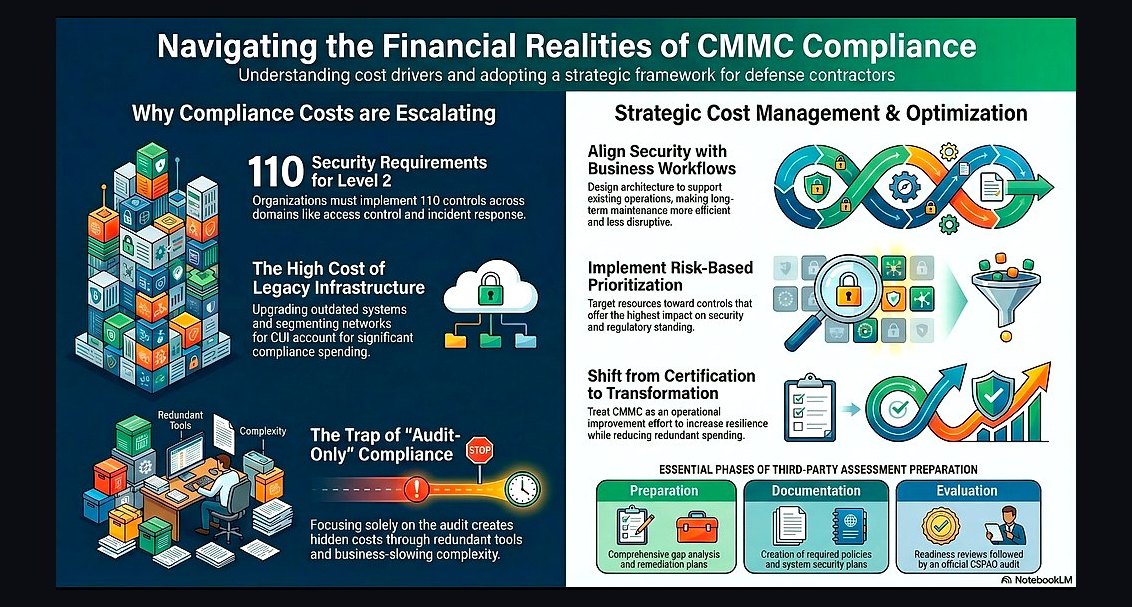 acg-systemsCMMC 2.0 compliance cost — why small federal integrators are getting crushed in 2027
 acg-systemsFederal IDIQ and GWAC contract integrator market — buyer + integrator friction in 2027
 acg-systemsFederal SATCOM teleport integrator market — buyer pain points in 2027
 acg-systemsChief Member is no longer a signal — brand inflation in 2027
 acg-systemsNG911 PSAP modernization integrator market — why these projects fail in 2027
 acg-systemsHow'd you fix Pluralsight's revenue issues in 2026?
 acg-systemsFederal comms integrator cybersecurity gaps — STIG and zero-trust compliance in 2027