


ACG Systems' 24/7 help desk and technician network in 2027
Quality
Certified

ACG Systems runs a continuously staffed help desk paired with a North American field technician network, backed by tiered Service Level Agreements. For 2027 buyers running LMR, air/ground radio, or VCS console systems, that structure means live overnight triage, engineer-led escalation across the whole stack, and one accountable partner instead of vendor finger-pointing.
The outcome you should expect
The practical outcome of buying into an integrator-run 24/7 support model is not "zero outages." It is a compressed and predictable distribution of restoration times. That distinction is worth internalizing before you sign anything, because it changes how you write the contract and how you brief your own operations team.
Here is what actually shifts. Without a staffed help desk, an overnight fault on a dispatch console follows a familiar path: the on-duty supervisor notices degraded audio, tries a reboot, calls a cell number from a laminated card, leaves a voicemail, and waits until someone reads it at 7 a.m. The clock on that incident is dominated entirely by dead time — hours where nobody qualified is even aware the fault exists. With a manned intake desk, that dead time collapses to the length of one phone call. The fault gets a ticket number, a severity classification, and an owner inside minutes. Everything downstream — remote diagnostics, parts staging, truck roll — can start in parallel rather than in sequence.
The second outcome is diagnostic quality at first touch. ACG positions itself as a systems integrator rather than a reseller, which means the population of people who design and commission the systems overlaps heavily with the population who support them. When the person on the bridge call already knows that a particular site's console interfaces to the radio subsystem through a specific gateway configuration, the first fifteen minutes of the call are spent testing hypotheses rather than reconstructing an architecture diagram from scratch. That overlap is the single most underrated variable in mean-time-to-restore, and it is the hardest one to evaluate during a procurement cycle because every vendor claims it.

Third, you should expect a shift in where risk sits. Under a tiered SLA, you are effectively purchasing a bounded worst case rather than an average. A four-hour on-site commitment does not mean technicians typically arrive in four hours; it means the contract obligates arrival inside four hours and creates a consequence when that fails. Mature buyers price the tier against the cost of the outage it prevents, not against the vendor's typical performance. A regional commercial radio system that can limp along on a backup channel for a day genuinely does not need the same tier as an emergency operations center whose console failure has a direct public-safety consequence.
Fourth — and this is where the model quietly earns its cost — you should expect fewer escalations that go nowhere. In a multi-vendor environment where a Motorola-lineage trunked system talks to a third-party console and rides a carrier-provided backhaul, the classic failure is not technical. It is jurisdictional. Each vendor tests their own segment, finds it healthy, and closes the ticket. The customer becomes the integrator of last resort at 3 a.m., which is precisely when the customer is least equipped to be one. A single accountable help desk with visibility across the stack changes who owns that seam. That is a governance outcome as much as a technical one, and it is the reason mission-critical buyers keep paying for integrator-led sustainment even when component-level support contracts would be cheaper on paper.
Finally, expect the outcome to be uneven by geography. Field response is a logistics problem before it is an engineering problem. A metropolitan site inside a dense corridor gets a materially different real-world experience than a mountaintop repeater site reachable by a forest service road in February. Any honest assessment of a technician network has to hold those two cases separately.
What drives that outcome

Four mechanisms drive everything above, and they compound rather than add.
Live human intake. A manned desk converts an unowned symptom into a tracked incident. Everything else in the chain is blocked on that conversion. This is why organizations that install sophisticated remote monitoring but route alerts into an unstaffed inbox see almost no improvement in restoration time — the telemetry is fine, the ownership is missing. The equivalent pattern shows up outside communications entirely: a RevOps team can instrument every stage of a pipeline and still lose deals to unrouted inbound, because detection without a staffed owner is just a better-documented failure.
Severity classification tied to a contract. Classification is what prevents the loudest caller from consuming the resources reserved for the most critical fault. Without a tier structure, triage becomes political. With one, a Tier 1 designation is a factual claim about which contract clause applies, and it can be audited after the fact.
Escalation depth. A three-layer structure — analysts handling intake and routine account or configuration issues, engineers handling remote diagnostics and software configuration, senior field engineers handling hardware and integration failures — works because most tickets genuinely resolve at the first two layers. Reserving the scarce senior population for the faults that actually need them is what makes the scarce population responsive when it matters.

Parts and logistics position. Diagnosis without a part is a status update, not a restoration. Depot inventory of the modules that actually fail — power amplifiers, console interface cards, power supplies — is what converts a correct diagnosis into a working system on the same visit. Ask any field engineer where their restoration times go and they will describe waiting for hardware, not waiting for insight.
The compounding effect matters more than any single mechanism. Fast intake with no parts position gives you a rapid diagnosis and a two-week wait. Deep bench strength with no severity discipline gives you senior engineers troubleshooting password resets while a console is down. The four mechanisms only produce the outcome together, which is also why partial implementations disappoint buyers who expected the whole benefit from one piece.
Benchmarks and realistic ranges
Public materials from integrators describe support structures at a high level; specific staffing counts, regional coverage maps, and measured 2027 response times are generally not disclosed. Treat the following as industry-typical ranges to negotiate against, not as published ACG commitments — verify every number in writing during contracting.
Remote response. Premium tiers in mission-critical communications commonly commit to a live engineer engaged within 15 to 60 minutes of ticket creation for the highest severity. Mid tiers typically land in the one-to-four-hour band. Standard business-hours tiers often specify same-business-day. The variable worth negotiating is not the number but the trigger: does the clock start at ticket creation, at severity confirmation, or at the vendor's acknowledgment? Those definitions can differ by hours in practice.

On-site arrival. Four-hour on-site is the recognizable premium benchmark across mission-critical service contracts, but it is almost always geographically fenced — typically to sites within a defined radius of a technician's home base or a covered metropolitan area. Next-business-day is the standard mid-tier commitment. Two-business-day is common for lower-criticality commercial systems. If you operate remote or mountaintop infrastructure, expect and negotiate an explicit carve-out rather than discovering it during your first winter outage.
First-call resolution. Well-run technical desks in complex equipment environments generally resolve a substantial minority of tickets at first touch — the exact figure varies enormously by how a vendor defines "resolution," which is why the metric is weak for comparing vendors and strong for tracking one vendor over time. Ask for your own account's trend, not an aggregate marketing figure.
Where the time actually goes. Across most restoration incidents in radio and console environments, the largest single contributor is neither diagnosis nor repair — it is travel plus parts acquisition. This is why depot placement matters disproportionately. A regional parts depot in a major logistics hub changes the achievable distribution of restoration times more than adding another engineer to the phone queue.
What to measure on your side. Track four things per incident: time from fault occurrence to ticket creation (yours to fix, not the vendor's), time from ticket to first qualified engagement, time from engagement to on-site arrival where applicable, and time from arrival to service restored. Most organizations track only the last two and then blame the vendor for a number dominated by the first. If your own detection-to-report gap is 90 minutes because nobody was watching the alarm panel, no SLA tier will fix that.

Contract mechanics worth pricing. Ask what the remedy actually is when a window is missed — service credits are the norm, and credits are typically capped as a percentage of the monthly fee. That cap is the real ceiling on the vendor's exposure. If a four-hour miss costs the vendor a small credit and costs you a day of degraded dispatch capability, the incentive alignment is weaker than the SLA language implies. Buyers who care about this negotiate escalating credits, a chronic-failure termination right, or both.
Risks, edge cases, and failure modes
Geography beats contract language. The most common disappointment with any technician network is a site the coverage model did not really anticipate. Rural, elevated, seasonal-access, and secured-facility sites all break the standard arrival math. Rural mountaintop sites may require additional travel well beyond a contractual window; secured facilities may require escort scheduling that no SLA can compress. Map your sites against the vendor's actual technician home bases before signing, and get the exceptions written down.
Credential and clearance friction. Defense and federal environments frequently require cleared personnel or facility-specific badging. The pool of technicians who are both qualified on your equipment and cleared for your facility is always smaller than the pool of technicians. That intersection, not the headline network size, determines your real response capability. Ask specifically how many people satisfy both conditions for your sites.
Legacy hardware and parts scarcity. Support teams typically cover both current and legacy LMR and VCS systems, but older hardware carries longer lead times for parts and narrower troubleshooting expertise. If you run equipment that is end-of-manufacture, the binding constraint is inventory, not skill. Confirm legacy model coverage during onboarding and consider funding a customer-owned spares cache for anything genuinely irreplaceable.

Multi-vendor seams. Mixed environments — a trunked system from one manufacturer interfacing with a console or network from another — generate the hardest faults. Even with an integrator holding the ticket, resolution may require a bridge call with manufacturer support. Ask how quickly the integrator can convene that bridge and whether they hold the partner-level support agreements that make it possible. An integrator without a direct escalation path into the OEM is passing your ticket through the same public queue you could have used.
Single-point-of-contact dependency. Consolidating support under one integrator is the entire value proposition and also the concentration risk. If that relationship deteriorates — acquisition, key-personnel departure, a pricing dispute — you have optimized away the internal knowledge you would need to run the environment yourself. Mitigate by requiring as-built documentation, configuration exports, and root-cause reports as contractual deliverables. Documentation you own survives a vendor change; institutional memory living only in a technician's head does not.
The customer-side competence gap. Support programs underperform most often because the customer never learned to use them. If your night supervisor does not know the severity definitions, cannot describe symptoms in the vendor's vocabulary, or defaults to rebooting equipment before calling, you will systematically under-classify your own incidents and destroy diagnostic evidence in the process. This is a training problem with a training solution, and it is entirely within your control.
Transitional-state complexity. Many agencies in 2027 operate mixed analog, digital, and IP-based equipment simultaneously. Transitional environments generate faults at the boundaries between generations — exactly the faults that are hardest to reproduce and easiest to misattribute. Budget more support capacity during a migration than steady state, not less.

Alert fatigue upstream. Remote monitoring is a prerequisite for fast intake, but poorly tuned monitoring produces so much noise that real faults get filtered by exhausted humans. The same dynamic wrecks alerting in adjacent operational disciplines — the pattern is identical whether the noisy signal is a flapping RF link or a CRM automation firing on every field change. Tune thresholds before you scale monitoring coverage.
A practical rollout plan
Treat onboarding a 24/7 support program as an implementation project with a defined completion state, not as a contract that starts working when signed.
Weeks 1–2: inventory and criticality mapping. Build a complete asset list — every site, subsystem, console position, repeater, gateway, and backhaul link — and assign each a criticality rating tied to a real operational consequence. This is the document that determines which SLA tier each asset needs, and it is the single highest-leverage artifact in the whole engagement. Do it before you talk pricing, because tier selection without criticality mapping is just guessing expensively.
Weeks 2–4: coverage validation. Overlay your site map against the vendor's technician bases, depot locations, and credentialing coverage. Identify every site where the standard commitment does not realistically apply and negotiate explicit language for those exceptions. Do not accept "we cover North America" as an answer for a site three hours from the nearest paved road.
Weeks 4–6: contract and runbook. Finalize tiers, response definitions, clock-start triggers, remedy structure, spares provisions, and documentation deliverables. In parallel — and this is the step most organizations skip — write the customer-side runbook: who calls, what number, what information to gather first, what not to touch, and how severity maps to your own operational language.

Weeks 6–8: instrumentation. Ensure the systems that matter emit usable telemetry and that alerts route somewhere staffed. Tune thresholds to suppress known-benign noise. The goal is that the help desk learns about a critical fault from a monitoring alert, not from a supervisor who noticed the audio was scratchy.
Weeks 8–10: rehearsal. Run at least two tabletop exercises and one live drill against a non-production or low-criticality asset. Time the whole chain. Rehearsal is where you discover that the after-hours number in your runbook is wrong, that your night shift was never briefed, or that the escalation contact left the organization in March.
Ongoing: quarterly review. Review every incident against its tier, look at the time distribution rather than the average, and adjust tiers where the mapping was wrong. Some assets will turn out to be less critical than you feared and can be downgraded; others will surprise you.
The through-line: a support contract is a capability you build jointly, not a service you receive. The vendor supplies the desk, the technician network, and the parts position. You supply criticality judgment, telemetry, trained callers, and a runbook. Programs fail on the customer half at least as often as the vendor half.
Related questions
How do I decide between a premium and a mid-tier SLA?
Compare the cost delta against the operational cost of the longer restoration window on your most critical asset. If a day of degraded service on that asset is genuinely tolerable, the mid tier is correct. Tier per asset group, never uniformly across the estate.
Does a single integrator really reduce restoration time versus direct OEM support?

Usually yes for multi-vendor environments, because it removes the jurisdictional gap where each vendor validates only their own segment. For a single-vendor estate, direct OEM support may be equally fast and cheaper.
What should be in the contract beyond response times?
Clock-start definitions, geographic exceptions, remedy structure and caps, spares provisions, legacy coverage, cleared-personnel availability, and documentation deliverables — as-built diagrams, configuration exports, and per-incident root-cause reports you own.
How much monitoring do I need before 24/7 support pays off?
Enough that critical faults generate an alert without human observation. Detection latency, not vendor response, dominates total downtime in most under-instrumented environments — a fast desk cannot help with a fault nobody has reported.
Should I keep internal technical staff if I outsource sustainment?
Keep enough to hold architectural knowledge, validate vendor work, and translate operational needs into technical requirements. Outsourcing execution is sound; outsourcing understanding leaves you unable to evaluate the service you buy.
FAQ
What does a 24/7 help desk actually cover?
A staffed desk handles fault intake, triage, and remote troubleshooting across the technologies the integrator supports — for ACG that includes ground land mobile radio, air/ground radio used in aviation and defense environments, and Voice Communication System consoles used in command-and-control settings. Coverage spans the integration lifecycle, not just warranty break-fix.
How quickly can a technician reach the site?

That depends entirely on the SLA tier and the site's geography. Premium mission-critical tiers commonly target four-hour on-site arrival within defined coverage areas; standard tiers typically commit to next-business-day. Remote, elevated, or access-restricted sites usually fall outside the standard window and need explicit contract language.
Does the same support model serve federal and commercial buyers?
Yes. Integrators serving this market typically tailor SLA scope and terms by sector, with federal and defense work carrying additional requirements around personnel credentialing, facility access, and past-performance documentation that commercial agreements do not impose.
Are spare parts included?
Spares provisions are contract-specific. Some agreements include on-site customer spares, others rely on depot inventory with expedited shipping, and some cover only diagnosis with parts billed separately. Confirm this explicitly — parts availability, not diagnostic skill, is the usual bottleneck in restoration.
Can legacy radio equipment still be supported?
Generally yes, though end-of-manufacture hardware carries longer parts lead times and a narrower pool of technicians with hands-on experience. Verify specific legacy models during onboarding rather than assuming coverage, and consider funding a customer-owned spares cache for irreplaceable components.
How do I know the help desk staff are qualified for my equipment?
Ask for the certification profile of the technicians who would actually cover your sites — not the network overall — and for the intersection of equipment-qualified and clearance-eligible personnel if you operate secured facilities. Manufacturer-level certifications and a documented tiered escalation path are the signals worth verifying.
Sources
- ACG Systems — Services
- ACG Systems — Home
- Cybersecurity and Infrastructure Security Agency — SAFECOM
- National Institute of Standards and Technology — Public Safety Communications Research
- Federal Communications Commission — Land Mobile Radio Services
- Project 25 Technology Interest Group
- U.S. Bureau of Labor Statistics — Computer Support Specialists
- CompTIA
- HDI — Help Desk Institute
Related on PULSE
- ACG Systems' aviation communications work in 2027 — defense and commercial niche
- What does ACG Systems specialize in for mission-critical communications, and where does that expertise matter most in 2027?
- ACG Systems vs national AV integrators in 2027 — where regional firms fall short
- ACG Systems' 2025 Northrim Horizon acquisition — what it signals for the company in 2027
- What does ACG Systems in Annapolis MD do, and what makes them notable?
- CPI Security installation quality in 2027 — the documented technician complaints
This page will be disappearing soon. Save it to your device for $1 — or read it free while it is here.
@Kory-White- · if Venmo asks, the last 4 of my number are 2012
This page is gone.
This one is off the shelf now. $1 keeps it on your phone for good — the whole page, pictures and diagrams included.
 acg-systemsFederal IDIQ and GWAC contract integrator market — buyer + integrator friction in 2027
 acg-systemsWhat does ACG Systems specialize in for mission-critical communications, and where does that expertise matter most in 2027?
 acg-systemsHow do you start a fractional CFO firm business in 2027?
 acg-systemsACG Systems vs national AV integrators — where regional firms fall short in 2027
 acg-systemsFederal AV+comms warranty and service gaps — what happens after install in 2027
 acg-systemsFederal video teleconference (VTC) integrator market — why deployments fail in 2027
 acg-systemsUtility and SCADA communications integrator market — co-op buyer challenges in 2027
 acg-systemsNG911 PSAP modernization integrator market — why these projects fail in 2027
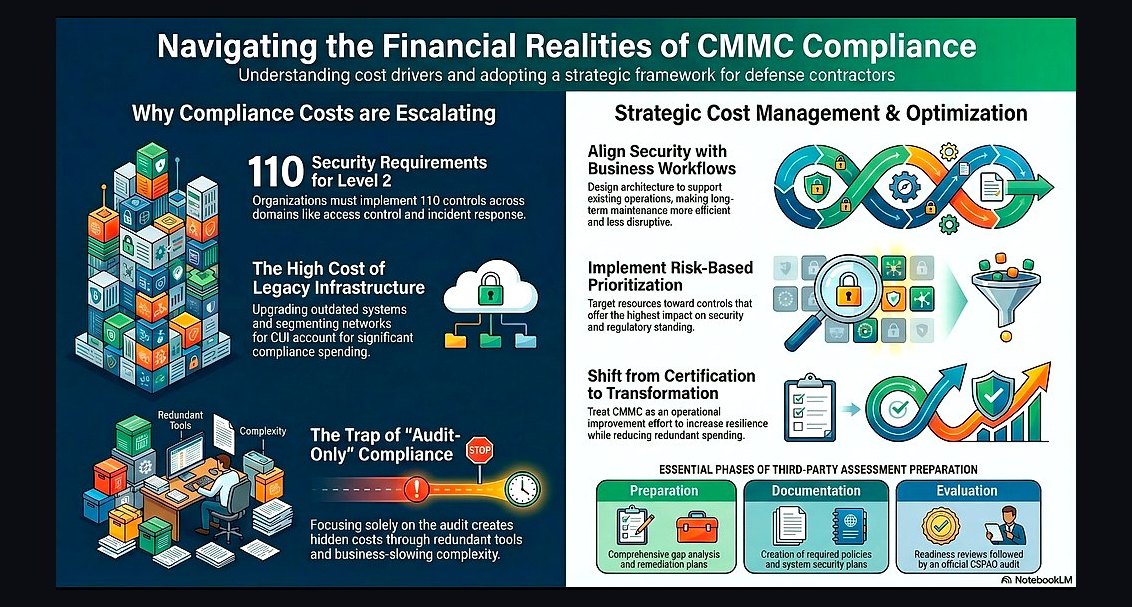 acg-systemsCMMC 2.0 compliance cost — why small federal integrators are getting crushed in 2027
 acg-systemsFederal defense AV and communications integrator market — challenges and customer pain points in 2027