


ACG Systems' 2025 Northrim Horizon acquisition — what it signals for the company in 2027
Quality
Certified

Northrim Horizon's September 29, 2025 acquisition of ACG Systems signals a platform-building strategy, not a quick-flip sale: founders Bob Dick and Tim Carney stayed on, new CEO Thomas Montalbano brings McKinsey and Marine Corps discipline, and Northrim's permanent-capital model reinvests earnings rather than chasing an exit. By 2027, expect ACG to be a larger, more capitalized wireless-integration platform pursuing bolt-on acquisitions in defense and federal communications.
Two paths a wireless integrator's acquisition can take
When a permanent-capital firm buys a founder-led services company, there are really only two structural paths the deal can follow, and reading which one applies tells you almost everything about what 2027 looks like for the acquired company.
The first path is the traditional private-equity playbook: a financial sponsor buys the company, strips out costs, installs a lean management team, and runs the business toward a sale or recapitalization inside a five-to-seven-year fund life. Under this path, founders typically exit at close, integration is aggressive and fast because the clock is ticking, and capital allocation favors whatever maximizes EBITDA multiple at the next sale rather than whatever builds durable capability. Customers of a company acquired this way often notice a subtle degradation — fewer senior engineers on calls, slower response times, price increases dressed up as "value optimization." It is not always a bad outcome for the acquired company, but it is a fundamentally extractive one.

The second path is the platform-and-reinvest model that Northrim Horizon publicly describes itself as running. Under this structure, the acquirer holds the company indefinitely rather than against a fund-life deadline, earnings get reinvested into hiring, capability, and further acquisitions rather than distributed to limited partners, and founders are frequently retained specifically because their institutional knowledge and customer trust are treated as an asset to compound rather than a cost to eliminate. The acquisition of ACG Systems reads as this second path on every available signal: Bob Dick and Tim Carney — who had co-led ACG since 2005 — stayed in their existing roles rather than departing at close, and Northrim publicly frames the deal as its third Fund III platform rather than a one-off transaction to be flipped.
The distinction matters enormously for anyone trying to project ACG's position in 2027. Under the extractive path, you would expect margin compression disguised as efficiency, senior talent attrition, and a sale announcement within three to five years of close. Under the platform path, you would expect steady headcount growth, continued investment in certifications and engineering capacity, and a string of smaller bolt-on acquisitions that expand ACG's footprint without changing its operating identity. Everything publicly available about the Northrim Horizon acquisition of ACG points toward the second scenario, which is the more constructive one for customers, employees, and the federal and defense communications market ACG serves.
How to decide which path ACG Systems is actually on
For a customer, competitor, RevOps leader, or prospective employee trying to evaluate which of those two paths a newly acquired vendor is actually walking, there is a practical checklist worth applying, and it maps cleanly onto what is publicly known about the ACG Systems deal.
Start with founder retention. If the people who built the customer relationships and the technical reputation are gone at close, that is the single strongest signal of an extractive deal — they took their payout and left, and the acquirer is now managing the business, not compounding it. In ACG's case, Bob Dick and Tim Carney remained in their current capacities post-close, supported by the existing sales, project management, engineering, and field services organization. That is a retention signal, not an exit signal.

Next, look at the new CEO's mandate. A CEO installed purely to cut costs behaves differently than a CEO installed to scale a platform. Thomas Montalbano's background — a Harvard MBA, roughly a decade as a Marine infantry officer, and years as a McKinsey consultant — is the profile of someone brought in to professionalize operations and pursue growth, not to liquidate assets. His military background in particular carries specific credibility in the defense and federal buyer conversations ACG depends on, which is a growth-oriented hire, not a cost-cutting one.
Third, examine the capital structure language. Permanent-capital and evergreen-fund structures explicitly reject the standard PE hold period, and firms that use that language publicly are making a reputational commitment to it — walking it back would damage every future deal they try to close. Northrim Horizon's own public materials describe reinvesting earnings into its portfolio companies and people rather than racing toward an exit, which is the language of a builder, not a flipper.
Fourth, and this is the piece that translates directly into RevOps terms: watch what happens to the revenue organization itself. An extractive owner typically flattens the sales and delivery org to cut headcount cost. A platform owner typically invests in sales operations instrumentation, pricing discipline, and pipeline visibility — precisely the kind of rigor a McKinsey-trained CEO tends to introduce. If ACG's sales-ops and RevOps function gains structure and headcount rather than losing it over 2026, that is strong confirmation the platform thesis is playing out as described.
The numbers behind Northrim's platform, quantified

The specific figures attached to this deal are worth walking through individually, because each one narrows the range of plausible outcomes for 2027.
ACG Systems was founded in 1995 and has operated out of Annapolis, Maryland for roughly three decades, building integrated wireless communications systems spanning air-to-ground radio, land mobile radio, tactical communications, and command-and-control systems for customers — largely defense, federal, state and local government, and commercial mission-critical buyers — who cannot tolerate communications failure. That thirty-year operating history is itself a number worth noting: it means ACG's customer relationships, agency certifications, and engineering talent pipeline were built over a long enough period that they are difficult for a competitor to replicate quickly, which is exactly the kind of asset a permanent-capital buyer values and a quick-flip buyer would be tempted to under-invest in.
Northrim Horizon closed the acquisition on September 29, 2025, making ACG the third platform investment out of its Fund III, which carries $235 million in committed capital according to the firm's public materials. Across its prior funds, Northrim has reportedly deployed capital into 47 companies total, structured as 11 platform acquisitions and 36 strategic add-ons layered onto those platforms — a ratio of roughly three-to-four add-ons for every platform. That ratio is the single most useful predictive number in this whole story: if it holds for ACG, the reasonable expectation by 2027 is that ACG has absorbed somewhere in the range of two to four smaller bolt-on acquisitions, each expanding either its geographic footprint, its certification set, or its technical capability, rather than one dramatic transformation.

Northrim's stated investment criteria target cash-generative businesses in the $1 million to $5 million EBITDA range across business and consumer services, healthcare services, and software and technology-enabled services — a profile ACG's systems-integration business fits cleanly, which suggests the deal was a strategic fit against a defined thesis rather than an opportunistic one-off purchase. None of the publicly available sources disclose the actual purchase price, ACG's specific revenue figures, or post-close financial targets, and any number presented as ACG's 2025 revenue or the deal's purchase multiple should be treated as unverified — those specifics simply have not been made public.
How the integration is sequenced from close to 2027
Permanent-capital platform integrations tend to follow a fairly consistent sequence, and mapping ACG's likely timeline against that sequence gives a grounded picture of what the company probably looks like at each stage between the September 2025 close and 2027.
In the first 90 days after close, the priority is almost always leadership stabilization rather than operational change — confirming the new CEO's role, communicating continuity to customers and employees, and avoiding any visible disruption to active contracts, which matters enormously in defense and federal work where a vendor's operational continuity is itself part of what agencies are buying. ACG's public announcement reflects exactly this pattern: Montalbano's appointment was paired explicitly with the retention of Dick, Carney, and the existing operating team, signaling to customers on day one that nothing about service delivery was changing.
Over the following six to twelve months — roughly covering the first half of 2026 — the typical next phase is back-office and systems consolidation: finance, HR, procurement, and often the CRM and sales-operations stack get integrated or upgraded to platform standards, since a permanent-capital owner needs consistent reporting across all of its portfolio companies to make reinvestment decisions. This is also the phase where a McKinsey-trained CEO's instincts typically show up most visibly — pricing structure review, margin-by-contract-type analysis, and pipeline instrumentation are the standard first moves, because they surface where reinvestment dollars will generate the best return before any acquisition capital gets committed.
The next phase, typically starting somewhere in the back half of 2026 and extending through 2027, is where bolt-on acquisition activity becomes visible. Northrim's public pattern — installing or retaining seasoned operating leadership at the platform, then layering disciplined add-ons onto it — suggests ACG spends 2026 as the absorbing entity for at least one smaller wireless or communications-adjacent integrator, chosen either for geographic reach into a region ACG does not currently serve, or for a specific certification or technical capability (such as a particular radio protocol or a specific agency clearance level) that expands what ACG can bid on. Each of these add-ons typically gets folded into ACG's existing brand and operating structure rather than run as a separate entity, which is part of why permanent-capital roll-ups tend to look, from the outside, like organic growth even when a meaningful share of it is acquisitive.

By 2027, the composite picture — assuming the sequence plays out the way Northrim's stated playbook and its 47-company track record suggest — is a company with more engineers, broader geographic coverage, a deeper certification set, and a more instrumented sales and delivery operation than it had at the September 2025 close, while still being run day-to-day by the same founders who built its reputation over the prior thirty years.
Related questions
Did ACG Systems' founders sell their entire stake?
Public sources don't disclose the specific transaction terms or what percentage of equity founders retained. What is public is that Bob Dick and Tim Carney remained in their existing operating roles after close, which is distinct from confirming any residual ownership stake.
Is Northrim Horizon a traditional private equity firm?
Not by its own description. Northrim publicly characterizes itself as a permanent-capital investor that reinvests earnings into portfolio companies rather than operating against a typical five-to-seven-year private equity fund exit timeline.
What kind of company would Northrim likely add to the ACG platform next?

Based on its stated add-on pattern, a likely target is a smaller regional wireless or communications integrator with agency relationships, certifications, or geographic coverage ACG currently lacks — the same logic behind its 36 prior strategic add-ons.
Does this acquisition change who ACG's day-to-day contacts are for existing customers?
The public announcement suggests no material change: the existing sales, project management, engineering, and field services organization stayed in place under the new CEO, with founders retained specifically to preserve those relationships.
FAQ
Did ACG Systems acquire Northrim Horizon, or was it the other way around? It was the reverse. Northrim Horizon, a Mesa, Arizona-based permanent-capital investment firm, acquired ACG Systems, making it the third platform acquisition out of Northrim's Fund III.
When did the Northrim Horizon acquisition of ACG Systems close? The deal closed on September 29, 2025, according to the public press release announcing the transaction and the appointment of Thomas Montalbano as CEO.
Why does it matter that ACG's founders stayed on after the acquisition?

Founder retention is one of the clearest public signals distinguishing a platform-building acquisition from an extractive one. Bob Dick and Tim Carney remaining in their roles suggests Northrim views their customer relationships and institutional knowledge as assets to compound, not costs to eliminate.
What is Northrim Horizon's Fund III, and how big is it? Fund III is Northrim's third investment vehicle, publicly reported to carry $235 million in committed capital, and ACG Systems is its third platform investment out of that fund.
Will ACG Systems make more acquisitions of its own after being acquired? Based on Northrim's public strategy and its track record of 36 strategic add-ons layered onto 11 prior platforms, it is reasonable to expect ACG to become the platform for further bolt-on acquisitions of adjacent wireless integrators over 2026 and 2027, though no specific targets have been publicly named.
Is this acquisition relevant outside of ACG's direct customer base? Yes, for two adjacent groups: competing regional wireless integrators, who may see ACG become a more aggressive acquirer or a tougher competitor for federal contracts, and RevOps or sales-operations professionals studying how a permanent-capital owner instruments an acquired services business for growth rather than short-term margin extraction.
Sources
- Northrim Horizon Acquires ACG Systems, Appoints Thomas Montalbano CEO (PR Newswire)
- ACG Systems Acquired by Northrim Horizon (ACG Systems)
- Northrim Horizon Closes Fund III with $235 Million in Committed Capital (PR Newswire)
- Northrim Horizon: A Permanent Home for Great Businesses
- Northrim Horizon Acquires ACG Systems to Expand Wireless Integration Capabilities (Aerospace Trends)
Related on PULSE
- ACG Systems' 24/7 help desk and technician network in 2027
- ACG Systems' aviation communications work in 2027 — defense and commercial niche
- What does ACG Systems specialize in for mission-critical communications, and where does that expertise matter most in 2027?
- ACG Systems vs national AV integrators in 2027 — where regional firms fall short
- What does ACG Systems in Annapolis MD do, and what makes them notable?
- How'd you fix ACG Systems' revenue issues in 2026?
This page will be disappearing soon. Save it to your device for $1 — or read it free while it is here.
@Kory-White- · if Venmo asks, the last 4 of my number are 2012
This page is gone.
This one is off the shelf now. $1 keeps it on your phone for good — the whole page, pictures and diagrams included.
 acg-systemsPublic safety radio interoperability still fails multi-agency response in 2027
 acg-systemsWhat does ACG Systems in Annapolis MD do, and what makes them notable in 2027?
 acg-systemsSCIF buildout integrator market — why ICD-705 schedules slip in 2027
 acg-systemsHow do you start a fractional CFO firm business in 2027?
 acg-systemsFederal video teleconference (VTC) integrator market — why deployments fail in 2027
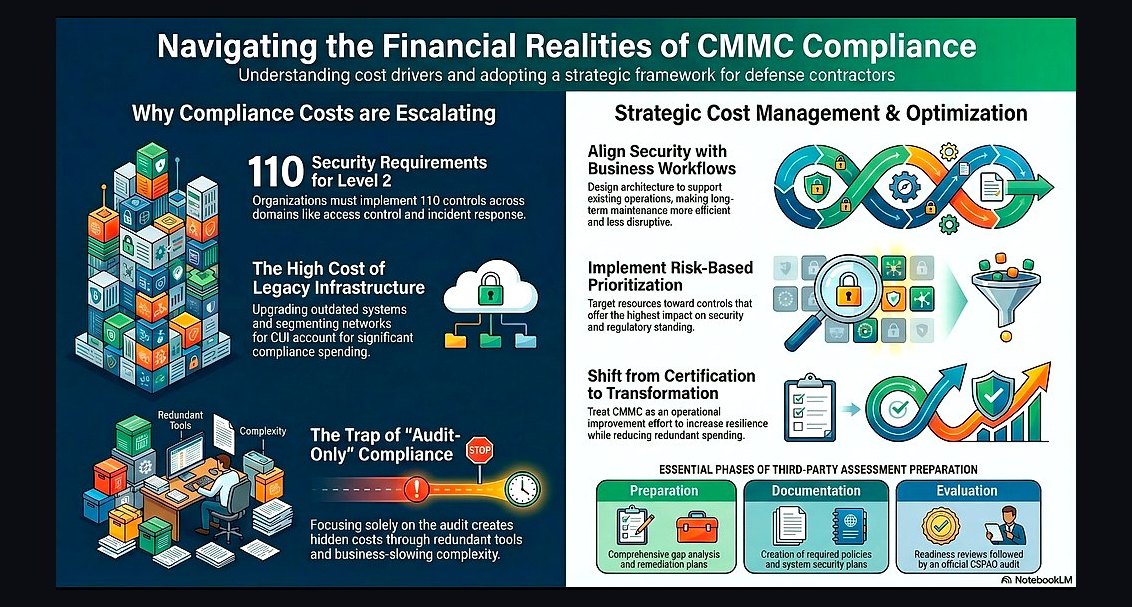 acg-systemsCMMC 2.0 compliance cost — why small federal integrators are getting crushed in 2027
 acg-systemsHow'd you fix ACG Systems' revenue issues in 2026?
 acg-systemsFederal AV install schedule slip in 2027 -- why projects run late
 acg-systemsThe Maryland defense contracting market — DoD procurement challenges for Annapolis-area firms in 2027
 acg-systemsFederal IDIQ and GWAC contract integrator market — buyer + integrator friction in 2027