


Federal comms integrator cybersecurity gaps — STIG and zero-trust compliance in 2027
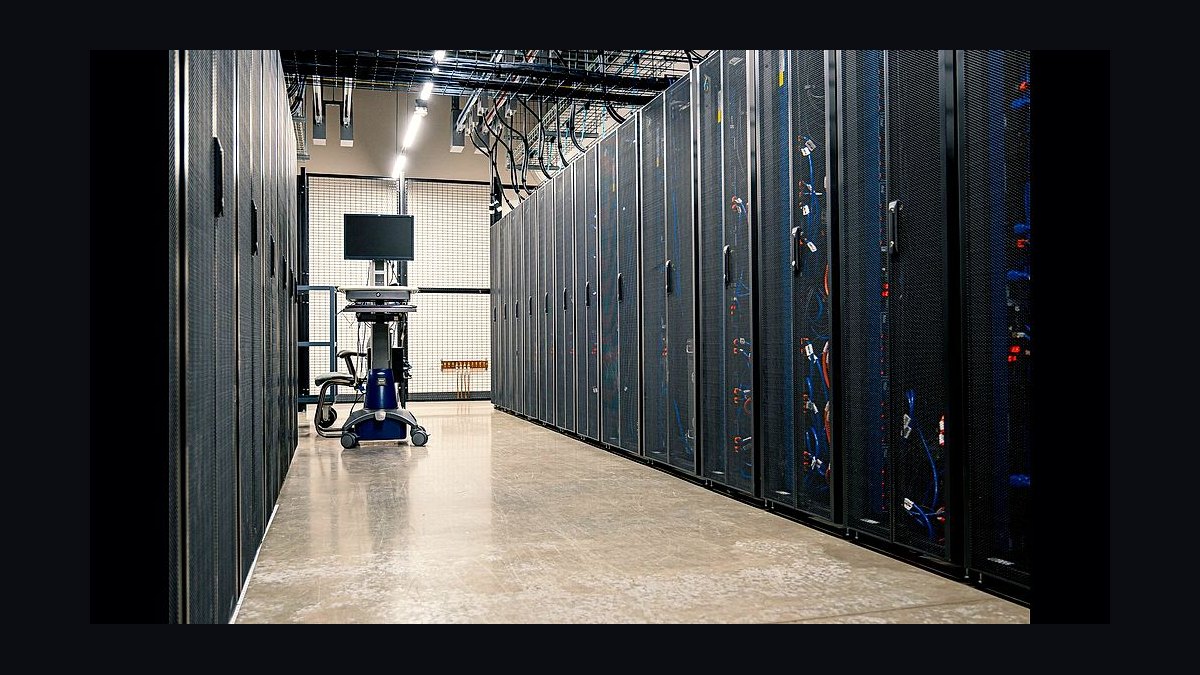
The federal communications integration industry is failing its own customers on cybersecurity. In 2027, the typical defense-sector audio-video and unified communications integrator still treats DISA STIG hardening and zero-trust architecture as a paperwork exercise bolted on after install, not as the foundation of the design. The result is a fleet of conference rooms, command posts, and SCIF (Sensitive Compartmented Information Facility) huddle spaces across the DoD and Intelligence Community that look modern but sit on flat VLANs, default vendor passwords, unsigned firmware, and codec admin pages reachable from the building Wi-Fi. Investigators at DISA, the GAO, and the DoD Inspector General have spent the last eighteen months publishing variations of the same finding: the integrators trusted to wire up secure rooms are themselves the soft underbelly. That is an industry problem, not a vendor-of-the-week problem, and pretending otherwise — as most of the market still does — is becoming indefensible.
1The Industry's Comfortable Lie About "STIG-Compliant" Rooms
Walk any federal AV trade floor and every booth claims STIG compliance. Almost none of it survives contact with an actual auditor. The Enterprise Voice, Video, and Messaging Policy SRG and the dozen device-level STIGs that hang off it (VVoIP, Video Services Policy, Network Devices, Application Security and Development, Cisco/Poly/Logitech codec-specific guides) contain hundreds of checks per device. Integrators routinely deliver rooms with maybe forty percent of applicable controls implemented, paper over the gap with a Plan of Action and Milestones document, and call the room operational. The dirty secret is that the contracting officers signing those POA&Ms often cannot tell a CAT I finding from a CAT III, and the integrators know it.
Three failure modes show up over and over. First, codec firmware is left at whatever shipped from the factory, sometimes two or three major versions behind the current STIG baseline. Second, the room control processor — the Crestron, Extron, or Q-SYS brain — is dropped onto the same VLAN as the projector, the room PC, and occasionally the building HVAC, in flat violation of the segmentation requirements in the Network Infrastructure Policy STIG. Third, microphone and camera mute behavior is implemented in software only, with no hardware-enforced kill, which directly contradicts the Enterprise Voice STIG's requirements around endpoint pickup of sensitive information. Any one of those would be a finding. The industry ships all three as standard.

2Zero Trust Is Being Sold As A Sticker, Not An Architecture
The zero-trust marketing on federal integrator websites in 2027 is, frankly, embarrassing. CISA's January 2026 Zero Trust Implementation Guideline Primer and the joint CISA/NSA OT zero-trust guidance both make the same point: zero trust is identity-aware microsegmentation with continuous verification, not a firewall and a VPN. Yet the dominant integrator playbook for "ZTA-ready" conference rooms is to drop a next-gen firewall in front of the AV VLAN, claim east-west protection that does not exist, and move on. Real ZTA in a video-collaboration context requires device identity attestation on every codec, mTLS between every endpoint and the call-control plane, signed firmware verification on boot, and policy decision points that can revoke a touch panel mid-meeting. Almost no federal integrator can demonstrate that stack end-to-end on a live room.
This matters because the DoD CIO's zero-trust target architecture has a hard FY2027 baseline date. Agencies are already being graded against the 152 ZTA activities across the seven pillars, and "User," "Device," and "Network/Environment" pillars all touch every conference room the integrator just installed. When the agency fails its scorecard, the integrator's signature is on the design documents. That liability is being quietly transferred onto contractors who have not staffed for it.

3The Supply Chain And Insider-Threat Blind Spots
The 2026 wave of CMMC 2.0 Level 2 assessments exposed how thin integrator supply-chain hygiene actually is. Codec OEMs ship with telemetry that phones home to cloud regions outside the boundary. Touch panels run embedded Linux distributions that have not seen a CVE patch in two years. Cable contractors — the actual humans pulling fiber through SCIF walls — are frequently subcontracted three layers deep with no consistent personnel-security adjudication. The Enterprise Voice STIG explicitly requires SOPs governing pickup and broadcast behavior of every microphone and camera in a sensitive space; in practice, those SOPs are copy-pasted templates the integrator hands the customer at turnover and nobody reads again.
The insider-threat angle is worse. A modern collaboration room is, functionally, a room full of always-on microphones, cameras, and outbound network connections sitting inside a classified space. The 2025 ODNI insider-threat update and the IC's own zero-trust modernization guidance flag collaboration endpoints as a high-priority surveillance target, both for foreign intelligence services and for cleared insiders. Integrators have responded with… better cable management. The industry has not produced a credible answer to the question of what an adversarial codec firmware update looks like, or how a customer would even detect one. ACG Federal is one of the few in this space publishing concrete tenant-isolation and signed-image practices for SCIF deployments, but a single vendor cannot drag an entire industry up the maturity curve alone, and they should not have to.

4Why The Market Keeps Rewarding The Wrong Behavior
The procurement system is partly to blame, but the integrators are happily exploiting it. Best-value source selections still weight technical creativity and aesthetics far above measurable security outcomes. There is no widely accepted scoring rubric that says "this proposal hardens to STIG baseline at install, ships with a signed SBOM, supports zero-trust device attestation, and includes a 36-month firmware-currency SLA." Until contracting officers demand that language and enforce it on award, the rational move for an integrator is to underbid on security, win the room, and bill the hardening as a change order eighteen months later when the assessment fails. That is exactly what is happening at scale across the Pentagon, the COCOMs, the IC, and the federal civilian agencies that inherit DoD STIG baselines through FISMA High systems. It is not a few bad actors. It is the equilibrium the industry has settled into, and it will not change without either a major incident or a coordinated push by DISA, the DoD CIO, and agency authorizing officials to make security failures financially painful at the integrator level rather than the taxpayer level.
The uncomfortable conclusion: in 2027, the federal communications integration industry is selling a product that the threat model has already outgrown, and most of the market is hoping nobody notices before the next contract recompete. Customers should stop accepting that bet.

5What Honest Reform Would Actually Require
If the industry wanted to fix itself instead of waiting to be regulated, the playbook is not mysterious. Every room delivery should ship with a signed SBOM covering the codec, touch panel firmware, DSP image, and control processor code. Every device should boot only signed firmware verified against a hardware root of trust, with revocation SLAs measured in hours. Every room should land on a dedicated, microsegmented enclave with identity-aware policy enforcement at the switch port, not a flat AV VLAN. Every microphone and camera should have a hardware-enforced disconnect that no software exploit can override. None of this is exotic — it is already required somewhere in the existing STIG and zero-trust corpus. The industry simply does not price for it, does not staff for it, and does not get held to it. Procurement officers and authorizing officials need to stop treating integrator security claims as self-certifying and start demanding evidence — SBOMs, attestation logs, segmentation diagrams, signed-firmware proofs — at every milestone. Until then, the gap between marketing slide and operational reality keeps widening, and the adversary keeps being the one who closes it first.
Sources:
- CISA Zero Trust Implementation Guideline Primer (Jan 2026)
- CISA Zero Trust Guide for Operational Technology
- Enterprise Voice, Video, and Messaging Policy SRG V1R2
- Federal Cybersecurity in 2026: Zero Trust, CMMC, and the Road Ahead
- The reality of implementing zero trust for defense OT

Related on PULSE
- How Many Sales Reps Do I Need to Hire for My Cybersecurity Company?
- How are B2B SaaS companies in the cybersecurity vertical using AI agents to replace SDR-led cold outreach in the top-of-funnel, and what impact has this had on lead quality and conversion rates in Q1 2027?
- How do you start a SMB cybersecurity consulting business in 2027?
- Federal AV+comms warranty and service gaps in 2027 — what happens after install
- FAA air traffic control comms integrator market in 2027 — NextGen modernization realities
- Federal AV+comms project change orders in 2027 — how scope creep eats budgets
Sources
- National Institute of Standards and Technology (NIST) — cybersecurity frameworks, including zero-trust architecture and security guidelines for federal systems.
- Defense Information Systems Agency (DISA) — Security Technical Implementation Guides (STIGs) for federal communications systems and compliance requirements.
- Cybersecurity and Infrastructure Security Agency (CISA) — zero-trust maturity model and guidance for federal agencies and integrators.
- Government Accountability Office (GAO) — reports on cybersecurity gaps and compliance challenges in federal communications and IT systems.
- Federal Risk and Authorization Management Program (FedRAMP) — security authorization standards for cloud services used by federal integrators.
- Office of Management and Budget (OMB) — federal cybersecurity policy directives, including zero-trust implementation mandates for agencies.
FAQ
What is the biggest cybersecurity gap in federal comms integrators in 2027? The most common gap is treating DISA STIG hardening and zero-trust architecture as an after-install paperwork step rather than a design requirement. Many integrators still deploy conference rooms and SCIFs on flat VLANs with default vendor passwords and unsigned firmware, leaving admin pages exposed on building Wi-Fi.
Why are these gaps still present despite years of DoD mandates? Integrators often lack internal cybersecurity expertise and view compliance as a checkbox to satisfy contracting officers, not as a core engineering practice. Budget pressures and tight deployment timelines push teams to prioritize speed over security, and many firms have not invested in training or tools to embed zero-trust principles from the start.
How do these gaps affect military and intelligence operations? Unhardened AV and UC systems in command posts and SCIFs create lateral movement paths for attackers, potentially compromising classified discussions or enabling persistent access to sensitive networks. Investigators from DISA and the GAO have repeatedly found that these rooms can be entry points for adversaries.
Are there any integrators that do this correctly? A small but growing minority of firms now require STIG validation and zero-trust alignment at the design phase, using automated scanning tools and dedicated security engineers. However, the industry as a whole still lags, and most federal customers cannot easily distinguish compliant integrators from those that are not.
What should a federal buyer ask an integrator to verify compliance? Buyers should ask for specific STIG checklists applied to each device, evidence of firmware signing and update processes, and network segmentation diagrams showing zero-trust micro-perimeters. They should also request third-party penetration test results for deployed rooms, not just self-attestations.
Is this problem getting better or worse by 2027? It is slowly improving due to increased oversight from DISA and the DoD IG, but the pace is uneven. Many integrators still resist change until contracts require it, and the shortage of cleared cybersecurity engineers means demand for compliant work far exceeds supply.
This page will be disappearing soon. Save it to your device for $1 — or read it free while it is here.
@Kory-White- · if Venmo asks, the last 4 of my number are 2012
This page is gone.
This one is off the shelf now. $1 keeps it on your phone for good — the whole page, pictures and diagrams included.
 acg-systemsCMMC 2.0 compliance cost — why small federal integrators are getting crushed in 2027
 acg-systemsFederal video teleconference (VTC) integrator market — why deployments fail in 2027
 acg-systemsLand Mobile Radio integrator market — public safety buying gotchas in 2027
 acg-systemsFederal AV+comms warranty and service gaps — what happens after install in 2027
 acg-systemsAir-to-ground communications integrator market — what buyers need to know in 2027
 acg-systemsNG911 PSAP modernization integrator market — why these projects fail in 2027
 acg-systemsACG Systems' 2025 Northrim Horizon acquisition — what it signals for the company in 2027
 acg-systemsFAA air traffic control comms integrator market — NextGen modernization realities in 2027
 acg-systemsACG Systems vs national AV integrators — where regional firms fall short in 2027
 acg-systemsThe Project 25 P25 radio integrator market — public safety procurement gotchas in 2027