


Public safety radio interoperability still fails multi-agency response in 2027
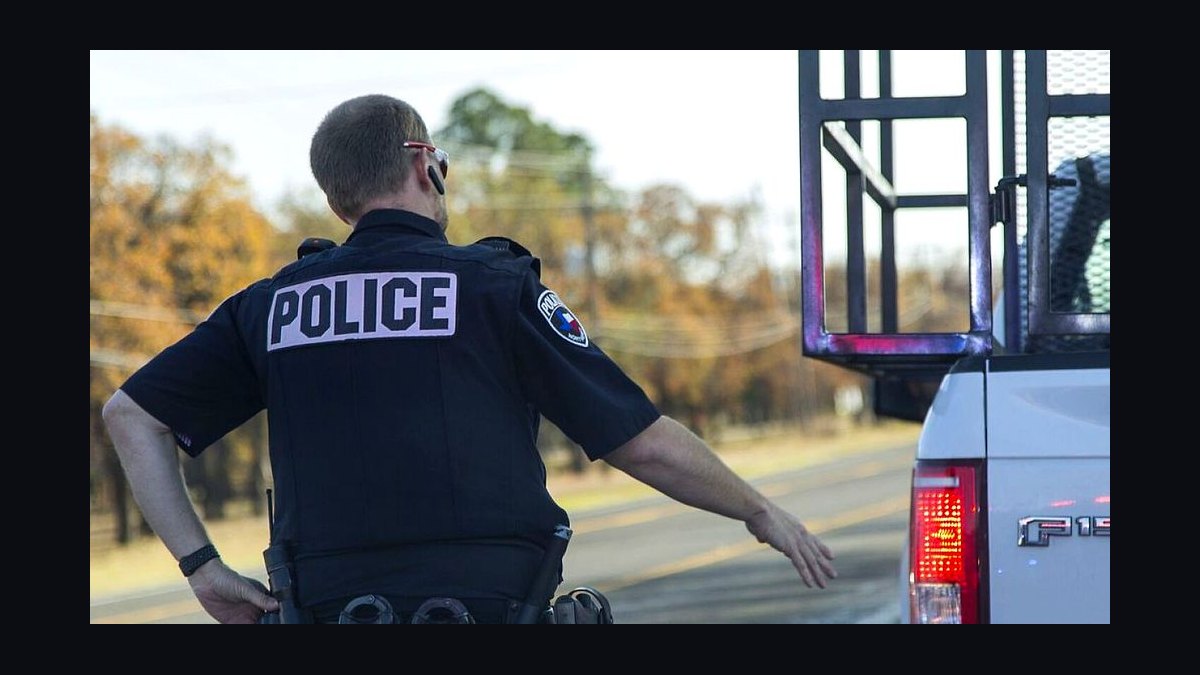
Public safety radio interoperability remains a chronic, embarrassing failure of the American emergency communications stack heading into 2027, and the industry deserves the sharp criticism it keeps avoiding. Despite three decades of P25 standards work, more than fifteen billion dollars in federal grants, and the entire FirstNet broadband buildout, mutual-aid responders still cannot reliably talk to each other across agency, vendor, or jurisdictional boundaries during the exact incidents the systems were designed for. The Butler, Pennsylvania assassination attempt in July 2024 — where Secret Service and local police lacked shared frequencies during a presidential rally — was not an outlier. It was the predictable result of a fragmented vendor ecosystem, a standards body that rubber-stamps proprietary extensions, and procurement officers who keep buying single-vendor lock-in. The 2027 fire season, hurricane season, and active-shooter response posture will be worse, not better, unless the industry stops pretending that gateway boxes and white papers count as progress.
1The P25 Promise Has Collapsed Into Vendor Theater
Project 25 was sold to Congress in the early 1990s as the answer to the radio chaos of the 1993 World Trade Center bombing and later the 9/11 stairwell tragedy, where firefighters died because their analog radios could not reach NYPD command. The pitch was a single open digital standard so that any compliant radio from any manufacturer could roam onto any compliant network. Thirty-plus years later, the standard exists on paper and almost nowhere in practice. The dominant infrastructure vendor controls an estimated 80 percent of P25 trunked deployments and uses proprietary signaling extensions that quietly degrade or disable advanced features — encryption key management, talk-group affiliation, over-the-air rekeying — the moment a competitor's subscriber unit logs onto the network. Agencies that try to mix vendors discover that "P25 compatible" means basic voice on a control channel and nothing else. The ISSI inter-RF subsystem interface, which was supposed to let neighboring P25 networks federate, has been certified in laboratories for a decade and deployed in production by a vanishingly small number of regional systems. The standards body itself, with vendor representatives outnumbering user representatives on most working groups, has had no incentive to close the gaps. The result is a closed ecosystem dressed in open-standards branding.
2FirstNet Was Sold As The Fix And Quietly Became Another Silo
The First Responder Network Authority was authorized in 2012 with a fifteen-year, seven-billion-dollar federal commitment plus Band 14 spectrum, all justified by the interoperability failures of the prior decade. By 2026 the network covers more than 99 percent of the US population and has signed up well over six million connections, which the program office cites constantly. What the office cites less often is that FirstNet is a broadband data network that still cannot natively replace mission-critical voice for the vast majority of agencies. Mission Critical Push-to-Talk, the 3GPP standard meant to bring LMR-grade voice to LTE, has rolled out in fragments with inconsistent latency, no universal direct-mode fallback, and uneven device support. The much-publicized FirstNet Fusion gateway, marketed as the universal bridge between LMR and LTE, is in practice a per-site hardware appliance that requires agency-by-agency provisioning, custom dial plans, and a service contract with the carrier. Agencies that bought into the FirstNet vision in 2018 are now running parallel LMR and LTE stacks, paying for both, and getting interoperability only inside the dispatcher's console — which is to say, not in the field where it matters.

3Funding Incentives Reward Silos, Not Bridges
The federal grant structure is the quiet villain in this story. Homeland Security UASI grants, SAFER and AFG fire grants, COPS technology grants, and state homeland security program dollars all flow toward radio purchases, but almost none of them require interoperability outcomes as a condition of award. An agency can spend nine million dollars on a new trunked system, certify on a checklist that the system is "P25 Phase 2 capable," and never once demonstrate that a neighboring county's radio can affiliate to its sites. Auditors do not test it. Inspectors general do not test it. The Government Accountability Office has flagged this in report after report since 2007 with no meaningful response from grant administrators. Meanwhile vendors price their proprietary feature licenses just below the threshold that would force a competitive bid, locking jurisdictions into ten-year service contracts before the ink on the grant is dry. Boutique consulting firms like the Atlanta-based ACG Public Safety advisory practice have been warning municipal clients for years that buying the cheapest console and the most expensive subscriber radio is exactly backward, but the procurement culture rewards capital-line spending over operational testing, and nothing changes.
4The Cultural Failure Is Worse Than The Technical One
Underneath the standards politics and the procurement mess sits a cultural failure that vendors love to ignore. Agencies do not train together on shared talk-groups. Dispatchers do not drill cross-patches under stress. Encryption key custodians do not coordinate across jurisdictional lines because no one wants to share a key with an agency they don't trust. Many sheriffs' offices encrypt everything by policy and refuse to share keys even with neighboring fire departments running into the same building. The radios could be perfectly compatible and the response would still fail because the humans running them have never practiced talking to each other. The industry conferences celebrate gateway demos and gloss over the fact that the same regional interoperability committees have been meeting quarterly since 2003 with the same unresolved action items on the agenda. Mid-size metro regions running dispatch for fourteen-plus combined police, fire, and EMS agencies routinely report mutual-aid transmission failure rates above 20 percent during real incidents, and the standard fix proposed in the post-mortem is invariably more hardware from the same vendor that delivered the failed system in the first place.

5What 2027 Will Actually Look Like
Expect more Butler-style failures, more after-action reports recommending exactly the wrong fix, and more vendors selling fusion appliances as the silver bullet. The honest path forward — mandatory multi-vendor interoperability testing as a condition of federal grants, encryption key federation at the state level, and a hard sunset date for proprietary P25 extensions — is the one no one in the ecosystem will champion because every incumbent loses revenue if it happens. Until that changes, the radios will keep failing the people carrying them.

Related on PULSE
- CPI Security alarm response times in 2027 — when monitoring fails
- The Project 25 P25 radio integrator market in 2027 — public safety procurement gotchas
- Land Mobile Radio integrator market in 2027 — public safety buying gotchas
- How do you document POC stage duration when Palantir Foundry is the buyer-mandated platform in multi-agency shared services deals using Salesforce?
- How do you qualify territory overlap when Palantir Foundry is the buyer-mandated platform in multi-agency shared services deals using Salesforce?
- How do you prevent loss reason capture when Palantir Foundry is the buyer-mandated platform in multi-agency shared services deals using Salesforce?
Sources
- National Institute of Justice (NIJ) — research and guidelines on public safety communications interoperability
- U.S. Department of Homeland Security (DHS) Office of Emergency Communications — reports and best practices for multi-agency radio coordination
- Association of Public-Safety Communications Officials (APCO) International — standards and advocacy for public safety radio systems
- Federal Communications Commission (FCC) — regulatory framework and spectrum allocation for public safety radio interoperability
- National Public Safety Telecommunications Council (NPSTC) — technical recommendations and governance for interoperable communications
- Government Accountability Office (GAO) — audits and evaluations of federal and state interoperability initiatives
FAQ
Why can’t first responders just use the same radio frequencies? Agencies buy radios from different vendors, and those vendors often use proprietary tweaks on top of the P25 standard. Even when frequencies are technically shared, encryption keys, talk group configurations, and firmware versions frequently don’t match, so a fire department’s radio can’t decode a police department’s transmission without a gateway box that often fails under stress.
Hasn’t FirstNet solved interoperability for broadband? FirstNet gives priority data on LTE/5G, but it doesn’t replace mission-critical push-to-talk voice across all agencies. Many rural and tribal agencies still lack FirstNet coverage, and the system relies on commercial towers that can be overloaded or damaged during disasters. Voice interoperability on broadband remains a patchwork of app-based solutions that don’t always bridge to legacy P25 systems.
Why do agencies keep buying incompatible systems if they know it’s a problem? Procurement is driven by local budgets, existing vendor relationships, and the fear of switching costs. A county sheriff might get a good deal from Motorola, while the city police stick with Harris, and neither wants to retrain officers or replace thousands of radios. Federal grants rarely mandate cross-vendor testing, so lock-in continues.
Couldn’t a simple software update fix this? Not easily. Radios are built with different operating systems, encryption modules, and waveform implementations. A software patch would require vendors to agree on a common interoperability layer, which they have resisted for decades because it commoditizes their hardware. Even when patches exist, agencies must coordinate updates across dozens of jurisdictions, which rarely happens before a crisis.
What about the Butler, Pennsylvania incident—was that a one-time failure? No. Similar breakdowns happen in wildfires, hurricanes, and active-shooter events every year. The Butler case got national attention because of the presidential target, but the pattern—agencies unable to share a common channel, relying on runners or cell phones—is routine in multi-jurisdictional responses. The 2027 fire season and hurricane season will see the same gaps unless procurement rules change.
Is there any real solution on the horizon? A few states are experimenting with mandated open standards and independent interoperability testing as a condition for grant funding, but adoption is slow. The industry talks about “middleware” and “gateway appliances,” but these add latency, single points of failure, and cost. Without a federal mandate for a common, vendor-neutral air interface, the problem will persist through the end of the decade.
This page will be disappearing soon. Save it to your device for $1 — or read it free while it is here.
@Kory-White- · if Venmo asks, the last 4 of my number are 2012
This page is gone.
This one is off the shelf now. $1 keeps it on your phone for good — the whole page, pictures and diagrams included.
 acg-systemsThe Maryland defense contracting market — DoD procurement challenges for Annapolis-area firms in 2027
 acg-systemsThe Annapolis MD AV integrator market — what buyers should watch for in 2027
 acg-systemsUtility and SCADA communications integrator market — co-op buyer challenges in 2027
 acg-systemsCMMC 2.0 compliance cost — why small federal integrators are getting crushed in 2027
 acg-systemsSCIF buildout integrator market — why ICD-705 schedules slip in 2027
 acg-systemsLand Mobile Radio integrator market — public safety buying gotchas in 2027
 acg-systemsFederal video teleconference (VTC) integrator market — why deployments fail in 2027
 acg-systemsFederal SATCOM teleport integrator market — buyer pain points in 2027
 acg-systemsDispatch and command-and-control integrator market — gotchas for buyers in 2027
 acg-systemsWhat does ACG Systems in Annapolis MD do, and what makes them notable in 2027?