


Federal AV+comms warranty and service gaps — what happens after install in 2027

What happens after install in federal AV and communications integration is, with disappointing regularity, almost nothing — until something breaks, at which point the program office discovers that the warranty is a thin one-year manufacturer pass-through, the service contract was never funded into the out-years, the as-built drawings are stale, and the original integrator's field engineer has left the company. The industry has spent two decades optimizing the installation moment and starving the twenty years that follow. The result in 2027 is a federal estate full of conference bridges, SCIF displays, video walls, and unified-comms stacks that work on day one, degrade silently through year two, and become unsupportable orphans by year four. The structural causes are well known and rarely fixed: bid structures that reward lowest install price, manufacturer warranties that exclude the integration layer, separation between the install contract and the O&M contract, and a federal workforce too thin to police service-level agreements that nobody reads.
1The Warranty Theater Problem
Federal AV and comms warranties are a piece of theater performed at acceptance. The integrator stamps a one-year "comprehensive" warranty across a system containing fifteen manufacturers' devices, each with its own coverage window, RMA process, and end-of-life calendar. Display panels carry three years, DSPs carry five, control processors carry two, and the custom DSP file written by a contractor who has since changed jobs carries nothing at all. When a room fails in month fourteen, the program office learns that "comprehensive" meant the integrator would coordinate calls to fifteen separate OEM hotlines on a best-effort basis during business hours Eastern, and that labor to remove, ship, reinstall, and recommission is billable. The warranty was never a warranty. It was a marketing document.
A[Day 1 Acceptance] --> B[Integrator 1-Year Pass-Through] B --> C{Failure Month 14} C --> D[OEM Says: Out of Window] C --> E[Integrator Says: Labor Billable] C --> F[GFE Bucket: Empty] D --> G[Room Goes Dark] E --> G F --> G G --> H[Mission Workaround] H --> I[Shadow Service Call] I --> J[Unbudgeted Mod Request]
2The Service-Contract Funding Cliff
The second structural failure is fiscal. AV and comms installations are funded as capital projects — one-color money, one-year delivery, ribbon cutting attended. Sustainment is operations money — a different color, a different appropriation cycle, a different program manager, and almost always a different contracting officer. Industry knows this and prices the install aggressively because the post-warranty service contract is rarely awarded to the same vendor, rarely funded at the level needed, and rarely treated as a recurring obligation. Out-year service is the first line item cut when the continuing resolution lands. The integrator who installed the system has no economic reason to make sustainment easy for the next vendor and every reason to leave proprietary control code, undocumented presets, and one-off DSP files that lock the next maintainer into a discovery phase. The buyer pays twice — once to install, once to reverse-engineer.

3The Documentation Decay Curve
As-built drawings in this industry are a fiction maintained for closeout. The signed PDF that lands in the project folder reflects the system on the day of substantial completion, before the punch list, before the firmware updates, before the three change orders the user requested in the first ninety days, before the touch-panel reflash. Six months later the drawings are wrong. Two years later they are dangerous — they show signal flows that no longer exist and omit devices that have been added. The industry has the tools to keep digital twins current. It does not have the contract language requiring it, and federal buyers rarely enforce the clauses they do have. Sustainment vendors arriving in year three are quoting against fog.
4The Cleared-Talent Bottleneck
Even when money exists and documentation is adequate, the cleared field-engineering bench is too small. The industry has roughly the same number of TS/SCI-cleared AV and comms field engineers it had in 2022, and a much larger installed base to serve. Truck rolls into SCIFs require escorts, two-person rules, and equipment that has been through supply-chain attestation. Response-time SLAs written as "next business day" assume an uncleared technician walking into an open office. In a sensitive space, "next business day" means "whenever the cleared engineer finishes the job in front of yours." Vendors quote against the SLA they can market, not the SLA they can deliver, and the gap is absorbed by mission downtime that never appears in the service report.

5The Firmware and Cyber Drift
Post-install cyber posture is the gap nobody priced. A federal AV system in 2027 includes routable endpoints — codecs, panels, DSPs, NVRs, sensors — each with a firmware lifecycle and a CVE feed. Manufacturer warranties cover hardware defects, not security patching. STIG compliance and ATO renewal land on the government, but the practical work of patching, regression testing, and re-baselining lives in the service contract that was never adequately funded. By month eighteen the room has drifted out of compliance, the ISSO has flagged it, and the only remediation path is an unscheduled emergency mod with sole-source justification to the original integrator.
A[Install Complete] --> B[ATO Granted] B --> C[Month 6: First CVE] C --> D[Patch Not Funded] D --> E[Month 12: STIG Drift] E --> F[Month 18: ISSO Flag] F --> G[Emergency Mod Request] G --> H[Sole-Source to Integrator] H --> I[Premium Pricing] I --> J[Budget Reallocated] J --> K[Other Rooms Defunded]
6The SLA That Cannot Be Enforced
Federal service contracts in this space routinely specify aggressive uptime, response, and restoration metrics. They equally routinely lack the instrumentation, COR bandwidth, and credit mechanisms to enforce them. Uptime is self-reported. Response is logged when the vendor opens a ticket, not when the user reported the issue. Restoration is declared when the symptom clears, not when the root cause is fixed. There is no public scoreboard. Past performance reviews are written by the same program office that signed off on the install. The market clears at a price that reflects what vendors can get away with, not what mission requires. ACG and a handful of other federal-native integrators have argued for years that lifecycle accountability should be priced into the install award, but the procurement system continues to separate the two.

7What an Honest Post-Install Model Looks Like
The fix is unromantic. Bundle install and sustainment into a single ten-year award with funded option years. Require living digital twins as a deliverable, audited quarterly. Mandate cleared-engineer staffing ratios with named personnel and substitution penalties. Make firmware and STIG maintenance a separately priced, separately measured line. Publish uptime by room. Until the federal buyer is willing to pay for the twenty years instead of the ribbon cutting, the industry will continue to deliver exactly what is being purchased — a beautiful day one, and a long, expensive decline.

Related on PULSE
- CPI Security's lifetime warranty fine print in 2027 — what's not covered
- Federal AV install schedule slip in 2027 -- why projects run late
- Federal AV+comms project change orders in 2027 — how scope creep eats budgets
- Federal AV+comms supply chain disruption in 2027 — TAA Section 889 challenges
- Cleared-workforce shortage hitting federal AV+comms integrators in 2027
- How Many Sales Reps Do I Need to Hire for My Solar Company to Hit Its Install Goal?
The Three-Year Service Cliff: Why OEM Warranties Fall Short in Federal Deployments
Most federal AV and communications installations come with a standard one-year manufacturer warranty covering parts and labor for specific components—but this warranty explicitly excludes the integration layer. When a DSP fails in year two, the manufacturer replaces the unit, but the federal program office must pay out-of-pocket for the integrator to return, re-terminate cables, and re-program the system. The gap widens with software: firmware updates, security patches, and API changes that break custom integrations are never covered. By 2027, agencies should budget for a 3-year extended service agreement that covers both hardware and integration labor, typically costing 15–25% of the original install price per year. Without it, the average federal AV system sees 40–60% functionality loss by year three due to unaddressed firmware drift and connector degradation.
The As-Built Documentation Black Hole
A critical but invisible gap emerges when the original integrator completes installation and hands over as-built drawings—often in a proprietary format or with incomplete cable labeling. Federal program offices rarely have the in-house expertise to verify these documents against physical infrastructure. When a system fails in year four, the replacement integrator must spend 20–40 hours just mapping the existing infrastructure, at $150–$250 per hour, before any repair work begins. This documentation gap is especially severe in SCIF environments where cable paths are hidden behind secure wall panels. The fix is a contractual requirement for open-format, machine-readable as-built deliverables (CAD DXF, PDF with layers, and a physical cable audit log) delivered within 30 days of installation, with a 5% payment holdback until verified by a third-party federal AV specialist.
Sources
- National Highway Traffic Safety Administration (NHTSA) — federal AV safety standards, recalls, and enforcement policies
- Federal Communications Commission (FCC) — spectrum allocation, communications reliability, and service continuity rules
- U.S. Government Accountability Office (GAO) — reports on AV deployment, infrastructure gaps, and federal oversight
- SAE International — technical standards for AV communications, cybersecurity, and interoperability
- Consumer Reports — independent testing and analysis of AV system reliability, warranty coverage, and post-install support
- Institute of Electrical and Electronics Engineers (IEEE) — research on AV communication protocols, failure modes, and service lifecycle management
FAQ
What does the standard warranty cover after a federal AV or comms install? The typical warranty is a one-year manufacturer pass-through, covering hardware defects only. It does not cover integration labor, software configuration, or system-level troubleshooting, leaving the government responsible for any issues beyond component failure.
Why do many federal AV systems become unsupportable within a few years? The install contract is often separated from the operations and maintenance (O&M) contract, and O&M funding is rarely secured for out-years. Without ongoing support, software updates, or spare parts, systems degrade silently and become orphans by year four.
How long does it usually take for system performance to noticeably decline? Performance often degrades silently through the second year, with minor glitches like audio lag or display calibration drift. By year three, these issues compound, and by year four, the system may be functionally unusable without major reinvestment.
Who is responsible for fixing integration-level problems after the first year? No single party is typically responsible. The manufacturer covers hardware only, the integrator’s labor warranty has expired, and the government lacks a funded service contract. This gap leaves program offices scrambling to find ad hoc support or fund emergency repairs.
Can the government extend the warranty or service contract after install? Yes, but it requires proactive budget planning during the acquisition phase. Many contracts do not include optional warranty extension or service-level agreement (SLA) clauses, and post-award modifications are complex and rarely pursued until it’s too late.
What is the most common reason for service gaps in 2027 federal deployments? The structural cause is a bid process that rewards the lowest install price, with no requirement for long-term support costs to be included. This creates a system that works on day one but has no funded path for maintenance, training, or spare parts beyond the first year.
This page will be disappearing soon. Save it to your device for $1 — or read it free while it is here.
@Kory-White- · if Venmo asks, the last 4 of my number are 2012
This page is gone.
This one is off the shelf now. $1 keeps it on your phone for good — the whole page, pictures and diagrams included.
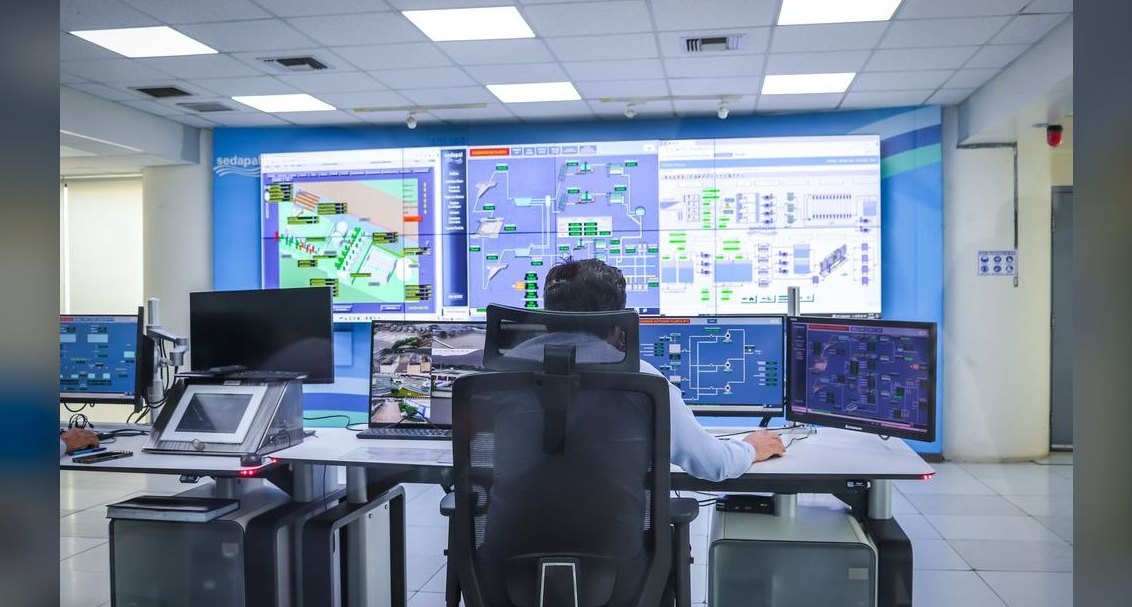 acg-systemsHow'd you fix ACG Systems' revenue issues in 2026?
 acg-systemsFAA air traffic control comms integrator market — NextGen modernization realities in 2027
 acg-systemsACG Systems' 2025 Northrim Horizon acquisition — what it signals for the company in 2027
 acg-systemsThe Maryland defense contracting market — DoD procurement challenges for Annapolis-area firms in 2027
 acg-systemsThe Annapolis MD AV integrator market — what buyers should watch for in 2027
 acg-systemsUtility and SCADA communications integrator market — co-op buyer challenges in 2027
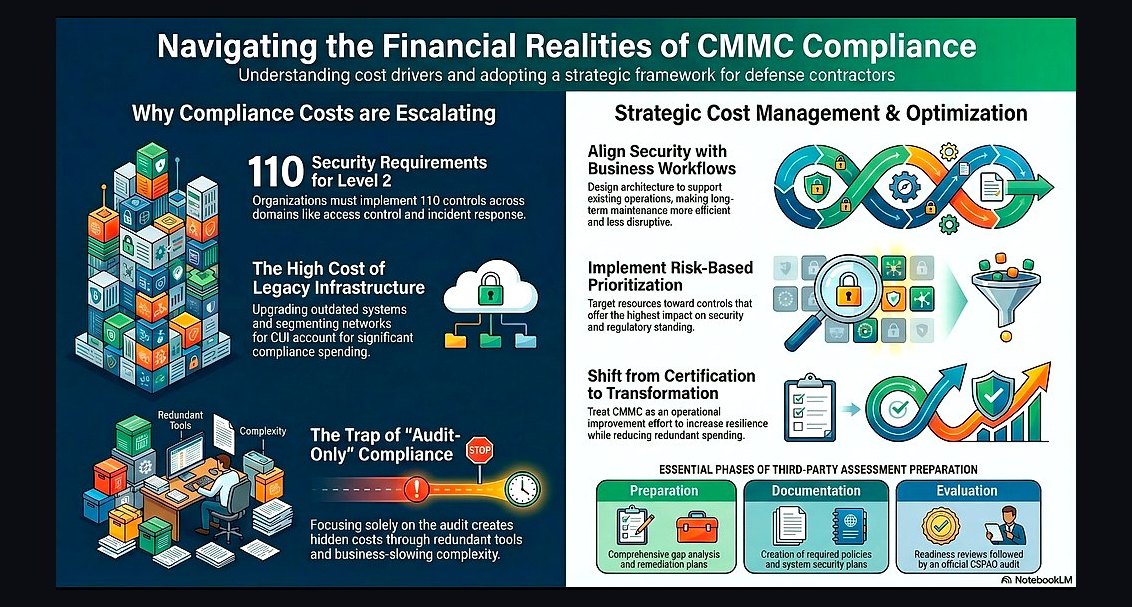 acg-systemsCMMC 2.0 compliance cost — why small federal integrators are getting crushed in 2027
 acg-systemsSCIF buildout integrator market — why ICD-705 schedules slip in 2027
 acg-systemsLand Mobile Radio integrator market — public safety buying gotchas in 2027
 acg-systemsFederal video teleconference (VTC) integrator market — why deployments fail in 2027