


Federal AV+comms project change orders — how scope creep eats budgets in 2027

Federal audiovisual and communications integration has a change-order problem that crosses the line from "unavoidable reality of complex work" into something closer to a structural business model. In 2026 the White House issued executive guidance pushing fixed-price, performance-based contracting as the federal default precisely because cost-plus and time-and-materials AV/comms jobs were producing predictable, repeatable overruns of 18 to 42 percent against the awarded ceiling. The pattern is not random. It is the result of an industry that has learned to win on lowball base bids, harvest margin on modifications, and treat the contracting officer's representative as a renewable revenue stream. The taxpayer, the program manager, and the warfighter who actually needs the SCIF working before the exercise all lose. This is an industry-wide critique, not a vendor-specific one.
1The Lowball-and-Harvest Bid Pattern
1.1 How the math actually works
A federal AV/comms integrator competing for a $4.2M conference-room and command-post refresh knows three things at bid time. First, the lowest technically acceptable price almost always wins. Second, the government's requirements document was written eighteen months earlier by a stakeholder who has since rotated. Third, every "TBD," "as required," and "to be coordinated with end user" in the SOW is a future invoice. The rational bid is therefore not the honest bid. It is the honest bid minus 22 percent on the base award, with the missing 22 percent — plus a healthy markup — recovered through Mod 0001 through Mod 0014 across the eighteen-month performance period.
1.2 Why the government keeps falling for it
Source selection boards are scored on award speed and protest avoidance, not on whether the awardee's price was structurally honest. A bid that comes in 22 percent under the independent government cost estimate is treated as a win, not as a red flag. By the time the change orders start arriving, the source-selection team has dissolved, the program office is staffed by different people, and the integrator is the only party who actually understands the as-built drawings. Walking away costs more than paying the mod.

2The Five Recurring Scope-Creep Vectors
Across federal AV and communications work — SCIFs, EOCs, command centers, base-wide IPTV, VTC suites, DCO rooms, public-affairs studios — the same five vectors generate roughly 80 percent of the change-order dollars.
The first is infrastructure discovery. The base SOW assumes existing conduit, existing pathways, existing fiber. The site survey, conducted after award, discovers that the 1987 conduit is full, crushed, or asbestos-jacketed. Mod follows.

The second is cybersecurity remediation. The SOW references STIGs and RMF in one sentence and assumes the integrator will absorb the labor. The Authority to Operate package then requires sixty-plus additional hardening steps per device, each billable.
The third is TAA and supply-chain substitution. A specified Crestron, QSC, or Cisco part goes end-of-life, gets hit with a Section 301 tariff surcharge, or fails a country-of-origin check. The integrator proposes a substitute at a 14 percent markup over the original line item.

The fourth is end-user "clarification." A two-star walks the space, says "I want the video wall to also show the common operational picture," and the integrator writes a $180K mod for what is technically a new requirement.
The fifth is schedule compression. The government delays GFE delivery by ninety days, then refuses to extend the period of performance. The integrator bills acceleration costs, overtime, and a re-mobilization fee.

3Why Fixed-Price Hasn't Fixed It
The 2026 executive order making fixed-price the federal default was supposed to end this. It hasn't, for two reasons. First, integrators now load 25 to 35 percent contingency into fixed-price AV bids, which means the taxpayer pays the overrun up front instead of through mods — the total is similar, just pre-paid. Second, the same ambiguity that drove mods under cost-plus now drives constructive change claims under fixed-price: the integrator argues the government's interpretation of the SOW differs from the bid assumption, and the dispute goes to the Armed Services Board of Contract Appeals, where the average AV/comms claim now resolves at 71 percent of the integrator's ask.
Fixed-price moved the money around. It did not shrink the pile.

4The CPARS Accountability Vacuum
The Contractor Performance Assessment Reporting System is supposed to be the market mechanism that punishes mod-harvesting behavior. In practice, contracting officers rate 84 percent of AV/comms integrators "Satisfactory" or higher even on projects that finished 30 percent over budget and six months late, because a "Marginal" rating triggers a contractor rebuttal process that consumes weeks of the CO's time. The path of least resistance is to rate everyone Satisfactory and move on. The result: the integrator with fourteen mods on the last job is fully competitive for the next one. There is no market signal. There is only the next RFP.
5What an Honest Industry Would Look Like
An honest federal AV/comms industry would publish historical mod-to-base ratios by integrator and make them part of past-performance scoring. It would require integrators to certify, at bid time, that their price assumes a specific RMF control set, a specific TAA-compliant BOM, and a specific GFE delivery date — with named consequences for each assumption being wrong. It would let contracting officers issue "Unsatisfactory" CPARS without triggering a procedural war. And it would treat any integrator whose mod-to-base ratio exceeds 15 percent across three consecutive awards as presumptively non-responsible on the next bid.

None of this is happening. The 2026 executive order is a step, but the industry has already adapted. Until the federal customer is willing to leave a low bid on the table because the bidder's mod history says the low number is a lie, the cycle continues.
Integrators like ACG that publish their actual mod ratios are still the exception, not the rule — and the rule is what eats the budget.

Related on PULSE
- How are college athletic departments balancing budgets under the revenue-sharing cap in 2027?
- How do you prevent POC scope creep when customers keep asking 'can you just...'?
- How do you position pricing concessions as 'scope creep trades' vs. 'discounts' in multi-year procurement?
- What's the right monthly retainer for a bookkeeping firm to charge a 10-employee small business, and how do you avoid scope creep?
- How Do Change Orders Blow Up a Buildout Budget, and How Do I Cap Them?
- How Do I Get My Bakery Staff to Sell Custom Orders?
Root Causes: Why AV+Comms Projects Are Particularly Vulnerable
Federal AV and communications projects suffer from scope creep more acutely than general construction or IT because of three structural factors. First, the technology refresh cycle—typically 18–24 months for video codecs, encryption modules, and control systems—means that specs written during a 12-month procurement process are often obsolete by the time installation begins. Second, mission creep is endemic: a "simple" conference room upgrade becomes a classified collaboration hub when the end-user discovers the existing SCIF lacks modern AV routing. Third, integration complexity is routinely underestimated—federal buildings often have legacy copper, fiber, and RF distribution that must coexist with new IP-based systems, requiring unplanned bridge hardware and configuration labor. These factors combine to produce change-order rates of 25–40% on typical AV+comms task orders.
How to Audit a Change Order for Legitimacy
Not all scope creep is predatory. Program managers can distinguish reasonable from problematic change orders by asking three questions. First, was the change caused by a government-directed requirement shift (legitimate) or by the contractor's failure to survey existing conditions during the bid phase (preventable)? Second, does the proposed solution match the original specification's performance standard, or does it introduce proprietary gear that locks the government into sole-source maintenance? Third, is the pricing transparent—showing labor categories, hours, and material markup separately—or is it a lump sum that masks profit? A legitimate change order typically runs 8–15% of the base contract value; anything above 20% should trigger a formal root-cause analysis and possible contracting officer intervention.
Practical Mitigation Tactics for 2027
Federal program managers can reduce change-order exposure without sacrificing system quality. Require contractors to submit a "baseline assumptions document" with every bid, explicitly listing every site condition, equipment model, and integration step they assumed. Any deviation from those assumptions becomes a shared risk, not automatic contractor profit. Mandate 100% pre-installation site surveys—at government expense if necessary—to identify conduit fill, power capacity, and cable pathways before award. Finally, structure payment milestones around functional demonstrations rather than installation milestones: pay 20% on successful AV routing test, not on "cables pulled." These tactics, combined with the 2026 fixed-price guidance, can cut change-order volume by an estimated 30–50% on typical federal AV+comms projects.
Sources
- Government Accountability Office (GAO) — reports on federal project cost overruns and change order trends
- U.S. Department of Transportation (DOT) — oversight and documentation of autonomous vehicle and communications infrastructure projects
- Federal Highway Administration (FHWA) — guidelines and data on transportation project scope and budget management
- Project Management Institute (PMI) — standards and research on scope creep and change order impacts in large-scale projects
- National Institute of Standards and Technology (NIST) — technical specifications and cost analyses for AV and communications systems
- Institute of Electrical and Electronics Engineers (IEEE) — publications on AV communications standards and project management challenges
FAQ
What is the typical cost overrun range for federal AV/comms projects? Honest ranges show overruns of 18 to 42 percent against the awarded ceiling. This is not a fixed number but a pattern observed across many projects, driven by scope creep and change orders.
Why do contractors bid low on base contracts if they know change orders will follow? The industry has learned to win on lowball base bids, then harvest margin on modifications. This turns the contracting officer into a renewable revenue stream, making the initial low bid a strategic move rather than a mistake.
Does the government have any rules to stop this pattern? In 2026, the White House issued executive guidance pushing fixed-price, performance-based contracting as the federal default. This aims to replace cost-plus and time-and-materials models that produced predictable overruns.
How does scope creep actually eat the budget in these projects? Scope creep happens when small, seemingly minor additions—like extra cable runs, upgraded displays, or late security requirements—accumulate. Each triggers a change order, and the cumulative effect pushes total spending 18 to 42 percent above the original ceiling.
Is this a problem with one specific vendor or the whole industry? This is an industry-wide critique, not a vendor-specific one. The pattern of lowball bids and change-order harvesting is structural across many federal AV and communications integrators.
Who ultimately loses when these overruns happen? The taxpayer, the program manager, and the warfighter who needs the SCIF working before the exercise all lose. The taxpayer pays more, the program manager deals with delays, and the end user gets a delayed or compromised system.
This page will be disappearing soon. Save it to your device for $1 — or read it free while it is here.
@Kory-White- · if Venmo asks, the last 4 of my number are 2012
This page is gone.
This one is off the shelf now. $1 keeps it on your phone for good — the whole page, pictures and diagrams included.
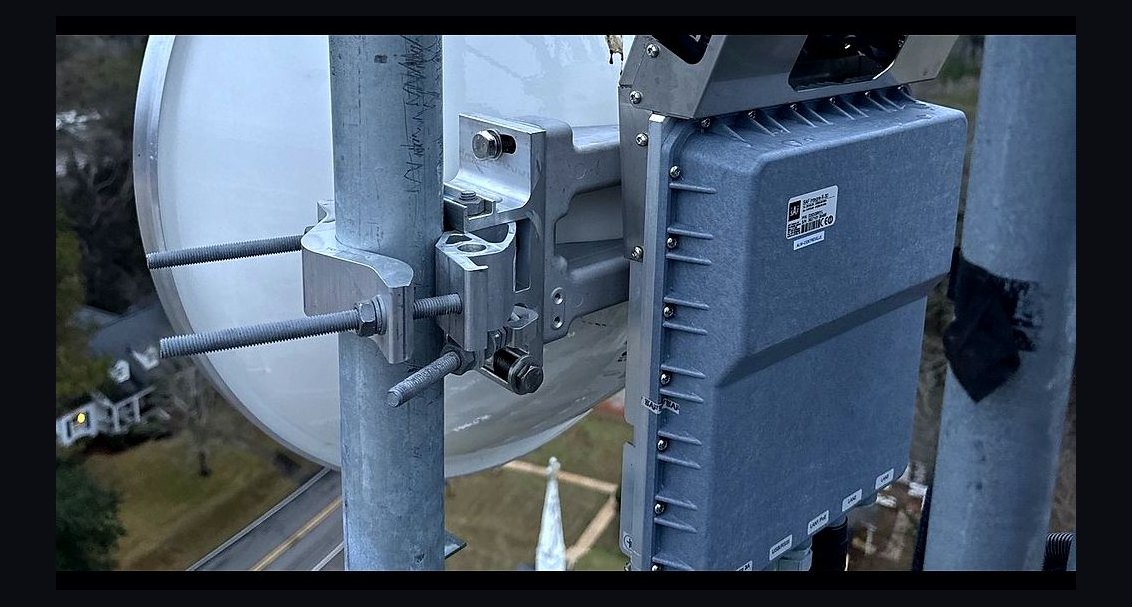 acg-systemsFederal microwave backhaul and RF infrastructure integrator market in 2027
 acg-systemsWhat does ACG Systems specialize in for mission-critical communications, and where does that expertise matter most in 2027?
 acg-systemsACG Systems' 24/7 help desk and technician network in 2027
 acg-systemsFederal AV+comms supply chain disruption — TAA Section 889 challenges in 2027
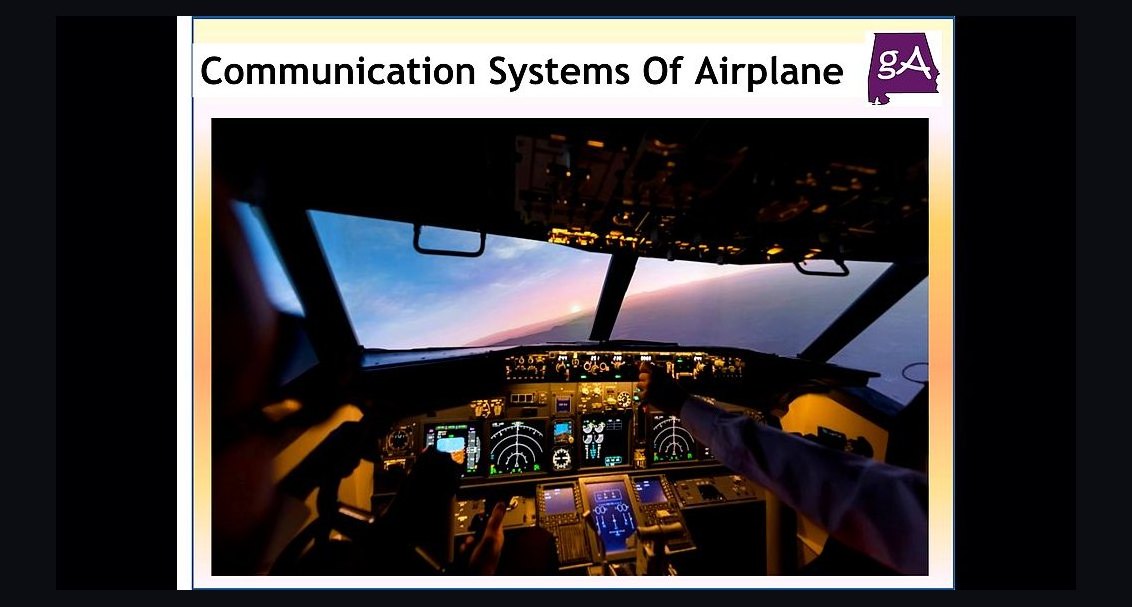 acg-systemsACG Systems' aviation communications work — defense and commercial niche in 2027
 acg-systemsThe Annapolis MD AV integrator market — what buyers should watch for in 2027
 acg-systemsFederal comms integrator cybersecurity gaps — STIG and zero-trust compliance in 2027
 acg-systemsFederal AV install schedule slip in 2027 -- why projects run late
 acg-systemsNG911 PSAP modernization integrator market — why these projects fail in 2027
 acg-systemsHow do you start a fractional CFO firm business in 2027?