
How many dogs per day can one groomer realistically handle, and what determines the ceiling in 2027?
 Curated byKory White · Fractional CRO · Maryland
 PULSEKNOWLEDGE LIBRARY
Quality
Certified

A solo groomer can realistically handle 4 to 8 dogs per day, with 5 to 6 the sustainable average for full-service work. What determines the ceiling is a stack of variables: dog size and coat condition, service mix, equipment and station layout, support staff, and the groomer's own stamina. Matted or anxious dogs cut that number fast.
What daily grooming capacity actually is and why the number matters
Daily capacity is not one number — it is a range that moves with the book of business you accept. A groomer who takes only small, well-maintained Shih Tzus on a bath-and-tidy package is running a different business than one who takes doodles in full coat, and the two should never be measured against the same benchmark. When operators ask how many dogs a groomer can handle, the honest answer is that the question is incomplete until you specify the mix.
Why it matters comes down to three downstream effects that compound.
The first is pricing. If you believe your groomer can do 8 dogs a day and you price for 8, but the actual sustainable number is 5, you have built a revenue model on a fiction. Every month you miss plan, and the instinct is to blame effort rather than the assumption. Capacity is the denominator in almost every per-dog cost calculation — labor per dog, overhead per dog, and the break-even price of a groom all move when the denominator is wrong.
The second is safety. Grooming involves sharp tools, slick surfaces, and animals that can move unpredictably. Injury rates in grooming rise sharply when a groomer is rushing, and rushing is what happens when the schedule assumes a number the body cannot deliver. A nick on a dog's ear or a slipped clipper on a flank is usually a scheduling failure wearing a costume.
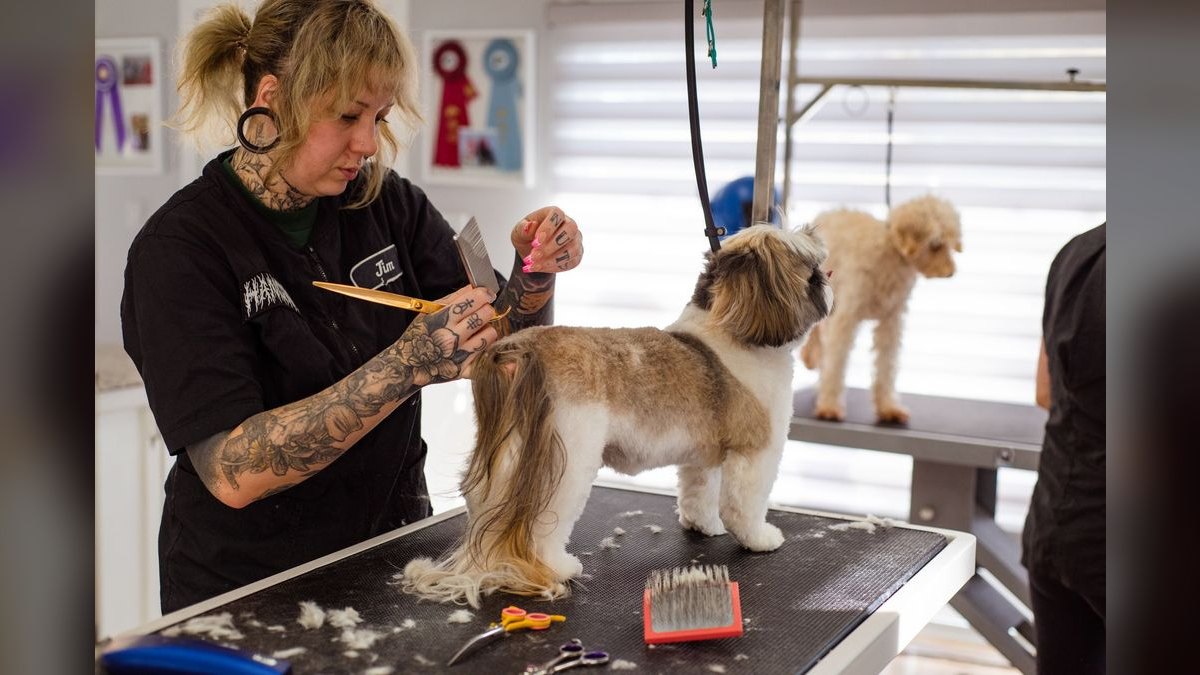
The third is retention — of clients and of staff. Clients notice inconsistency before they notice almost anything else. A groomer who produces excellent work on dog two and rushed work on dog seven loses the seventh client, and often the first one too once word travels. Meanwhile, groomers leave the industry at high rates, and the most common reason cited in trade conversation is physical breakdown and unsustainable daily volume, not pay.
There is also a RevOps-adjacent lesson here that transfers well beyond pet services. Capacity planning in any appointment-driven service business — grooming, dental hygiene, auto detailing, salon work — fails the same way: leadership adopts a theoretical maximum from a best-case day and treats it as the planning number. The disciplined move is to plan on the median day, not the best day, and treat the best day as upside.
A useful reframe: stop asking how many dogs a groomer can handle and start asking how many dogs a groomer can handle well, five days a week, for fifty weeks, without their hands giving out. That second number is lower, and it is the one that determines whether the business is still standing in three years.
The step-by-step process for finding your real ceiling
Finding a defensible capacity number is a measurement exercise, not a guess. Work through it in order.
Step one: time your actual services. Pick a representative week and log start and stop times for every dog, broken into stages — intake and pre-check, bath, dry, clip or scissor, finish, cleanup, client handoff. Do not estimate. Most groomers are surprised by how much time goes to drying and to the gaps between dogs.

Step two: segment by service type. Group the logged grooms into categories: bath-and-brush only, full groom on a small breed, full groom on a medium breed, full groom on a doodle or double-coated breed, and any specialty work. You now have a per-category time, not a global average. A global average hides everything useful.
Step three: build a realistic day. Take your available grooming hours — genuinely available, after admin, phone calls, cleanup, and breaks — and lay out a day using the segment times. If you have seven productive hours and your mix is two small full grooms, two medium full grooms, and one doodle, you will find the day is already full.
Step four: add the friction factors. Matted coats add substantial time and often require a shave-down plus a conversation with the owner. Senior dogs need rest breaks. Puppies need patience and often a first-visit partial groom. Anxious or reactive dogs may need a quieter slot with no other dogs nearby. Log how often these appear in your book; for many shops it is 20 to 30 percent of appointments.
Step five: run it for two weeks and compare. The gap between your planned day and your actual day is your scheduling error rate. If you consistently finish 45 minutes late, your plan is wrong, not your effort.
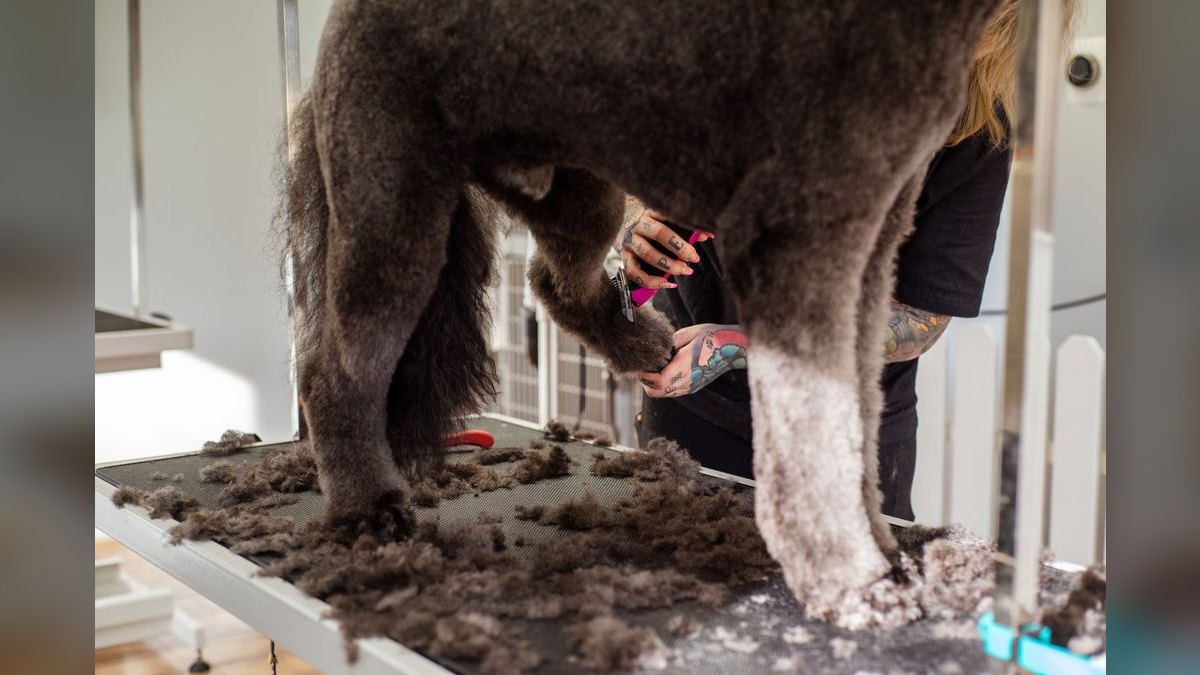
Step six: set the number and defend it. Publish the capacity to whoever books appointments, and build rules around it — no back-to-back doodles, a buffer between every appointment, and a hard stop before the last dog that leaves time for cleanup.
The loop matters more than the first answer. Breed mix changes seasonally — spring deshedding season, holiday rush, summer shave-downs — and each shift moves the ceiling. A capacity number set in January and never revisited will be wrong by June.
Costs, timelines, and typical ranges
Concrete numbers help here, with the caveat that regional pricing and local competition swing them considerably.
Time per service, typical ranges. A bath-and-brush on a small, well-maintained dog runs roughly 45 minutes to an hour including drying and cleanup. A full groom on a small breed — clip, nails, ears, sanitary — runs about 1 to 1.5 hours. A medium breed full groom runs 1.5 to 2 hours. A standard poodle or a doodle in full coat runs 2 to 2.5 hours, sometimes more. A double-coated breed needing a proper deshed treatment runs 1.5 to 2.5 hours depending on coat blow. Creative or hand-scissored work can run 3 hours or more per dog.
Daily totals by mix. Small-breed-focused shops can push 8 to 10 dogs. Mixed-breed general practice lands at 5 to 7. Doodle-heavy or large-breed-heavy books land at 3 to 5. A groomer doing exclusively hand-scissored show work might do 2 to 3.
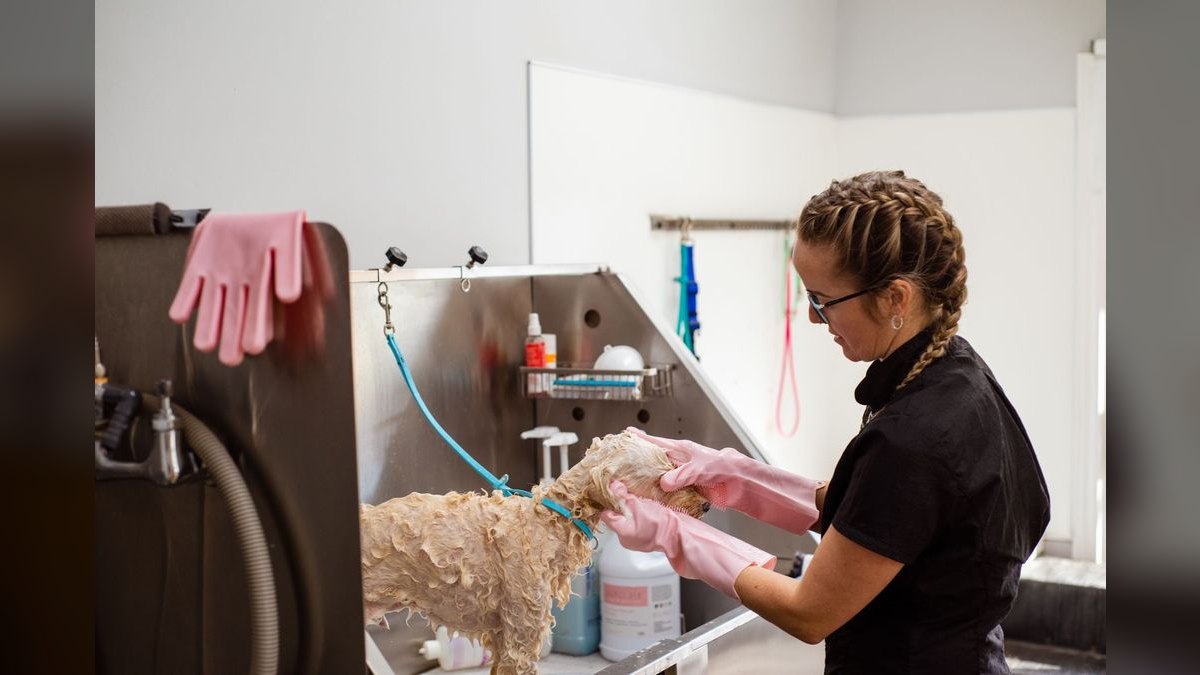
Revenue per dog. Depending on region and dog size, a full groom typically prices somewhere in the range of 60 to 120 dollars, with doodles and large breeds often commanding 100 to 160 dollars or more in premium markets. Bath-only services run lower, often 30 to 60 dollars.
Labor and supply cost per dog. Shampoo, conditioner, ear cleaner, nail supplies, blades, and wear on clippers and dryers typically run a modest per-dog supply cost. The larger cost is labor — either the groomer's own time or a wage plus payroll burden.
Timeline to proficiency. A new groomer typically needs six months to a year of full-time work before their speed stabilizes, and often longer before their quality is consistent enough to book premium clients. Expect a new hire to run meaningfully below the shop's established capacity for the first several months. Planning a new groomer at full capacity from week one is a common and expensive mistake.
Support staff economics. Adding a dedicated bather or assistant can raise a groomer's throughput substantially, but the added labor has to be paid for. The math works when the incremental dogs per day generate more revenue than the assistant's fully loaded hourly cost — which is usually true in markets with strong demand and premium pricing, and false in markets where grooming prices are compressed.
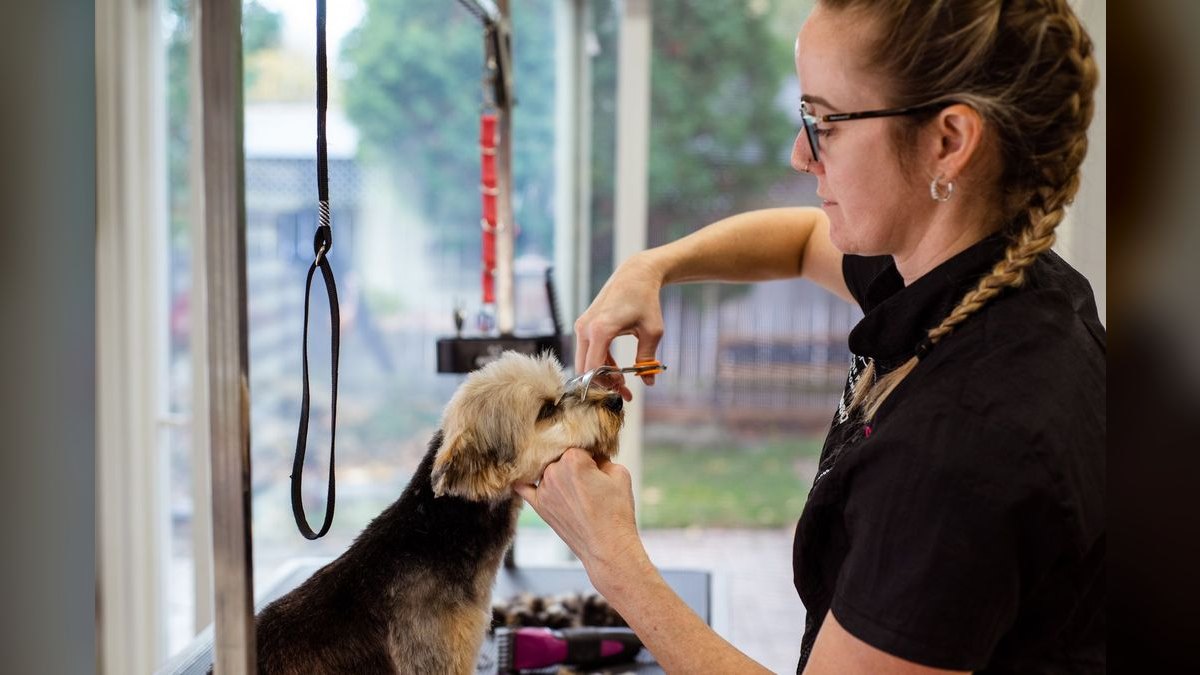
Facility setup. A single tub and single drying station creates a hard sequential bottleneck. Two tubs and two drying stations let a groomer overlap stages, which typically adds one to two dogs per day without any change in effort. Proper ventilation, an adjustable-height table, and a good floor mat reduce fatigue, and reduced fatigue shows up as capacity at the end of the week, not the beginning.
Weekly and annual framing. A groomer running five days at 5 dogs per day is doing roughly 1,200 to 1,300 grooms a year. Five days at 7 dogs is closer to 1,700. That difference is large enough to change a shop's entire financial picture — and large enough that assuming the higher number without evidence is genuinely risky.
Where teams get it wrong
Several failure patterns recur often enough to be predictable.
Planning on the best day. Someone grooms 9 dogs once during a holiday push and that becomes the assumed capacity. The median day was 5. The plan is now 80 percent too optimistic on paper and permanently behind in reality.
Ignoring the mix drift. A shop builds its model on small breeds, then the neighborhood changes, doodle ownership rises, and average appointment time climbs 40 percent. Nobody updates the capacity number because nobody is measuring service times anymore.

Treating add-ons as free. Nail grinding, teeth brushing, anal gland expression, and flea treatment each add minutes. Stacked across every dog in a day, they can quietly remove a full appointment slot from the schedule. Either price them to reflect the time or limit how many you accept per day.
Booking back-to-back with no buffer. Grooming has unavoidable variance — a dog that won't settle, a mat that takes longer than expected, an owner who arrives late. Without a buffer, one overrun cascades through the entire afternoon. The buffer is not wasted time; it is the mechanism that keeps the schedule honest.
Confusing throughput with capacity. A production-line setup where one person bathes, another dries, and the groomer only clips can push raw numbers higher. But quality variance rises, injury risk rises, and the groomer's skill set narrows. Some shops run this model successfully; many discover that the volume gain is partly imaginary once rework, complaints, and staff turnover are accounted for.
Assuming a second groomer doubles capacity. It does not. Adding a groomer adds somewhere in the range of 60 to 70 percent of their theoretical capacity once scheduling friction, shared equipment, management overhead, and quality variance are counted. Two groomers at 5 dogs each rarely produce 10; they more often produce 7 to 8 with more coordination cost.

Letting the groomer absorb the shortfall. When the schedule is overbooked, the groomer works through breaks and stays late. This works for a while and then it does not. The correction comes as a resignation, often with little warning, and usually at the worst possible time.
Never tracking no-shows and late cancellations. In many shops these run 5 to 15 percent of booked appointments. If your capacity model assumes every booked slot is a completed groom, you are overstating revenue and understating the true cost of each completed dog.
Skipping the intake conversation. A two-minute pre-check at drop-off — coat condition, skin issues, behavior notes, owner expectations — prevents the surprise mat that turns a 90-minute groom into a three-hour project. The intake is capacity protection, not customer service theater.
Decision framework: when to choose what
The right capacity target depends on what you are optimizing for. Work through the decision honestly.
If your goal is maximum revenue per groomer hour and you have strong demand, price up and slow down. Fewer dogs at higher prices with better outcomes usually beats more dogs at commodity prices, because the cost of a rushed groom is a lost client and a damaged reputation.

If your goal is volume and you have a reliable pipeline of simple, well-maintained pets, a streamlined menu — bath, tidy, nails — can push daily counts higher without wrecking quality, provided you enforce coat-condition standards at intake.
If your goal is scaling beyond one groomer, hire for the 4-to-6 range rather than the theoretical maximum, invest in a bather before you invest in a third groomer, and keep your own book deliberately light so you remain the quality anchor and the person who trains.
If your market is price-sensitive and you cannot raise prices, your only lever is mix — refuse the three-hour doodle at a bath-and-brush price, or refer it out. Taking that dog at the wrong price destroys more margin than turning it away.
The through-line: capacity is a lever you set deliberately, not a number you discover by accident. A groomer who knows their ceiling and defends it will out-earn and outlast one who keeps saying yes.
Related questions
Does a mobile grooming van change the daily ceiling?
Yes, it lowers it. Van work removes the multi-station advantage and adds drive time between appointments. Most mobile groomers realistically cap at 4 to 6 dogs per day, and route density matters as much as grooming speed — a tight route with short drives can recover a slot.
How much does a matted coat reduce daily capacity?
Substantially. A heavily matted coat can double or triple the time for a single dog, and severe matting sometimes requires a shave-down plus a skin check. One matted dog can effectively consume the slot of two or three normal appointments.
Can a groomer sustain 10 dogs a day long term?
Rarely at full-service quality. Ten dogs a day is achievable in a bath-only or production-line model, but for full grooms it typically leads to quality decline, injury risk, and burnout within months. Sustainable full-service volume sits much lower.
Does experience really change the number?
Yes, meaningfully. A groomer in their first year may top out at 4 to 5 dogs, while an experienced groomer with efficient handling and a tuned workflow can reach 6 to 8 on a favorable mix. Speed stabilizes over the first year or two.
What is the single biggest capacity lever?
Support staff and station layout. Adding a bather or a second drying station removes the sequential bottleneck and typically adds one to two dogs per day without requiring the groomer to work faster or cut corners.
FAQ
How many dogs per day can one groomer realistically handle? For full-service grooming, 4 to 8 dogs per day is the realistic band, with 5 to 6 the sustainable average for a mixed book. Bath-only or small-breed-focused work can reach 8 to 10. Doodle-heavy or large-breed books often settle at 3 to 5. The number is a function of mix, not a fixed industry constant.
What determines the ceiling more than anything else? Coat condition and service complexity. A well-maintained small dog on a bath-and-tidy takes under an hour; a matted doodle in full coat can take three. Since most books contain a mix, the ceiling is really an average weighted by how many difficult appointments you accept per day.
Does hiring a bather actually increase capacity? It does, typically by one to two dogs per day, because it removes the wash-and-dry bottleneck that forces sequential work. The gain only pays off if the incremental revenue exceeds the bather's fully loaded cost, which depends on your pricing and demand.
How long does it take a new groomer to hit full capacity? Expect six months to a year of full-time work before speed and quality stabilize, and longer before a groomer can command premium pricing. Planning a new hire at the shop's established capacity from week one will consistently overbook them.
Is it better to groom more dogs or charge more per dog? For most independent shops, charging more per dog wins. Fewer, better grooms reduce injury risk, protect reputation, and improve groomer longevity. High volume only makes sense when the book is genuinely simple and intake standards are enforced.
How often should capacity be re-measured? At least quarterly, and any time the breed mix shifts noticeably. Seasonal patterns — spring deshedding, summer shave-downs, holiday rushes — move the number, so a capacity target set once and never revisited will drift out of accuracy within a few months.
Sources
- American Kennel Club: https://www.akc.org/
- National Dog Groomers Association of America: https://www.nationaldoggroomers.com/
- International Professional Groomers: https://www.ipgicmg.com/
- Humane Society of the United States: https://www.humanesociety.org/
- Groomer to Groomer trade publication: https://www.groomertogroomer.com/
- American Pet Products Association: https://www.americanpetproducts.org/
- Occupational Safety and Health Administration: https://www.osha.gov/
- U.S. Bureau of Labor Statistics: https://www.bls.gov/
Related on PULSE
- How many cars per day can a one-truck mobile detailer realistically do, and what's the per-car gross profit?
- How many residential lawn-care accounts can a one-truck two-man crew realistically maintain in a 5-day week, and what's the route density that makes it work?
- How do you scale a workshop-led senior tech-training business in 2027 — what's the proven path past the single-operator ceiling?
- How long should AE ramp realistically take in mid-market SaaS?
- Chief has lost its pricing power in 2027 — how the $7,900 ceiling collapsed
This page will be disappearing soon. Save it to your device for $1 — or read it free while it is here.
@Kory-White- · if Venmo asks, the last 4 of my number are 2012
This page is gone.
This one is off the shelf now. $1 keeps it on your phone for good — the whole page, pictures and diagrams included.
 referencesWhat reference cadence prevents burnout while maximizing call volume in 2027?
 revopsAt what ARR threshold should a Salesforce admin be a full-time hire vs a contractor vs an AE-level RevOps generalist?
 total-aviation-staffingHow'd you fix Total Aviation Staffing's revenue issues in 2026?
 mini-golfShould I open a 9-hole or 18-hole mini-golf course in a tourist town, and what's the throughput math in 2027?
 nail-salonHow do you start a nail salon business in 2027?
 capacity-planningHow do we right-size rep capacity and assign quota without guessing in 2027?
 the-new-networkHow'd you fix The New Network's revenue issues in 2026?
 roller-rinkHow do you run a profitable roller rink — what session schedule maximizes revenue per square foot in 2026?
 revopsHow do you build a capacity model for sales hiring in 2027?
 capacity-planningWhat's the right capacity-planning model for a 50-rep org in 2027?