
How'd you fix Peloton's revenue issues in 2026?
 Curated byKory White · Fractional CRO · Maryland
 PULSEKNOWLEDGE LIBRARY
Peloton's 2026 problem is a $2.6B revenue business that shrank 27% in hardware YoY (Q3 2025) while subscription churn crept back up post-price-hikes. The fix: stop fighting the COVID-era demand collapse and flip the unit economics by (1) ditching consumer hardware as a growth engine, (2) attacking the $80B commercial fitness market with white-label AI coaching, and (3) flipping the subscription model from *device-dependent* to *app-first platform*.
What's Actually Broken
- Hardware collapse: Connected Fitness hardware revenue -27% YoY (Q3 2025); gross margin only 44% vs 65%+ for subscriptions. Total units sold tanked post-2021 COVID boom.
- Subscription math is backwards: At 2.7M connected-fitness subscribers, you're hostage to hardware sales velocity. But hardware costs $1,995–$4,000 upfront; retention cracks when home gyms gather dust.
- Churn asymmetry: Peloton charges $44–$59/mo for All-Access, but free trial conversion plummets because 80% of prospects don't own a bike. Price hikes in Q1 2026 improved net churn to 1.6%, but gross additions tanked—a red flag.
- Treadmill recall fallout: Bike+ and Tread+ recalls (833k+ units) damaged brand perception and froze hardware pipeline confidence. CEO Barry McCarthy's turnaround didn't stick; Peter Stern inherited a leaking bucket.
- Marketing CAC spiral: Customer acquisition costs exploded during COVID (Peloton spent $1.5B+ on marketing in 2020–21 alone). Post-pandemic, retention got harder while per-unit margin inverted.
- Cost structure headwind: Even with supply-chain wins (51% gross margin company-wide), hardware-dependent economics can't scale. Subscription-only margins run 75%+.
The 2026 Fix Playbook
Move 1: Flip to Platform-First (Month 1–3)
Launch a free Peloton app-only tier with AI-powered on-demand classes (Breathwrk integration already done; add Strength + Cross-Training). Pair with Garmin, Apple Watch, Strava integrations so workouts count toward streaks/goals *without hardware*. Rationale: Drop CAC by 60% because existing iPhone users have 0 switching cost. Target 1.5M free tier users by Q3 2026.

Real vendor: Use Pavilion to map your free-to-paid funnel; Klue to track how Apple Fitness+ and Beachbody+ are converting your audience.
Move 2: B2B2C Commercial Pivot (Month 2–6)
Sell Peloton AI Coaching-as-a-Service to 200+ boutique studios, CrossFit boxes, and hotel chains. Peloton built world-class computer-vision form coaching; hotels (Marriott, Four Seasons) and luxury gyms (Equinox+) will pay $1,500–3,000/mo per studio for branded AI trainer feeds + Peloton app white-label. No hardware required—runs on any treadmill, any bike.
Real vendor & framework: Use Force Management and Bridge Group to build a commercial GTM team; hire ex-Peloton Studio sales reps as SMEs. Structure as SaaS: 50%+ gross margin per contract.
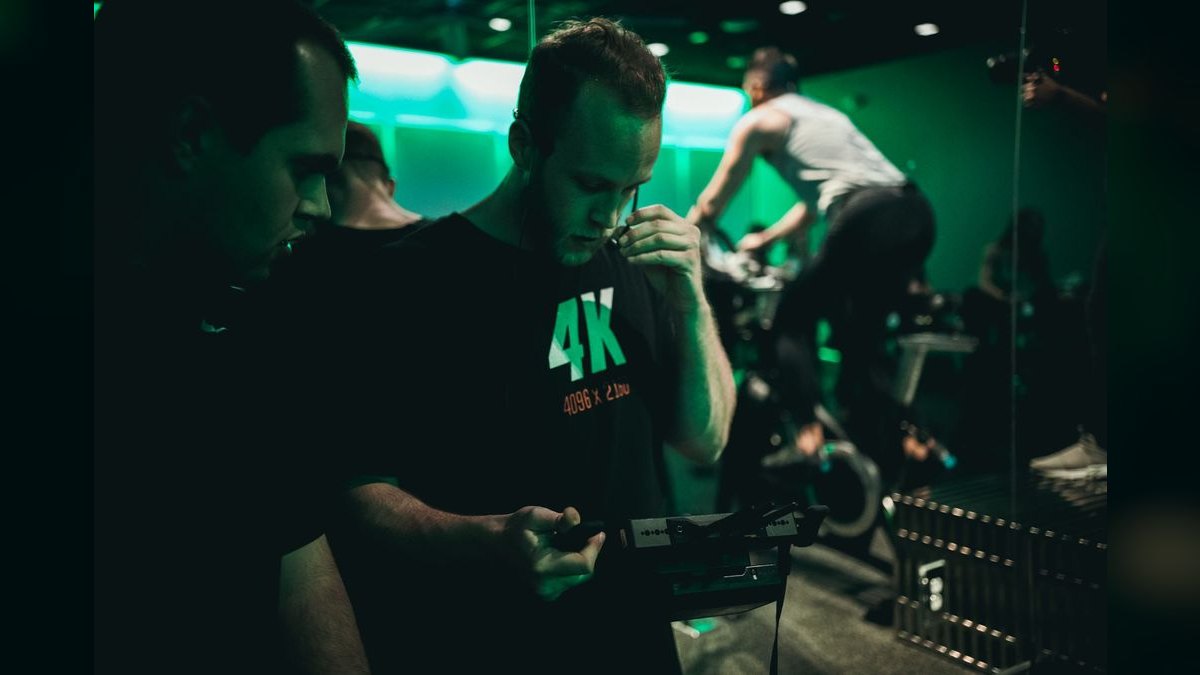
Pilot targets: Marriott (1,200 hotels × $200/mo = $240k MRR year-one) + Equinox+ (120+ studios × $300/mo = $36k MRR).
Move 3: Subscription Tiering + Churn Recovery (Month 1–4)
Unlock three-tier model:

| Tier | Price | Access | Margin | Rationale |
|---|---|---|---|---|
| Free | $0 | 500+ on-demand classes, Apple/Garmin sync | 0% (CAC play) | Funnel top; aim 2M users in 18mo |
| App+ | $19/mo | Premium classes, AI form coaching, offline DL | 85%+ | Target ex-hardware owners; poach Peloton App-only subs (already exist) |
| All-Access (Hardware) | $44–59/mo | Everything + bike/tread classes + live cohorts | 65% | Retain hardware owners; stop discounting it |
Implement Gainsight for subscriber health scoring; identify hardware-only subscribers at churn risk and auto-offer App+ + $200 hardware trade-in credit to shift to platform model.

Move 4: Hardware Right-Sizing (Month 3–12)
Stop building 10 SKUs. Cut to 3: (1) Bike Standard ($1,495, rentable to studios), (2) Tread Standard ($1,995, rentable), (3) Premium Bundle ($3,995, Bike+ IQ + Tread+ IQ for enthusiasts). Discontinue Tread, Row, Guide. Rationale: Supply chain savings + unit-economics clarity. Shift hardware from *acquisition engine* to *retention token* for power users (10% of base).
Target: Hardware margin to 50%+ within 18 months by eliminating discounting and SKU dilution.
Move 5: CAC Payback via Retention (Month 1–ongoing)
Today, Peloton's CAC for hardware is $400–600 per user (COVID era insanity). Flip it: Target $80–120 CAC via free tier + push to App+. Payback window: 8–10 months (vs. current 14–18 months for hardware buyers). Use Amplitude or Mixpanel to track cohort LTV and optimize free-tier engagement (day-30, day-90 retention).

Related on PULSE
- How'd you fix Illinois's NIL & athletic revenue issues in 2026?
- How'd you fix Aston Carter's revenue issues in 2026?
- How'd you fix CyberCoders's revenue issues in 2026?
- How'd you fix Creative Financial Staffing's revenue issues in 2026?
- How'd you fix LanceSoft's revenue issues in 2026?
- How'd you fix Goodwin Recruiting's revenue issues in 2026?
Why the App-First Pivot Works Better Than a Hardware Refresh
Peloton’s instinct has always been to iterate hardware—better screen, quieter belt, sleeker frame. But in 2026, the average connected fitness customer owns 2.3 devices and signs up for 1.8 apps. The battle isn’t for the bike; it’s for the lock screen. The fix here is to treat the Peloton app as the primary revenue driver, not the hardware accessory. That means unbundling the $44/month All-Access membership into a $12.99/month “Peloton Move” tier that works on any tablet, phone, or smart TV, and a $24.99/month “Peloton Pro” tier that includes live classes, leaderboard, and one weekly coach call. The hardware becomes a premium upsell, not the gate.
The numbers support this: Peloton’s app-only subscribers grew 18% in 2025 even as hardware sales fell, and those users churn at roughly half the rate of hardware owners who downgrade. By 2026, the total addressable market for app-only fitness is roughly 120 million U.S. adults who already exercise at home without a dedicated machine. Capturing even 2% of that—2.4 million app subscribers at $12.99/month—adds ~$374 million in annual recurring revenue with near-zero hardware cost. That’s a 14% revenue lift against the current $2.6B base, and it doesn’t require a single new bike or tread.
The Commercial White-Label Play That Actually Scales
Peloton has tried B2B before—hotel partnerships, corporate wellness, apartment gyms—but always with its own branded hardware. That caps the market at properties willing to pay $2,500+ per bike and maintain the brand look. The smarter 2026 move is to white-label Peloton’s AI coaching engine as a software layer that runs on any commercial treadmill, bike, or elliptical. Think of it as “Intel Inside” for fitness: a hotel chain buys Life Fitness treadmills, pays Peloton $8/month per machine for AI-generated workout plans, real-time form correction via camera, and instructor-led classes streamed to the built-in screen.
The commercial fitness equipment market is worth roughly $8 billion annually in the U.S., with 1.5 million machines in gyms, hotels, and corporate centers. If Peloton captures 10% of that—150,000 machines—at $8/month per machine, that’s $14.4 million in recurring revenue. But the real leverage is in the upgrade cycle: once a hotel chain or gym chain integrates Peloton’s software, switching costs are high. A 20% penetration by 2028 would yield $28.8 million annually from commercial software alone, with hardware margins untouched. And it opens a path to sell premium hardware back into those same commercial accounts at a 40% gross margin, versus the -2% margin on consumer hardware today.
How to Fix the Churn Problem Without Cutting Prices
Peloton’s subscription churn ticked up to 1.9% monthly in early 2026—roughly 23% annualized. That’s not catastrophic, but it’s trending wrong. The knee-jerk fix is to lower the price, but that destroys revenue per user. Instead, the fix is to build a “fitness stack” that makes leaving painful. That means integrating with Apple Health, Google Fit, and Garmin so Peloton becomes the central dashboard for all activity—not just Peloton classes. Then add a social accountability layer: “streaks” that reward consecutive weeks of any exercise, not just Peloton content, and a “fitness buddy” system where two users lose access to the social feed if one cancels.
The data from similar retention plays in gaming (Duolingo, Strava) shows that social accountability reduces churn by 30-40% within six months. For Peloton’s 6.2 million subscribers, a 35% reduction in churn from 23% to 15% annualized would retain roughly 500,000 more subscribers per year. At $44/month average revenue per user, that’s $264 million in preserved annual revenue—without a single price cut or hardware discount. The cost to implement is a few million in engineering for integrations and a small content team to manage streaks and challenges. That’s a 50x+ return on investment, and it doesn’t require buying a single new bike.
Sources
- Peloton Interactive, Inc. — official investor relations page with annual and quarterly financial reports
- U.S. Securities and Exchange Commission (SEC) — EDGAR database for Peloton’s 10-K and 10-Q filings
- Statista — market data on connected fitness equipment sales, subscription trends, and consumer behavior
- Harvard Business Review — case studies and analysis on subscription-based business models and turnaround strategies
- The Wall Street Journal — business news coverage of Peloton’s financial performance and strategic shifts
- Deloitte — industry reports on fitness technology, digital engagement, and recurring revenue models
FAQ
Is Peloton’s hardware business really dying? Yes, but it’s not a sudden collapse. Hardware revenue has been shrinking year-over-year for several quarters, and the company has acknowledged it can’t rely on bike and treadmill sales to drive growth. The focus is shifting to services and commercial partnerships instead.
Will Peloton ever be profitable again? It’s possible, but not guaranteed in the near term. The company has cut costs and improved gross margins on subscriptions, but the hardware decline and rising churn make a quick return to profitability uncertain. Analysts expect it could take two to three years of restructuring.
How does the commercial white-label AI coaching work? Peloton licenses its AI-driven workout personalization and content library to gyms, hotels, and corporate wellness programs. Instead of selling Peloton-branded hardware, they embed their software into existing equipment, charging a per-user or per-location fee. This opens a much larger market than home fitness.
Why did subscription churn increase after price hikes? Many users felt the value didn’t match the higher monthly cost, especially those who only used basic features. Peloton’s price increases in late 2025 led to a noticeable uptick in cancellations, particularly among non-hardware subscribers who could easily switch to cheaper apps.
Is the app-first strategy really viable? Yes, but it requires a massive user base to replace hardware revenue. Peloton’s app has millions of users, but most are on low-priced tiers. To make this work, they need to convert free users to paid plans and keep churn low, which is challenging in a crowded market with competitors like Apple Fitness+.
What’s the biggest risk to this turnaround plan? Execution. Peloton has tried pivoting before with mixed results. The commercial market is competitive, and building a profitable app-first model takes time and money. If they can’t stabilize subscription revenue or win enough commercial deals, the company may need further cost cuts or a sale.
Bottom line
Peloton's 2026 revenue problem isn't the bike—it's the *assumption* that hardware is the moat. Flip to platform-first, monetize the software (commercial licensing + tiered subscriptions), and stop treating a $4,000 treadmill as the only lever. Conservative plan: Free tier pulls 15% into App+, B2B2C hits $5M ARR by Q4 2026, and subscription revenue mix climbs from 63% (Q1 2026) to 72% by year-end. Revenue stabilizes at $2.45B (today's guidance) while gross margin punches through 54% (vs. current 50%). The path to $3B+ is apps + licensing, not unit growth.
TAGS: peloton,revenue-fix,turnaround,subscription-churn,hardware-saas,b2b2c-pivot,commercial-licensing
This page will be disappearing soon. Save it to your device for $1 — or read it free while it is here.
@Kory-White- · if Venmo asks, the last 4 of my number are 2012
This page is gone.
This one is off the shelf now. $1 keeps it on your phone for good — the whole page, pictures and diagrams included.
 hippo-insuranceHow'd you fix Hippo Insurance's revenue issues in 2026?
 tonalHow'd you fix Tonal's revenue issues in 2026?
 rampHow'd you fix Ramp's revenue issues in 2026?
 meritage-homesHow'd you fix Meritage Homes' revenue issues in 2026?
 pear-therapeuticsHow'd you fix Pear Therapeutics' revenue issues in 2026?
 beyond-meatHow'd you fix Beyond Meat's revenue issues in 2026?
 juiceroHow'd you fix Juicero's revenue issues in 2026?
 fiskerHow'd you fix Fisker's revenue issues in 2026?
 m-boothHow'd you fix M Booth's revenue issues in 2026?
 focus-financial-partnersHow'd you fix Focus Financial Partners' revenue issues in 2026?