

How do you start a woodworking shop business in 2027?
 Curated byKory White · Fractional CRO · Maryland
Quality
Certified

Start a woodworking shop business in 2027 by choosing one model — solo studio or crew-run cabinet shop — then building a bottom-up shop rate before you buy a single machine. Budget $30K–$70K lean or $120K–$250K+ full, price every job above that rate, take 40–50% deposits, and quote lead times honestly.
Two paths diverge immediately: solo studio versus crew-run cabinet shop
Almost every founder who asks how to start a woodworking shop is really choosing between two businesses that share a trade but not an economic structure. The mistake is treating this as a difference of scale — as if the cabinet shop is just the solo studio with more benches. It isn't. They have different capital requirements, different customers, different failure modes, and different ceilings, and the machinery you buy for one is partly wrong for the other.
The solo studio maker is one skilled person, a modest space of roughly 800–1,500 square feet, and a calendar of custom furniture and small built-in commissions sold on craftsmanship, design fluency, and a personal brand. The advantages are genuine: low overhead, no payroll, full creative control, the ability to say no to work you don't want, and a business you can start for $30K–$70K all-in including a working-capital cushion. The constraint is equally genuine and it is absolute — every dollar of revenue requires your own hands on the wood. A week with the flu is a week with zero revenue. A back injury is an existential event. Reuben, in the composite scenario worth holding in your head, runs a deliberate one-person studio at roughly $160K revenue and $90K owner profit, and he does that for years without strain — but he gets there only because his pricing is right, not because his volume is high. The solo studio is a real business when it is a *priced* business. It is a slow-motion trap when the founder assumes revenue growth will eventually solve the margin problem.
The custom cabinet and millwork shop is a founder plus 2–6 people, a real industrial space of 2,000–5,000+ square feet, serious machinery including panel processing, and a revenue mix built on kitchens, built-ins, and architect-specified millwork flowing through a referral network of designers, builders, and general contractors. This is the most common path to a genuinely profitable woodworking business, reaching $300K–$1.2M+ in revenue by Year 5 with $130K–$300K+ in owner profit. The costs are payroll, project management, cash-flow swings on large jobs, and a founder role that migrates steadily away from the bench. Marcus — the disciplined-builder composite — launches solo with about $55K, discovers in Year 1 that his quotes were roughly 30% low, re-prices, hires an apprentice in Year 2, and reaches $480K with a crew of three by Year 3. The re-pricing is not a footnote in that story. It is the whole story.
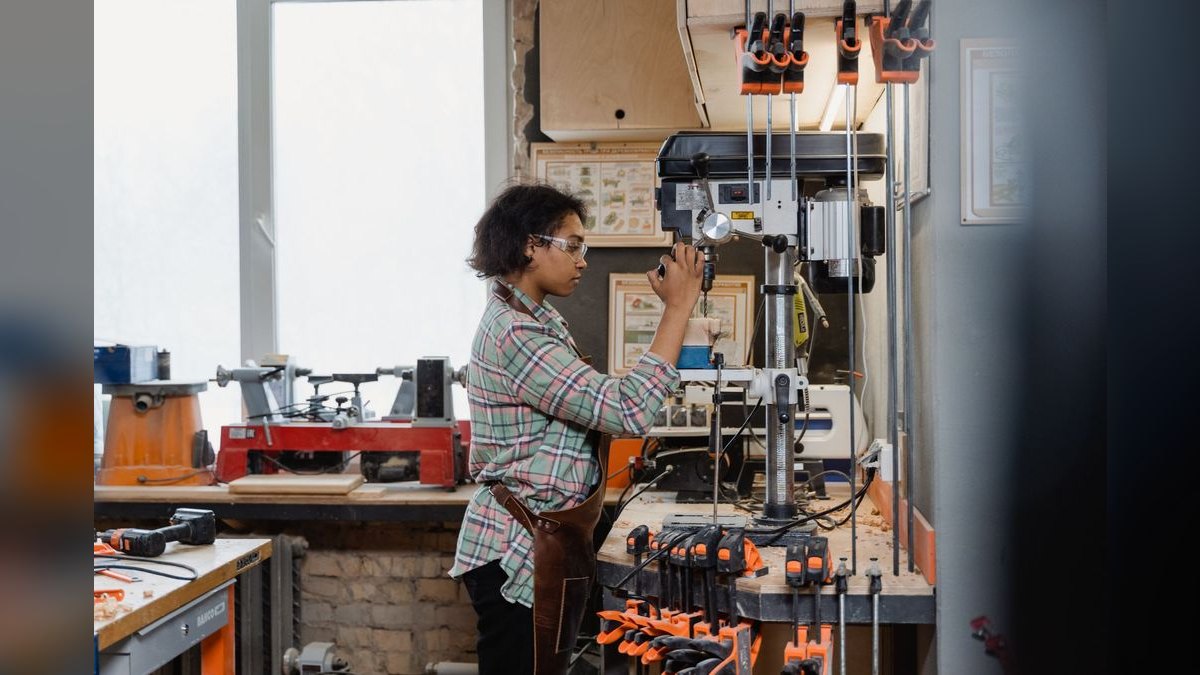
Two further models sit just off this main axis and deserve mention because founders drift into them accidentally rather than choosing them. The semi-production line designs a repeatable range — casegoods, a signature table, a product family — and builds it in small batches using jigs, fixtures, and CNC, selling wholesale, online, and through design-trade channels. Design effort amortizes across units, which is the whole appeal, but it demands real upfront tooling investment plus a sales channel that actually moves volume; the Okafor-brothers composite spends two years on custom work first, then invests in CNC and jigs and passes $900K by Year 5. The niche specialist goes deep on one high-value category — architectural millwork, stair building, restoration, high-end commission furniture — and becomes the regional authority. Priya builds tight relationships with three architecture firms and owns the local high-end millwork market by Year 4. Smaller total market, meaningfully better margins, less price-shopping, real concentration risk.
The pathology to avoid has a name: drift. Being a little bit of all four, mediocre at each, with a machinery set and a shop that fit none of them well. Each model implies a different capital plan, a different shop layout, a different hiring sequence, and a different sales motion. Choosing badly costs you money. Choosing nothing costs you the business.
How to decide between them before you spend a dollar
The decision isn't a preference test. It's a sequence of gates, and the honest answer to any one of them can send you back a step. Run them in order.

Gate one is skill breadth, not skill depth. A solo studio maker needs to build sellable work *efficiently* across whatever categories their portfolio promises. A cabinet shop founder needs enough breadth to specify, quote, and inspect work they will eventually stop performing themselves. If you can build a beautiful dining table in sixty hours but the market pays for forty, you have a skill gap that no pricing model fixes. Build the speed first, in someone else's shop if possible.
Gate two is business temperament, and it eliminates more founders than skill does. Roughly half your time in Year 1 goes to quoting, sourcing, client meetings, photography, bookkeeping, and delivery — not to the bench. The gifted maker who treats the business underneath the craft as an inconvenient tax runs the single most common failure profile in the trade. Dana, the cautionary composite, is a genuinely excellent woodworker who prices by feel, never builds a shop rate, quotes every lead time as bench time, spends eighteen months booked and exhausted, and quits believing the business doesn't make money. Her work was never the problem. If you answer no on this gate, do not start a shop — the honest move is to work as a lead maker in someone else's operation, where the craft is the job.
Gate three is capital, and it has two components people conflate. Machinery capital can be financed; a table saw is tangible, long-lived, productive collateral and lenders understand it. Working capital cannot be financed, because no lender covers the gap between a deposit landing and a final payment clearing. You need $10K–$25K of real cash reserve for a solo launch and $25K–$40K+ for a cabinet shop, and it must be cash you can lose.
Gate four is pricing discipline expressed as a specific willingness: will you re-price upward when Year 1 reveals you were low? Most founders discover they underquoted. Only some raise prices in response. That difference is the difference between Marcus and Dana.
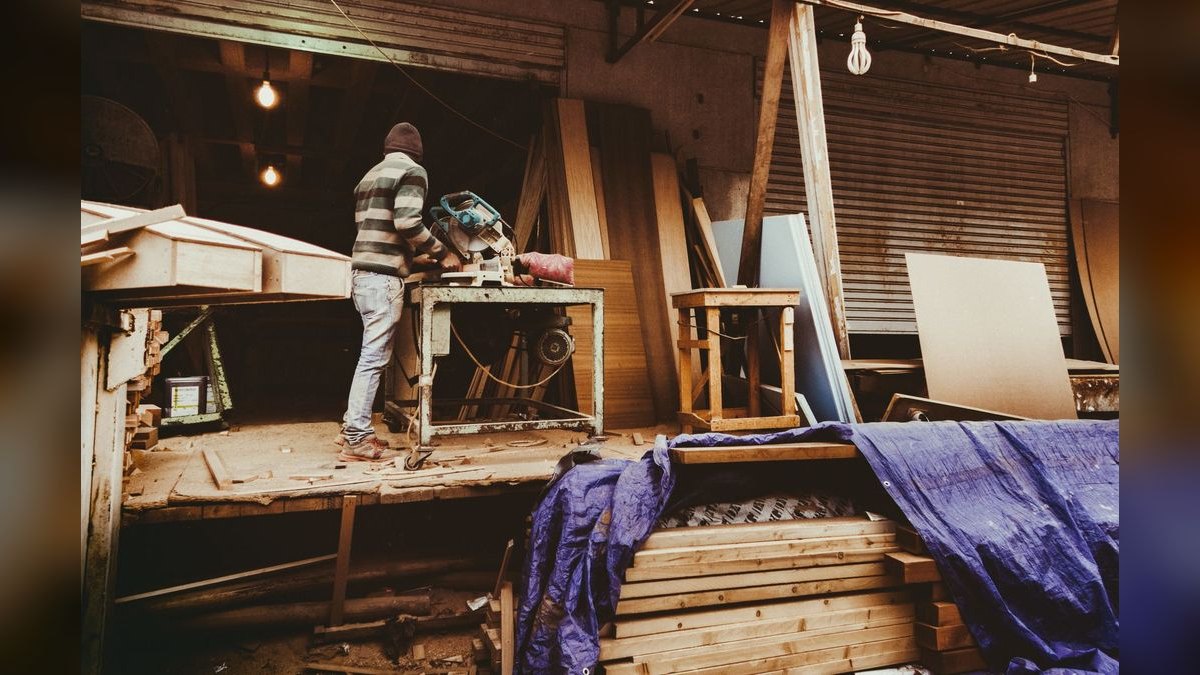
Gate five is network orientation. Woodworking leads come from professional referral relationships far more than advertising. Interior designers specify custom furniture and built-ins client after client. Architects specify millwork — the high-margin, drawing-driven, less price-shopped work. Builders and GCs drive cabinetry volume through renovations. Around these sit a web of adjacent trades who work in the same homes: painters, flooring installers, stagers, kitchen designers, handyman operations who both refer simple work and occasionally compete for it. Building that web is slow, unglamorous, and non-optional. If you won't do it, the solo studio with a strong online portfolio is your only viable lane, and it's a narrower one.
Gate six is physical reality over a decade, not a season. This is loud, dusty, heavy work with real injury exposure. The table saw, jointer, and shaper are genuinely dangerous; blade-brake technology like SawStop's mitigates but does not eliminate the risk. Wood dust and finishing rags create structural fire and explosion hazard requiring proper collection, storage, and disposal. An injured solo founder is a zero-revenue shop, which is why disability coverage matters more here than in most small businesses.
A useful cross-check: the same decision structure appears in adjacent asset-heavy trades. A CNC machining shop, a tiny-home or container-home builder, a cabinet refacing operation — each faces the identical fork between owner-operated craft ceiling and crew-run capacity. The vocabulary changes; the gates don't.
The numbers that actually separate the two options
Everything above is preamble to one calculation. Your shop rate is the fully-loaded hourly cost of running your shop — and it is not "what I want to earn per hour." It is every cost the shop incurs simply by existing, divided by the hours you can genuinely bill.
Here is the trap that quietly destroys more woodworking businesses than any other single factor. A solo maker works perhaps 2,000–2,200 hours a year. Only a fraction of those are billable hours building paid work. The rest disappear into quoting, client meetings, sourcing lumber, shop maintenance, photography, bookkeeping, deliveries, and rework. A realistic solo billable figure is 1,000–1,400 hours a year, not 2,000. Founders divide by 2,000. That single arithmetic choice bakes a near-50% underprice into every quote they will ever write.
Run it honestly for a lean solo studio. Owner target wage $50K–$65K — a modest real wage, not the profit. Shop rent and utilities $9K–$24K for industrial-zoned, power-heavy space. Insurance (general liability, property, equipment) $1,800–$4,500, fixed whether or not a job is on the bench. Machine depreciation and maintenance $4,000–$10,000, because machinery wears with use. Consumables — blades, bits, abrasives — $2,000–$6,000, recurring and chronically forgotten. Software for design, quoting, and cut optimization $600–$2,500. Bookkeeping, fees, and miscellaneous overhead $2,000–$6,000. Total: roughly $90,000 annually. Divide by 1,200 billable hours and your shop rate is $75/hour just to break even — and you must price *above* that, never at it.

Now the job-level P&L, using a custom dining table quoted at $4,500. Lumber and sheet goods run $300–$700, quoted with volatility and waste factored in because rough lumber yields less usable board than its footage suggests. Hardware — slides, hinges, fasteners — is $40–$150 on a table and far more significant on cabinetry. Finishing materials are $80–$200. Finishing *labor* is the line everyone misses: sanding through grits, staining evenly, sealing, building topcoats, sanding between coats, rubbing out — routinely a quarter or more of total job hours. Build labor at shop rate is the largest single line, and it must be costed at the real rate, not a wished-for wage. Delivery and installation cost $100–$400 in time, vehicle, and sometimes a helper, and are almost always given away free. Design and revision hours are real hours absorbed unpriced. Rework and waste — the board that tore out, the panel that came back wrong — is 5–15% of hours and almost always omitted.
Net it out and a healthy custom shop runs a 35–55% gross margin after materials, finish, and shop labor. The spread is driven almost entirely by estimation honesty. Founders who fail at the P&L level costed the lumber they could see and forgot everything else, ran a 15% real margin believing it was 45%, and never understood why a busy year produced no money.
Capital differs sharply by path. A lean solo launch: machinery $30K–$60K; shop deposit, buildout, electrical, and ducting $3K–$12K; hand, measuring, and layout tools plus clamps and jigs $3K–$8K; finishing setup $2K–$5K; initial lumber inventory $3K–$8K; software in the hundreds to low thousands; insurance first payment $1,500–$3,500; formation, licensing, and contracts $500–$2,500; website and portfolio photography $1,500–$4,000; working-capital reserve $10K–$25K. Total roughly $30K–$70K. A fuller cabinet shop: machinery $80K–$150K+; space $10K–$25K+; tools $6K–$12K; finishing $5K–$10K; material inventory $8K–$15K; insurance $3,500–$6,000; marketing $4K–$6K; reserve $25K–$40K+. Total roughly $120K–$250K+.

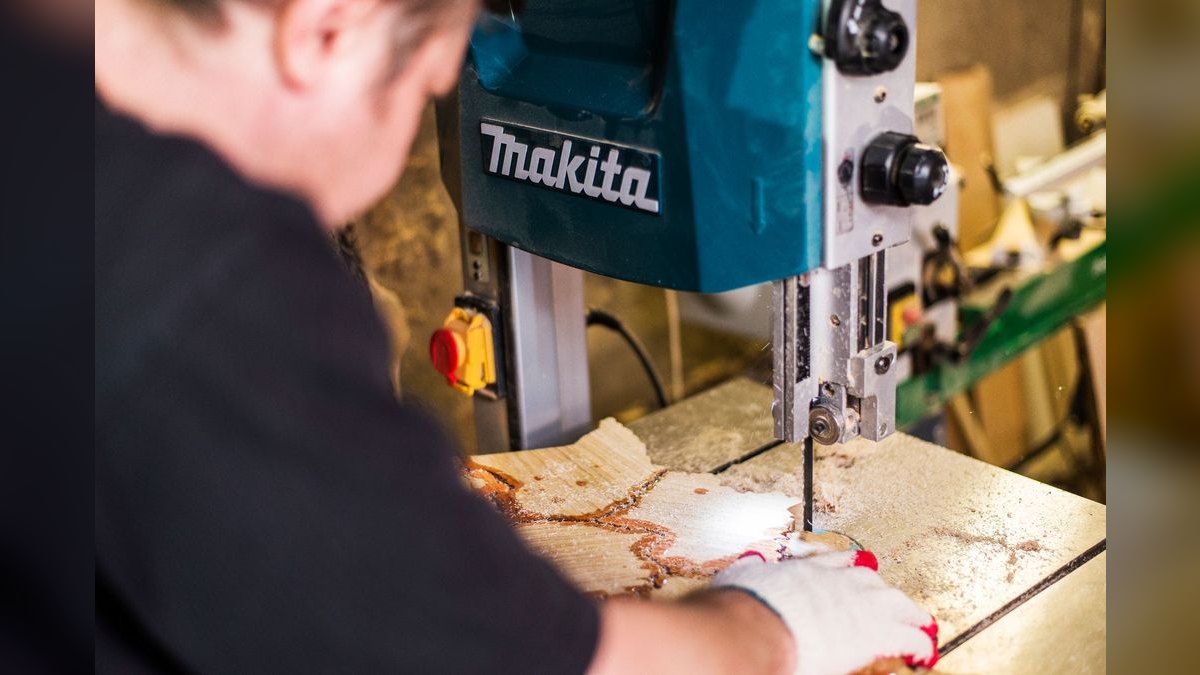
Machine by machine, the core set is a table saw ($3,000–$8,000 for an industrial cabinet model, often a SawStop for the blade brake), a jointer and planer ($2,500–$6,000 solo, $5,000–$12,000 shop), a bandsaw ($1,200–$4,000 solo, $3,000–$8,000 shop), dust collection ($1,500–$5,000 solo, $6,000–$20,000 ducted for a crew), a miter saw, drill press, router table, and a deep hand-tool set. Cabinet shops add panel processing — a sliding table saw or panel saw at $8,000–$40,000 — and increasingly a CNC router at $15,000–$40,000+ entry, with industrial machines well beyond. Edgebanders, wide-belt sanders, and shapers follow as production scales.
The five-year arc, assuming disciplined pricing throughout: Year 1 solo, 5–25 commissions, $50K–$200K revenue, $25K–$70K owner profit, and the central lesson is your real shop rate. Year 2 applies Year-1 pricing lessons, first relationships generate repeat work, often a first apprentice arrives — $150K–$400K revenue, $50K–$130K profit. Year 3 is a real business with a crew of 2–4 and actual project-management systems — $300K–$700K revenue, $80K–$200K profit. Year 4 brings capacity growth, possible CNC investment, possible specialization — $450K–$900K, $110K–$250K. Year 5 is a mature shop at $600K–$1.2M+ with $130K–$300K+ owner profit. These assume nothing exponential, because the business scales with skilled labor, machine capacity, and floor space — and skilled labor is the genuine constraint.
Product mix drives all of it. Kitchen and built-in cabinetry ($15K–$150K per job) is the volume-and-margin core. Architectural millwork ($5K–$100K+) is the profit center — specified by architects, hard for the low end to execute, sticky because the relationships repeat. Custom furniture ($800–$15K) builds portfolio and brand with variable per-hour economics. Commercial buildouts ($10K–$300K) fill the calendar with tighter deadlines and contractor payment dynamics. Restoration bills $60–$150/hour and is often the best per-hour work in the shop. Small maker goods — cutting boards, serving boards, signage at $50–$400 — are a marketing front, not a business; a full week of $80 cutting boards produces a few hundred dollars of margin, which is the classic Year-1 trap.

Implementation and sequencing: what to do in what order
Order matters more than speed. Doing the right twelve things out of sequence produces an expensive shop full of machines quoting unprofitable work.
Confirm skill and temperament first. Both gates, honestly, before spending anything. Choose your model deliberately — solo studio, cabinet shop, semi-production, or niche specialist — because everything downstream depends on it. Build your shop rate bottom-up and treat the result as an absolute pricing floor. This precedes machinery, because the rate tells you what monthly overhead your projected billable hours can actually carry.
Plan machinery to the chosen model. Commercial grade for machines that run all day; skip the dream shop. The sequencing rule is buy what the next six months of *actual booked work* requires, prove the work, then reinvest into capacity. Quality used machinery from retiring woodworkers and closing shops is among the most effective ways to build capacity affordably. Finance the large machines as the productive assets they are — but never finance away your reserve.

Set up space and infrastructure. You need square footage with safe machine clearance, infeed and outfeed room for long stock and full sheets, an assembly area, a dedicated ventilated finishing area separated from machining dust, flat lumber storage, and staging room for finished pieces. Critical infrastructure: adequate electrical service with 240-volt circuits, dust collection ducted to the machines, air compression for pneumatics and spray, climate consideration because wood moves with humidity, lighting that reveals grain and finish defects in raking light, and grade-level or dock loading access. Layout is operational, not cosmetic — material should flow from lumber storage → rough milling → dimensioning → joinery → assembly → finishing → staging. A shop laid out against that flow burns hours daily in material handling. Confirm industrial zoning; woodworking generates noise, dust, and fumes.
Build supplier relationships and material discipline. Learn to buy hardwood well — board-foot pricing, grades, rough versus surfaced, and real usable yield after defects and milling waste. Sheet goods quality varies enormously and a cabinet shop's reputation rides partly on substrate. A dealer who pulls good boards, holds stock, extends terms, and delivers fast is a genuine competitive asset. Lumber price volatility is a live 2027 condition — use escalation language, quote validity windows, or buy material at quote time.
Price from the floor, then for value above it. Cost-plus is the floor, not the answer. A custom piece for a specific client, or architect-specified millwork, is not a commodity and should be priced accordingly. Most custom work is quoted as a fixed project price, which means you carry all estimation risk; restoration and evolving designs are better billed hourly. Write detailed quotes with clear scope, revision limits, lead time, and material assumptions. Set a job minimum so tiny jobs don't cost more in quoting and setup than they earn. Institute a written, priced change-order process — scope creep performed free is among the largest margin leaks in the trade.
Take real deposits and manage lead time and cash. Deposits of 40–50% before work begins, progress payments on larger jobs, final payment at or before delivery. Then the discipline that separates surviving shops from imploding ones: lead time is a promise, and beginners break it constantly. A maker quotes a table "in about three weeks" because the build is three weeks of bench time — forgetting the four jobs ahead of it, that finishing adds a week, that lumber needs to acclimate, that a revision will land, and that something will go wrong. Nine weeks later the client is furious, the deposit is spent, and three more jobs have slipped. Quote the queue plus finishing plus acclimation plus revisions plus buffer.

The cash-flow trap is specific and lethal: deposits arrive before a job is built, final payments after, so a growing shop constantly spends this job's deposit on that job's material. One slow-paying client can leave a busy, profitable-on-paper shop unable to make rent or payroll.
Respect finishing as a major costed phase. A beautifully built piece with a poor finish is a failed job. Finishing is slow, fussy, skilled, and it is a scheduling bottleneck because coats need cure time. Finish choice — oils, water-based, lacquers, conversion varnishes — differs materially in durability, appearance, and cost.
Build the referral network relentlessly, adopt technology where it earns its place, and hire to break the solo ceiling. The first apprentice — handling material, rough work, sanding, and finishing under direction — is usually the first real leverage a founder gets. Skilled labor is genuinely scarce in 2027 with a thin trade pipeline, so many successful shops grow their own talent rather than hiring it ready-made. Critically: do not scale an underpriced business. You only multiply the loss.

Structure and taxes deserve early attention. Most shops form an LLC or S-corp; the entity holds the lease, contracts, insurance, and client agreements. Depreciation is central here because machinery is a large depreciable asset base, and available first-year expensing materially shapes taxable income in heavy-capex years — this is where a knowledgeable accountant earns their fee. Handle sales tax correctly from day one, including the treatment of installed cabinetry and millwork, which some jurisdictions treat as a real-property improvement rather than a taxable good. Work-in-progress accounting matters when you carry lumber and half-built jobs across a year-end. Separate business banking immediately.
Exit paths exist and are worth building toward. Sell the operating business — a shop with a skilled crew, established relationships, a portfolio, well-maintained machinery, and clean books is a saleable asset valued as a multiple of stabilized earnings, discounted heavily for owner dependence. Sell the assets, since machinery holds real resale value and gives this business an asset floor that pure-service businesses lack. Transition to a key employee or family member. Or wind down gracefully — finish the queue, sell the equipment, keep the proceeds. Build from day one toward the transferable version rather than the version that is only your own two hands.
One framing worth borrowing from an unrelated discipline: RevOps practitioners obsess over unit economics, pipeline visibility, and forecast honesty because those three things predict whether a business survives contact with growth. A woodworking shop needs the identical instruments under different names — shop rate is unit economics, the job board is pipeline visibility, and honest lead-time quoting is forecast discipline. The shops that fail are almost never bad at woodworking.
Related questions
What is a realistic shop rate for a solo woodworker in 2027?
For a lean solo studio with roughly $90,000 in total annual costs including a modest $50K–$65K owner wage, and 1,200 realistic billable hours, break-even lands near $75/hour. Price above that. Dividing by 2,000 hours instead produces $45/hour and guarantees an unprofitable year.
Do I need a CNC router to start a woodworking shop?
Not to start. A solo studio furniture maker often never needs one. But a cabinet or millwork shop competing in 2027 is competing against shops that have one — CNC nests parts efficiently, cuts repeatable joinery, and raises throughput. Entry machines run $15,000–$40,000. Evaluate it in Year 3–4, not at launch.
How much money do you need to start a woodworking business?
A lean solo studio runs $30,000–$70,000 all-in including a $10K–$25K working-capital reserve. A fuller custom cabinet shop with panel processing, CNC, and crew-sized dust collection runs $120,000–$250,000+ with a $25K–$40K+ reserve. Machinery can be financed; the reserve cannot.
Can you start a woodworking shop from a garage?
For the smallest scale, briefly. But past the first few commissions you need machine clearance, infeed and outfeed room for sheet goods, a ventilated finishing area away from machining dust, flat lumber storage, 240-volt service, and grade-level loading. Most residential zoning also prohibits commercial woodworking outright.
Which woodworking products make the most money?
Architectural millwork and kitchen cabinetry. Millwork is architect-specified, drawing-driven, and rarely price-shopped. Kitchens are $15K–$150K per job and repeatable in method. Small maker goods — cutting boards, serving boards — have thin per-hour economics and function as a marketing front, not a business.
FAQ
How long before a new woodworking shop is profitable?
Year 1 is calibration, not profit extraction. A disciplined solo shop generates $50,000–$200,000 in revenue against $25,000–$70,000 in owner profit while learning what jobs truly take in hours, discovering the real shop rate by living the costs, and building the first designer and builder relationships. Meaningful profit typically arrives in Year 2–3 once pricing has been corrected and the first apprentice breaks the solo output ceiling.
What is the single most common reason woodworking businesses fail?
Underpricing driven by a shop rate that was never built. Founders cost the lumber they can see and forget rent, insurance, machine depreciation, consumables, finishing hours, design and revision time, delivery, rework, and the unbillable hours of running a business. They run a 15% real margin believing it is 45%, work a brutally busy year, and end it with almost no money — never understanding why.
Should I buy new or used woodworking machinery?
Both, deliberately. Buy new and commercial-grade for the machines running all day — the table saw, the jointer, the primary dust collection. Buy quality used for everything else. Retiring woodworkers and closing shops release well-maintained industrial machinery at a fraction of new cost, and this is one of the most effective ways to build real capacity affordably. Inspect under power before buying.
How do I handle lumber price volatility in fixed-price quotes?
Three practical mechanisms. Put escalation language in your contract tying price to material cost movement above a threshold. Give every quote a validity window — commonly 15 to 30 days — after which it must be re-issued. Or buy the material at quote acceptance and price from the actual invoice. Shops that skip all three eat the volatility out of their own margin.
When should I make my first hire?
When your pricing is verifiably correct and you are consistently turning away work or delivering late. Never before. Scaling an underpriced business multiplies the loss rather than fixing it. The first hire is usually an apprentice or shop helper handling material movement, rough work, sanding, and finishing under direction — freeing you for skilled work and quoting. That single hire often converts a capped solo income into a growing business.
What insurance does a woodworking shop actually need?
General liability for the piece that fails or the built-in that injures someone. Property and equipment coverage against fire, theft, and damage — fire risk is structural given wood dust and finishing materials. Commercial auto for the delivery vehicle. Workers' compensation once you hire. And for a solo founder whose income depends entirely on their own hands, health and disability coverage are not optional extras.
Sources
- https://www.sba.gov/business-guide/plan-your-business/calculate-your-startup-costs
- https://www.bls.gov/ooh/production/woodworkers.htm
- https://www.osha.gov/woodworking
- https://www.irs.gov/businesses/small-businesses-self-employed/depreciation
- https://www.nist.gov/mep
- https://www.fs.usda.gov/research/products/forest-products
- https://www.census.gov/construction/c30/c30index.html
- https://www.score.org/resource/business-plan-template-startup-business
- https://www.nfib.com/small-business-resources/
- https://www.epa.gov/stationary-sources-air-pollution/wood-furniture-manufacturing-operations-national-emission
Related on PULSE
This page will be disappearing soon. Save it to your device for $1 — or read it free while it is here.
@Kory-White- · if Venmo asks, the last 4 of my number are 2012
This page is gone.
This one is off the shelf now. $1 keeps it on your phone for good — the whole page, pictures and diagrams included.
 weldingHow do you start a custom welding fabrication business in 2027?
 cnc-machiningHow do you start a CNC machining business in 2027?
 3d-printingHow do you start a 3D printed custom parts business in 2027?
 epoxy-flooringHow do you start a epoxy garage flooring business in 2027?
 cnc-machiningHow do you start a CNC machining shop business in 2027?
 handyman-businessHow do you start a handyman business in 2027?
 painting-contractorHow do you start a painting contractor business in 2027?
 mobile-tire-repairHow do you start a mobile tire repair business in 2027?
 screen-printingHow do you start a screen printing business in 2027?
 craft-distilleryHow do you start a craft distillery business in 2027?