


What is Salesforce Data Cloud and why does it matter for AI-native RevOps in 2027?
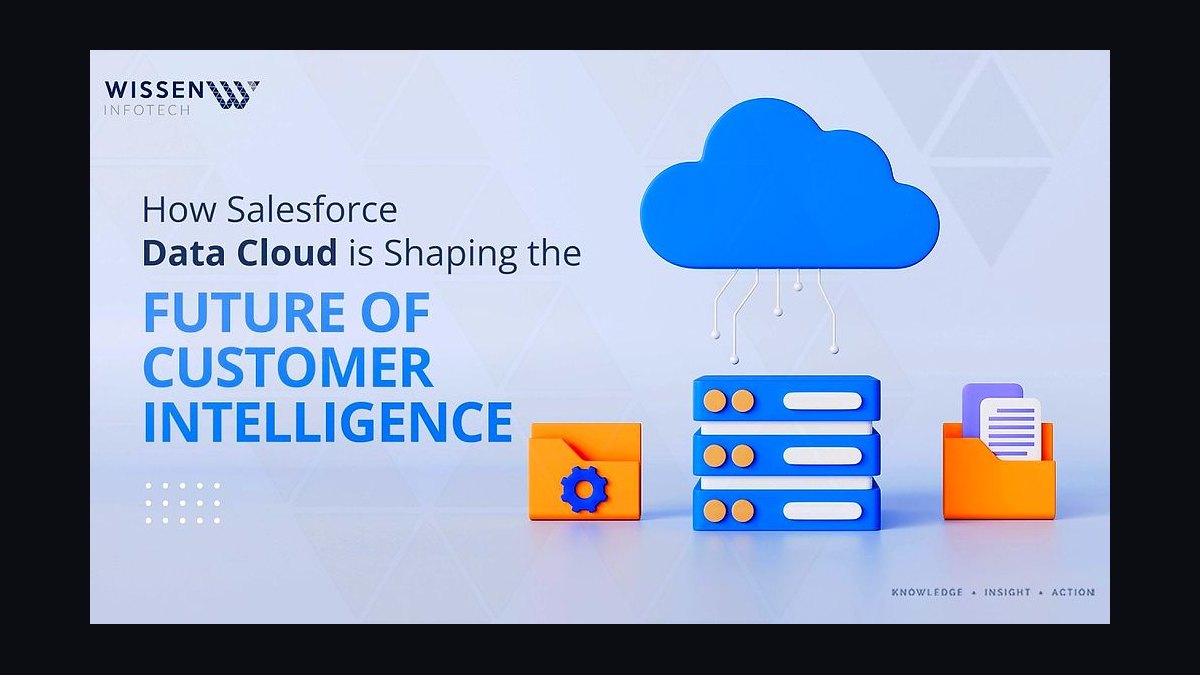
Salesforce Data Cloud is the unified customer data platform that Salesforce launched in 2023 and significantly expanded through 2024-2027, designed to serve as the underlying data infrastructure for Agentforce 360 and the full Salesforce Customer 360 platform. Data Cloud unifies first-party customer data from across Salesforce clouds (Sales Cloud, Service Cloud, Marketing Cloud, Commerce Cloud) with third-party data sources (ZoomInfo, Bombora, weather data, market data, custom enterprise data) into a single addressable customer profile that agentic AI workflows can read from and write to in real time. For AI-native RevOps in 2027, Data Cloud matters because agentic AI workflows are only as good as the data they have access to — and without Data Cloud (or an equivalent unified data platform), Agentforce agents are limited to the data in one Salesforce cloud at a time, producing fragmented decisions. Companies running Data Cloud at scale in 2027 report 30 to 50 percent improvement in agentic workflow quality, 20 to 40 percent improvement in marketing-to-sales lead handoff conversion, and significant reduction in the time required to deploy new agentic use cases.
1What Data Cloud Actually Does
Data Cloud is built on three foundational capabilities that together enable AI-native RevOps workflows.
First, real-time data ingestion. Data Cloud ingests data from Salesforce sources (every cloud), external SaaS sources (via 200-plus pre-built connectors), data warehouses (Snowflake, Databricks, BigQuery via zero-copy integration), and custom enterprise data sources (ERP, billing, product usage telemetry). The ingestion is real-time or near-real-time — typically sub-second latency for high-priority data flows. This contrasts with traditional CRM where data flows in nightly batch loads and reaches the CRM 12 to 24 hours after the event.
Second, identity resolution and profile unification. Data Cloud uses identity-resolution algorithms (combining deterministic match rules and probabilistic AI matching) to unify multiple representations of the same customer across data sources. A customer who exists as a Lead in Sales Cloud, a Contact in Service Cloud, a Subscriber in Marketing Cloud, a Buyer in Commerce Cloud, and a User in the product database becomes a single unified profile. This is the foundational capability that makes agentic AI workflows reliable — without unified identity, agents work from fragmented data and produce inconsistent decisions.
Third, activation and consumption. Once data is ingested and unified, Data Cloud activates the unified profile into downstream systems and agentic workflows. The data can power Agentforce agents (which read the profile to make decisions), Marketing Cloud journeys (which target campaigns based on the profile), Sales Cloud Einstein (which scores opportunities based on the profile), and Service Cloud (which routes cases based on the profile). The activation is real-time and bidirectional — agentic workflows can both read from and write back to the Data Cloud profile.

1.1 The zero-copy architecture
A defining technical feature of Data Cloud is its zero-copy integration with major data warehouses (Snowflake, Databricks, Google BigQuery, Amazon Redshift). Zero-copy means Data Cloud can read data from the customer's existing data warehouse without physically copying or moving the data — Salesforce's compute layer reads directly from the warehouse's storage layer.
The zero-copy architecture matters for three reasons. First, it eliminates ETL pipeline maintenance — there is no data-engineering team required to keep Salesforce data in sync with the warehouse. Second, it eliminates storage duplication — the customer doesn't pay to store the same data twice. Third, it enables real-time consistency — the data Salesforce sees is always the same data the warehouse sees, with no lag from batch syncing.
The zero-copy capability was announced in late 2023 and matured through 2024-2026. By 2027, zero-copy is the dominant architecture for enterprises with significant warehouse investments. Companies that still run ETL-based Salesforce data flows are increasingly seen as legacy.

2Why Data Cloud Matters for AI-Native RevOps
The AI-native RevOps thesis depends on agentic AI workflows being able to read complete, current, unified customer data. Without that data foundation, agents make decisions from fragmented inputs and produce inconsistent outputs.
Five specific AI-native use cases require Data Cloud (or equivalent unified data platform) to work well.
Lead scoring and routing — agentic lead scoring depends on signals from across the entire customer relationship, not just the Sales Cloud lead record. A lead who is already a Marketing Cloud subscriber in a different product line, a Service Cloud case-opener in another product, and a product user who downloaded a trial last week deserves a very different score than a lead with no prior touchpoints. Data Cloud surfaces all of those signals to the scoring agent.
Account planning and territory design — agentic account planning requires complete view of every interaction the customer has had across Sales, Service, Marketing, and Product. Data Cloud assembles that view.

Opportunity progression and risk scoring — agentic risk scoring on open opportunities benefits from signals across the relationship, not just the opportunity record. Data Cloud surfaces those signals.
Customer success expansion and retention — agentic CS workflows need to see Sales Cloud purchase history, Service Cloud support patterns, Marketing Cloud engagement, and Product Cloud usage to make accurate expansion-versus-churn predictions.
Personalized outbound and ABM — agentic prospecting and ABM workflows benefit from understanding the full customer context, including whether the company is already a customer in another product line, has an open support case, or has churned previously.
3The Production Architecture at a 200-Million-Dollar B2B SaaS
A 200-million-dollar B2B SaaS running Data Cloud in production through 2026-2027 typically has the following architecture.

The unified data platform pulls from six primary sources: Salesforce Sales Cloud (CRM data), Salesforce Marketing Cloud (campaign and engagement data), Salesforce Service Cloud (support and case data), the company's data warehouse (Snowflake or Databricks, holding product usage and financial data), external enrichment (ZoomInfo Copilot for contact data, Bombora for intent), and the company's billing system (Stripe or Zuora, holding subscription and revenue data).
Identity resolution unifies these sources into a single customer profile per account and per contact. The resolution is configured with custom match rules tuned to the company's data quality and business model.
Activation flows from Data Cloud into Agentforce agents. The lead-routing agent reads the unified profile to make routing decisions. The account-planning agent reads the unified profile to draft account plans. The forecast-aggregation agent reads the unified profile to inform forecasting models.

Marketing Cloud journeys read the unified profile to personalize campaigns. Service Cloud uses the unified profile to route cases. Commerce Cloud uses the unified profile to personalize purchase experiences.
The total deployment effort is significant — typically 9 to 18 months from contract signature to full production. The first 6 months are typically dedicated to ingestion configuration and identity resolution; the next 6 to 12 months expand to activation across Agentforce, Marketing Cloud, and other consuming systems.
3.1 The cost structure
Data Cloud pricing is consumption-based, with three primary cost drivers: number of profiles unified, volume of data ingested, and volume of activations triggered. A typical 200-million-dollar B2B SaaS deployment runs 300 thousand to 800 thousand dollars per year in Data Cloud consumption costs.
Plus the implementation cost: typically 400 thousand to 1.2 million dollars for a 9-to-18-month implementation, depending on data complexity and number of source systems. The implementation cost is often split between Salesforce Professional Services and a partner implementation firm.

Plus the ongoing maintenance cost: typically 1 to 2 data engineers and 1 RevOps person dedicated to Data Cloud, totaling 350 to 600 thousand dollars per year in fully-loaded headcount.
The total annual investment for a typical 200-million-dollar B2B SaaS lands at 700 thousand to 1.5 million dollars per year all-in. This is significant but typically pays back via improved Agentforce workflow quality and reduced data-engineering toil.
4The Competitive market in 2027
Data Cloud competes against three categories of alternatives in 2027.

First, native CDP platforms. Segment (now Twilio Segment) and mParticle are the dominant native customer data platforms. Both have strong identity resolution and event-streaming capabilities but weaker integration into Salesforce-native AI workflows. Companies that are not deeply on Salesforce sometimes prefer Segment; companies that are deeply on Salesforce strongly prefer Data Cloud.
Second, data warehouse-native customer data platforms. Hightouch and Census operate as "reverse ETL" platforms that activate warehouse data into downstream tools. They compete with Data Cloud's activation layer but are typically less integrated with agentic AI workflows. Companies that have made deep investments in dbt and modern data stacks sometimes prefer Hightouch or Census.
Third, Microsoft Dynamics Customer Insights. For Microsoft-shop enterprises, Customer Insights is the equivalent of Data Cloud — unified customer data platform tightly integrated with Microsoft's Sales Copilot agentic AI layer. Customer Insights is competitive in capability but only relevant for Microsoft-shop enterprises.
The 2027 competitive position: Data Cloud dominates among Salesforce-heavy enterprises (which is the majority of large B2B SaaS), with native CDPs holding share among Salesforce-agnostic companies and Customer Insights holding share among Microsoft-shop enterprises.

5The Mistakes Enterprises Make with Data Cloud
The biggest mistake is treating Data Cloud as a CRM-replacement project. Some enterprises buy Data Cloud expecting it to replace their CRM data infrastructure entirely. Data Cloud is not a replacement for the CRM — it is a data unification layer on top of the CRM and other systems. Enterprises that try to replace their CRM with Data Cloud end up with implementation chaos.
The second mistake is under-investing in identity resolution. The unified profile only works if the identity-resolution rules are well-tuned. Enterprises that skip the identity-resolution investment and accept the off-the-shelf match rules end up with fragmented profiles and unreliable agentic workflows.
The third mistake is over-ingesting data. Some enterprises ingest every data source they can think of into Data Cloud, producing a bloated profile with low-quality signals. The discipline is to ingest only the data sources that drive measurable improvement in agentic workflow quality.
The fourth mistake is failing to invest in activation. Some enterprises invest heavily in ingestion and identity resolution but neglect activation — the consumption of the unified profile by downstream agentic workflows. Without activation, the Data Cloud investment produces no business value.

The fifth mistake is under-staffing the ongoing operation. Data Cloud requires continuous data engineering and RevOps attention — sources change, match rules need tuning, activations need monitoring. Enterprises that try to operate Data Cloud without dedicated capacity see quality drift over time.
6The Outlook for Data Cloud in 2028-2029
The Data Cloud trajectory through 2028-2029 points in three directions.
Deeper agentic AI integration. Data Cloud and Agentforce will continue integrating tightly, with new agentic capabilities increasingly assuming Data Cloud as the data foundation. Enterprises that have not deployed Data Cloud will find themselves unable to access the latest Agentforce capabilities.

Expansion of zero-copy ecosystem. The zero-copy integration with data warehouses will expand to more platforms (currently Snowflake, Databricks, BigQuery, Redshift; expected to add platforms like Microsoft Fabric, Oracle Autonomous Database, and ClickHouse). This will reduce the friction of deploying Data Cloud for enterprises with diverse warehouse investments.
Industry-specific data models. Salesforce is investing in industry-specific Data Cloud models (Financial Services Cloud, Health Cloud, Manufacturing Cloud) with pre-built data schemas, identity-resolution rules, and activation patterns tailored to vertical use cases. These industry models will accelerate deployment for vertical-focused enterprises.
By 2029, the expected pattern is that Data Cloud is the default data foundation for all Salesforce-heavy enterprises, with new agentic AI use cases assuming it as infrastructure rather than treating it as an optional add-on.
Related on PULSE
- What data sources are most effective for training AI models to predict next best action in complex enterprise deals?
- How does the expanding size of B2B buying committees increase the risk of vendor consolidation paralysis?
- Which vendor consolidation strategies are failing most often when integrating AI sales tools into existing stacks?
- Why are longer sales cycles now correlating with a shift from pipeline velocity to deal value predictability?
- What specific metrics are B2B RevOps teams using to measure AI's impact on lead quality in the top-of-funnel?
FAQ
What exactly does Salesforce Data Cloud do for RevOps teams? Data Cloud unifies customer data from Sales, Service, Marketing, and Commerce Clouds with external sources like ZoomInfo or Bombora into a single profile. This lets RevOps teams build consistent, real-time customer views that agentic AI workflows can act on without data silos.
How does Data Cloud improve agentic AI workflow quality? When agentic AI agents access fragmented data from only one cloud, decisions are often incomplete. Data Cloud gives agents a unified profile, so actions like lead scoring or next-best-offer recommendations use all available customer signals, typically boosting workflow quality by 30 to 50 percent.
Is Data Cloud only useful for large enterprises with complex data stacks? No, but its value scales with data complexity. Small teams with simple CRM data may see less benefit, while organizations managing multiple clouds and third-party data sources gain the most from eliminating manual data stitching and enabling real-time AI actions.
What third-party data sources can Data Cloud integrate? It connects to common B2B data providers like ZoomInfo and Bombora, plus weather, market, and custom enterprise data. The exact list expands over time, and teams can also bring in proprietary data through APIs or connectors.
Does Data Cloud replace existing data warehouses or CDPs? Not necessarily. Data Cloud can complement tools like Snowflake or Amazon Redshift by acting as a real-time customer profile layer. Many organizations use it alongside existing warehouses for different use cases, though some replace legacy CDPs entirely.
How quickly can a RevOps team see results after implementing Data Cloud? Initial improvements in data consistency and agentic workflow quality often appear within weeks, but full-scale benefits like 20 to 40 percent better lead handoff conversion typically take several months of tuning and integration. Timelines vary based on data complexity and team readiness.
Sources
- Salesforce Data Cloud product documentation 2025-2027
- Salesforce 2026-2027 Dreamforce announcements on Agentforce-Data Cloud integration
- Snowflake-Salesforce zero-copy integration documentation
- Databricks-Salesforce zero-copy integration documentation
- Forrester Wave 2026 Customer Data Platforms report
- Gartner 2027 Magic Quadrant for Customer Data Platforms
- Pavilion 2026 RevOps Benchmark Survey on CDP adoption
- Salesforce 2026-2027 enterprise customer case studies
This page will be disappearing soon. Save it to your device for $1 — or read it free while it is here.
@Kory-White- · if Venmo asks, the last 4 of my number are 2012
This page is gone.
This one is off the shelf now. $1 keeps it on your phone for good — the whole page, pictures and diagrams included.
 revopsHow do you reduce CRM data decay in 2027?
 revopsHow do you migrate CRM platforms without losing data in 2027?
 revopsWhat is Microsoft Copilot for Sales and what does it mean for RevOps in 2027?
 revopsHow do you run a CRM data hygiene program in 2027?
 revopsWhat does ServiceNow's acquisition of Moveworks mean for CRM and RevOps in 2027?
 revopsHow do you keep CRM data clean when reps use AI note-takers in 2027?
 revopsHow do you do effective deal coaching in 2027?
 revopsHow do you handle a sales reorg without losing pipeline in 2027?
 revopsHow do you score and route product-qualified leads in 2027?
 revopsDo you need a revenue data platform in 2027?