


What is the 2027 outlook for AI sales coaching tools (Wingman, Mindtickle, Showpad)?
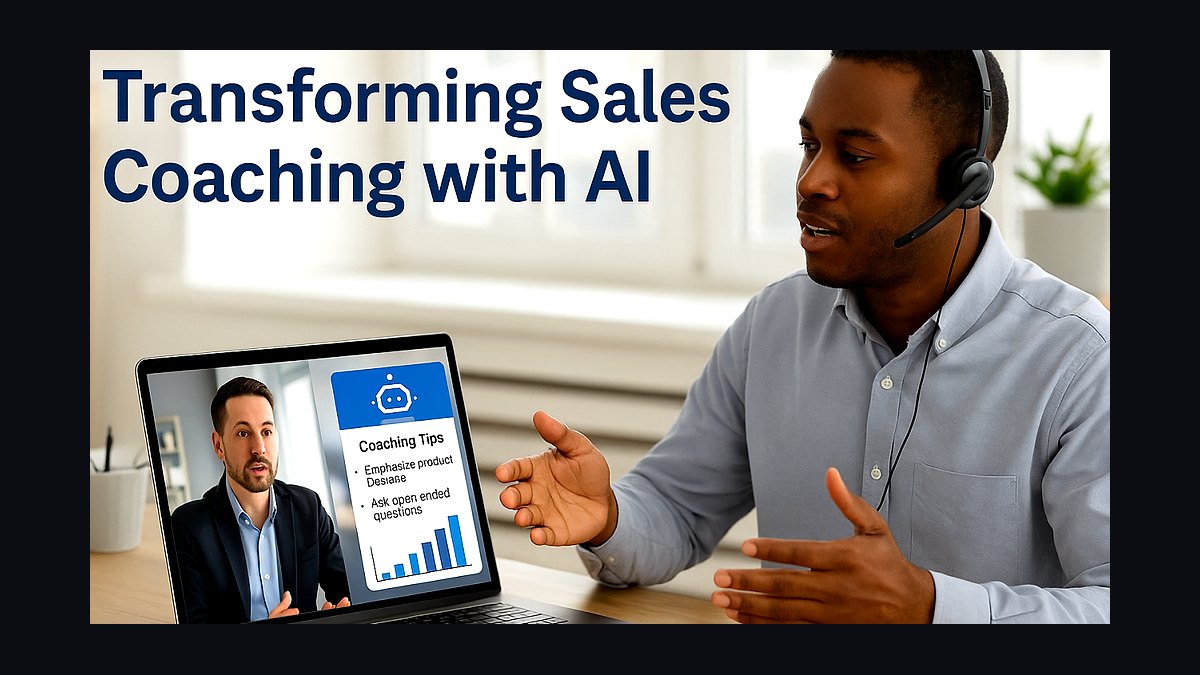
The 2027 outlook for AI sales coaching tools is strong with significant capability advancement across the leading platforms — Wingman (now part of Clari), Mindtickle, Showpad, Highspot AI, Gong, and several emerging entrants. Sales coaching has evolved from manual ride-along reviews and quarterly performance assessments to continuous AI-driven coaching that captures every customer-facing conversation, analyzes against best-practice frameworks, and delivers personalized coaching recommendations to AEs and CSMs in real time. The 2027 best-in-class platforms combine conversation intelligence (call capture and analysis), enablement content delivery (just-in-time content for specific selling situations), AE coaching workflows (structured coaching plans with manager visibility), and AI-generated coaching recommendations (specific behaviors to improve, specific calls to review). The companies leading this category in 2027: Highspot (sales enablement leader with strong AI coaching), Gong (conversation intelligence leader with strong coaching extension), Clari (forecast leader with Wingman coaching), Mindtickle (training and coaching specialist), and Showpad (enablement plus coaching). Sales organizations running mature AI coaching programs report 20 to 35 percent improvement in AE quota attainment, 25 to 45 percent improvement in new-hire ramp time, and 15 to 30 percent improvement in win rate on coachable deals.
1The Evolution from Manual to AI-Driven Coaching
Sales coaching in 2010-2020 was primarily manual. Sales managers ride-aligned with AEs on selected calls, reviewed call recordings selectively (when conversation intelligence wasn't yet ubiquitous), conducted quarterly performance assessments, and ran ad-hoc coaching sessions. The coaching coverage was inevitably uneven — top performers got more attention; underperformers got more remediation; the middle 60 percent often got minimal coaching.
The 2020-2027 evolution to AI-driven coaching has fundamentally changed the coverage and quality of coaching. Three specific changes have transformed the practice.
First, universal conversation capture. AI conversation intelligence tools (Gong, Clari Wingman, Salesforce Einstein Conversation Insights) capture every customer-facing call automatically. The "selective sampling" approach to call review is replaced by "full coverage" — every call is captured and available for analysis.
Second, automated quality analysis. The AI tools analyze every call against best-practice frameworks (MEDDIC/MEDDPICC compliance, talk-time ratios, question quality, objection handling, next-step clarity) and produce quality scores automatically. Sales managers no longer need to listen to entire calls to identify coaching opportunities; the AI surfaces the moments worth coaching.

Third, personalized coaching recommendations. AI tools generate specific coaching recommendations for each AE based on their conversation patterns, performance data, and identified skill gaps. The recommendations are tailored to the individual rather than generic.
1.1 The 2027 coverage benchmark
The 2027 best-practice coverage benchmark: every AE receives weekly coaching feedback on their conversation performance. Some of the feedback is AI-generated (specific calls to review, specific behaviors to adjust); some is manager-delivered in weekly 1-on-1s based on AI-surfaced insights. The result is significantly higher coaching coverage than the 2010-2020 era.
2The Platforms Leading the Category
Six platforms dominate the 2027 AI sales coaching category.

Highspot. The sales enablement leader with strong AI coaching capabilities added through 2024-2026. Highspot combines content management, AI coaching, and digital sales rooms in a unified platform. Pricing typically 180 to 350 thousand dollars per year for enterprise deployments.
Gong. The conversation intelligence leader with deep AI coaching extension. Gong's Smart Tracker and Deal Intelligence products provide coaching insights at the deal level; Gong Coaching provides AE-level coaching workflows. Strongest for enterprise sales teams. Pricing typically 200 to 500 thousand dollars per year.
Clari (Wingman acquired 2022). Clari Copilot provides conversation intelligence; Wingman provides the dedicated coaching layer. Clari is preferred by enterprises that want forecast integration with coaching. Pricing typically 250 to 600 thousand dollars per year.
Mindtickle. The training and coaching specialist platform with strong onboarding, certification, and ongoing coaching capabilities. Mindtickle is preferred by enterprises that prioritize structured training programs alongside coaching. Pricing typically 150 to 350 thousand dollars per year.

Showpad. The integrated enablement-plus-coaching platform with strong content management and coaching workflows. Showpad is preferred by enterprises that want unified content delivery and coaching. Pricing typically 150 to 300 thousand dollars per year.
Salesforce Sales Engagement (with Agentforce 360). The Salesforce-native coaching option, integrated with Sales Cloud and Agentforce. Increasingly competitive with standalone tools for Salesforce-heavy enterprises. Pricing typically included with Sales Cloud or consumption-based on Agentforce.
2.1 The platform selection framework
The platform selection framework depends on three factors. First, scope of need. Companies that want comprehensive enablement plus coaching pick Highspot or Showpad. Companies that want conversation intelligence plus coaching pick Gong or Clari. Companies that want training plus coaching pick Mindtickle.
Second, CRM stack. Salesforce-heavy enterprises increasingly evaluate Sales Engagement plus Agentforce as the native option. Multi-CRM environments prefer standalone platforms.

Third, sales motion complexity. Complex enterprise motions benefit from Gong or Clari's conversation intelligence depth. Mid-market and SMB motions can use simpler platforms (Highspot, Showpad).
3The Coaching Capabilities in 2027
The 2027 AI sales coaching capabilities span five categories.
Conversation analysis and feedback. Every customer-facing call is analyzed for AE behavior — talk-time ratios, question quality, objection handling, MEDDIC/MEDDPICC compliance, next-step clarity. AEs receive feedback within hours of the call, often with specific moments highlighted for review.

Best-practice playbook delivery. The AI tools deliver just-in-time playbook content — when an AE is preparing for a discovery call with a specific persona at a specific company, the tool surfaces relevant playbooks, content, and example conversations.
Skill gap identification. The AI tools analyze each AE's conversation patterns over time and identify specific skill gaps (e.g., "this AE consistently struggles with pricing objections"). The skill gap analysis informs targeted coaching.
Manager coaching workflows. The AI tools provide sales managers with structured coaching workflows — which AE to coach, which specific calls to review with them, which coaching points to focus on. The workflows make coaching systematic rather than ad-hoc.
New-hire ramp acceleration. The AI tools accelerate new-hire ramp by providing intensive coaching during the first 90 days. New hires receive daily coaching feedback, structured playbook delivery, and targeted skill development. The ramp time reduction is significant — typically 25 to 45 percent versus pre-AI baselines.

4The Implementation Approach
A sales leader deploying AI sales coaching in 2027 should approach the program in this sequence.
Months 1 to 3: platform selection and conversation intelligence deployment. Select Highspot, Gong, Clari, Mindtickle, Showpad, or Salesforce-native based on scope and CRM stack. Deploy the platform with full conversation capture and CRM integration.
Months 3 to 6: best-practice framework configuration. Configure the platform with the company's specific best practices — MEDDIC/MEDDPICC structure, talk-time targets, objection-handling patterns, next-step protocols. The framework drives the AI analysis.

Months 6 to 9: manager coaching workflow training. Train sales managers on the AI tools and the coaching workflows they enable. Establish weekly 1-on-1 cadence that uses AI insights as the framework. Sales managers spend more time on coaching, less on data gathering.
Months 9 to 12: AE adoption and self-coaching. Train AEs on the AI tools as self-coaching resources. AEs review their own call analyses, identify skill gaps, and pursue targeted improvement. The self-coaching layer compounds the manager-coaching layer.
Months 12 to 18: optimize and scale. Tune the AI tool configurations based on operational data. Adjust best-practice frameworks based on what produces results. Expand to additional teams (customer success, SDR, sales engineering) if not initially in scope.
By month 18, AI sales coaching operates as the operational backbone of the sales organization, with measurable improvements in quota attainment, win rate, and new-hire ramp.

5The Mistakes Companies Make on AI Coaching
The biggest mistake is treating AI coaching tools as performance management surveillance. Some sales organizations deploy the tools and use them punitively — surveilling AEs, citing specific call moments to discipline underperformers. The AEs perceive the tools as adversarial and resist adoption. The right approach is developmental — using the tools to help AEs improve, not to police them.
The second mistake is under-investing in sales manager training. The AI tools enable better coaching but don't automate it. Sales managers need training on how to use the tools effectively. Companies that deploy the tools without manager training see minimal coaching improvement.
The third mistake is over-relying on AI feedback at the expense of human coaching. The AI tools provide great signal but lack contextual judgment. The right approach combines AI insight with manager wisdom. Companies that try to fully automate coaching produce mechanical feedback that doesn't develop AEs.
The fourth mistake is failing to integrate with new-hire onboarding. AI coaching tools are particularly powerful for new-hire ramp acceleration. Companies that deploy the tools only for experienced AEs miss one of the highest-ROI use cases.

The fifth mistake is failing to refresh the best-practice frameworks. The frameworks that drive the AI analysis become stale over time as the business evolves. Companies that don't refresh the frameworks see coaching insights become less relevant over 12 to 24 months.
6The Outlook for 2028-2029
The AI sales coaching trajectory through 2028-2029 points in three directions.
Real-time in-call coaching. The 2028-2029 evolution will likely include AI agents that provide real-time coaching during calls — surfacing relevant talking points, suggesting follow-up questions, flagging missed opportunities in the moment. Early pilots in 2026-2027 are promising; production deployment expected by 2028-2029.

Voice agent coaching. As autonomous voice agents handle more SDR-level prospecting calls, the coaching workflows will adapt to coach the agents (tuning prompts, refining response patterns) alongside the humans. The coaching role evolves from purely human-focused to human-plus-agent.
Personalized AE development plans. AI tools will increasingly generate personalized development plans for each AE — structured 6 to 12-month growth plans based on the AE's specific strengths, gaps, and career goals. The plans evolve continuously as the AE develops.
The AI sales coaching market will continue growing rapidly through 2028-2029. The market size is expected to reach 5 to 8 billion dollars by 2029 versus approximately 2.5 to 3.5 billion in 2027.
Related on PULSE
- What data sources are most effective for training AI models to predict next best action in complex enterprise deals?
- How does the expanding size of B2B buying committees increase the risk of vendor consolidation paralysis?
- Which vendor consolidation strategies are failing most often when integrating AI sales tools into existing stacks?
- Why are longer sales cycles now correlating with a shift from pipeline velocity to deal value predictability?
- What specific metrics are B2B RevOps teams using to measure AI's impact on lead quality in the top-of-funnel?
FAQ
What exactly does "AI sales coaching" mean in 2027? AI sales coaching uses machine learning to automatically analyze sales calls, meetings, and emails, then provides personalized feedback and training suggestions. In 2027, it goes beyond simple call scoring to recommend specific behaviors, surface best-practice examples, and integrate with enablement content in real time.
How do Wingman, Mindtickle, and Showpad differ from Gong and Highspot? Wingman (now part of Clari) focuses on forecasting and coaching from conversation data, while Mindtickle specializes in structured training and certification workflows. Showpad combines content management with coaching, whereas Gong leads in conversation intelligence with a coaching layer, and Highspot excels in enablement content delivery with AI coaching built in. Each has distinct strengths, but all converge on continuous, data-driven coaching.
Will these tools replace human sales managers? No, they augment managers by automating repetitive analysis and surfacing actionable insights. Managers still set strategy, provide context, and build relationships—AI handles the heavy lifting of call review, skill gap identification, and personalized coaching plan generation.
What kind of ROI can a sales team expect from adopting these tools? Sales organizations with mature AI coaching programs typically see a 20 to 35 percent improvement in AE quota attainment. Gains come from faster ramp time for new hires, higher win rates on coached deals, and reduced time spent on manual call reviews.
Are these tools only for large enterprises, or can small teams use them? While many platforms target mid-market and enterprise, several offer tiered pricing or scaled-down versions for smaller teams. Implementation complexity and cost vary, but even a 10-person sales team can benefit from automated call analysis and basic coaching recommendations.
What are the main risks or limitations of AI sales coaching in 2027? Key risks include over-reliance on AI suggestions without human judgment, potential bias in scoring models, and data privacy concerns from recording all conversations. Additionally, integration with existing CRM and enablement stacks can be challenging, and poor data quality can reduce coaching accuracy.
Sources
- Highspot 2026-2027 AI coaching product documentation and customer case studies
- Gong 2026-2027 Sales Coaching Benchmarks
- Clari Wingman 2026 coaching capabilities and customer case studies
- Mindtickle 2026 Sales Enablement and Coaching Benchmarks
- Showpad 2026 Integrated Enablement Benchmarks
- Forrester Wave 2026 Sales Coaching and Enablement Wave
- Gartner 2027 Magic Quadrant for Sales Performance Management
- Pavilion 2026 RevOps Benchmark Survey on coaching tool adoption
People also search for: best what is the 2027 · top what is the 2027 · top rated what is the 2027 · top ranked what is the 2027 · highest rated what is the 2027 · what is the reviews 2027
This page will be disappearing soon. Save it to your device for $1 — or read it free while it is here.
@Kory-White- · if Venmo asks, the last 4 of my number are 2012
This page is gone.
This one is off the shelf now. $1 keeps it on your phone for good — the whole page, pictures and diagrams included.
 revopsHow do you set up effective sales technology training in 2027?
 revopsHow do you build a sales enablement function in 2027?
 revopsHow do you build a sales career ladder in 2027?
 revopsHow do you set up effective sales onboarding in 2027?
 revopsHow do you onboard new sales reps faster in 2027?
 revopsHow do you build a competitive intel program in 2027?
 revopsHow do you build a sales playbook library in 2027?
 revopsHow do you reduce CRM data decay in 2027?
 revopsHow do you reduce speed-to-lead in 2027?
 revopsHow does AI roleplay change sales training and rep ramp in 2027?